
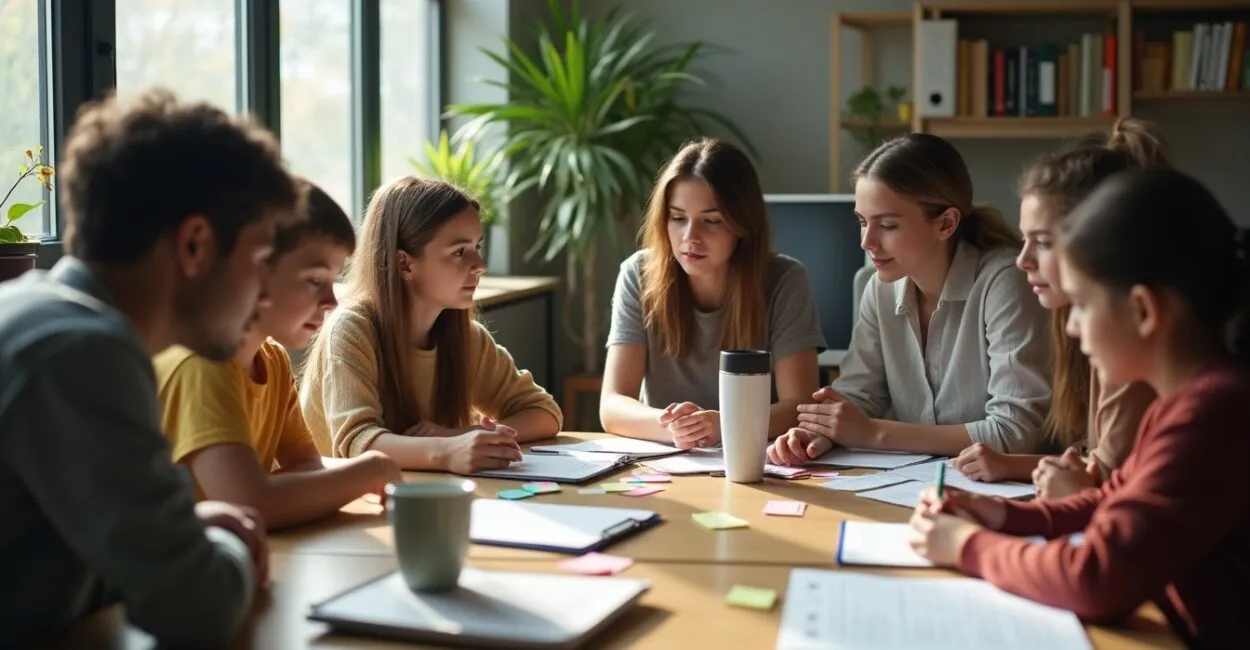
These are the skills that enable people to recognize and manage emotions, build healthy relationships, make responsible decisions, and navigate everyday social and emotional challenges.
In today’s educational landscape, social-emotional skills are essential to supporting whole-child learning, well-being, and inclusion. Integrated public policies and school practices strengthen children’s and adolescents’ development by connecting curriculum and teacher preparation.

Key Takeaways
- What social-emotional skills are and why they matter in whole-child education.
- Effective classroom practices for developing social-emotional skills.
- Common implementation mistakes and how to avoid them.
- Measurement, assessment, and integration with public policies and teacher preparation.
Social-Emotional Skills in Education
How Social-Emotional Skills Transform Learning
Social-emotional skills affect motivation, attention, and peer collaboration, helping create safer, more inclusive, and more productive learning environments that are essential for sustainable long-term academic outcomes. When schools foster these skills, they often see fewer conflicts, stronger self-esteem, and greater participation in activities, connecting academic curricula with students’ real social and emotional needs.
Integrating social-emotional wellness programs requires planning, teacher training, and community involvement so these practices are consistent and visible in everyday school life.
Models for Implementing Social-Emotional Skills
Successful models combine explicit curricula, integrated instruction, and universal interventions with individualized support for students with specific needs, ensuring equitable and sustained efforts. Adopting these models requires educator training, appropriate instructional materials, and ongoing assessment, as well as coordination with families and local social services.
Global and national frameworks guide local adaptation, while monitoring tools help refine strategies based on outcomes and diverse contexts.
Assessing Social-Emotional Skills: Measures and Indicators
Measuring social-emotional skills involves observational assessments, self-reports, and standardized tools to track behavior, emotional regulation, and peer social skills. Robust indicators help identify progress, gaps, and training needs, informing policies and investments in school and community programs.
It’s crucial to align assessment with instructional goals so data informs practice rather than simply generating administrative reports.
Effective Teaching Practices
Classroom Strategies for Social-Emotional Skills
Strategies include explicit skills instruction, group activities, cooperative games, and reflective discussions that foster empathy, self-regulation, and conflict resolution through practical, ongoing practice. Planning routines, opportunities to listen, and constructive feedback supports measurable progress and creates a school culture that encourages social-emotional development.
Teachers serve as facilitators, modeling behaviors and using language that builds students’ confidence, independence, and sense of belonging.
Ongoing Training for Educators in Social-Emotional Skills
Teacher training should include theoretical knowledge, reflective practice, and supervision, combining workshops, mentoring, and professional learning communities to embed new practices. Investing in ongoing professional development helps educators recognize emotional cues, apply strategies, and integrate social-emotional instruction with academic content in a coherent way.
Training programs grounded in scientific evidence and local contexts help make school initiatives sustainable.
Collaborative Teaching and Feedback Techniques
Collaborative teaching and structured feedback foster social and metacognitive skills, encouraging shared responsibility and critical reflection on learning processes and behavior. Methods such as project-based learning, dialogue circles, and formative assessment create more opportunities to practice social-emotional skills every day.
Effective feedback is specific, focuses on behaviors and progress, and recognizes both academic and social-emotional achievements.

Public Policies and Guidelines

Integrating Social-Emotional Skills into Education Policy
Public policies that incorporate social-emotional skills support integrated curricula, dedicated funding, and impact measures for evaluating the effectiveness of educational initiatives. Governments that prioritize mental health and social-emotional development expand access and sustainability by coordinating education with health care and social services.
Successful national models involve cross-sector partnerships and ongoing monitoring to support evidence-based adjustments.
Program Funding and Scalability
Scaling social-emotional skills programs requires stable funding, training, and cost-effectiveness assessments that demonstrate educational and social returns. Public funding mechanisms and partnerships with nonprofits and universities can leverage resources and expand access for schools in underserved communities.
Investments should cover materials, teacher training, and monitoring systems to ensure lasting impact.
Relevant Laws and Regulatory Frameworks
Laws and curricular guidelines that recognize social-emotional skills legitimize school practices and establish minimum implementation standards for public and private school systems. Developing regulatory frameworks typically involves consulting experts, reviewing scientific evidence, and engaging communities to ensure local relevance.
Clear regulations encourage consistent adoption but should allow flexibility to address the country’s diverse realities.
Leia também: Principles of Outcome-Based Education
Assessment and Measurement
Tools and Methods for Social-Emotional Skills
Assessment tools combine validated scales, structured observations, and self-assessments to provide a multidimensional picture of social-emotional development at different ages. Mixed methods allow data to be triangulated for greater accuracy, informing interventions tailored to individual students and classrooms. Choosing culturally appropriate tools is essential to ensure they are valid and accepted by educators, families, and students.
Data Analysis and Continuous Improvement
Data on social-emotional skills should inform school improvement cycles, guiding training, curriculum adjustments, and targeted interventions that address identified gaps. Clear reports and accessible visualizations help school leaders and teachers understand the information and engage in evidence-based decision-making.
Leia também: Cultural Funding: Risks and New Sources for 2025
Combining social-emotional data with academic outcomes makes it possible to assess the broader impact of implemented practices.
Ethical Challenges in Assessment
Assessing social-emotional skills raises ethical concerns, including privacy, labeling, and appropriate use of information. This requires informed consent and data protection protocols. Transparency with families and safeguards against stigmatization are essential when collecting and interpreting sensitive data.
Assessment decisions should prioritize student well-being and instructional improvement, not punishment or exclusion.

Comparing Programs and Tools
Comparing Universal and Targeted Approaches
Universal approaches promote social-emotional skills across the entire school community, while targeted interventions serve students with specific needs; each has advantages depending on the context. Universal approaches are preventive and help shape school culture, while targeted ones are intensive and focused, making them essential for students facing vulnerability or risk.
Combining strategies improves effectiveness by directing resources toward priorities identified through ongoing assessment.
Program Comparison Table (Curriculum vs. Projects)
| Criterion | Integrated Curriculum | Projects and Activities |
|---|---|---|
| Scalability | High | Medium |
| Flexibility | Medium | High |
| Implementation timeline | Ongoing | Project-based |
| Assessment | System-wide | Focused |
Digital Tools and Support Resources
Digital platforms, apps, and activity libraries support the teaching and monitoring of social-emotional skills by providing content, learning paths, and reports for educators. Well-designed tools make it easier to adapt curricula, track progress, and collaborate with colleagues, strengthening evidence-based practice.
It’s important to ensure digital accessibility and provide training so these technologies can be used effectively in different school settings.
Common Mistakes and Recommendations
Common Mistakes When Implementing Social-Emotional Skills
Superficial implementations that treat skills as one-off activities, without teacher training or continuity, undermine results and frustrate educators and families. Limited resources, misaligned assessment, and a lack of cross-sector coordination also reduce impact, as does ignoring local cultural contexts.
Prioritizing sustainable policies, training, and community involvement helps address many of these problems, making initiatives more effective and long-lasting.
Practical Recommendations to Avoid Pitfalls
Strategic planning, ongoing training, aligned assessment tools, and family involvement are recommended to ensure social-emotional skills initiatives are consistent and scalable. Allocating resources, tracking progress, and fostering committed school leadership can improve success rates and help sustain these practices.
Documenting processes and sharing lessons learned across school systems helps replicate effective solutions and avoid recurring mistakes.
Quick Checklist for School Leaders
- Set clear, measurable goals.
- Provide teachers with ongoing training and support.
- Implement multidimensional assessment.
- Ensure families and the community are involved.
A checklist helps teams prioritize actions and clarify accountability. It also serves as a communication tool between teams and higher levels of education leadership.
Resources, Partnerships, and Research
Strategic Partnerships to Strengthen Social-Emotional Skills
Partnerships with universities, nonprofits, and public agencies expand technical capacity and provide evidence and resources for implementing social-emotional skills programs at scale. Cross-sector collaboration supports coordination with mental health services, social services, and teacher training, while also improving access to funding and applied research.
Examples and case studies offer guidance for local adaptation and scaling effective practices.
Online Resources and Recommended Reading
Official resources and university repositories offer practical materials and research on social-emotional skills. Consult government portals and research centers for guides and protocols. See recommendations from portals such as Brazil’s Ministry of Education (MEC), universities, and international organizations to stay aligned with evidence and regulatory frameworks.
Useful links include public policy materials and research that support intervention and assessment models.
Authoritative Links and References
For more information, consult official documents and guidance on the development and assessment of social-emotional skills in educational settings. Government and institutional websites offer guidelines and case studies that inform school practices.
Examples of reliable sources include the MEC Portal, UNICEF Brazil, and publications from public universities.
Implementation and Sustainability
Institutional Planning for Social-Emotional Skills
Institutional planning requires goals, timelines, assigned responsibilities, and funding mechanisms to ensure social-emotional skills initiatives continue across school systems. Integrating these efforts into the school’s pedagogical plan and institutional assessment tools helps ensure visibility and commitment from everyone involved.
Ongoing monitoring and data-driven adjustments strengthen sustainability and adaptability over time.
Scaling and Local Adaptation
Scaling practices requires adapting them to local needs, training facilitators, and strengthening school leadership to oversee implementation in different settings. Pilot programs and impact assessments inform evidence-based expansion strategies and help identify lessons learned.
Community participation and transparent communication encourage buy-in and legitimize the initiatives being implemented.
Measuring Medium- and Long-Term Impact
Medium- and long-term assessments measure not only skill development but also effects on academic performance, school climate, and students’ social trajectories. Longitudinal data collection makes it possible to measure educational and social returns, informing investment and public policy decisions.
Integrated indicators and periodic reports support accountability and continuous improvement of interventions.
Frequently Asked Questions About Social-Emotional Skills
What Exactly Are Social-Emotional Skills, and Why Do They Matter?
Social-emotional skills include self-control, empathy, communication, and responsible decision-making. They are essential for academic and social success because they influence behavior, relationships, and the ability to learn throughout life. Developing these skills at school improves school climate, reduces conflict, and promotes inclusion, supporting well-being and citizenship beyond academic achievement.
How Can I Assess Progress in Social-Emotional Skills at My School?
Assessment combines observational tools, validated scales, and self-assessments with reports from teachers and families. Standardized protocols, ongoing data collection, and qualitative and quantitative analysis are essential for adjusting interventions, recognizing progress, and identifying individual support needs, always with ethical care and protection of personal data.
Which Teaching Practices Produce the Fastest Results?
Effective practices include explicit skills instruction, dialogue circles, cooperative learning, and structured feedback. Results come faster when teachers receive consistent training, school routines support daily practice, and social-emotional learning is integrated with academic curricula. Ongoing monitoring also allows for timely adjustments and support for students with specific needs.
How Can I Involve Families and the Community in Developing These Skills?
Involving families means communicating regularly, offering workshops and joint activities, and sharing practical guidance so strategies can be reinforced at home. Partnerships with social services, health care providers, and nonprofits expand resources and build support for these efforts. Community involvement strengthens belonging, ensures continuity, and adapts practices to local needs and values, improving effectiveness and sustainability.
What Are the Main Barriers to Implementing Programs, and How Can They Be Overcome?
Common barriers include insufficient teacher training and resources, lack of committed leadership, and inadequate assessment. These can be addressed through strategic planning, dedicated funding, ongoing training, evidence-based monitoring, and cross-sector coordination that aligns education, health care, and social services to create conditions for change.
Artigos Relacionados
 Social-Emotional Learning in Schools: Transforming Learning and Whole-Child Development
 Whole-Child Education: Strategies for Thriving Today
 School Political-Pedagogical Project for Whole-Child Education: A Practical Guide
 Transformative Education: Practices That Change Lives Today
 Medieval Education: Practices and Institutions in the Middle Ages
 Active Learning Methodologies in Today’s Quality Higher Education
