
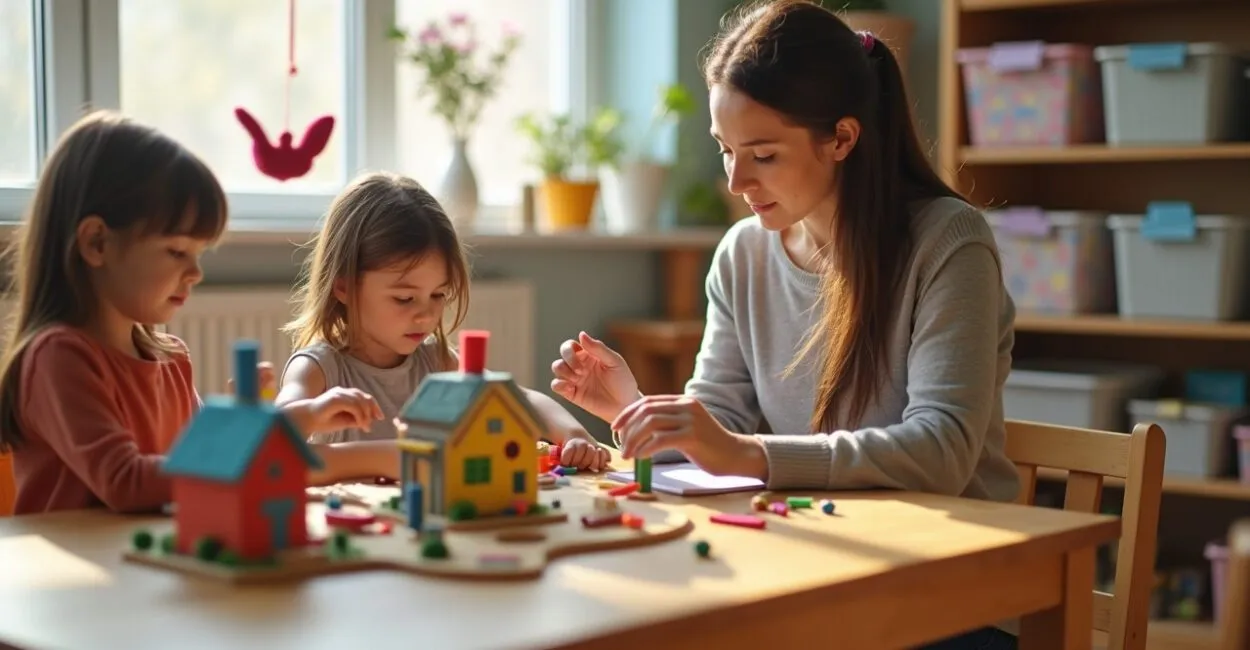
This means intentionally incorporating time, spaces, and materials for free and guided play into the school day. It’s about more than recess: play is integrated with social, cognitive, and emotional development goals. Play at school involves adults who facilitate, observe, and adapt the environment to promote meaningful learning through play.
Key Takeaways
- Play at school strengthens executive function and student agency when it’s integrated into the curriculum with clear goals and formative assessment.
- Practical models combine free-play time, thoughtfully designed spaces, and play-based projects that connect curriculum content with social-emotional skills.
- Simple curriculum adaptations—flexible schedules, open-ended materials, and observation-based assessment criteria—increase inclusive participation.
- Teachers need practical training in game planning, structured observation, and minimal-intervention strategies that preserve children’s autonomy.
- Brief assessment tools and clear indicators ensure that play contributes to learning goals.
Why Integrating Play at School Changes How Children Learn
Integrating play at school changes the relationship between teaching and learning. Play provides a context for practicing complex cognitive skills such as planning, inhibition, and working memory. Neuroscience studies suggest that play-based activities increase synaptic plasticity in young children, helping them retain what they learn. Play also supports language development, problem-solving, and collaboration—all predictors of school success.

Cognitive Evidence and Learning
Experimental data show improvements in executive function following structured play programs lasting 12–24 weeks. Programs with explicit goals produced moderate to large effects on working memory and attention. Research in public and private schools confirms that cognitive gains go hand in hand with stronger engagement and lower dropout rates. For play to be effective, it needs to be consistent (regular time), varied (different materials and settings), and supported by well-calibrated teacher facilitation.
Implications for Curriculum and Assessment
When play is part of the curriculum, students can explore subject matter through projects, dramatic play, and games with rules. Formative assessment uses portfolios, observation, and brief records to track skills. This requires clear indicators, such as “plans with a group,” “uses language to negotiate,” or “applies a math strategy during a game.” These indicators align curriculum expectations with play-based practice.
Practical Models for Organizing Play at School
Organizing play requires a combination of three elements: time, space, and facilitation. Time means setting regular periods (for example, 30–45 minutes daily or longer blocks three times a week). Space means providing indoor and outdoor areas with open-ended materials. Facilitation means adults observe and intervene as little as possible, stepping in at key moments. Effective models combine consistent routines with opportunities for exploration.
Model 1: A Hybrid Routine (Free and Guided Play)
In a hybrid routine, 20–30 minutes are set aside for free play with loose parts. Then, another 20–30 minutes focus on guided activities: projects, challenges, or games with learning goals. This approach preserves autonomy while ensuring exposure to curriculum content. The teacher documents progress with brief notes and short recordings for weekly review.
Model 2: Thematic Centers
Thematic centers rotate weekly and may include a block-building area, a dramatic play corner, hands-on math, and exploratory science. Each center has specific goals and materials that support a range of skills. Rotating centers allows for focused assessment and individualized adaptations without limiting student choice.
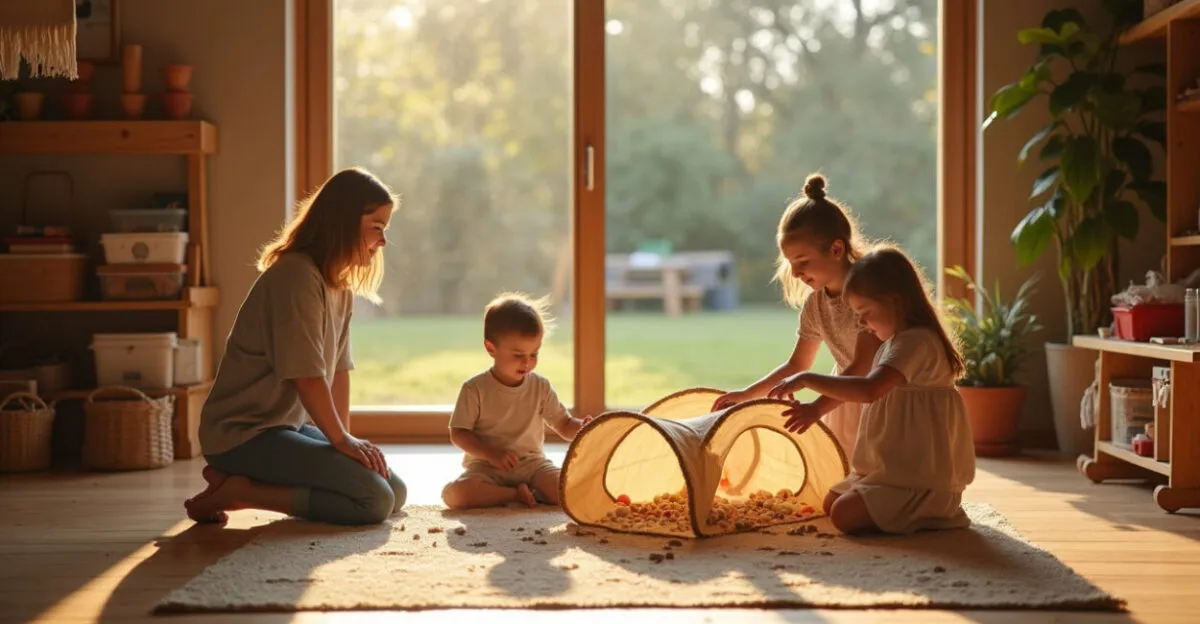
Materials, Spaces, and Effective Facilitation Strategies

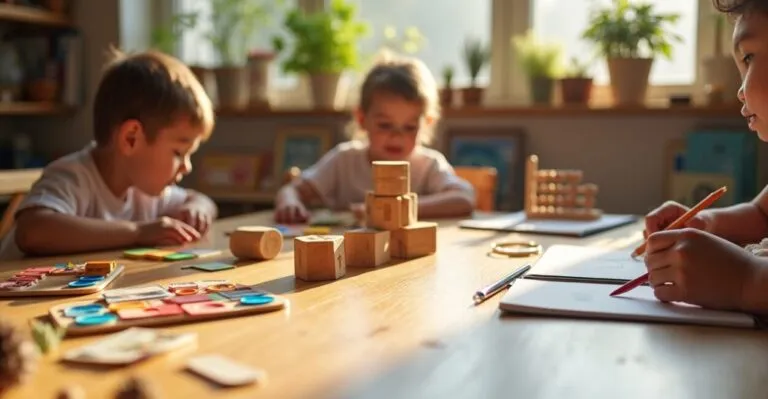
Open-ended materials—boxes, fabric, blocks, and containers—encourage creativity and multiple solutions. Flexible indoor and outdoor spaces expand sensory and motor opportunities. Effective facilitation combines intentional observation, open-ended questions, and minimal intervention to preserve children’s agency. Teachers act as facilitators, not directors of play.
Choosing Materials and Ensuring Safety
Choose materials that can be used in different ways and for pretend play. Avoid toys with rigid instructions that limit exploration. For safety, establish clear rules and inspect materials regularly. Materials should be accessible to everyone, with sensory alternatives for students with disabilities. Keeping things simple supports inclusion and helps prevent conflicts.
Read also: Integrated Curriculum: How to Plan Lessons in Practice
Facilitation Strategies: Minimal Intervention
Minimal intervention means waiting and observing, and stepping in only when safety is at risk or a conflict becomes too complex for children to resolve. Ask questions that encourage reflection: “What are you planning?” or “How will you work out who gets to use this space?” These questions build metacognition without taking away autonomy. Keep a record of interventions so you can adjust your approach over time.
Curriculum Adaptations and Inclusion in Play at School
Adapting the curriculum to include play requires adjustments to goals, methods, and assessment. Inclusion calls for varied materials, individualized support, and appropriately adjusted expectations. Play makes it easier for students with different learning paces to participate because it offers multiple ways to express themselves. Schools must ensure physical and communication access.
Read also: How to Confidently Negotiate a Raise
Simple Planning Adjustments
Include explicit play-based goals in the weekly plan, describing target skills and observation criteria. Use visual supports for students with language difficulties. Offer a variety of roles in play to accommodate different levels of social and motor skills. Small adaptations increase participation without adding too much to a teacher’s workload.
Assessing Inclusion During Play
Create brief rubrics with 3–5 indicators for each goal (for example, participation, autonomy, communication). Observe each student for 5–10 minutes, twice a week. Record qualitative evidence and simple numbers (participation frequency, number of self-initiated social interactions). These data guide interventions and show their impact.
Teacher Training for Strong Play-Based Practice
Effective training combines a brief introduction to theory with plenty of hands-on practice. Teachers need opportunities to observe, co-plan, and receive feedback in the classroom. Practice scenarios involving conflicts and intervention strategies build confidence. Hands-on learning follows the principle “watch, try, adjust.”
Essential Content for Training Courses
Courses should cover child development basics, observation techniques, materials design, and play-based assessment methods. Include visits to classrooms where play is integrated into learning, as well as microteaching sessions with feedback. Practical tools, such as observation checklists and record templates, make it easier to apply new skills right away.
Institutional Support and Leadership
School leaders need to prioritize time for collaborative planning and model lessons. School policies that value play—including schedules, resources, and training—determine whether these practices can be sustained. Committed leadership creates room for experimentation and low-stakes failures, both essential to educational innovation.
Measuring Impact: Practical Indicators and Tools
Measuring the impact of play requires simple, reliable tools. Combine qualitative measures (portfolios, narratives) with quantitative ones (behavior scales, participation frequency). Indicators should reflect clear goals, such as improved problem-solving or increased social interaction.
Recommended Tools
Use structured observations lasting 5–10 minutes, three-point skill scales, and photos with reflective captions. Internationally validated tools can be adapted for local use. Combining different tools allows for triangulation and makes conclusions more robust.
Sample Comparison Table for Practical Use
| Indicator | Tool | Frequency |
|---|---|---|
| Autonomy during play | Three-point observation scale | Weekly |
| Social interactions | Incident log (number per session) | Daily |
| Language use | Portfolio with transcripts | Monthly |
Next Steps for Implementation
Start small: introduce 30 minutes of free play each week and record standardized observations. Train teachers through microteaching and observation sessions. Adjust materials and spaces based on evidence gathered during the first 6–8 weeks. Seek support from school leadership and communicate clearly with families about goals and benefits. Then, move toward daily routines as the team gains confidence.
Question 1: How Can We Make Time for Play at School Without Cutting Curriculum Content?
Integrate play into curriculum goals instead of treating it as extra time. Use hybrid blocks: 20–30 minutes of free play followed by 20–30 minutes of a guided activity that connects curriculum concepts to play. Plan expected outcomes and simple indicators for each block. When appropriate, formative assessments can replace tests, freeing up time while keeping the focus on learning. This reorganization requires coordination among teachers and support from school leadership.
Question 2: What Materials Are Essential for Starting a Play-at-School Program?
To get started, choose inexpensive, open-ended materials: building blocks, boxes, fabric, containers, different kinds of paper, art supplies, and everyday objects. These materials encourage imaginative play and creativity. Add sensory materials such as sand, water, and play dough for hands-on exploration. Prioritize accessibility by providing tactile and visual alternatives for students with disabilities. A rotation and maintenance plan helps keep resources in good shape throughout the school year.
Question 3: How Can We Assess the Impact of Play on Learning for Children with Special Needs?
Assess students using functional indicators aligned with their individual goals. Combine brief observations (5–10 minutes) with qualitative records and portfolios. Use adapted behavior scales and measurable goals (for example, “initiates social interaction 3 times per session”). Involve the multidisciplinary team to adjust methods and tools. Track progress in 4–8-week cycles and adjust interventions based on the evidence collected.
Question 4: What Teacher Training Is Most Effective for Implementing Play at School?
Practical, context-specific training is most effective. It should include a brief theory component, observation in a real classroom, microteaching, and constructive feedback. Cover structured observation, minimal intervention, and the use of assessment tools. Follow-up sessions and professional learning communities improve retention and application. Training should be ongoing, with room for experimentation and group reflection at school.
Question 5: What Common Mistakes Do Schools Make When Introducing Play, and How Can They Avoid Them?
Common mistakes include treating play as recess with no learning goals, controlling activities too much, using toys that limit creativity, failing to document evidence, and not providing teacher training. Avoid these mistakes by setting clear goals, using minimal intervention, choosing open-ended materials, and adopting simple monitoring tools. Involve school leaders and families from the start to ensure play-based practices are consistent and sustainable.
Artigos Relacionados
 Science Projects Integrated Into the Elementary School Curriculum
 Early Childhood Education: The Importance of Play in Child Development
 Why Reading Matters in Early Childhood and Elementary School
 Child Attention: How Free Play Improves Focus
 Early Childhood Education: A Guide for Parents
 Creative Curriculum: 7 Hands-On School Activities for 2025
