
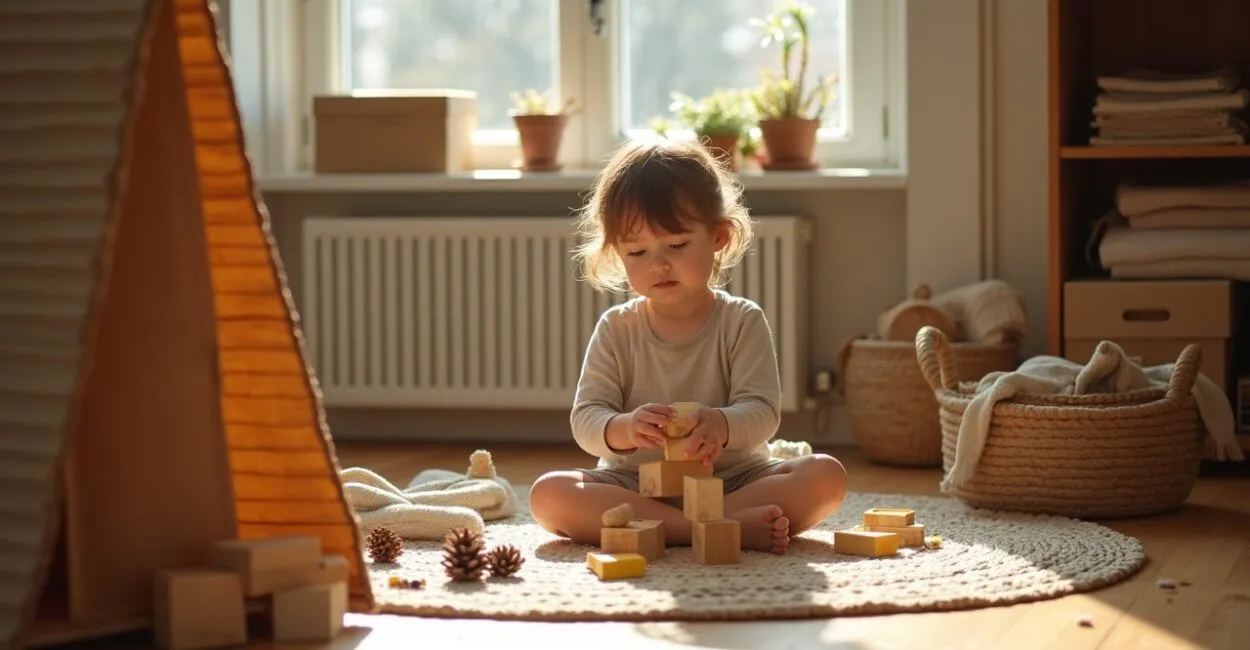
These are objects and materials designed to encourage independent play: open-ended, multifunctional, and non-directive materials that let children decide how to use them, set the rules, and choose what to do next. In essence, an open-ended toy doesn’t prescribe solutions; it offers possibilities. Blocks, fabrics, boxes, ropes, loose parts, and natural materials invite exploration, experimentation, and storytelling.
This approach matters because educators, urban planners, and families are looking for ways to reduce passive consumption and screen-led play. Offering open-ended toys can shape children’s cognitive, social-emotional, and motor development by prioritizing creativity, problem-solving, and self-regulation.

They’re also a practical response to limited space and budgets: when thoughtfully chosen, these materials offer significant educational value at a low cost.
Key Takeaways
- Open-ended toys are flexible, non-prescriptive materials that expand imagination and problem-solving by putting children in the role of creator.
- Selection criteria include safe materials, multifunctionality, room to grow in complexity, and potential for both social and independent play.
- Affordable items—boxes, fabrics, lids, and cardboard tubes—can replace ready-made toys and provide just as much or more cognitive stimulation.
- Environment design and adult guidance are essential: stimulation without explicit direction maximizes the benefits of open-ended toys.
- Research on child development and guidance from educational institutions, such as child development organizations and universities, support their effectiveness; practical implementation also requires careful attention to safety and inclusion.
Why Defining Open-Ended Toys Changes How We Evaluate Play Materials
Defining open-ended toys clarifies what to look for in anything we offer children. It’s not just about the absence of instructions; it’s about specific qualities: flexibility of use, resistance to wear, the ability to combine with other items, and the potential to offer increasingly challenging play as a child grows.
This definition helps professionals choose materials that promote active learning rather than passive consumption.
Essential Qualities of Open-Ended Toys
Open-ended materials (with many possible uses), multifunctional materials (serving different purposes), and non-directive materials (without a fixed function) make up the trio. A simple wooden piece is an open-ended toy if it can be stacked, rolled, used as a starting point for stories, or combined with other items. Safety and durability are technical criteria: smooth edges, nontoxic materials, and resistance to splintering help minimize risks without limiting possibilities.
What This Means for Buying and Accepting Donations
When buying or accepting donations, prioritize versatility over novelty. Expensive items with a single purpose tend to lose their educational value quickly. Choose materials that encourage reuse and can be adapted by children or educators. This reduces waste and increases the return on investment at home and in educational settings.
How to Choose Open-Ended Toys: Practical Criteria and Priorities
Choosing open-ended toys involves weighing trade-offs: creativity versus safety, cost versus durability, and flexibility versus the potential for frustration. One useful measure is the “reuse index”: how many different activities can an item support? Evaluate items based on the range of complexity they offer, from sensory exploration to symbolic construction and complex problem-solving.
A Practical Selection Checklist
- Material: natural or durable plastic, nontoxic;
- Functionality: How many different uses does it allow?
- Room to grow: Can it be used from ages 1 to 10, with variations?
- Accessibility: Cost and ease of replacement;
- Inclusion: Suitable for a range of motor and cognitive abilities.
Use this checklist as a quick guide when putting together a home or classroom kit. Prioritize items that are easy to clean and offer rich opportunities for both social and independent play.
Affordable, Timeless Items That Work as Open-Ended Toys

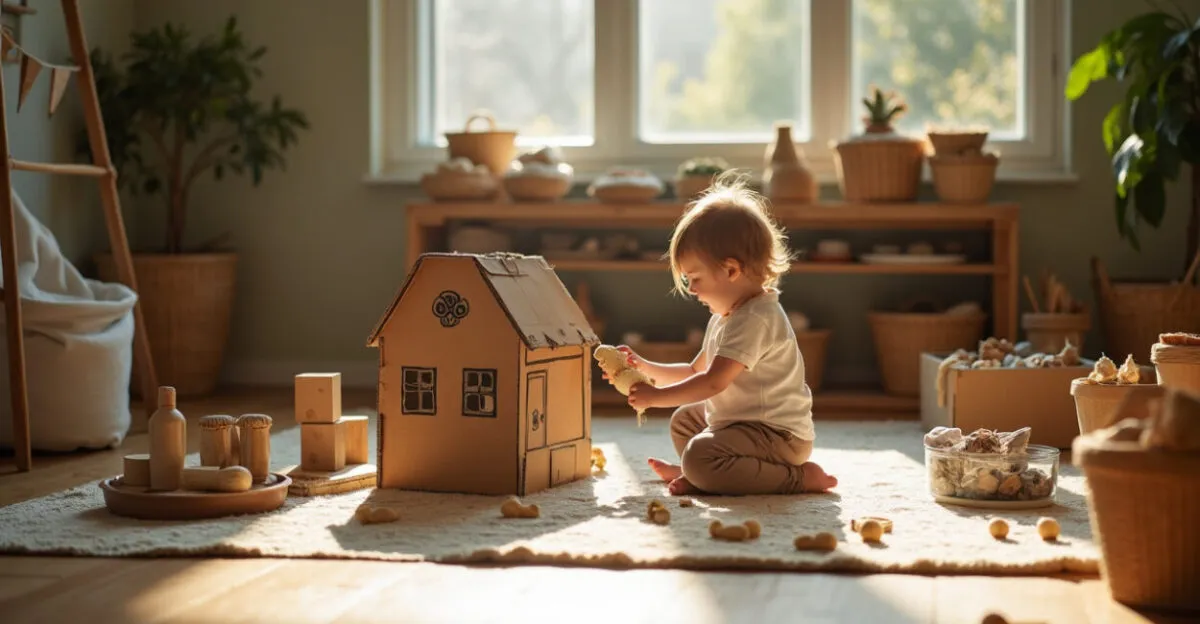
A short list of items can support a wide variety of play when used together. These materials are inexpensive, easy to find, and highly reusable: cardboard boxes, fabrics, simple wooden blocks, plastic lids and containers, tape, ropes, clean stones and shells, cardboard tubes, and clothespins. They support building, pretend play, games with rules, and hands-on experiments.
Examples of How to Use Them
Boxes can become houses, vehicles, or mazes; fabrics can be used as capes, backdrops, or hideouts; and lids can become coins or pieces for an improvised board game. A combination of blocks and tubes can introduce balance and levers. It’s important for adults to rotate materials to renew interest without directing how they’re used.
Where to Find Materials and How to Recycle Them
Donate or shop at used-materials fairs, swap groups, and school rummage sales. Construction materials, such as unfinished wood and pipes, and industrial packaging can provide inexpensive supplies. When possible, standardize sizes and materials to make replacements and cleaning easier. This approach reduces costs and makes a play-material collection more sustainable.
Leia também: Multiple-Choice Exams: Common Mistakes That Cost You Points
Environments and Organization That Make Open-Ended Toys More Effective
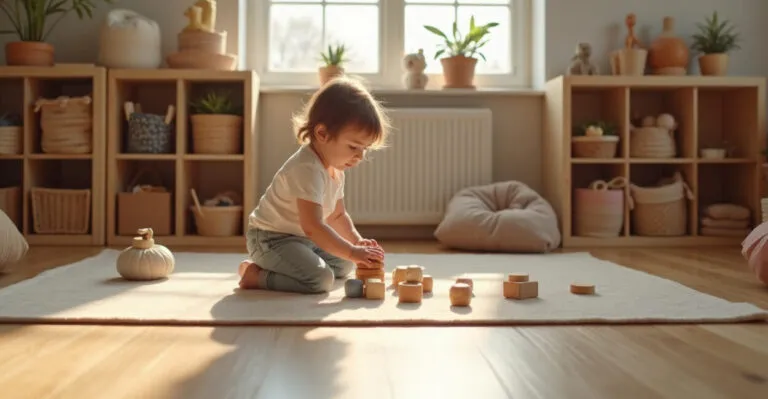
The same material goes much further when the environment encourages exploration. Visible storage, simple categories (open boxes or baskets by type), and distinct activity areas (building, pretend play, and experiments) let children make their own choices without constant intervention. A well-planned space encourages the independence that defines open-ended play.
Space Design: Practical Principles
Key principles include accessibility (shelves at a child’s level), visual clarity (fewer items per tray), rotation (changing materials weekly), and areas with minimal rules (such as a designated painting area). Keep pathways clear for movement-based play and provide washable surfaces in sensory areas. Visual labels help young children put materials away.
The Adult’s Role Without Directing Play
Adults act as facilitators by organizing the space, ensuring safety, and offering a brief prompt, such as a question or an open-ended challenge. Avoid step-by-step instructions. Offer ways to extend the play and increase its complexity, such as new pieces or questions that encourage children to form hypotheses. Observe and step in only when needed for safety or to expand possibilities without taking control.
Activities and Games That Expand Reasoning and Imagination
Open-ended toys support a variety of structured activities that guide exploration without directing play. Examples include building challenges (Who can build the tallest tower without it falling?), scavenger hunts (Find objects that float), collaborative storytelling, and games with rules created by children. These activities develop critical thinking, language, and social skills.
Quick Activity Guides for the Classroom or Home
1) Mystery box: Hide materials in a box and ask the child to describe them and suggest ways to use them. 2) Themed display: Rotate items around a theme, such as transportation, and let children create freely. 3) Invention workshop: Set an open-ended goal, such as solving an imaginary problem, and provide a limited list of materials. Each activity provides a focus without dictating a solution.
Measuring Educational Impact
Use systematic observations to record types of play, duration, number of social interactions, and levels of symbolic complexity. Simple weekly logs can show progress in persistence, language, and problem-solving. Studies show that children who regularly use open-ended materials demonstrate greater cognitive flexibility; track changes to help adjust the materials and space.
Risks, Myths, and How to Evaluate Them Critically
Some myths get in the way of adoption: “open-ended toys are just junk” and “they don’t develop specific skills.” Both are false. When carefully selected and introduced in the right context, open-ended toys develop specific skills—fine motor skills, basic math, and language—through a range of activities. There are real risks, too: small parts, toxic materials, poor organization, and lack of supervision all call for clear protocols.
Common Mistakes and How to Avoid Them
- Mistake: Too many items. Solution: Rotate materials and limit the selection by theme.
- Mistake: Too much direction. Solution: Ask open-ended questions instead of demonstrating what to do.
- Mistake: No safety criteria. Solution: Use a checklist for cleanliness and condition.
A simple safety and screening protocol reduces risks without limiting creative potential. This includes monthly inspections, cleaning, and replacing damaged items.
A Practical Comparison: Open-Ended vs. Directed Toys
A table can help you quickly compare their effects and relative costs.
| Criterion | Open-ended toys | Directed toys |
|---|---|---|
| Flexibility of use | High — multiple uses | Low — specific function |
| Cost per hour of use | Low — highly reusable | High — quickly loses its appeal |
| Cognitive development | Encourages creativity and problem-solving | Develops a specific skill through guided play |
| Adaptability | Easy — combines with new items | Limited — depends on updates |
This comparison isn’t meant to do away with directed toys. Instead, it suggests finding a balance: open-ended toys offer greater educational value with fewer resources, while directed toys can be useful for practicing specific skills.
Next Steps for Implementation
Set clear goals: increase independence, reduce consumption, or diversify sensory experiences. Start by auditing your current collection with the checklist above and planning a monthly rotation. Prioritize acquiring or donating 8–12 multifunctional items, and reorganize the space to make them accessible. Measure the impact through simple observations and adjust your safety policy as needed.
For organizations, provide educators with brief training on non-directive facilitation and track how materials are used. At home, involve children in choosing and organizing materials to foster responsibility and creativity. These steps turn theory into everyday practice, making the most of available resources and reinforcing benefits over the medium and long term.
Frequently Asked Questions
How Can You Ensure Safety Without Limiting the Possibilities of Open-Ended Toys?
Safety and flexibility can go hand in hand when you follow three practices: screen materials before use (remove small, sharp, or toxic items), maintain them regularly (inspect monthly for cracks and clean them), and organize the space (set aside separate areas for messy materials). Give minimal instructions only when there’s a real risk; use visual safety cues rather than written rules that limit creative use. This preserves freedom of play while keeping risks under control.
What Criteria Can You Use to Adapt Open-Ended Toys for Children with Disabilities?
Prioritize sensory and motor accessibility: use contrasting textures, pieces with easy-to-grip features, sound and visual elements, and nonslip surfaces. Reduce the number of items per tray to avoid sensory overload. Work with an occupational therapist to choose appropriate sizes, weights, and grip features. Small adaptations can turn everyday materials into inclusive tools while preserving the open-ended nature of play.
How Can You Tell Whether Open-Ended Toys Are Improving Cognitive Skills?
Use structured weekly observations and simple indicators: average activity duration, number of social exchanges, symbolic complexity (stories and transformations), and persistence when faced with a challenge. Take photos and write brief descriptions to track progress over several months. Language and executive function assessments administered by professionals can provide additional information. Consistent data can help you adjust materials while keeping the focus on the process rather than rigid targets.
Which Open-Ended Toys Should You Prioritize in Small Spaces?
Prioritize stackable, compact items: wooden blocks, paper tubes, rollable fabrics, small boxes, and building sets. Choose materials that can be taken apart and stored vertically. Rotation is essential: keep just 6–10 options visible and put the rest away, switching them out weekly to renew interest. This strategy maximizes variety without requiring a large area and preserves the richness of open-ended play.
What Research or Sources Support the Effectiveness of Open-Ended Toys?
Research in child development and education shows that open-ended materials encourage creativity and cognitive flexibility; studies by universities and child development organizations document gains in language and problem-solving. For practical reference, consult reports from academic institutions on open-ended play and development, such as early childhood education research centers at public universities, as well as child health guidelines on toy safety. Consult specific links and studies based on your local context.
Artigos Relacionados
 Educational Toys: 9 Options That Inspire Creativity
 Creative Play: 8 Activities That Inspire Creativity
 Play Environment: Creating Spaces That Encourage Play
 Formative Assessment: Workshops That Strengthen Learning
 Entrepreneurial Projects Inspire Students to Start Businesses
 School Entrepreneurship Builds Independence and Creativity
