
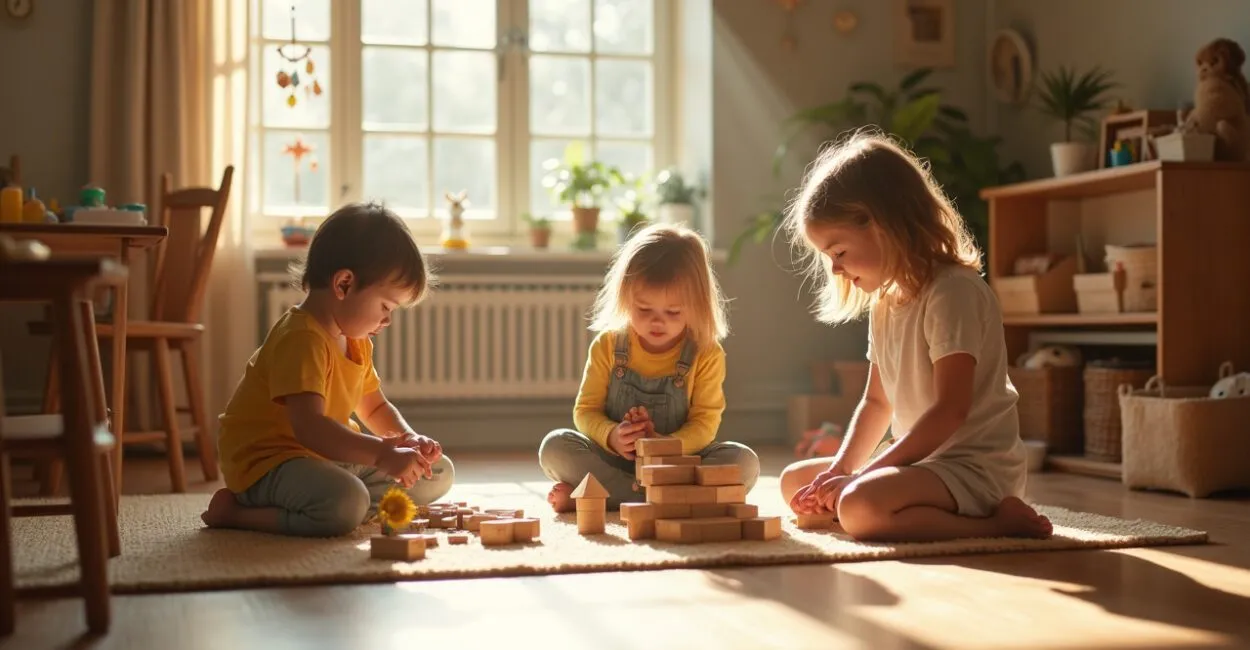
Child attention refers to the ability to direct and sustain focus on relevant stimuli, shift between tasks, and filter out distractions. It includes components such as sustained, selective, alternating, and executive attention, all of which develop throughout early childhood. Understanding these components helps distinguish temporary difficulties from signs that call for a professional evaluation.
Key Takeaways
- Free play improves children’s attention by building inhibitory control, persistence, and self-regulation without rigid external instructions.
- Experimental evidence shows improvements in sustained attention and cognitive flexibility after regular periods of pretend play and building.
- Structured routines that include free-play spaces and clear boundaries produce greater gains than strict disciplinary control or passive activities.
- Simple games—such as independent puzzles, pretend play, and modular building—strengthen neural networks related to focus and working memory.
- Practical implementation requires adjustments based on age, environment, and temperament; tracking progress with observational tasks is essential.
Why Child Attention Is a Critical Indicator of Development
Child attention is a consistent predictor of academic performance, emotional self-regulation, and social adjustment. Longitudinal studies show that attention skills in preschool predict reading and math performance years later. Neuroscience shows that frontoparietal networks and the prefrontal cortex mature gradually, and learning experiences shape these connections. So attention is about more than just “sitting still”: it encompasses cognitive and emotional processes that determine a child’s ability to learn in any environment.

Attention and Brain Plasticity
Attention involves experience-sensitive synaptic plasticity. Free play activates cycles of exploration and consolidation that strengthen synapses useful for focus. In young children, repeated periods of voluntary concentration during play improve neural efficiency without the fatigue associated with repetitive laboratory training.
Impact on School Performance
Educational cohort data indicate that attention skills in preschool explain a significant amount of variation in school outcomes, even when IQ and socioeconomic status are taken into account. Investing in environments that foster attention yields measurable academic benefits.
How Free Play Develops Attention Skills
Free play lets children choose goals, take on challenges, and solve problems at their own pace. This self-direction engages executive control and working memory. When free play is compared with adult-directed activities, studies show greater improvements in sustained attention when children have agency over what they do.
Independent Exploration and Inhibitory Control
When children make their own decisions, they practice inhibiting irrelevant impulses to achieve play-related goals—for example, sticking with building a tower instead of reaching for another shiny block. Repeating this exercise strengthens inhibitory control without causing excessive frustration.
Attentional Flow and Intrinsic Motivation
Free play encourages flow states: deep focus paired with intrinsic reward. This connection between enjoyment and attention makes it easier to transfer those skills to more demanding schoolwork.
Practical Protocols: Games and Routines That Strengthen Focus

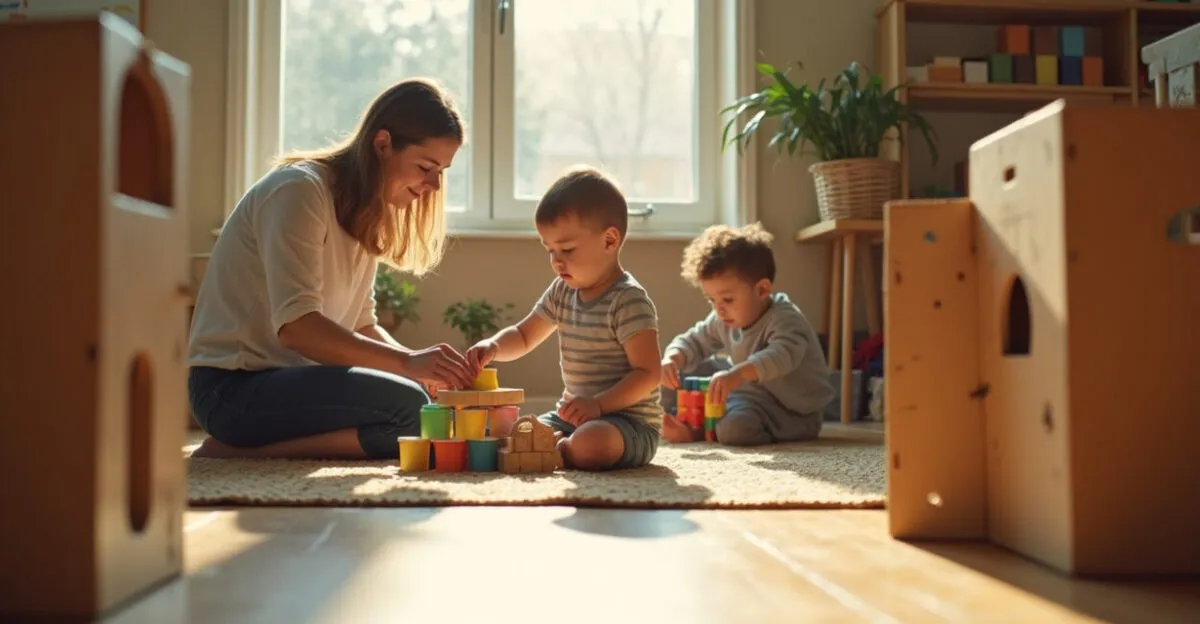
Here are simple protocols that educators and parents can use: 1) daily blocks of 20–40 minutes of free play; 2) materials with varying levels of structure (blocks, dolls, boxes); 3) minimal, predictable rules to reduce external decision-making; 4) smooth transitions between activities. These elements create opportunities to practice attention repeatedly within safe boundaries.
Recommended Games by Age Group
- Ages 2–3: sensory play with containers, stacking cups, and peekaboo.
- Ages 3–5: pretend play, modular building, and obstacle courses designed by the child.
- Ages 6–8: group building projects, progressively challenging puzzles, and simple strategy games with a few rules.
Each option gradually increases cognitive demands without sacrificing independence.
Measuring and Assessing Progress in Child Attention
Useful assessment combines structured observation with standardized tasks. Tools such as the Conners Teacher Rating Scale and cancellation or go/no-go tasks provide quantitative data. Video recordings of children during free play can reveal behavioral indicators such as average focus time, the number of self-initiated interruptions, and the ability to return to a task after a distraction. These data make it possible to fine-tune routines and materials.
Practical Measures for Home and School
A simple tracking method: time periods of uninterrupted, focused play, note what causes interruptions, and record the quality of engagement (exploration, planning, persistence). Repeat assessments every 4–8 weeks to check for trends.
Exceptions: When Free Play Isn’t Enough
Although effective, free play does not address every attention difficulty. Children with neurodevelopmental disorders, severe environmental deprivation, chronic sleep problems, or sensory issues may need specialized intervention. In these cases, free play works best as part of a multimodal plan that includes behavioral therapy, environmental adjustments, and, when appropriate, clinical evaluation by a neurologist or psychologist.
Signs That Call for Further Evaluation
Seek an evaluation if your child’s inattention interferes with daily activities, they show extreme hyperactivity, lose previously acquired skills, or have persistent sleep difficulties. These signs call for a formal screening.
Combining Free Play with Formal Interventions
Combining free play with direct instruction and targeted therapy can maximize results. For example, occupational therapy sessions can address sensory modulation, making it easier for a child to participate in free play.
Policies and Physical Spaces That Enhance the Benefits of Free Play
Policy and classroom design choices influence children’s attention. Spaces with quiet play areas, accessible materials, and frequent periods of free play provide more opportunities to practice focus. School policies that prioritize unstructured recess and time for spontaneous activities are associated with better self-regulation on national assessments.
Designing the Environment
Environments with versatile materials (blocks, fabric, boxes) and clearly defined areas reduce friction between making decisions and taking action. Lighting, noise levels, and the availability of an adult for minimal support are key factors.
Guidance for Educators and Administrators
I recommend daily blocks of at least 30 minutes of free play, policies that allow spaces to be rearranged, and teacher training on how to supervise in ways that encourage independence without micromanaging.
How to Put This Knowledge into Practice
Prioritize routines that balance freedom with boundaries. Combine simple assessment measures with low-cost interventions: regular free-play times, varied materials, and systematic observation. If you see no results after 8–12 weeks, reassess the environment and consult specialists. Deliberate practice through play can lead to real, lasting gains in children’s attention.
Immediate Steps
- Set aside 20–40 minutes of uninterrupted free play each day.
- Provide open-ended materials and rotate them every 2–3 weeks.
- Track focus with simple observations and adjust the environment as needed.
Resources and Further Reading
To support your practices with evidence, consult systematic reviews and child development guides from sources such as PubMed, UNICEF, and university articles on neurodevelopment. These materials provide evidence and detailed protocols.
Frequently Asked Questions
What Exactly Counts as “Free Play,” and How Is It Different from Other Activities?
Free play is an activity directed by the child, without detailed adult instructions, using materials that allow for multiple solutions. It differs from structured activities (lessons, tasks with assigned goals) and adult-led play (games with fixed rules led by an adult). During free play, children choose their goals, tools, and pace, which encourages decision-making, persistence, and emotional regulation—key components of attention. Independence reduces external pressure and increases intrinsic motivation, making it easier to practice focus repeatedly.
How Often and for How Long Should Children Engage in Free Play to Improve Attention?
Experimental interventions and practical guidelines suggest daily sessions of 20 to 40 minutes for preschoolers, with comparable periods adapted for older children. Observable gains often appear after 6 to 12 weeks of regular practice when paired with predictable routines and appropriate materials. Consistency matters more than the length of any one session: short daily sessions are better than occasional long blocks because they allow children to practice attention in varied contexts.
Which Specific Games Improve Sustained Attention and Executive Control?
Activities that require planning and persistence tend to have the greatest effect: building with modular blocks, ongoing narrative-based pretend play, multistep projects (such as assembling a model), and progressively challenging puzzles. Structured sensory activities can also help younger children develop initial focus. Games should allow children to reengage independently after interruptions and offer adjustable levels of challenge. Gradually increasing complexity strengthens working memory and flexibility without causing frustration.
How Can Free Play Be Adapted for Children with More Severe Attention Difficulties?
For severe difficulties, it is essential to combine free play with structured strategies. Adjust the environment (reduce visual and auditory stimuli), provide materials with simple visual instructions, and create predictable routines. Interventions such as occupational therapy and self-control training can come before or alongside free play. Active supervision that offers minimal support and scaffolding—demonstrating without taking over—helps children build skills without taking away their agency. A clinical evaluation is recommended when difficulties persist.
How Can Progress Be Measured Without Formal Tests?
Practical measures include observation records: how long a child stays focused during play, how often they reengage after distractions, and the quality of their play (planning, problem-solving). Use weekly checklists completed by educators or parents and short videos for later review. Compare measures every 4–8 weeks to identify trends. These qualitative and quantitative data make it possible to make quick adjustments and are sufficient to assess the impact of environmental or routine changes before turning to formal testing.
Artigos Relacionados
 How to Help Students With ADHD Stay Focused Before an Exam
 Strategies to Improve Attention in the Classroom
 The Importance of Play in Childhood for Whole-Child Development
 Early Childhood Education: The Importance of Play in Child Development
 Education: The Essential Role Parents Play in Child Development
 Free Play: How It Strengthens Cognitive Development
