
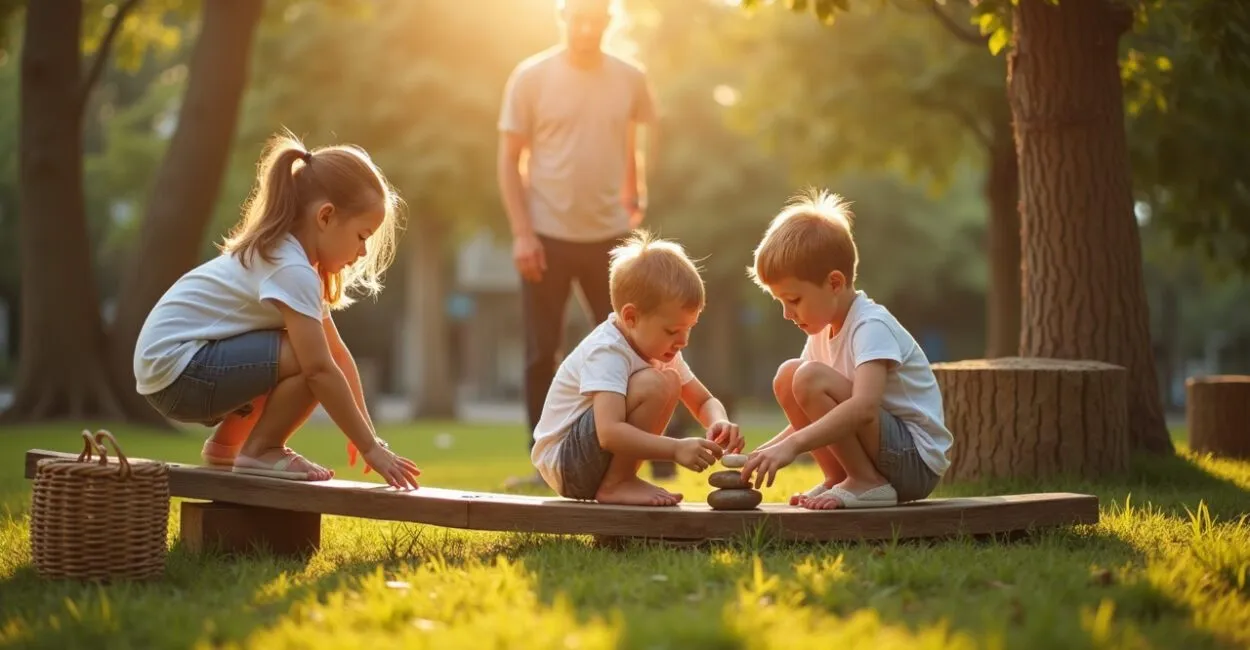
It is a voluntary activity not directed by adults, in which children explore objects, spaces, and other children without externally imposed goals. At its core, it is a self-regulated process of sensory, social, and symbolic exploration that combines calculated risk, imagination, and repetition to generate meaningful learning. I define free play as an activity in which children decide what to play, how to play, and for how long, with minimal adult involvement focused on safety and facilitation rather than instruction.
Key Takeaways
- Free play is essential to executive development: self-directed decisions support attention, working memory, and inhibitory control.
- Effective adult involvement means creating rich, safe environments, not directing the activity; balancing risk and protection is critical.
- Longitudinal studies show a correlation between free play in childhood and creativity, emotional resilience, and social skills in adolescence.
- Schools and families can track progress through observable behaviors, such as persistence with tasks, conflict resolution, and symbolic storytelling.
Why Free Play Builds Foundational Executive Skills
Children’s brains develop executive functions through repeated choices and immediate feedback—a typical feature of free play. By deciding on rules, switching roles, and regulating impulses, children practice working memory and self-control.

These practical exercises produce measurable changes in prefrontal connectivity, as observed in neuroimaging studies.
Direct Impact on Attention and Working Memory
Unstructured games require children to maintain self-imposed rules and monitor their surroundings, engaging working memory. Research, including studies published in Developmental Science, shows improvements in working memory after consistent free-play routines.
These gains translate into better school performance on tasks that require children to keep information in mind.
Inhibitory Control and Emotional Regulation
When children negotiate conflicts without immediate adult intervention, they learn to delay impulsive responses and develop new regulation strategies. Longitudinal studies indicate that children who spend more time in free play show less emotional reactivity and a greater ability to solve social and emotional problems in adolescence.
How Free Play Encourages Creativity and Symbolic Thinking
Without a script, objects can take on many meanings. This constant reinterpretation lies at the heart of symbolic thinking. Free play encourages children to create flexible mental representations, a skill associated with divergent thinking.
From Real Object to Symbol
Using a block as a “phone” engages abstract thinking. Repeating this transformation strengthens semantic connections and promotes idea fluency. Creativity tests, such as the Torrance Tests, show a correlation between early symbolic play and later creative performance.
Social Play as a Laboratory for Innovation
Group play sparks innovation through co-creation. Children try out social roles and make up rules, expanding their range of responses to different situations and improving cognitive flexibility—an essential skill for creative problem-solving.
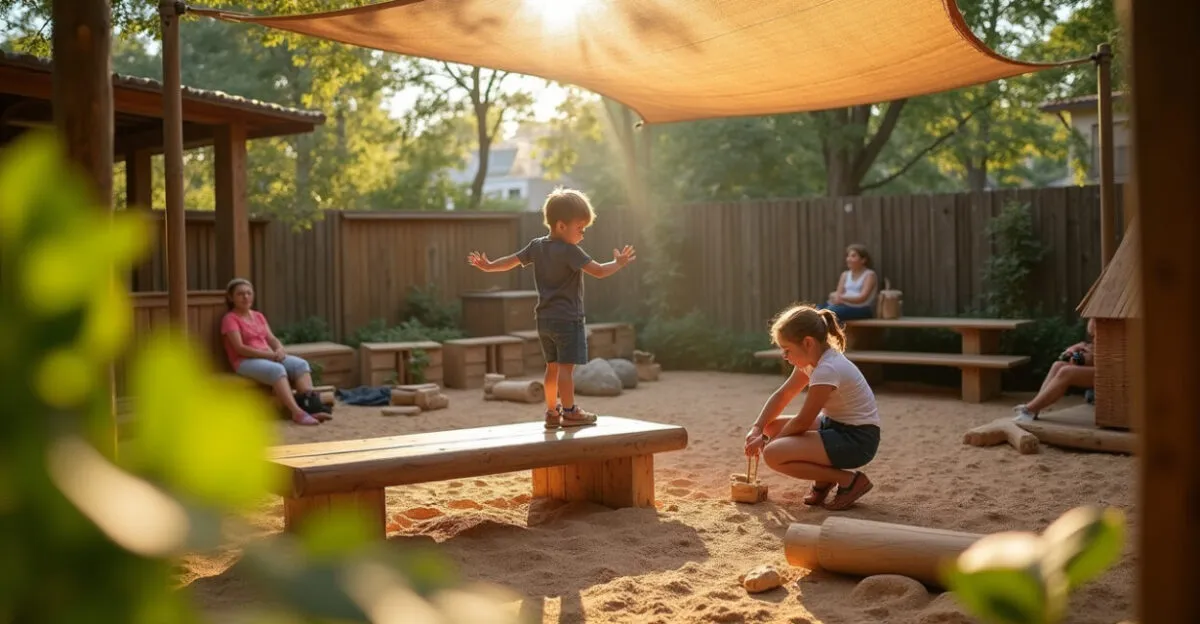
Environments That Encourage Free Play: Design and Calculated Risks

Physical spaces shape the kinds of play that are possible. Environments rich in versatile materials, sensory variety, and natural elements encourage independent exploration. Designing these spaces means balancing freedom with safety—allowing minor risks that help children learn about limits.
Features of an Ideal Space
- A variety of recyclable and natural materials
- Designated areas for movement, building, and quiet activities
- Hiding places and uneven surfaces that offer motor challenges
These features boost curiosity and encourage repeated attempts, both essential to hands-on learning.
Read also: Foundations of Cognitive Development: Essential Concepts
Managing Risk and Supporting Independence
Calculated risk means allowing small falls, supervised climbing, and the use of simple tools with indirect supervision. This builds competence and reduces anxiety in children. Well-designed school protocols set clear boundaries without eliminating opportunities to make mistakes.
Measuring Outcomes: Observable Indicators and Data
For free play to be recognized as an educational practice, its outcomes need to be measured. Practical indicators include how long children stay focused during play, the complexity of their symbolic play, how often they resolve conflicts without an adult, and how creatively they use materials. Standardized data make it possible to compare interventions and support public policy decisions.
Easy-to-Collect Behavioral Measures
Simple observational records, such as 1–5 scales for persistence and cooperation, provide reliable signals. Parent and teacher questionnaires can supplement direct observation. In research settings, neurocognitive measures and standardized tests (e.g., executive function assessments) provide objective validation.
Research and Evidence
Systematic reviews and meta-analyses indicate an association between free play and better cognitive and social-emotional outcomes (see UNESCO and the AAP). For local policies, measurable behavioral changes may be detectable within 6–12 months.
The Adult’s Role: Facilitator, Not Director
Effective adults create safe settings, offer engaging materials, and step in only when safety or fairness is at stake. The ideal approach is active observation: monitor without directing, model language, and name emotions without taking control of the play.
When and How to Step In
Step in to prevent serious harm, address direct physical aggression, or help when a child asks for assistance. Ask open-ended questions to encourage problem-solving: “What do you think might work?” Avoid instructions that turn the activity into a directed task.
Training for Educators and Families
Training programs should cover how to identify acceptable risks, observation techniques, and ways to enrich spaces at low cost. Investing in training reduces unnecessary intervention and helps adults feel more confident about allowing free play.
Integrating Free Play Into School Curricula and Public Policy
For free play to be adopted across a system, it needs to be included in school policies and local guidelines. This means providing time for unstructured play, appropriate facilities, and assessments that recognize the long-term value of nonacademic play.
Models for Implementation in Schools
Successful schools set aside daily blocks for free play, make spaces more flexible, and connect play with academic subjects (e.g., exploring math through building). Supervision protocols and observation records turn play into useful educational data.
International Policy Examples and Evidence
Countries with policies that value free play, such as Denmark and Canada, report better child well-being indicators. Documents from UNESCO and the American Academy of Pediatrics provide guidelines that can be adapted to local contexts. For demographic data, consult IBGE, Brazil’s national statistics agency, and local university studies.
Next Steps for Implementation
Families and schools should start by identifying spaces and times when free play can take place without competing with structured tasks. Begin with an 8–12-week pilot, tracking simple behavioral indicators and adjusting risk policies. A rapid cycle of data collection, analysis, and adjustment builds local evidence to support expanding the practice.
At the community level, bring together parents, educators, and health professionals to agree on shared guidelines. Seek funding for basic materials and short training programs. Use observational data to discuss indirect academic benefits and mental health with decision-makers.
Question: Does Free Play Interfere With Formal Instruction?
Free play complements formal instruction by developing skills that support learning, including sustained attention, working memory, and emotional regulation. Studies show that children who spend more time in free play perform better on tasks requiring executive function, which is essential for school success. Integration calls for balance: keep structured time for academic content and set aside unstructured blocks for cognitive development. When monitored and documented, free play boosts rather than diminishes academic gains.
Question: How Can You Balance Safety and Freedom for Young Children?
Balancing safety and independence requires evidence-based risk assessment: allow small risks, such as low falls and supervised climbing, that teach children about limits. Set clear rules, use indirect supervision, and remove only risks that could cause serious harm. Train adults to distinguish educational risk from real danger. By creating zones with gradually increasing levels of challenge, children can develop motor skills and judgment without unnecessary exposure to risk.
Question: Which Materials and Spaces Best Encourage Free Play?
Versatile, natural materials—boxes, ropes, fabric, boards, and clean rocks—encourage more creativity than ready-made toys. Spaces combining open areas, varied surfaces, and hiding spots expand the range of possible play. Prioritize having materials available and rotating them rather than buying lots of themed toys. Costs can be low; what matters most is functional variety, which encourages experimentation and social interaction.
Question: How Can You Measure Progress Without Turning Play Into a Task?
Use unobtrusive observational indicators: time spent focused, the number of symbolic transformations, conflicts resolved without an adult, and persistence with a building project. Brief records (5–10 minutes) made weekly by a trained observer provide useful data over time. Avoid standardized tests during play; instead, connect observations with periodic executive function assessments to measure impact without disrupting spontaneity.
Question: What Are the Most Common Institutional Barriers, and How Can They Be Overcome?
Barriers include pressure for immediate academic results, fear of legal liability, and a lack of teacher training. Overcoming them requires local evidence: well-documented pilot programs, risk-management training, and conversations with families about the benefits. Policies that recognize free play as part of the curriculum and clear supervision protocols can reduce institutional resistance. Communicating observable results makes it easier for decision-makers to support the practice.
Artigos Relacionados
 The Importance of Play in Childhood for Whole-Child Development
 Early Childhood Education: The Importance of Play in Child Development
 Education: The Essential Role Parents Play in Child Development
 Cognitive Development From Birth to Age 6: Encourage Learning
 Foundations of Cognitive Development: Essential Concepts
 Nutrition and Development From Birth to Age 6: Essential Nutrients
