
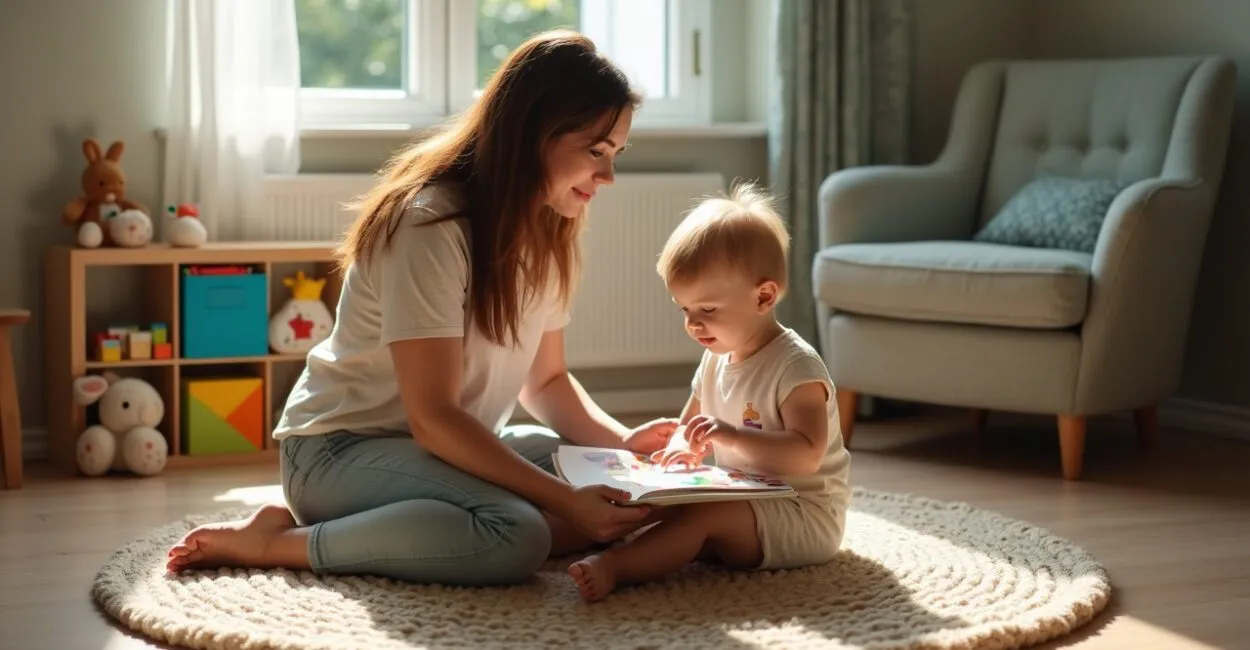
Supporting oral language development involves intentional practices that promote speech, vocabulary, and conversational skills in children ages 0–5. At its core, it involves responsive interaction, appropriate language models, sensory activities, and a language-rich environment that encourage communication attempts and help children build early grammatical structures. Here, I outline proven strategies, developmental milestones, and practical steps parents and educators can apply systematically and track.
Key Takeaways
- Responsive daily interactions and conversational routines build receptive and expressive vocabulary before age 2 and predict better school performance.
- Guided play, shared reading, and singing reduce passive screen time and create more opportunities for speaking practice.
- Tracking milestones by area—sounds, words, and sentences—supports effective early intervention; warning signs call for an evaluation by 24–30 months.
- A language-rich environment grows through conversational turn-taking, language modeling, open-ended questions, and avoiding punitive corrections.
Why Supporting Oral Language Shapes Early Learning
Supporting oral language development lays the cognitive foundation for reading, writing, and self-regulation. Children’s brains have sensitive periods for acquiring phonemes and syntax. Consistent exposure to complex language between birth and age 3 is associated with greater synaptic density in language-related areas and the development of verbal working memory. Early language support is therefore not an add-on to education; it is a public health intervention that affects educational attainment and future opportunities.

Evidence and Practical Implications
Longitudinal studies show an association between how often adults and children talk and children’s vocabulary test scores at age 5. The practical takeaway is to prioritize quality over quantity: responsive exchanges—when adults respond to a child’s cues—have a greater impact than one-way speech.
Simple strategies, such as narrating actions and expanding on a child’s sentences, turn everyday routines into language practice.
When to Act Promptly
Systematic assessment should take place in child care centers and during pediatric visits. Warning signs include little vocalizing by 12 months, few words by 18 months, or no word combinations by 24 months.
In these cases, referral to a speech-language pathologist or developmental services is crucial to minimize the cumulative effects on language acquisition.
How to Create a Language-Rich Environment at Home and at School
A language-rich environment is about more than having books in the room; it requires structured, predictable interaction. Essential elements include routines that involve talking, reading areas, toys that spark conversation, and classroom policies that prioritize children’s talking time.
The physical setup matters, too: quiet areas encourage conversational turn-taking and reduce sensory distractions.
Routines That Maximize Language Exposure
Build conversation into meals, personal care, and transitions. Naming objects, describing actions, and turning mistakes into opportunities to model language create informal mini-lessons. For example, during a diaper change, describe each step: “Now we’re taking off the diaper, cleaning up, and putting on your blue clothes.” This kind of phrasing exposes children to verbs, pronouns, and logical order.
Classroom Practices That Encourage Spontaneous Speech
Set up “conversation time,” rotate partners for storytelling, and limit passive visual stimuli. Teachers should set aside 10–15 minutes per activity block for small-group interactions focused on open-ended questions and active listening.
This doubles the opportunities for each child to practice compared with whole-group activities alone.

Practical Activities by Age Group: 0–12 Months, 1–2 Years, 2–3 Years, 3–5 Years

Each age group calls for different goals and strategies. From birth to age 1, the focus is on responsiveness and vocal turn-taking. From ages 1 to 2, the priority is building vocabulary and combining words. Between ages 2 and 3, focus on expanding morphosyntax and comprehension. From ages 3 to 5, work on storytelling, complex questions, and academic vocabulary.
0–12 Months: Vocal Turn-Taking and Joint Attention
Imitate sounds, use exaggerated intonation, and create moments of joint attention by pointing and naming things. “Conversations” through babbling strengthen social and phonological connections. Use daily routines to repeat key words.
Leia também: Children’s Memory: Activities to Train and Develop It
1–2 Years: Label and Expand
Name objects, offer verbal choices, and expand on a child’s phrases by adding words. Child: “Ball.” Adult: “Yes, a red ball!” Choice questions (“Do you want water or juice?”) encourage short verbal responses and decision-making.
2–3 Years: Combine Words and Tell Stories
Encourage two- to three-word phrases and introduce simple pretend-play games. Use picture books to prompt children to describe scenes. Correct by restating the phrase correctly rather than scolding, which helps maintain motivation.
3–5 Years: Build Grammar and Storytelling Skills
Work on sequences and three-part stories. Introduce connecting words such as “because,” “when,” and “if,” and ask “why” questions to encourage causal thinking. Conversation games and dramatic play build language complexity.
Teaching Strategies and Practical Activities That Build Speech and Vocabulary
Activities should combine enjoyment with a clear purpose. The most effective include interactive reading, singing, imitation games, sensory activities, and rule-based play. Each activity should have variables that can be adjusted: adult talk time, the number of child-adult turns, and the use of open-ended questions.
Shared Reading With a Dialogic Approach
Choose age-appropriate books and ask questions that encourage children to infer and predict. Try this sequence: ask, pause for a response, expand on it, and invite the child to repeat. Studies show that dialogic reading can increase vocabulary by up to 30% compared with passive reading.
Games and Songs That Focus on Phonological Skills
Rhymes, alliteration, and short songs help children distinguish sounds. Games that isolate syllables or ask children to find rhyming words build phonological awareness, a direct predictor of reading success. Set aside 5–10 minutes each day for these activities.
Tracking Progress: Milestones, Records, and When to Refer
Tracking progress requires simple records collected regularly. Use age-based milestone checklists and track three indicators monthly: variety of words used, average utterance length, and the number of spontaneous conversational turns per session. Simple data can support objective intervention decisions.
Essential Milestones Table (Practical Examples)
| Age | Expected skill | Warning sign |
|---|---|---|
| 6–12 months | Babbling, joint attention | No babbling by 10–12 months |
| 12–24 months | 50+ words, first word combinations | Fewer than 20 words at 18 months |
| 24–36 months | 3+ word sentences, understanding instructions | Not combining words by 30 months |
| 36–60 months | Simple stories, questions, and answers | Speech unintelligible to strangers at age 4 |
Referrals and Evaluation
If warning signs appear, refer the child to a speech-language pathologist and for a hearing evaluation. Standardized assessments such as the ABFW (a Brazilian language assessment test) or local equivalents can provide a functional diagnosis. Early interventions—before age 3—have well-documented effectiveness in improving language outcomes.
Common Mistakes and How to Avoid Them
Many adults believe that speaking louder or correcting children harshly helps. In practice, punitive corrections discourage children from trying. Another mistake is relying on digital devices without human interaction. Technology works as a support only when paired with responsive interaction.
Common Mistakes Checklist
- Speaking for the child instead of waiting for a response.
- Using oversimplified sentences for too long.
- Relying exclusively on apps without human conversation.
- Ignoring subtle signs of hearing loss or developmental delay.
How to Improve Ineffective Practices
Teach adults to wait for conversational turns, rephrase rather than punish, and build vocabulary in context. Brief teacher training—such as four-hour workshops with practice in dialogic reading and feedback strategies—can improve the quality of classroom interactions.
Policy Measures and Resources for Large-Scale Implementation
Public programs and school policies can scale up these practices at relatively low cost. Effective strategies include ongoing teacher training, universal hearing screening, and adding language measures to child health programs. Community-based interventions in early childhood centers can also extend the impact.
Program Examples and Evidence
Initiatives such as Reach Out and Read in the U.S. have shown gains in vocabulary and family engagement when reading is incorporated into pediatric visits. In Brazil, it is recommended that efforts align with policies of the SUS (Brazil’s public health system) and municipal education authorities to achieve broad coverage. Useful links: CDC – Child Development, SciELO.
Practical Resources for Program Administrators
Create kits with reading guides, milestone checklists, and short videos for professionals. Simple forms can be used to digitize monitoring. Prioritize training in responsive conversation practices and early risk identification.
Next Steps for Implementation
Set clear goals: increase conversational turns per child by X% in 6 months and reduce unevaluated warning signs by 80% within 12 months. Start with small pilot projects in 2–3 classrooms or health care sites to test routines and collect data. Use simple tracking tools and review them weekly.
Scaling up requires training, follow-up, and policies that sustain these practices. Prioritize low-cost, high-impact tools: dialogic reading, language-rich routines, and hearing screening. Coordinated efforts among families, schools, and health care providers can change the language trajectory of a generation.
Question 1: How Can You Distinguish a Language Delay From Typical Developmental Variation?
The distinction between a delay and typical variation depends on patterns and progress over time. Typical variation involves steady growth in vocabulary and sentence structure, even if it is slower. A delay may involve a plateau, regression, or functional gaps, such as comprehension falling far behind expressive language. Standardized assessments, hearing history, and observation of interactions in context can help distinguish between the two. Screening by 18–24 months is recommended, with a referral if there is no progress after 6–8 weeks of more intensive support.
Question 2: Which Measurable Indicators Can Child Care Centers Use to Track Progress?
Practical indicators include the variety of words used per session (number of distinct words), average utterance length in words, the number of spontaneous conversational turns per child, and participation in dialogic reading. Simple weekly records can help identify trends. Realistic goals include a 20–30% increase in word variety over three months or twice as many conversational turns per session after teacher training. These indicators are easy to collect without special equipment.
Question 3: Which Home Activities Best Build Expressive Vocabulary?
The most effective activities combine interaction with repetition in context. Daily dialogic reading, naming things during routines, pretend play, and rhyming songs often lead to the greatest gains. The key is to turn everyday moments into opportunities to practice by asking open-ended questions, expanding on phrases, and repeating words intentionally. Short, frequent sessions (5–10 minutes several times a day) work better than occasional long sessions. Consistency and responsiveness are essential.
Question 4: When Can Technology Support Language Development, and When Can It Get in the Way?
Technology can help when an adult uses it interactively with a child, choosing apps that encourage repetition and responses. Visual and audio resources can reinforce phonological concepts and vocabulary. In contrast, passive screen time without human interaction reduces opportunities for conversational turn-taking and can hinder development. Recommendation: limit passive screen time, prioritize adult involvement, and use technology to supplement—not replace—speaking activities.
Question 5: Which Professional Should You See, and What Tests Should You Request if You Suspect a Delay?
See a speech-language pathologist for an evaluation of language and communication development. A formal hearing screening is also essential to rule out hearing loss. In complex cases, ask for a referral to a developmental pediatrician or developmental psychologist for a comprehensive evaluation. Additional tests may include pure-tone audiometry, otoacoustic emissions testing, and standardized language assessments adapted to the child’s native language. Early intervention is more effective, so do not wait more than 4–6 weeks after warning signs appear to start an evaluation.
Artigos Relacionados
 Child Language Development From Birth to Age 6: Stages and How to Encourage Speech
 Child Development Stages: A Guide to Ages 0–5
 Free Play: How It Strengthens Cognitive Development
 Nutrition and Development From Birth to Age 6: Essential Nutrients
 Socioemotional Development From Birth to Age 6: A Practical Guide
