
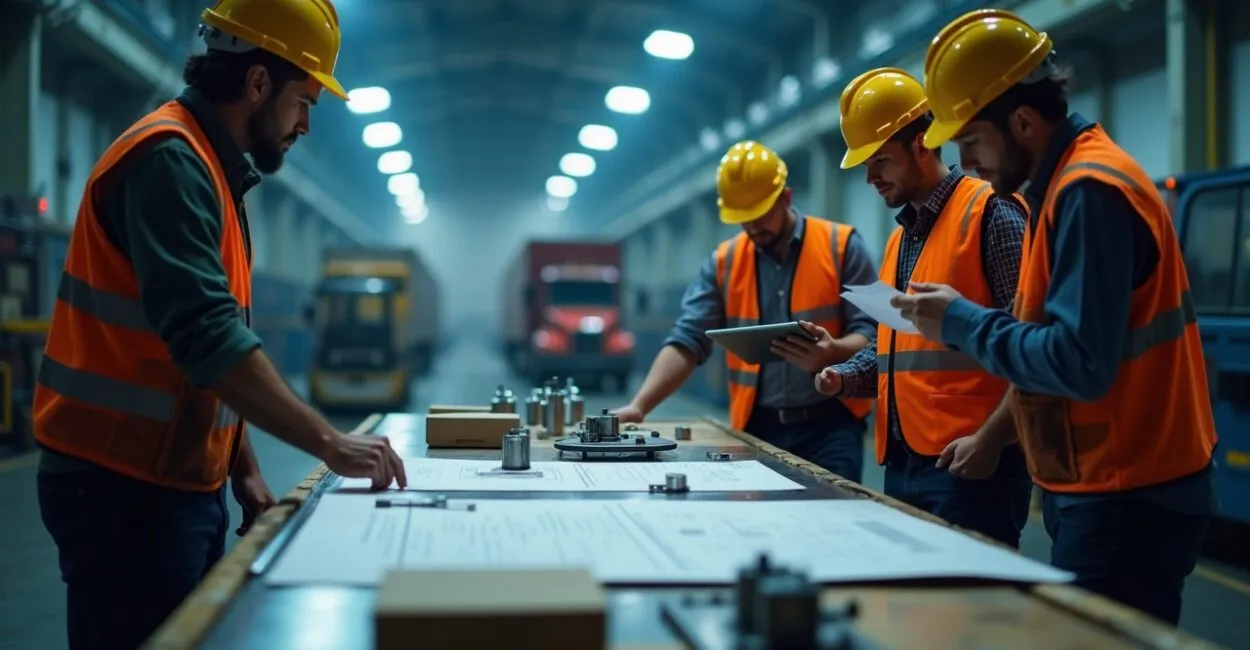
The truck arrives at 4 a.m., the production line needs 5,000 parts by 10 a.m., and the customer is threatening to cancel if there’s a delay. Industrial partnerships aren’t just handshakes and good intentions—they’re a pact built on risk-sharing, technical expertise, and trust. If you want stable contracts, you need to master technical requirements, certifications, joint R&D, and supply ramp-up. Here’s a straightforward approach, including mistakes I see every day and solutions that really work.
Why Manufacturers Reject 60% of Proposals Before the Second Meeting
Many suppliers think price is all that matters. It isn’t. Manufacturers reject proposals for lack of clear technical data, quality documentation, and a track record of on-time delivery. The first screening is technical: drawings, tolerances, and traceability. Certifications and the ability to scale come next.

- Incomplete technical data = automatic disqualification.
- No relevant certifications (ISO, AS, etc.) = high risk in the buyer’s eyes.
- Unproven production capacity = a red flag.
The Minimum Requirement Every Manufacturer Expects—and Few Suppliers Meet
A short checklist can open doors. It’s not a luxury; it’s the price of admission. It includes approved drawings, quality control plans, inspection records, and at least one recognized certification. Without these, your proposal becomes the backup option.
- Technical drawings with clearly defined tolerances.
- FMEA or process risk analysis.
- Quality control plan and lot traceability.
- Certifications (e.g., ISO 9001, ISO 14001, depending on the industry).
How to Use Certifications to Turn Price into Partnership

A certification is more than a seal of approval. It’s a shared language for engineers and buyers. When you show internal audits and evidence of continuous improvement, you reduce the perceived risk. A well-implemented ISO standard can turn a discount request into a long-term contract.
Think of it this way: instead of cutting your price by 5%, offer technical guarantees, corrective action plans for nonconformities, and joint improvement clauses. These carry more weight in an industrial buyer’s decision.
Joint R&D: The Secret to Contracts That Grow With You
Working with a customer on R&D changes the relationship. You’re no longer just a supplier delivering parts; you’re a partner solving problems. When you co-design a product, you gain technical exclusivity and more predictable demand.
Read also: Industrial Contracts: Protecting Sales and Payments
- Start with rapid prototypes and field testing.
- Document every phase: requirements, tests, and results.
- Propose clear clauses for cost-sharing and intellectual property.
Supply Ramp-Up: From Pilot Run to One Million Parts, Without Surprises
Scaling up is a series of steps, not a leap. Plan your capacity, backup suppliers, and reverse logistics. A solid ramp-up plan prevents bottlenecks that can cost you contracts.
| Phase | Focus | Deliverable |
|---|---|---|
| Pilot run | Technical validation | Test report |
| Pre-production | Process adjustments | Control plan |
| Full production | Capacity and logistics | Delivery KPIs |
Common Mistakes That Kill Industrial Partnerships (and How to Avoid Them)
Some mistakes are common—and can be fatal: promising impossible delivery dates, missing documentation, and failing to prove you can scale. Avoiding these missteps is more profitable than cutting your prices.
- Mistake: no validated samples. Avoid it: offer a pilot run with clear metrics.
- Mistake: underestimating logistics. Avoid it: arrange appropriate freight and insurance.
- Mistake: no quality plan. Avoid it: provide evidence of quality controls.
Practical Negotiation: Terms That Secure Stable Contracts
Negotiating with manufacturers means translating technical details into contract terms. Include quality SLAs, R&D plans, ramp-up clauses, and clear price adjustment formulas. Transparency reduces disputes and extends the life of a contract.
- SLAs by lot and KPI (defects in PPM, lead time).
- R&D clauses with milestones and intellectual property terms.
- Supply continuity plan (alternative suppliers).
Here’s the quick comparison: the expectation is that you’ll win business by offering the lowest price. In reality, you win by providing a reliable solution that makes you a valued, trusted partner. If you want stable contracts, focus on technical proof before competing on price. A long-term contract is worth far more than a one-time gain.
A quick story: an electronic components supplier won a global contract by admitting during a meeting that it couldn’t handle a certain volume. The company proposed a joint investment in machinery and a testing plan. Two years later, the customer renewed the contract with an exclusivity agreement. Trust was built through transparency and R&D.
According to data from Brazil’s Central Bank (Banco Central do Brasil), steady, predictable cash flows reduce financial risk for companies in supply chains. According to the Central Bank, cash flow management and contractual guarantees help companies secure better financing. For technical standards and certifications, visit the website of Brazil’s National Institute of Metrology, Quality and Technology (Inmetro): Inmetro.
If you have one decision to make today, invest in technical documentation, run a pilot project, and propose an R&D initiative. These steps lay the foundation for scaling up and securing long-term contracts. Manufacturers want fewer surprises and more predictability—be the partner who delivers it.
Conclusion
A lasting industrial partnership can’t be bought with a discount. It’s built on evidence, processes, and technical trust. Get the fundamentals right now, and you’ll have customers who aren’t just negotiating over price—they’re building a future with you.
How Do I Approach a Manufacturer With No Prior Experience?
Start by demonstrating your technical capabilities, even on a small scale. Put together a portfolio with drawings, samples, test results, and a basic control plan. Propose a pilot project with clear goals and defined responsibilities. Be transparent about your capacity and timelines, and show how you manage risk (backup suppliers, testing, quality control). This can make up for a lack of reputation and open the door to your first opportunity.
Which Certifications Should I Prioritize to Win Industrial Contracts?
The most common are ISO 9001 (quality) and ISO 14001 (environmental management). Some industries require specific standards, such as IATF 16949 in automotive or AS9100 in aerospace. Assess your target customer: many require industry-specific certifications. Start with ISO 9001 and internal controls that can withstand an audit. This reduces barriers to negotiation and strengthens your technical credibility.
How Do I Structure an R&D Agreement Without Losing Control of My Technology?
Define intellectual property ownership clearly from the outset. Use contracts with milestones, deliverables, and clauses specifying who owns improvements and who has a license to use them. Set up technical committees to make decisions and document results. Use nondisclosure agreements and success-based compensation clauses. Transparency and risk-sharing keep the partnership healthy and protect both parties’ investments.
What’s the Best SLA Format for Ensuring Industrial Deliveries?
An effective SLA includes measurable metrics: lead time, defect rate (PPM), response time, and availability of critical parts. Set clear penalties and bonuses, measurement methods, and reporting windows. Include corrective action plans for nonconformities and periodic SLA reviews. Simple, verifiable metrics build trust and reduce contract disputes.
How Can I Prove My Ability to Scale at a First Meeting?
Bring evidence: installed capacity, production history, supplier partnerships, and equipment purchasing plans. Present a ramp-up schedule with milestones and required investment. Share case studies or customer references, even from smaller projects. If possible, offer a pilot run with ramp-up conditions tied to technical targets. Concrete proof beats vague promises.
Artigos Relacionados
 Family Agribusiness: The Hidden Risk in Local Supply Chains
 Active Learning Methodologies in Today’s Quality Higher Education
 Institutional Assessment for High-Quality Higher Education
 School-Community Partnerships: How to Engage Your Community Today
 Industrial Automation: Robots, AI, and Emerging Jobs
 Industrial Salaries: 5 Trends Reshaping Pay in 2025
