
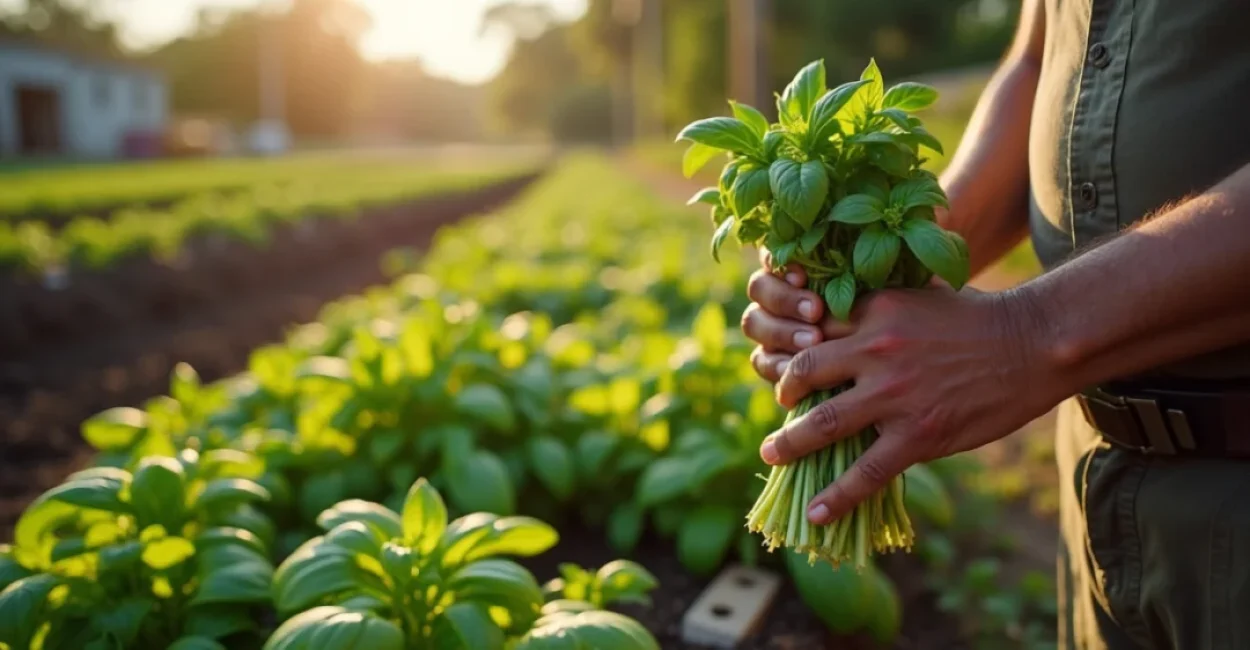
In the middle of a garden bed that looked neglected, I found a grower selling pharmacy-quality herbs—and spending half of what I expected. The secret? Agroecological management. The idea of sustainable cultivation informs every choice: smart crop rotation, green manure, and fewer purchased inputs. If you grow herbs to sell in bulk, these techniques cut costs and raise product quality. Here’s the short version: these are the practices that really make a difference to your bottom line—and the aroma of your basil.
Why Crop Rotation Protects Your Farm and Your Bottom Line
Crop rotation isn’t just about switching crops—it protects your farm and boosts profits. Alternating medicinal herbs with legumes breaks pest cycles and improves soil fertility without chemical fertilizer. In a 1,000-square-meter plot, replacing a year of basil with jack bean can reduce the need for synthetic nitrogen by up to 40%. For bulk sellers, that means lower costs per pound and a more consistent product throughout the year.

- Choose a legume to fix nitrogen.
- Alternate short and long growing cycles to control nematodes.
- Maintain a three- to four-year plan for each plot.
The Thing No One Explains Clearly About Green Manure
Green manure is living fertilizer. Plants such as sunn hemp or hairy vetch grow and return nutrient-rich organic matter to the soil. This improves water retention and releases nutrients gradually, enhancing the herbs’ aroma and potency. The difference is clear: with mineral fertilizer, production rose quickly, but the soil became depleted. With green manure, production stabilizes and the cost per growing season falls over time.

How to Save on Inputs Without Sacrificing Quality for Bulk Sales

Using fewer inputs doesn’t have to mean lower quality. Replace synthetic fertilizers with well-made compost and locally available soil amendments. Use Bordeaux mixture only when there’s a documented history of fungal disease. Invest in controlled solar drying to reduce postharvest losses—a good drying process extends shelf life and increases the value of bulk herbs. Small adjustments, such as checking soil pH once a month, can prevent costly mistakes.
Read also: Inclusive Teaching Practices: How to Plan for Equity
Growing Practices That Enhance the Herbs’ Sensory Profile
Living soil, stronger aroma. Agroecological management changes plant chemistry: it increases essential oils and reduces bitterness. Simple techniques—drip irrigation at dawn, partial shade for sensitive species, and harvesting when essential oil levels peak—produce more aromatic herbs. Buyers purchasing by the pound notice the difference as soon as they handle the product. That gives you a selling point and can command a better price for bulk sales.
Common Mistakes That Eat Into Profits (and How to Avoid Them)
Avoiding mistakes saves time and money.
Read also: African Mahogany Planting: A Complete Guide to Sustainable, Profitable Cultivation
- Failing to test the soil before planting—leading to unnecessary spending on amendments.
- Harvesting at the wrong time—losing essential oils and value.
- Using one-size-fits-all inputs—each species requires specific management.
- Neglecting biological pest control—pests can wipe out an entire crop.
A Short Story: Three Years That Changed a Small-Farming Family’s Fortunes
In a rural valley, a family replaced monoculture with rotating plots and green manure. Yields fell in the first year, but the plants came back stronger. In the second year, their assets grew: local buyers paid 20% more for the higher-quality herbs. By the third year, they were selling in bulk to a regional chain. The change wasn’t magic; it came down to management: patience, testing, and spending less on purchased inputs.
How to Measure Results and Scale Up Safely
Simple metrics help you avoid costly decisions. Track cost per pound, essential oil content in samples, and postharvest losses. Keep monthly records and compare plots with and without green manure. Once you can demonstrate improved quality, negotiate longer-term contracts with bulk buyers. For technical guidance, consult studies on agroecological management from universities and public agencies that recommend locally appropriate practices.
According to data from the Institute for Agricultural Research, a Brazilian agricultural research organization, conservation practices improve soil resilience and reduce the need for outside inputs. See recommendations and practical guides on the Embrapa website, Brazil’s agricultural research corporation, and extension materials from the FAO.
Wrapping Up
If your goal is to sell medicinal herbs in bulk, the choice is clear: agroecological management cuts costs and improves your product. Fewer inputs, more science, and a little patience. Think of your farm as a living business—take care of the air, water, and soil, and the profits will follow.
How Do You Start Using Green Manure in a Small Garden Bed?
Choose a fast-growing legume, such as hairy vetch or jack bean, and sow it in a resting plot after the main harvest. Let it grow until early flowering, then work it into the soil as a cover crop, or cut it and use it as mulch. Test the approach in a small pilot bed before applying it across the entire area. This lets you assess decomposition time and how nitrogen availability for the next crop is affected.
How Long Does It Take to See Cost Savings from Agroecological Management?
The first financial benefits usually appear within 12 to 24 months, depending on the crop and initial management practices. The first year may involve spending on green manure seed and composting. Starting in the second year, the need for synthetic fertilizers tends to decline, and production becomes more stable. Record monthly costs to compare before and after, and adjust your practices based on the results to recoup your investment sooner.
What’s the Best Way to Dry Herbs for Bulk Sales Without Electricity?
Use solar dryers with airflow and mesh shelves for even drying. Build the dryer with translucent plastic sheeting, ventilation at the base, and an outlet for hot air at the top. Avoid uncontrolled direct sunlight, which can cause essential oil loss. Slow, controlled drying preserves aroma and reduces mold. Monitor humidity; aim for a moisture content below 10–12% for well-preserved dried herbs.
How Can You Demonstrate Herb Quality to High-Volume Buyers?
Standardize samples by lot: weigh and dry them, then test essential oil content using basic methods at a local lab or through a university partnership. Provide representative samples and a technical sheet detailing your growing practices, such as rotation, green manure, and drying. Records show professionalism and help prevent price disputes. Contracts with quality clauses and periodic testing help build trust and justify higher prices per pound.
Which Biological Controls Work Best for Medicinal Herbs?
Generalist predators such as ladybugs and lacewings control aphids, while beneficial bacteria and antagonistic fungi help reduce root diseases. Yellow sticky traps and physical barriers can also help. The most effective approach combines practices: crop rotation, companion plants that attract natural enemies, and reduced use of chemical pesticides. Monitor pests weekly and record the impact of your control measures. This helps maintain balance and prevent losses that eat into profits.
Artigos Relacionados
 5 Sustainable Practices That Transform Small Farms
 Realistic Practice Tests That Mirror Exams and Boost Scores
 Rural Technology: Drones and Sensors That Boost Profits
 Rural Sustainability: 9 Practices That Can Fail
 Integrated Pest Management: Sustainable Practices for Pest Control
 Sustainable Hospitality Is Booming: Why Local Businesses Profit More
