
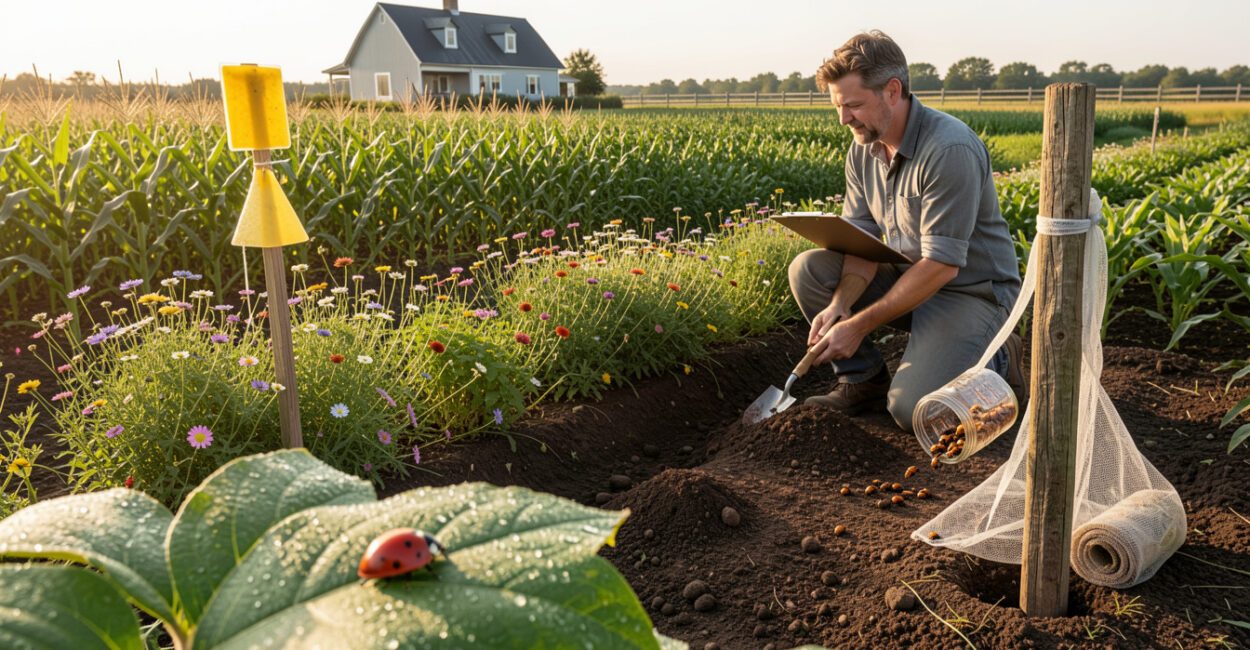
Integrated pest management (IPM) in agriculture combines prevention, monitoring, and control methods to keep pests at levels that do not cause significant economic losses. Decisions about intervention take the crop, its growth stage, pest activity, and the effects of each method into account. The process starts with correctly identifying the problem, followed by inspections, comparing results with technical guidelines, and choosing appropriate measures. Cultural, biological, physical, and chemical practices can be combined; costs and effectiveness vary with the crop, pest, and conditions on the farm.
IPM foundations and basic concepts
- Identify pests, diseases, host plants, and beneficial organisms.
- Monitor the area through observations, sampling, and appropriate traps.
- Use action thresholds established for the crop and pest.
- Prevent outbreaks and conserve natural enemies.
- Record findings, decisions, and results to guide future management.
Core principles and working definition
IPM is a decision-making system that integrates prevention, monitoring, and control, with interventions guided by the risk of crop damage. The action threshold helps determine when to act; it depends on the species, crop, growth stage, and local conditions. As part of routine monitoring, the team records what it found, where it found it, and the crop’s growth stage. These data, together with weather and field history information, help distinguish an isolated occurrence from a trend that warrants intervention.

IPM also requires an accurate diagnosis: disease symptoms, nutrient deficiencies, and insect damage can look alike. When in doubt, have the identification confirmed by a qualified professional or agricultural extension service.
System components: cultural, biological, and chemical
The main management approaches include cultural practices, biological control, physical or mechanical methods, and chemical control. Prevention underpins the system: crop rotation, choosing adapted cultivars, managing crop residues, and cleaning equipment can reduce conditions favorable to pests. Biological control uses natural enemies or microorganisms to reduce pest populations; it can also involve conserving organisms already present. Vegetated buffer strips can provide shelter and food for beneficial species when planned for the crop and region. Information about pollinators can help guide these choices (bees).
Physical and mechanical methods include barriers, removal of infested areas, and traps. Chemical products can be part of the plan when technically justified; Embrapa, Brazil’s agricultural research corporation, and the FAO treat integrated pest management as a context-based combination of tactics, not a one-size-fits-all recipe. Embrapa also recommends considering selectivity and conserving beneficial organisms.
Monitoring, diagnosis, and action thresholds
Pest monitoring means systematically observing and measuring the presence and development of pests and natural enemies in a field. Visual inspections, sampling plants or plant parts, and traps are complementary tools; the choice depends on the species and the goal. Set sampling points and use the same method for each inspection. Record the date, location, number of plants or traps assessed, likely identification, crop stage, and presence of beneficial organisms. Pheromone traps can indicate activity by certain species, but trap catches alone do not confirm that the field has reached an action threshold.
Compare the data with technical recommendations specific to the crop and pest. There is no universal threshold: applying a value from another crop or region can lead to unnecessary or late interventions. Diagnosis should also distinguish active damage from old symptoms.
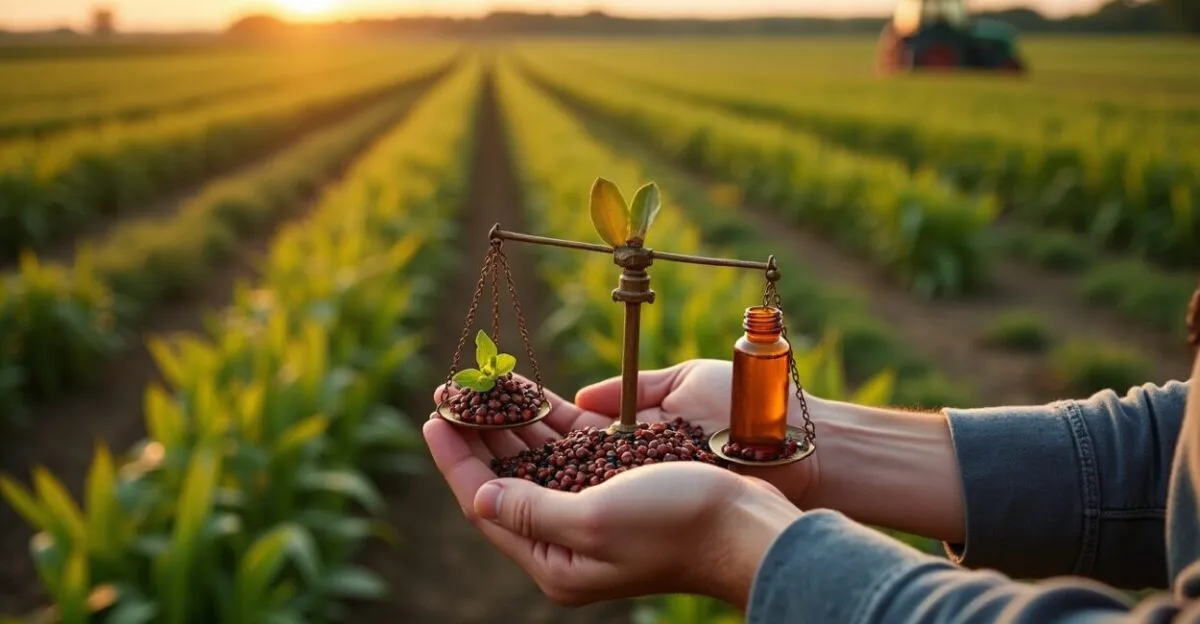
Practical IPM strategies in the field
Step-by-step implementation for a productive farm
- Plan: Map fields, past pest occurrences, crops, and high-risk areas.
- Prevent: Adopt appropriate cultural and sanitation measures before pest outbreaks occur.
- Monitor: Inspect at set intervals using consistent sampling methods.
- Analyze: Confirm the identification and compare records with the action threshold.
- Choose and act: Select a measure suited to the problem and minimize effects on beneficial organisms.
- Reassess: Inspect again and record the response to guide future decisions.
For example, in a grain field, the team can visit points across the field, examine plants, and record pests, damage, and natural enemies. If the data do not warrant control, monitoring continues; if they indicate a risk according to local technical recommendations, the team chooses a tactic suited to the pest and crop stage. A single count should not replace an assessment of the problem’s distribution and development. It is also a mistake to apply a product just because a trap caught pests, without confirming their presence in the crop and checking the applicable technical criteria.
Biological control and techniques for conserving natural enemies
Biological control can involve conserving natural enemies already present in the area or making planned releases of control agents. The choice depends on the pest, the available agent, environmental conditions, and technical recommendations. Avoiding unnecessary applications and selecting measures compatible with beneficial organisms helps conserve predators and parasitoids. Flower strips or shelter areas require planning: the species selected, location, and maintenance should suit the farm and should not encourage pests or invasive plants.
Responsible pesticide use and product selection
When monitoring and the action threshold justify a chemical intervention, confirm that the product is registered for the crop and target pest, and follow the label directions. Application must comply with the specified rate, equipment requirements, weather conditions, preharvest interval, and worker protection measures. Consider selectivity for natural enemies and pollinators, as well as the product’s mode of action. Rotating modes of action according to technical guidance reduces selection pressure for resistance; unnecessary repeated applications from the same group can limit future options.
Proper equipment calibration and suitable application conditions help reduce drift and coverage problems. Brazil’s Ministry of Agriculture provides official information about registered products and their authorized uses.
Read also: Rotational Grazing Management: How to Plan Pastures
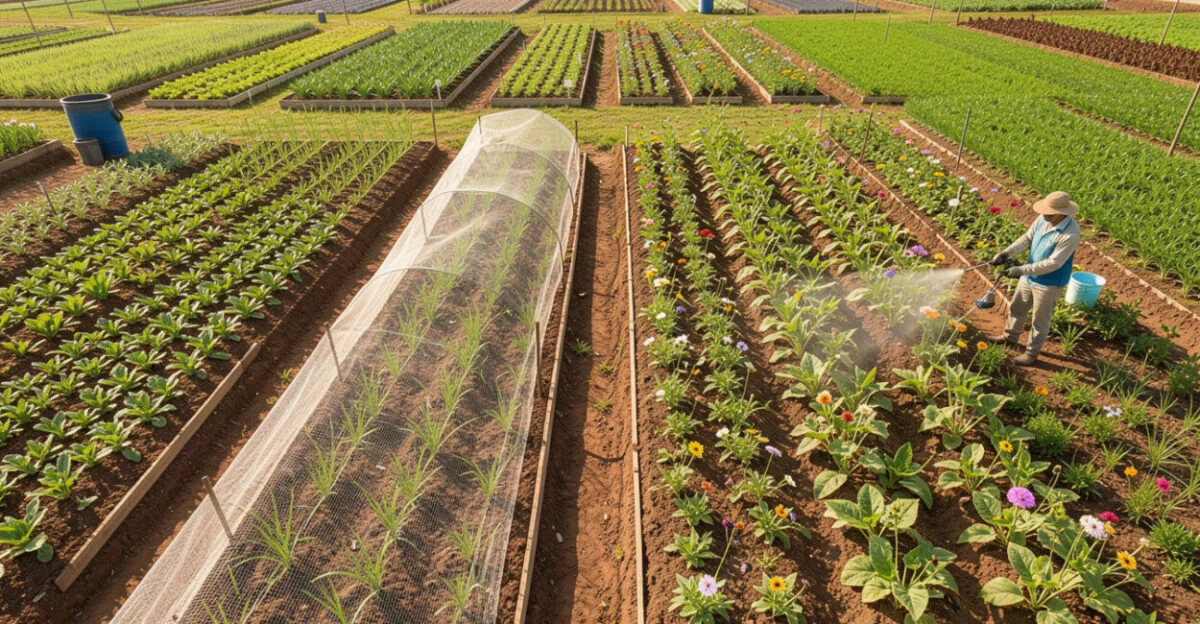
Comparing methods: evaluating options and effectiveness

Comparing cultural, biological, and chemical practices
Cultural practices generally focus on prevention; physical or mechanical methods remove pests or restrict their access; biological control depends on interactions between organisms; and chemical control can act quickly but carries risks of resistance and unintended effects. No method has a fixed level of effectiveness or cost in every situation. A strategy might combine crop rotation, inspections, conservation of natural enemies, and, if needed, a selective intervention. Decisions should consider the crop’s growth stage, pest distribution, and the likely cost of damage compared with the cost and risks of control.
Methods and costs
| Method | Contribution and limitations | Costs to consider |
|---|---|---|
| Cultural practices | Prevention; depends on production planning | Labor, seeds, and system adjustments |
| Biological control | Reduces pests; requires compatibility and follow-up | Agents, logistics, and technical support, when applicable |
| Physical or mechanical methods | Removal or barriers; may require frequent labor | Materials, installation, and labor |
| Chemical products | Can act quickly; carry risks of resistance and effects on nontarget organisms | Product, application, equipment, and protective gear |
| Combined methods | Allow the response to be adapted to the problem; require coordination | Vary according to the crop and plan used |
Success stories and risk-benefit analysis
Whenever possible, cost-benefit analysis should use data from the farm itself: input and labor costs, observed losses, yields, and frequency of interventions. Results from another region or crop do not guarantee the same return. The analysis should also account for resistance risk, effects on beneficial organisms, and the risk of drift or contamination. Recording the method used and the crop’s response makes it possible to revise the plan without assuming gains before measuring them.
Leia também: Rural Technical Courses: A Reliable Path to a Successful Agribusiness Career
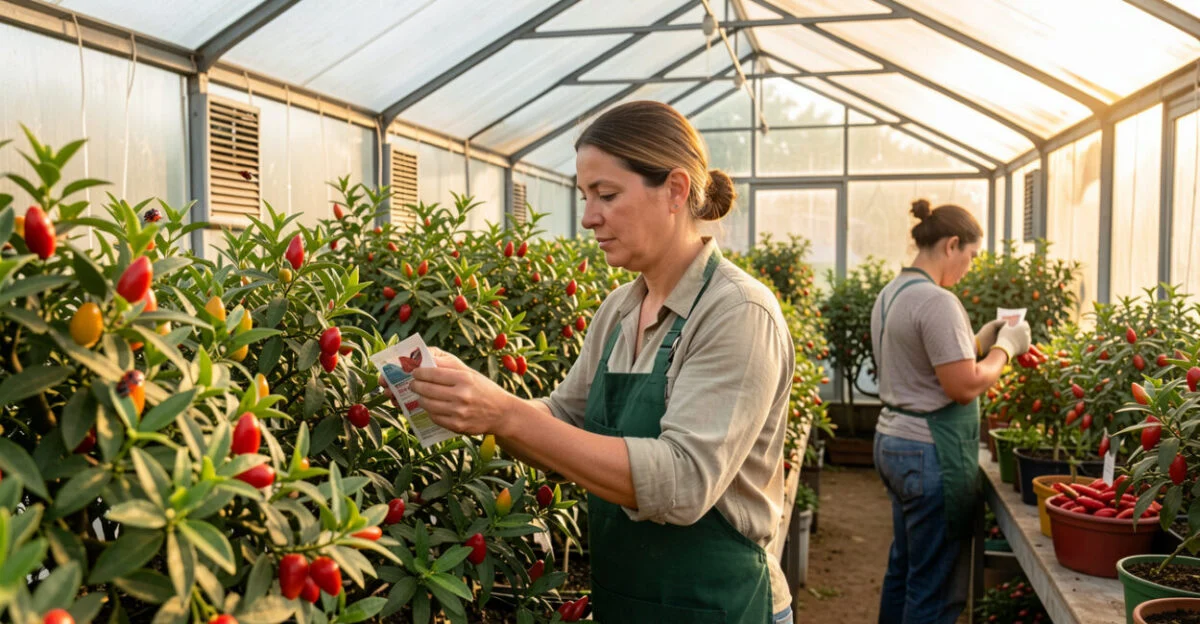
Advantages, benefits, and environmental impact
Agronomic and economic benefits of IPM
- Control decisions guided by observations and technical criteria.
- Potential to avoid unjustified applications.
- Conservation of natural enemies and other beneficial organisms.
- Better tracking of costs, damage, and interventions.
- Strategies tailored to the crop and farm conditions.
Economic outcomes depend on monitoring costs, the measures selected, pest pressure, and the value of the crop. Comparisons should therefore consider costs per area and yield, without assuming that IPM always reduces expenses or maintains yields in every situation.
Positive environmental and social impacts
By reducing unnecessary applications and considering effects on nontarget organisms, IPM can lower risks to the environment and workers. Results depend on proper implementation: correct storage, mixing, and application remain essential whenever chemical products are used. Conserving vegetation and habitats can support ecosystem services, but measures must be compatible with the landscape and production. Adopting good practices does not in itself guarantee access to specialized markets or certifications; each program has its own criteria.
Measuring results and success indicators
Track pest frequency, observed damage, the presence of natural enemies, the number of interventions, and costs per area. Also record yields and conditions during each inspection so the data can be interpreted in context. Spreadsheets or field forms can include the date, field, sampling method, identification, decision, product or measure used, and follow-up assessment. Compare equivalent periods and avoid attributing changes to a single practice when other factors, such as weather and crop management, also varied.
Solutions, limitations, and practical recommendations
Limitations and challenges of IPM
IPM requires training to identify pests, sample correctly, and interpret thresholds. It also takes time to inspect and keep records, and may require access to technical support, traps, or biological control agents.
Small farms can share training and services through cooperatives and agricultural extension programs. Weather variability and the arrival of new pests may require adjustments, so the plan should be reviewed when conditions in the area change.
Table: advantages vs. disadvantages of implementation
| Aspect | Advantages | Challenges |
|---|---|---|
| Costs | Helps assess expenses and avoid unjustified interventions | May require investment in training and monitoring |
| Environmental impact | Supports choosing measures compatible with beneficial organisms | Depends on proper selection and implementation |
| Effectiveness | Tailors the response to the pest and crop | Requires reliable data and follow-up |
Recommendations and a roadmap for getting started
Start by assessing the area and setting up a simple inspection plan. Decide who will conduct assessments, which locations will be sampled, and how data will be recorded; consult technical recommendations for the crop and identified pests.
Next, adopt appropriate preventive measures and establish how control decisions will be made. Reassess the area after each intervention and adjust the plan based on the records, rather than applying generic intervals or thresholds across different crops.
Decision matrix for integrated pest management
A simple matrix links monitoring evidence, the action threshold, the method selected, resistance risk, and intervention records. It organizes decision-making but does not replace crop-specific recommendations or assessment by a professional.
Evidence observed Relation to threshold Possible decision Resistance risk Record Pest identified, low occurrence, and no upward trend Below the technical threshold Continue monitoring and preventive measures Not applicable to a chemical intervention; avoid unjustified applications Location, count, date, and next inspection Increasing occurrence or consistent damage Near or at the established threshold Confirm the diagnosis and assess cultural, biological, or physical methods Consider the history of interventions Evidence, method selected, and reason Technical threshold reached and risk to production confirmed Reached or exceeded Select a recommended measure; if chemical, check registration and mode of action Avoid inappropriate repeat applications and follow resistance management guidance Product or measure, date, area, and follow-up assessment
In every case, reassessment determines whether the decision was appropriate and whether the plan needs to be adjusted. Complete records also help identify seasonal patterns and avoid repeating interventions that have been ineffective.
Integrated pest management in agriculture combines prevention, diagnosis, monitoring, and control based on observed conditions. To get started, map the area, choose an appropriate sampling method, and record each decision; costs and results should be evaluated in the context of each farm.
Frequently asked questions
What is integrated pest management?
Integrated pest management, or IPM, is a system that combines prevention, monitoring, and control methods to keep pests at levels acceptable for production. Interventions are based on technical criteria and take into account effects on the crop, beneficial organisms, and the environment.
How does monitoring work in integrated pest management?
Monitoring involves inspections, sampling, and, when appropriate, traps to identify pests and track their occurrence. Record the location, date, and results; then compare the data with the action threshold specific to the crop and pest. A trap catch alone does not determine whether control is needed.
What’s the difference between biological and chemical control?
Biological control uses organisms or microorganisms to reduce pests and may involve conserving natural enemies. Chemical control uses products registered for the target pest and crop, following the label directions. In IPM, the choice depends on the diagnosis, threshold, and risks of each method.
When should chemical products be used in integrated pest management?
Consider a chemical product when an assessment indicates a risk of damage based on the applicable technical criteria and other measures are not suitable for the situation. Check that it is registered for the crop and target pest, follow official instructions, and consider selectivity, mode of action, and protection for workers and beneficial organisms.
How much does it cost to implement integrated pest management?
Costs vary depending on the crop, area, pest, and available resources. They may include training, monitoring time, traps, technical support, and control measures. To estimate the investment, record these expenses and compare them with interventions and losses on your own farm, without assuming a fixed payback period.
Artigos Relacionados
 Effective School Management: Practices for Students and Staff
 School Management: Effective Practices for Principals
 Debt Management Plan for Fast and Sustainable Relief
 Sustainable Agriculture: A Path to Sustainable Social Development
 Home Gardening: How to Grow Your Own Food in a Healthy, Affordable, and Sustainable Way
 African Mahogany Planting: A Complete Guide to Profitable, Sustainable Growing
