
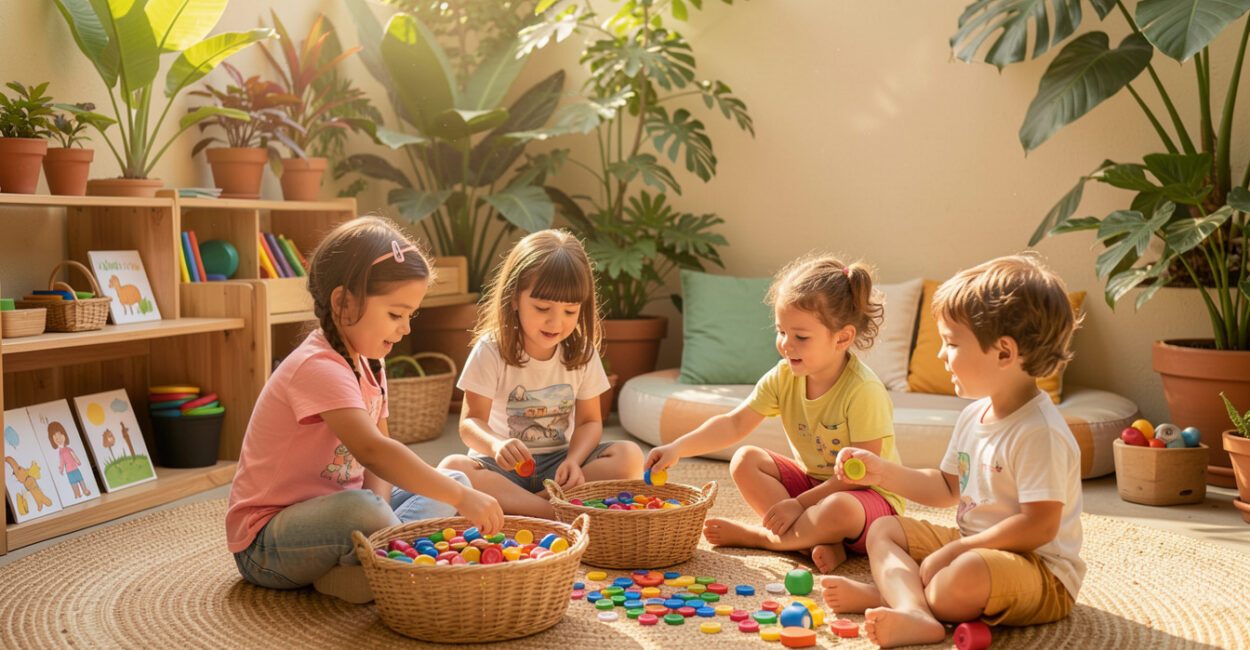
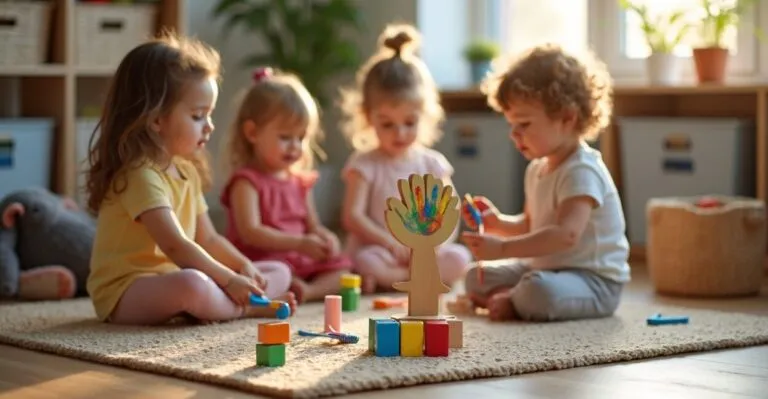
A 4-year-old can learn to count by sorting bottle caps without having to sit at a table with a worksheet. Early childhood activities are planned opportunities for play and exploration that support children’s development, with age-appropriate goals and room for different learning paces. Simple materials can be used to build language, movement, creativity, and social skills.
When choosing activities, consider what the child can already do, what sparks their curiosity, and how long they tend to stay engaged. A well-planned activity also accounts for how to begin and wrap up, as well as what to do if it becomes difficult or overly stimulating.

How do you choose early childhood activities?
Choose early childhood activities based on learning goals, children’s ages, and what’s realistic for the group. A well-suited activity combines a clear task, safe materials, and some room for children to decide how they’ll participate. The adult observes and adjusts the support without expecting everyone to produce the same result.
Brazil’s Base Nacional Comum Curricular (BNCC), the national curriculum framework, organizes early childhood education around learning rights and fields of experience, such as “The self, others, and us” and “Body, gestures, and movement.” This helps educators plan integrated experiences instead of turning each play activity into a rigid school task. Brazil’s National Curriculum Guidelines for Early Childhood Education, established by CNE/CEB Resolution No. 5/2009, also place interactions and play at the center of teaching.
A practical rule of thumb: if a child can get started with a brief instruction and keep exploring with little help, the activity is probably at the right level. If they just wait for an adult to do it for them, reduce the number of steps or demonstrate it once. If they finish without exploring, add a choice, a challenge, or a variation.
Which activities work for children ages 1 to 5?
Activities should match the skills a child is developing, without treating age as a strict rule. The table offers some starting points: the same play activity can be made simpler or more challenging depending on each child’s language, coordination, and interests.
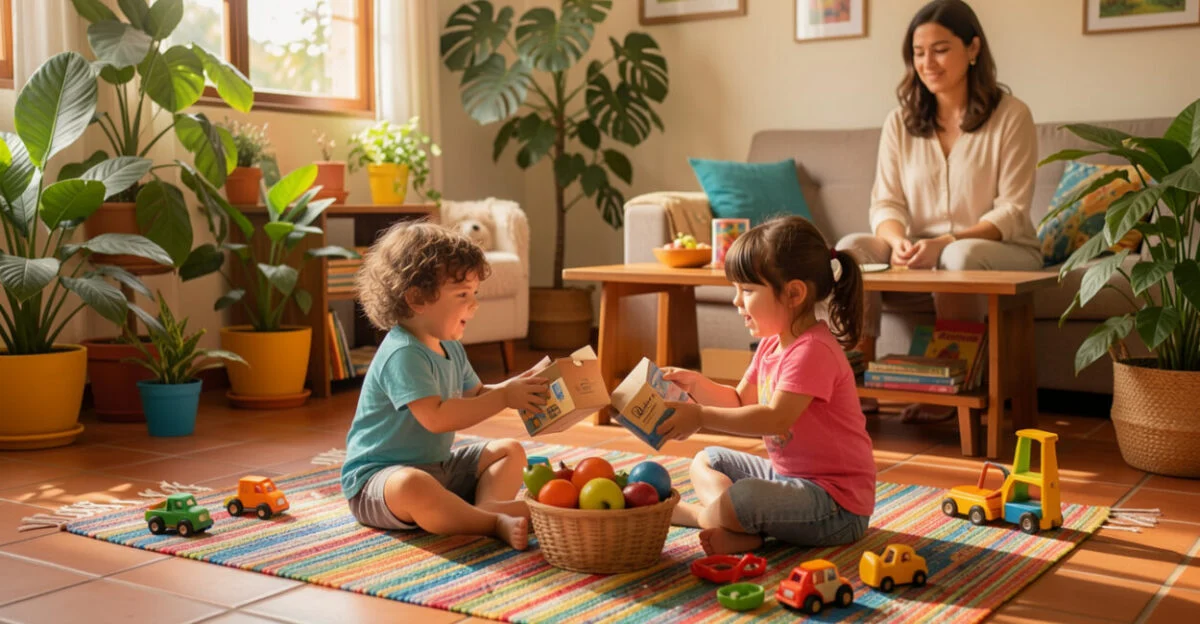
Age Goal Activity Adaptation and what to observe 1 to 2 years Explore textures and gestures Put large blocks into and take them out of a basket Offer a few large, safe objects. Notice whether the child repeats actions or looks for new ways to explore. 3 years Build vocabulary and engage in pretend play Play grocery store with clean packages Offer a few choices and name objects without expecting answers. Notice whether the child points, imitates, or invents new uses. 4 years Count and compare quantities Sort bottle caps by color and count each group Start with two groups. Children who are ready can compare which group has more. Notice the strategies they use. 5 years Plan and tell stories Create a group story using picture cards The child can talk, point, or arrange the pictures. Notice whether they follow the sequence and contribute ideas.
Age ranges are guidelines, not assessments of what a child “should” know. For example, a sorting activity for 3-year-olds might involve just two categories. For 4- and 5-year-olds, you can add counting, comparing, or creating rules if the group is interested.
Which play activities develop language, movement, and social skills?

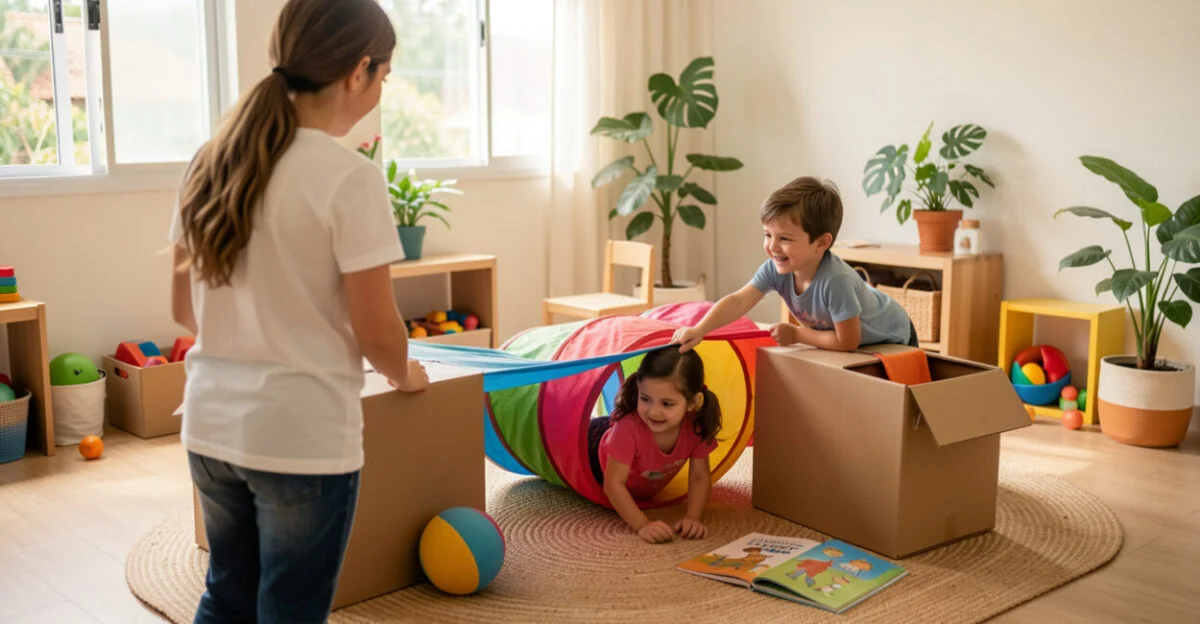
Play activities using everyday materials can support several areas of learning at once. Set aside objects without sharp edges or small parts that could be unsafe for the group’s age range: boxes, fabric, soft balls, picture books, large containers, and chunky crayons.
- Language: Tell a short story and invite children to choose what happens next. For children who are not yet talking much, accepting gestures or pointing helps them participate.
- Movement: Set up a path with cushions and floor markers to walk around, crawl under, or jump over. Adjust the distance and offer a seated option if needed.
- Creativity: Invite children to build something with boxes and fabric scraps. Don’t set one specific model; ask what the child is making and offer more materials if they ask.
- Social skills: Play a ball-passing game, taking turns choosing where to pass it. Help the group wait for their turn and agree on simple rules.
For children who are beginning to name emotions, use dolls or drawings to act out familiar situations: someone wants the same toy, playtime is over, or a tower falls down. Start the conversation with simple questions like, “What happened?” and “What might help now?” Social stories and role-play games can also help children practice asking for help, waiting, or resolving small conflicts.
How can you use printables without relying on worksheets?
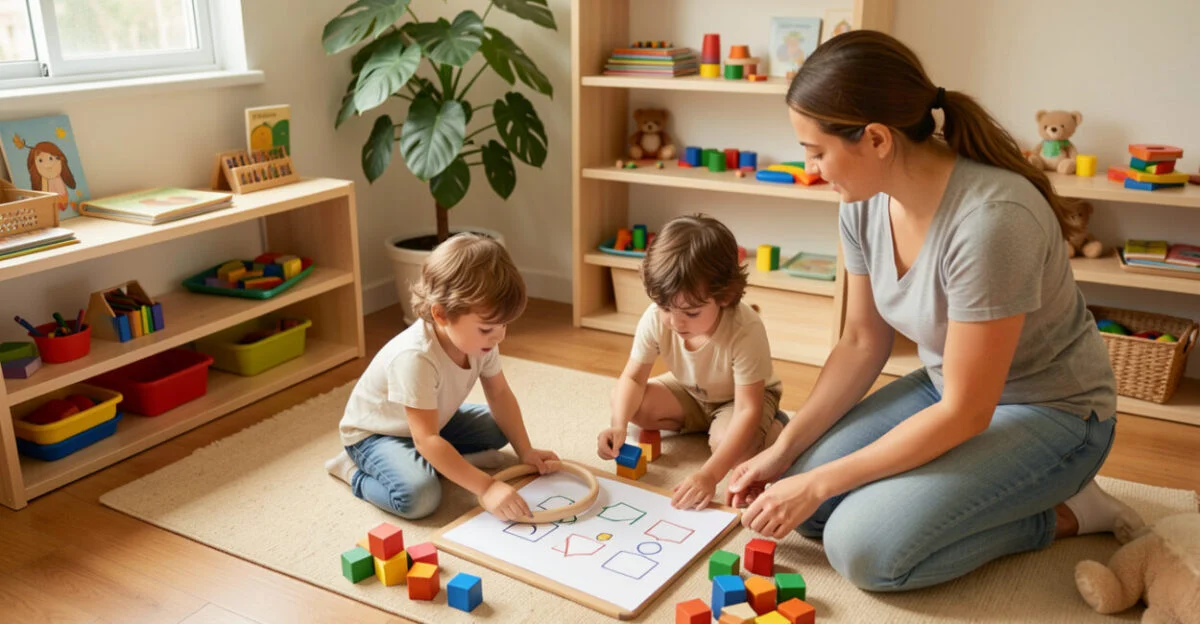
Use printouts as brief support for a hands-on experience, not as a substitute for play, conversation, or movement. A shapes worksheet, for example, becomes more meaningful when children first look for circles and squares around the room, compare objects, and then record what they found.
When looking for printable early childhood activities or a free early childhood activity book in PDF format, check whether it specifies the age range, goal, and how to use it. No specific free file is recommended here, so don’t count on a promised resource without checking its source and access requirements. Choose pages with simple instructions, clear images, and space to draw, mark, or fill in.
Read also: Entrepreneurship for kids: early childhood activities
For printable activities for 4- and 5-year-olds, alternate worksheets with hands-on materials. A counting worksheet can come after children sort real objects; a tracing page can be replaced or supplemented with drawing on the floor with chalk. This sequence makes paper part of the experience instead of the only medium.
How can you organize routines, spaces, and emotions during activities?
Predictable routines and advance warnings before transitions help children understand what’s happening and what comes next. Use pictures to show the sequence, give children a heads-up before playtime ends, and set aside a few minutes to put materials away together.
Set up exploration areas with a few accessible items and a clear purpose: books in a quiet spot, blocks on an open surface, or art supplies in a protected area. A common mistake is filling the space with objects and changing everything frequently; too much stimulation can make it harder to choose and concentrate. Also avoid small items with children who still put things in their mouths, scented materials, and textures a child dislikes.
When a child becomes overwhelmed, pause the expectations and offer verbal reassurance, space, or a slow breath with an adult, if the child finds that comfortable. Don’t force the technique or expect it to work the same way for everyone. In mixed-age groups, you can share the same story about feelings with everyone but offer different ways to respond: younger children can point to pictures, while older children can talk about possible solutions.
For example, during a group building activity, two children want the same box. The adult pauses the disagreement, names the problem, and asks what different uses they could agree on. One child might choose another box, while the other waits their turn. Then the group goes back to building without turning the conflict into a punishment.

What are signs that an activity is working?
Look for signs of engagement and well-being, such as a child trying again, exploring materials, communicating a choice, or returning to play after a break. The result doesn’t have to be a beautiful product or a correct answer; what matters is whether the activity offers a way for that group to engage.
Keep brief notes: what sparked interest, when difficulties came up, and what adjustments helped. If several children leave the activity at the same point, the instructions may be too long, the materials may be hard to access, or the wait may be too long. A child who watches without touching may still be participating; give them time before inviting them to join again.
Emotional regulation is the ability to notice and manage emotions in response to a situation. In early childhood, it develops with support and practice; it’s not a skill that every child shows at the same pace. Tracking patterns over time can help with planning, but everyday notes are no substitute for a professional evaluation when there are ongoing concerns about a child’s development.
How can educators and families plan together?
Share short activities that use common materials and clearly explain what children can explore. A message suggesting a sorting game with clean socks, for example, is easier to adapt than a list of supplies a family may not have.
Educators can agree on one goal for a given period and share observations about what worked with each group. To support learning, it’s also important to follow safety requirements when choosing materials: use large, clean, age-appropriate objects. Planning strategies can include rotating materials and reusing packaging, as long as it’s intact and has no dangerous parts.
Teachers can suggest one activity at a time and ask families for just one simple observation, such as “Which part caught your child’s attention most?” Attention-building exercises can be incorporated into short games, without pressure to perform. Clear communication between the school and caregivers helps them share adaptations without assigning blame when an activity doesn’t work.
Keep in mind that not every family has the time, a printer, or extra materials, and not every child responds the same way to a visual routine or a breathing break. Offer free alternatives and let children participate at school, without turning at-home activities into an obligation.
Question Answer in one line How do you choose? Match the goal, age, safety, and the group’s interests. How do you adapt by age? Simplify steps for children who need support and add choices for those who have mastered the activity. How do you assess? Observe attempts, exploration, communication, and returning to the activity—without grades or comparisons. How do you use worksheets? Connect the printed activity to a short, hands-on play activity.
Start by choosing a skill that makes sense for the group, such as counting, storytelling, or waiting for a turn. Gather safe materials, plan an adaptation, and observe how the children participate. Then use what you learn to decide whether the next activity should repeat, simplify, or build on the challenge.
Frequently asked questions
Do you need to print activities to monitor a child’s development?
No. Play, conversation, movement, and exploring objects also offer opportunities for learning and observation.
How do you choose an activity for children who learn at different paces?
Set a shared goal and offer different ways to participate. One child can point, another can talk, and another can organize materials. Adjust the number of steps and the amount of support without comparing results.
What should you do if a child doesn’t want to participate?
Don’t force them or interpret their refusal as a lack of interest in learning. Let them watch, offer an alternative, or invite them to join later. If they keep refusing, check whether the space, materials, or activity are causing discomfort.
Artigos Relacionados
 Language Routines: Daily Activities to Develop Speech
 Extracurricular Activities for Social-Emotional Development at School
 Early Childhood Education: The Importance of Play in Child Development
 Early Childhood Education: Essential Practices for Development
 Professional Development for Early Childhood Educators
 Preschool Activities That Build Social Skills Every Day
