
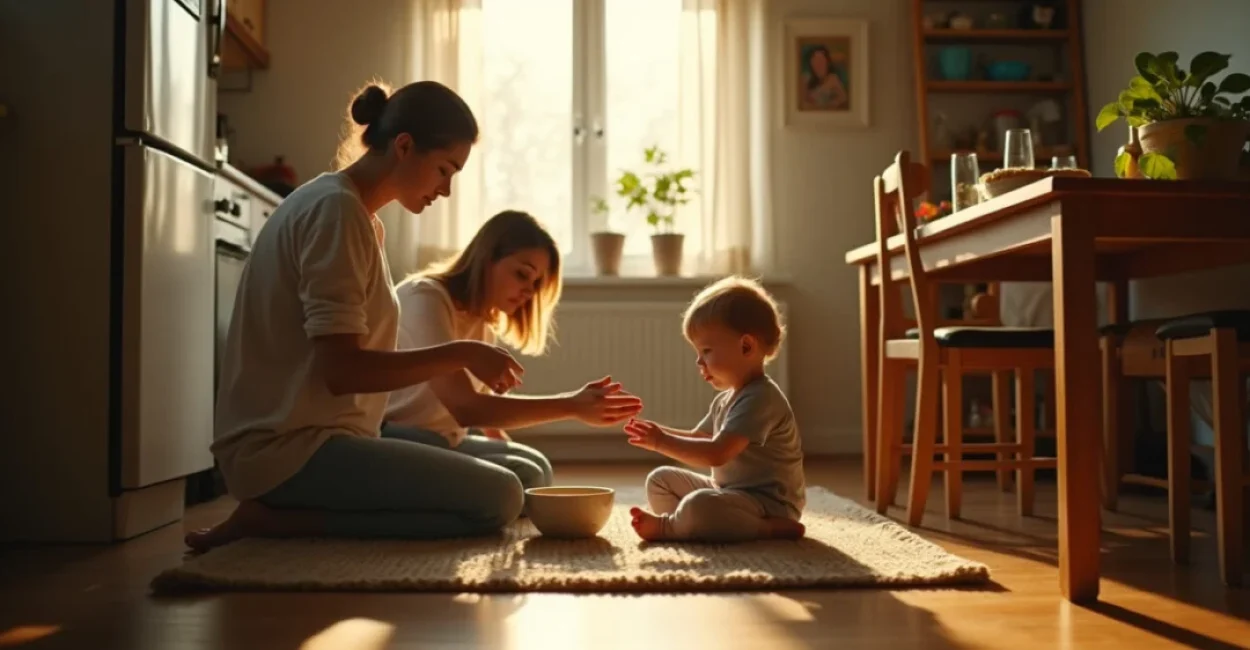
This refers to the connection between parenting practices and the development of children’s social-emotional skills, including self-regulation, empathy, emotional awareness, and social skills. In essence, it’s the set of parental attitudes, routines, and responses that shape a child’s ability to understand emotions, build secure relationships, and make effective social decisions.
This area calls for direct family involvement for two reasons: first, emotional plasticity is especially high in early childhood and the preteen years; second, schools and public policies rarely replace the emotional routines of home life. Today’s pressures—screens, social isolation, and overstimulation—create measurable risks to children’s emotional well-being, but also open up clear opportunities for evidence-based parenting practices.

Key Takeaways
- Parents’ emotional responses in a child’s early years help calibrate the child’s stress-regulation circuits and influence academic and social performance during adolescence.
- Practical strategies such as predictable routines, naming emotions, and problem-solving practice should be taught and practiced at home as skills, not just discussed.
- Clear, empathetic boundaries reduce challenging behaviors and promote independence when paired with positive reinforcement and brief explanations.
- Active partnerships with schools, sharing observations, and aligning social-emotional goals can increase long-term impact.
Why Parents and Social-Emotional Development Set the Foundation for Childhood
The family environment plays a causal role in shaping emotional regulation. Longitudinal studies show that sensitive parenting responses reduce stress reactivity and increase children’s ability to focus.
This is more than a correlation: parenting interventions that teach co-regulation reduce anxiety symptoms and improve school grades.
Neurobiological Foundations and the Impact of Sensitive Periods
In the early years, circuits in the prefrontal cortex and limbic system take shape through repeated experiences. Co-regulation—when an adult helps a child name an emotion and reduce its intensity—strengthens connections that support future self-regulation.
A lack of consistent co-regulation increases the risk of reactive responses and difficulty focusing.
Practical Takeaways for Parents
Parents should prioritize predictable, responsive interactions: routines for sleep, screen-free meals, and daily conversations. These practices create predictability and reduce children’s cortisol levels.
Over time, this can lead to better adjustment at school and more stable social relationships.
Communication That Teaches Emotional Regulation
Communication is the primary tool for teaching social-emotional skills. The goal is not just to communicate rules, but to model emotional processing. Short phrases, naming emotions, and open-ended, problem-focused questions encourage reflection and learning.
Practical Communication Techniques
Use “labeling” (e.g., “You seem sad because your toy broke”) to put a name to the emotion. Practice “active listening” by briefly repeating what your child said, and pair it with validation. Then offer one or two possible actions to resolve the situation. This sequence (label → validate → offer options) teaches self-regulation in a structured way.
Avoiding Verbal Pitfalls
Dismissive phrases like “Don’t cry” or “Stop being dramatic” discourage emotional expression and make learning harder. Long explanations are not effective either; children respond better to brief, consistent instructions. Your tone of voice matters just as much as your words.
Games and Activities That Develop Social-Emotional Skills

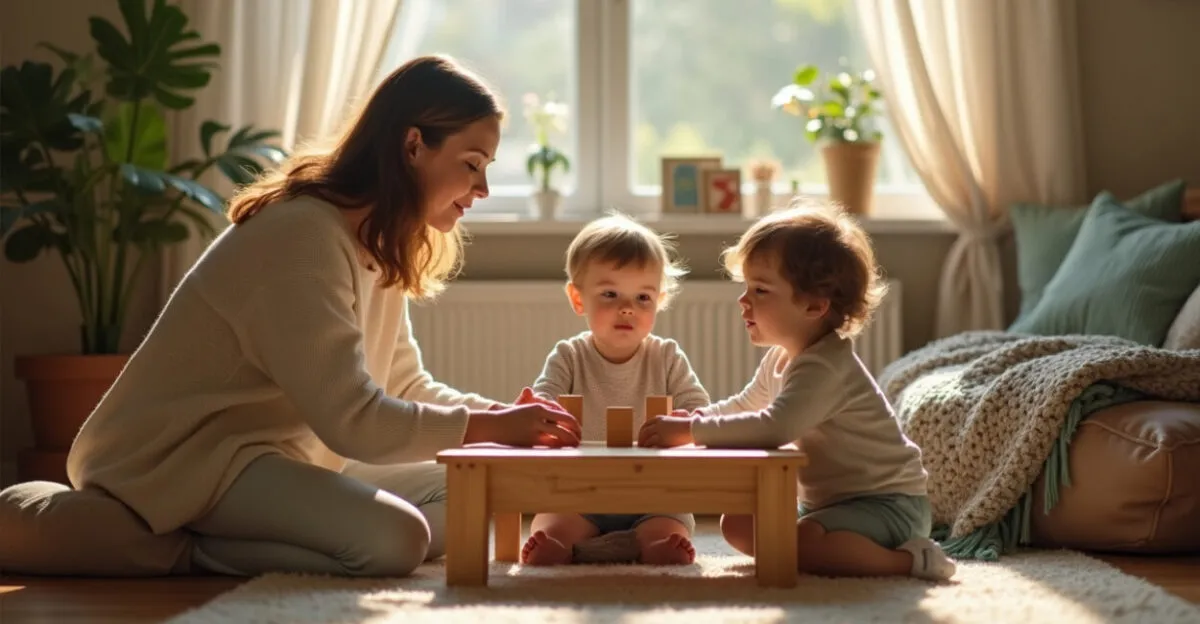
Play is the primary way children explore social roles, test rules, and practice empathy. Intentional activities can accelerate this learning. Effective parents plan play that challenges children to cooperate, take another person’s perspective, and resolve conflicts.
Recommended Games and Activities
- Mirror game: The child imitates facial expressions to develop emotional awareness.
- Stories with a different ending: Practice problem-solving and cognitive flexibility.
- Turn-taking games with simple rules: Build skills in waiting, handling frustration, and negotiating.
Keep sessions short and frequent; regular 10- to 20-minute activities lead to more learning than occasional, lengthy ones.
Structured vs. Free Play
Both are necessary. Structured play teaches specific skills, while free play allows children to practice spontaneously. Step in only when there’s a safety concern or a clear teaching opportunity. The goal is to guide without taking over the play.
Boundaries and Discipline That Foster Independence
Consistent, empathetic boundaries create a sense of security. Effective discipline combines clarity, immediate consequences, and a chance to make things right. The focus is on teaching an alternative behavior, not punishing an emotion.
Evidence-Based Discipline Strategies
Use a logical consequence—one related to the behavior—instead of an arbitrary punishment. Set a few clear, visible rules and use positive reinforcement for desired behaviors. When a child makes a mistake, guide them through a plan to make amends: acknowledge the mistake, apologize, and repair the harm.
When to Adjust Your Approach
If a behavior continues despite clear boundaries for 4–6 weeks, review caregiver consistency, whether the rules are appropriate, and outside factors such as sleep, nutrition, and stressful events. For extremely intense behaviors, consult a child mental health professional.
Partnering With the School: Building Consistency and Generalizing Skills
Cooperation between families and schools can multiply results. Sharing social-emotional goals and strategies helps children apply what they learn outside the home. This requires thoughtful communication and measurable goals.
How to Build an Effective Partnership
Ask the teacher for specific observations (e.g., “How does your child respond to frustration in a group?”). Suggest two or three shared goals (e.g., waiting their turn, expressing frustration with words). Agree on ways to share feedback, such as a brief weekly report, quick messages, or quarterly meetings.
Common Challenges and How to Overcome Them
Lack of time and differences in approach between school and family are common. A practical solution is to create a “three-step protocol” that both can use: label, offer options, and reinforce. This reduces ambiguity and makes it easier to practice skills across settings.
Measurement, Adjustments, and Evidence-Based Resources
Measuring progress helps you make informed decisions. Use simple indicators: how often emotional outbursts occur, the number of conflicts per week, and participation in group activities. Standardized tools, such as self-regulation scales and school reports, provide comparable data.
Useful Tools and When to Use Them
Screening tools such as the Strengths and Difficulties Questionnaire (SDQ) and self-regulation checklists can be useful. Use them every 8–12 weeks to track trends. The data should guide changes to routines or discipline, or help determine whether to seek professional intervention.
Recommended Resources and Reading
For expert guidance, consult resources from UNICEF and the Brazilian Institute of Geography and Statistics (IBGE) for demographic data that can provide context for interventions. Validated parenting programs such as Triple P and Incredible Years have strong evidence supporting their effectiveness.
Next Steps for Putting These Strategies Into Practice
Focus on practical steps: 1) establish two screen-free daily routines; 2) practice naming emotions and offering choices in at least three interactions a day; 3) align on two goals with the school. When applied consistently, these steps can produce observable changes in 6–12 weeks.
Plan a monthly review: document patterns, adjust consequences, and expand the practices that work. If you notice signs of ongoing difficulty, such as isolation, regression, or increased aggression, seek an evaluation from a child psychologist to develop a more targeted intervention.
Frequently Asked Questions
How Can I Tell if My Child Needs Professional Help With Social-Emotional Issues?
Seek professional help when difficulties persist for more than six weeks, even after adjusting routines and consistently using parenting strategies. Key signs include significant social isolation, regression in basic skills, aggression that puts other children at risk, or significant attention problems that interfere with school performance. An initial evaluation by a child psychologist or pediatrician can help distinguish medical causes, developmental disorders, and environmental factors, and identify specific interventions, such as cognitive behavioral therapy when appropriate for the child’s age.
What Daily Routine Best Supports Social-Emotional Learning in Young Children?
An effective routine combines predictability with opportunities to practice: regular sleep and meal times, 20–40 minutes of screen-free play each day, and a reflective conversation in the evening. Include three brief regulation practice moments each day: name the emotion, validate the feeling, and offer a choice. These practices build learning into the day without requiring long sessions. Consistency is key: small, repeated changes have a greater impact than occasional, intensive interventions.
How Can I Handle Tantrums Without Threats or Physical Punishment?
Handle tantrums with a three-step plan: first, ensure safety and reduce stimulation; second, briefly name your child’s emotion; third, offer a concrete action to reduce frustration (e.g., choosing between two options). Use logical consequences and help your child make amends when needed, without shaming them. Positive reinforcement for attempts to self-regulate makes the desired behavior more likely. If tantrums are intense and happen daily, consider sleep, hunger, or sensory overload before changing your approach to discipline.
How Can I Teach Empathy to Children Who Struggle to Understand Other People’s Emotions?
Teach empathy through modeling and hands-on practice: read stories about feelings and ask, “How do you think she feels?” Use simple role-play games where your child switches roles. Point out other people’s behavior and name the emotion (“I noticed she felt sad when you took the toy”). Small helping tasks at home can also build concern for others. Regular practice with positive feedback is more effective than abstract explanations of what empathy means.
What Signs at School Suggest We Should Align Social-Emotional Strategies With Teachers?
Ask to coordinate strategies when a teacher reports changes in your child’s social behavior, reduced participation, recurring conflicts with classmates, or ongoing difficulty following classroom rules. Also seek collaboration if strategies used at home aren’t carrying over to school. Alignment requires clear goals, objective observations, and an action plan with a few shared strategies across both settings—for example, using the same phrases to name emotions, the same logical consequences, and a shared reinforcement system.
Artigos Relacionados
 Social-Emotional Development for Schools
 Extracurricular Activities for Social-Emotional Development at School
 Social-Emotional Learning in Schools: Transforming Learning and Whole-Child Development
 Early Childhood Activities: A Daily Routine for Emotional Development
 Supporting Oral Language Development: Ages 0–5
 Parent Involvement Tips to Support Early Learning at Home
