
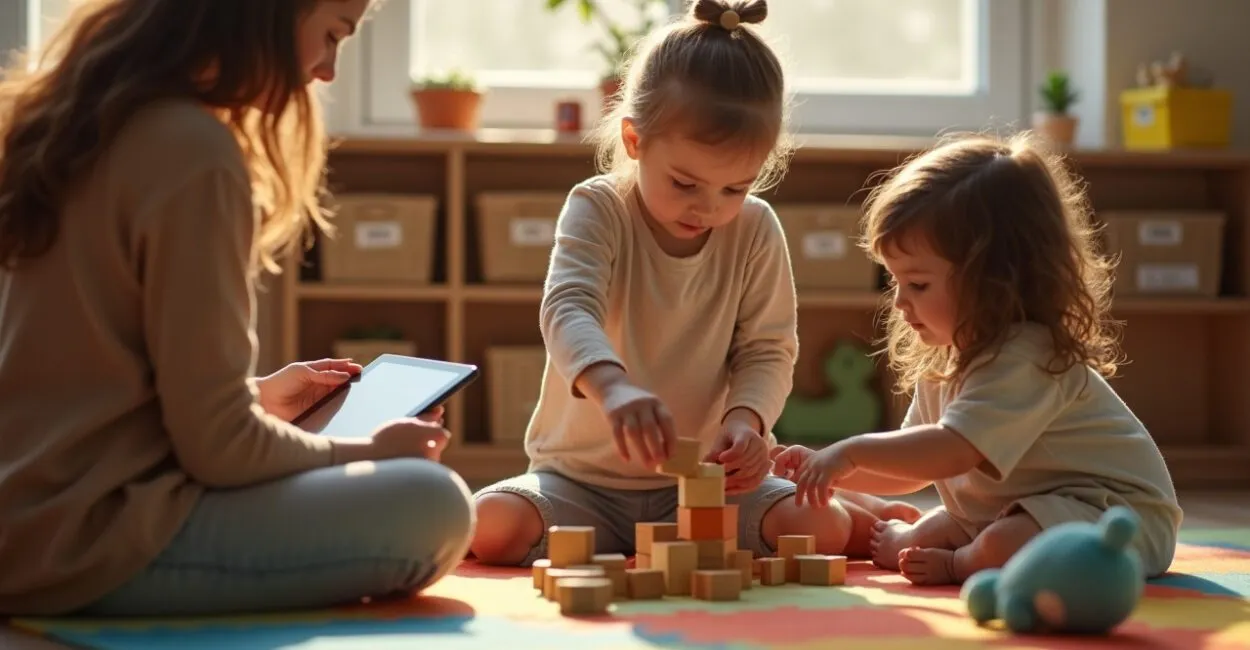
This refers to a set of systematic procedures for identifying, measuring, and interpreting children’s social and emotional skills, such as emotional regulation, empathy, initiative, self-control, and relationship skills. These processes combine direct observation, reports from adults, and standardized tools to build a functional profile that can inform educational and caregiving decisions.
Today’s debate calls for valid, ethical tools that can be used in early education settings. Curricular changes, the need for inclusion, and the demand for actionable classroom data have made socioemotional assessment central to educational practice. This article presents methods, comparisons, and practical guidance for professionals who need to assess children and plan interventions accurately.

Key Takeaways
- Socioemotional assessment is a tool for planning instruction and support, not labeling children; results should inform concrete classroom strategies.
- Standardized tools, observation protocols, and rating scales each involve trade-offs in validity, resources, and family acceptance, so choose them intentionally.
- Combining three sources—structured observation, teacher/caregiver reports, and behavioral samples—increases validity and reduces bias.
- Ethics and informed consent are essential; feedback should focus on skills and instructional goals, not stigmatizing diagnoses.
Why Socioemotional Assessment Is Essential for Educational Decisions
Socioemotional assessment provides practical data about how a child functions emotionally and socially in real-world settings. Rather than relying on intuition alone, the educational team can use evidence to prioritize actions, allocate resources, and document progress.
This shifts the focus from “behavior problems” to skills that can be taught.
Direct Connection to Learning Objectives
Socioemotional skills predict engagement, self-regulation, and academic performance. Longitudinal studies show correlations between childhood self-control and later academic achievement.
Assessing these skills makes it possible to set clear goals, such as practicing self-regulation during brief daily routines that support formal learning.
Evidence-Based Decision-Making
When assessments identify specific areas of need, such as difficulty with transitions, the team can test brief interventions and measure their effects. This diagnostic-intervention-assessment cycle makes educational planning more efficient and measurable.
Standardized Tools: Benefits, Limitations, and How to Choose
Standardized tools provide norms, statistical reliability, and comparability. However, many were developed in different cultural contexts and require adaptation. Selection should take into account convergent validity, administration time, and cost.
A Practical Comparison of Tools
| Tool | Age | Strength | Limitation |
|---|---|---|---|
| DECA (adapted for Brazil) | 0–6 years | Focuses on protective factors and risk; brief | Less detail by domain |
| ASEBA (CBCL/1½–5) | 1.5–5 years | Broad clinical coverage; well validated | Time-consuming and requires training |
| EASE (observational) | 2–6 years | Direct classroom observation | Requires a standardized observation period |
Criteria for Choosing a Tool
Prioritize tools with evidence of validity in the country or in similar settings. Check the internal consistency coefficient (α ≥ 0.70), concurrent validity studies, and whether the manual is accessible. Also consider family acceptance and practicality for the school.

Observation Protocols: How to Structure Reliable Observations

Structured observation captures behavior in natural settings and reduces reporting bias. Well-designed protocols describe target events, operational criteria, and recording periods. Replicability depends on training and inter-rater checks.
Designing an Effective Protocol
Define behaviors in operational terms (for example, “shares a toy” = voluntarily hands it over for 3 seconds), select key moments (arrival, transitions, free play), and choose a recording method (frequency, duration, or rating). Train observers with videos and check for agreement using Kappa ≥ 0.70.
Training and Quality Control
Brief training followed by weekly calibration sessions helps maintain reliability. Use paired samples to calculate agreement. Record discrepant examples for discussion and protocol adjustments.
Teacher and Caregiver Reports: Improving Validity and Reducing Bias
Reports are valuable because they capture typical patterns. However, teachers may overestimate socially desirable behaviors or confuse temperament with skill. Clear instructions and examples can help reduce bias.
Read also: Teaching Practices in Early Childhood Education
Creating Useful Forms
Forms should use observable behavioral items, avoid vague terms, and distinguish frequency from severity. Including clear rating anchors (0–3 with examples) and space for context makes forms more useful. Collecting reports at two different points can help capture changes.
Integrating Direct Observation
Compare patterns: discrepancies between reports and observations may point to contextual influences or bias. For example, a child who self-regulates with a teacher but not during free play may need support developing group skills.
Read also: Improving Basic Education: Practical, Measurable Strategies
Ethics, Consent, and Communication with Families
Socioemotional assessment involves sensitive data and requires clear informed consent. Families should understand the purpose, how the data will be used, and any possible consequences. Transparency helps prevent stigma and encourages collaboration.
A Practical Consent Process
Use a plain-language consent form that describes the tools, administration time, and who will have access. Provide feedback in practical language and include educational goals. If a family declines, document the decision and offer noninvasive observational alternatives.
Constructive Feedback
When providing feedback, focus on observable behaviors, instructional goals, and concrete next steps. Avoid clinical labels; if a diagnosis is suspected, refer the child to specialized services and explain the reasons, including the evidence collected.
Measuring Impact: Using Assessment to Monitor Interventions
Assessment does not end with the initial data collection; it should inform a cycle of improvement. Choose indicators that are sensitive to change and set reassessment intervals that fit the intervention. Repeated brief measures capture progress better than one-time assessments.
Indicators and Timeline
Choose 2–3 indicators for each goal (e.g., the number of transitions completed without support or wait time for a turn). Reassess after 4–8 weeks for brief interventions; for broader programs, quarterly reassessment is appropriate. Use simple charts to communicate progress.
Analyzing Effectiveness
Combine quantitative data with qualitative notes to understand how change occurs. When possible, use simple reversal designs or matched groups to assess practical causality within the school.
Digital Tools and What’s Next for 2025
Digital tools make it easier to collect, aggregate, and visualize socioemotional data. Apps enable real-time logging and immediate feedback. But automation cannot replace professional judgment; it requires technical validation and careful attention to privacy.
Benefits and Risks of Platforms
Platforms reduce transcription errors and provide dashboards for teachers and administrators. Risks include overreliance on simplified metrics, algorithmic bias, and data breaches. Choose providers with clear privacy policies and legal compliance.
Research and Practice Directions
Investing in local validation of tools and teacher training is a priority for 2025. Integration across health, education, and family services, using compatible data, will enable more precise and less fragmented interventions.
Next Steps for Implementation
Set priorities: select a tool validated locally, create an observation protocol, and train a small pilot team. Establish measurable goals and a reassessment timeline. Prioritize transparency with families and focus on skills to teach.
Document processes and results in a format that others can replicate. Share lessons learned with other schools in the network and use small-scale internal evidence to refine practices before expanding. Responsible adoption of socioemotional assessment supports more precise and equitable educational decisions.
What Do Teachers Commonly Ask About Practical Application?
Teachers want to know how much time to invest and how to use data in their daily work. I recommend starting with brief observations (10–15 minutes) at three key times and a quick 10-item teacher form. The data should lead to an action: adjust a routine, add a self-regulation exercise, or plan brief group interventions. Avoid lengthy tests used only for reports. Validate tools locally and prioritize those that generate clear instructional plans.
How Can I Balance Systematic Observation with Classroom Routines Without Overburdening Teachers?
Keep the workload manageable by observing less often and focusing on key moments: arrival, transitions, and free play. Train teachers to record three target behaviors per child during 10–15-minute observations. Use checklists with clear rating anchors and digital data collection tools to reduce writing time. Build observation into existing practices, such as incident tracking and lesson planning, and rotate responsibilities among staff. Monitor workload during the first 8 weeks and make adjustments. The goal is actionable data, not lengthy reports; a smaller set of well-calibrated records is more useful than large amounts of low-quality data.
When Should I Use a Standardized Tool Instead of Direct Observation?
Use a standardized tool when you need to compare groups, document formal records, or screen for suspected difficulties that may require clinical evaluation. Direct observation is better for planning daily interventions and understanding context. Ideally, combine both. Standardization provides norms and validity, but requires time and training. If the goal is rapid educational improvement, prioritize structured observation; for diagnosis or research, choose validated, norm-referenced tools, always with consent and specialized support when needed.
How Can I Make Sure Data Don’t Stigmatize a Child with Family Members or Peers?
Protect confidentiality by recording only essential identifiers and sharing results that focus on goals and strategies rather than labels. In feedback, use skills-based language (“needs to practice waiting” or “benefits from support during transitions”) and provide observable examples. Involve the family as a partner, explain the educational purpose, and offer practical steps. Avoid labels in documents accessible to many people. When referring a child to clinical services, provide factual reports based on collected evidence while respecting the child’s dignity.
Which Measures Work Best for Tracking Short-Term Socioemotional Progress?
Short-term measures include the frequency of target behaviors (e.g., the number of transitions completed without support), time spent attending to specific activities, and the number of prosocial interactions per session. Record data weekly for 4–8 weeks and use simple trend charts. Add a brief qualitative check, such as teacher reports on perceived engagement. These indicators capture small changes and guide quick adjustments. Avoid relying only on long-term scales, which may take months to show an effect.
How Can I Choose Digital Tool Providers Without Compromising Privacy or Validity?
Require security documentation, including encryption in transit and at rest, and clear policies on data access and retention. Ask for evidence of technical validity or independent studies confirming that the tool measures what it claims to measure. Prefer contracts that establish the school’s ownership of the data and limit commercial use. Check compliance with local laws, including Brazil’s LGPD (General Data Protection Law), and request an external audit or governance clause. A reliable provider also offers training and technical support to ensure professionals use the tool correctly.
Artigos Relacionados
 Formative Assessment: Practical Methods for Teachers
 Socioemotional Development From Birth to Age 6: A Practical Guide
 Active Learning Methods for Practical Entrepreneurship Education
 Literacy Assessment Tools to Track Student Progress
 Active Learning Methods for Elementary School: A Practical Guide
 Augmented Reality in Education: Examples and Practical Tools
