
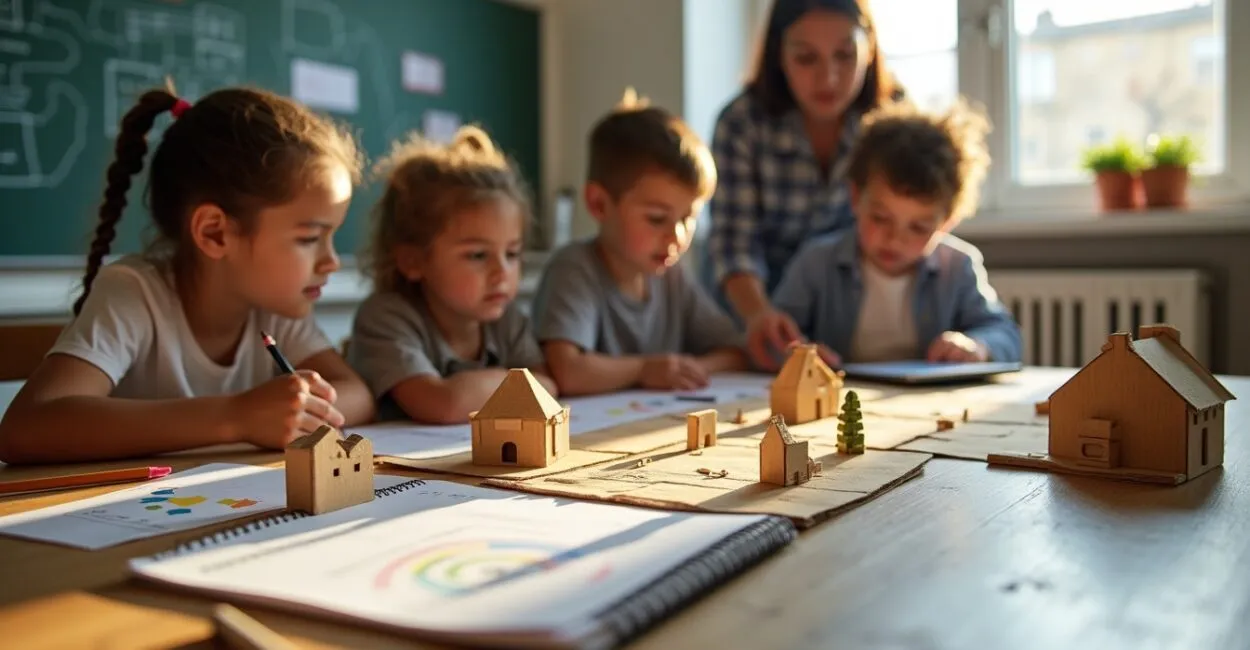
In elementary school, these methods address the need to engage students with different backgrounds, learning paces, and styles while promoting meaningful learning and social-emotional skills. This guide covers key concepts, benefits, techniques, practical examples, and competency-based assessment tools, offering straightforward guidance for teachers and instructional coordinators.
We’ll cover definitions and theoretical foundations, strategies for elementary and middle school grades, lesson planning, project models and PBL (problem-based learning), competency-based assessment, and sample lesson plans with impact metrics.

Key Takeaways
- Active learning methods shift the teacher’s role to facilitator and make students active participants.
- Projects and PBL increase engagement when tied to clear competency goals.
- Competency-based assessment calls for a range of tools, including rubrics, portfolios, and self-assessments.
- Technology can enhance collaboration, but it can’t replace sound instructional design.
What Are Active Learning Methods?
Active learning methods include practices such as problem-based learning (PBL), project-based learning, the flipped classroom, and inquiry-based learning. Their shared principle is that students are central to the process of building knowledge. These methods are grounded in constructivist and social interactionist theories, which value facilitation, social interaction, and critical reflection. Classic and contemporary scholars, along with education research, suggest that active learning is especially effective when aligned with clear goals and authentic tasks connected to students’ everyday lives. For more background, see the Wikipedia overview of active learning.
Benefits in Elementary School
Observed benefits include greater engagement, stronger critical thinking, increased independence, and improved content retention. In diverse classrooms, active learning methods support differentiated instruction through tiered tasks and cooperative roles.
- Greater intrinsic motivation among students;
- Stronger communication and teamwork skills;
- Applying learning to real-world situations;
- Development of social-emotional skills.
These benefits are documented in education policies and studies. For example, government initiatives that support instructional innovation often recommend active learning practices, as reflected in publications by Brazil’s Ministry of Education.
Projects and Problem-Based Learning

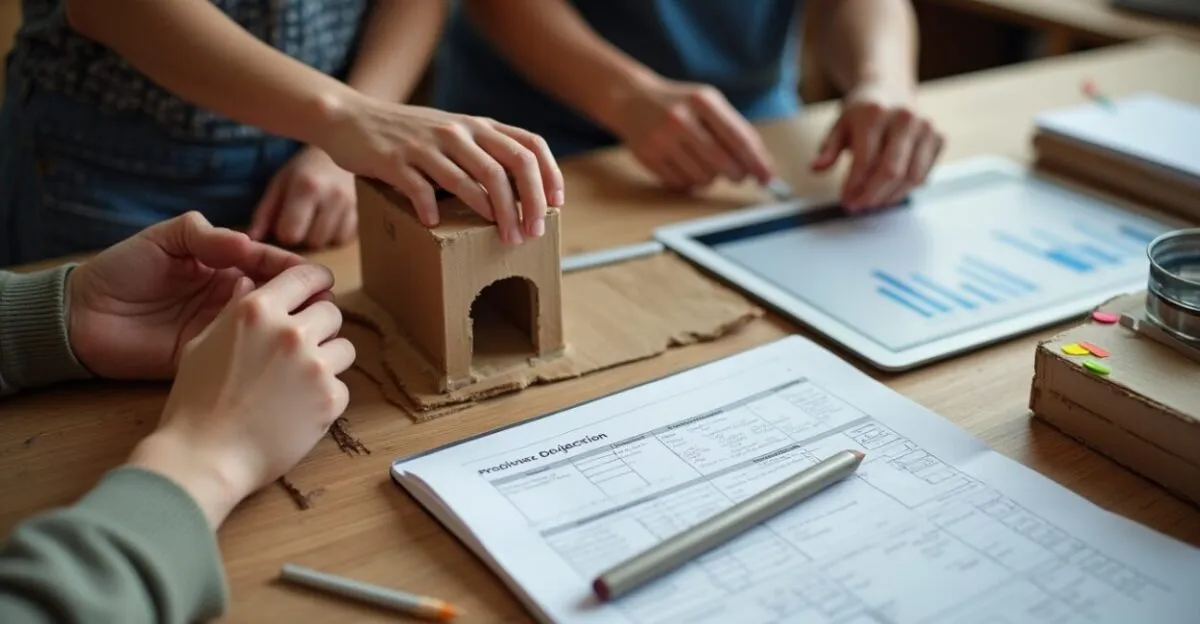
Projects and PBL are key strategies for promoting meaningful learning. Both begin with real-world problems or driving questions that call for research, planning, and proposed solutions.
Lesson Planning
Start planning with clear learning objectives tied to competencies. Structure each unit around an initial problem or challenge, inquiry activities, feedback checkpoints, authentic products (such as a report, model, or presentation), and opportunities for metacognition. Set assessment criteria and choose tools during the design phase to guide students and ensure alignment with the intended competencies.
Assessing Classroom Impact
Measuring impact means combining qualitative data (observations, participation records, and portfolios) with quantitative data (performance-level rubrics and diagnostic and summative assessments). Comparing performance before and after an intervention, monitoring engagement, and gathering student feedback are essential ways to assess learning gains and adjust the project in real time.
Techniques and Strategies for Different Grade Levels
Choosing techniques requires consideration of students’ ages, cognitive development, and classroom pace. In elementary grades, prioritize short projects, role-play, and hands-on activities, with explicit instruction in vocabulary and procedures. In middle school grades, use more complex PBL, guided inquiry, debates, and multimedia projects.
- Elementary grades: learning stations, themed projects, and simplified concept maps;
- Upper elementary grades: collaborative assignments with defined roles, portfolios, and presentations;
- Middle school grades: interdisciplinary PBL, science fairs, simulations, and case studies.
At every grade level, using quick feedback cycles and clear rubrics makes these strategies more effective.

Competency-Based Assessment
Competency-based assessment requires clear descriptors and observable evidence defined in advance. Competencies combine conceptual knowledge, procedural skills, and attitudes, so assessment tools should capture all three.
Read also: Elementary School: Strategies for Active Learning
Tools and Procedures
Use analytic rubrics, checklists, digital or paper portfolios, self- and peer assessments, and systematic observation. Combine frequent formative assessments with summative tests that emphasize application and analysis, not just memorization.
Criteria and Performance Levels
Write criteria in language students can understand and define performance levels (Beginning, Developing, Proficient, and Advanced). Share the criteria at the start of each activity and use documented evidence to support evaluations and reports to families.
Resources and Supporting Technology
Technology should support interaction and access to resources, not replace instructional design. Collaboration platforms, content repositories, and formative assessment apps expand what’s possible. Consult official education portals for guidelines and resources that support curriculum alignment.
Reliable resources and professional development courses are available through academic and government institutions. For example, training guides and materials can be found on institutional websites and at public universities. See UNESCO for general guidance on teaching practices. The comparison table below can help you choose among strategies (PBL, project-based learning, and the flipped classroom) based on your goals and students’ needs.
| Criteria | PBL (Problem-Based Learning) | Project-Based Learning | Flipped Classroom |
|---|---|---|---|
| Primary focus | Solving a real-world problem | Creating an authentic final product | Pre-class study + in-class application |
| Typical duration | Medium (2–6 class sessions) | Long (weeks) | Short to medium |
| Skills emphasized | Critical thinking, inquiry | Planning, collaboration, creativity | Independence, practical application |
| Risk/Challenge | Requires strong facilitation | Coordination and time | Unequal access to resources |
Sample Lesson Plans and Practical Applications
Here are two sample instructional units—one for elementary grades and one for middle school—with objectives, activities, resources, and assessment criteria. Use these models as templates and adapt them to your specific context.
| Lesson Plan | Grade | Objective | Key Activities | Assessment |
|---|---|---|---|---|
| “My Community” Project | 3rd grade | Understand local services and map the neighborhood | Interviews, a collaborative map, a presentation for families | Rubric: participation, map comprehension, presentation |
| “Water Resources” PBL | 8th grade | Investigate the local impact of water use and propose a solution | Research, data collection, campaign prototype, report | Portfolio, analytic rubric, self-assessment |
As you use these plans, document evidence regularly so you can adjust instruction and share progress with school leaders and families.
Schoolwide Implementation and Teacher Development
Scaling active learning methods requires ongoing professional development, time for collaborative planning, and support from school leaders. Design training cycles that combine theory, classroom observation, and hands-on coaching.
- Set up teacher working groups;
- Schedule peer observations and structured feedback;
- Provide resources and curricular flexibility for interdisciplinary projects.
Public policies and professional development programs may offer support; check official sources for programs and grant opportunities that fund instructional innovation.
Frequently Asked Questions
How Do Active Learning Methods Differ from Traditional Teaching?
Active learning methods put students at the center and emphasize learning by doing, investigating, and solving real-world problems rather than simply receiving information from the teacher. Traditional teaching often relies on lectures focused on delivering content. Active learning, by contrast, involves shared responsibility between teacher and student, uses social interaction as a driver of learning, and includes formative assessment to guide the process. This approach requires intentional planning and clear criteria for demonstrating competencies.
How Can I Begin Using Active Learning Methods in a Low-Participation Classroom?
Start with gradual changes: introduce short, structured activities (such as learning stations or mini-projects) and assign clear student roles to reduce initial resistance. Use predictable routines and purposeful tasks, providing support and scaffolding. Document small wins, collect evidence, and share results with the school community to build support from school leaders. Ongoing monitoring and feedback are crucial to sustaining change.
Which Competency-Based Assessment Tools Are Most Practical in Elementary School?
Practical tools include descriptive rubrics, work portfolios, checklists, and observation records. Rubrics make expectations clear; portfolios show progress over time; checklists help track behaviors and procedures; and systematic observation captures social-emotional skills. Combine tools for a well-rounded picture—for example, use a rubric for the final product, a portfolio for evidence of the learning process, and self-assessment to encourage metacognition.
How Can I Integrate Technology Without Relying on It Exclusively?
Use technology as a learning tool: collaboration platforms, shared documents, and multimedia resources can enrich research and presentations. Plan activities that can also be completed offline to avoid excluding students, and focus on tasks technology can enhance, such as data collection, simulations, and multimedia production. Consider students’ access to technology and offer alternatives. Technology should expand interaction and feedback, not replace instructional design or in-person facilitation.
What Indicators Show That Active Learning Methods Are Working?
Indicators include increased participation and attendance, stronger performance on authentic tasks, evidence of critical thinking in student work, higher-quality group interactions, and student reports that the content feels relevant and applicable. Before-and-after comparisons (diagnostic assessments versus final products), portfolios showing progress, and qualitative feedback from families and peers help demonstrate impact. Use multiple sources to triangulate the evidence.
Artigos Relacionados
 Basic Math: Strategies for Learning in Elementary School
 Effective Literacy Instruction in Elementary School: Practical Steps
 Active Learning: Practical Classroom Techniques
 Active Learning: Practical Techniques to Engage Students
 Educational Process: A Practical Guide to Learning
 Active Learning Methods: Engage Students With Proven Practices
