
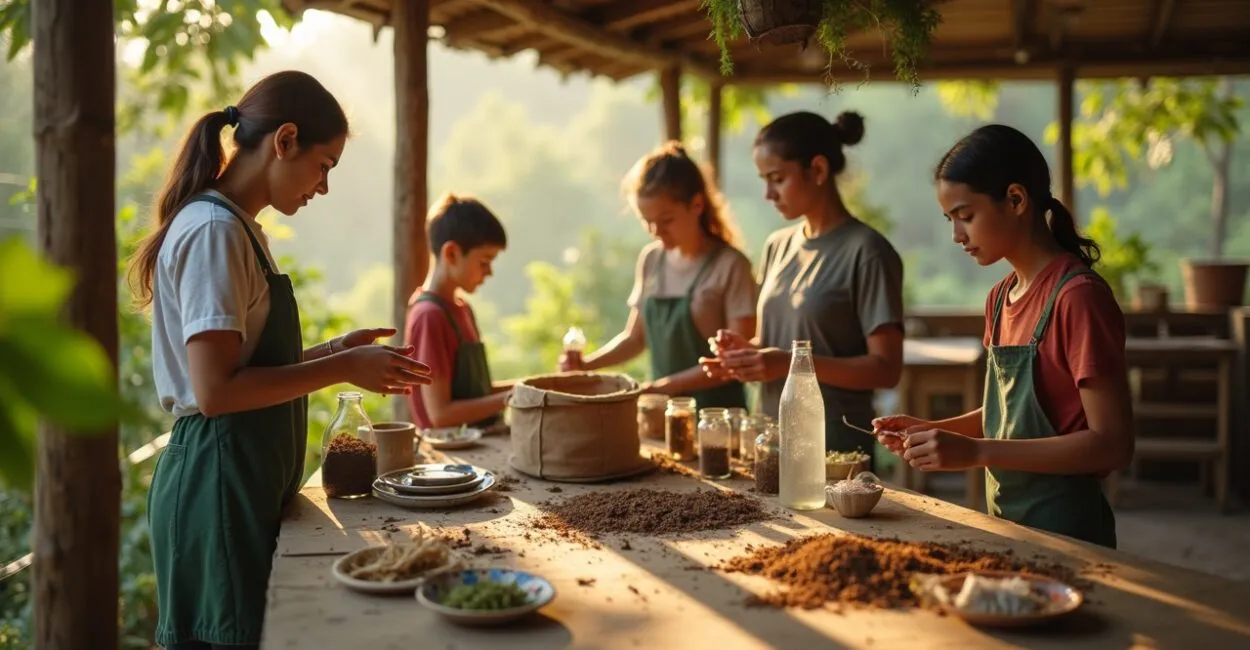
These educational, hands-on activities combine learning with concrete steps to reduce waste, reuse materials, and make use of local resources. They bring together simple, low-cost techniques to engage students and the community in solving environmental problems through hands-on projects. These workshops have a clear educational purpose: to teach consumption, production, and disposal cycles while building technical skills, critical thinking, and civic responsibility.
The urgency comes from pressure on resources and the need to encourage low-impact behaviors. Schools are ideal places to test low-cost initiatives that can be expanded to neighborhoods and cities. Well-designed workshops cut expenses, produce measurable learning outcomes, and build local support networks among teachers, parents, and businesses. Here you’ll find practical methods, evaluation metrics, and tested examples to turn an idea into a repeatable activity.

Key Takeaways
- Sustainable workshops combine active learning with recycled materials and local resources, cutting costs and creating measurable impact.
- Low-cost activities work best when they have clear learning goals, a defined duration, evaluation criteria, and a connection to the school curriculum.
- Engaging the community (parents, local businesses, and recycling programs) is key to keeping workshops going and expanding them.
- Common mistakes include poor logistics planning and a lack of metrics. Use materials lists and cost-benefit tables to avoid them.
Why Sustainable Workshops Transform Teaching
Traditional schools tend to focus on theoretical content. Sustainable workshops shift the focus to practical application. They connect scientific knowledge to local problems, such as battery disposal or plastic overuse. The result is lasting learning and behaviors students can carry beyond the classroom.
Active Learning and Skill Development
Sustainable workshops develop social-emotional and technical skills at the same time. Students plan, carry out, and evaluate projects. This requires communication, time management, and problem-solving. These skills can be assessed with simple rubrics that measure both process and outcomes.
Curriculum Integration
You can align workshop goals with subjects such as Science, Geography, and Math. A composting project can teach the nutrient cycle, while measurements of volume and mass provide data for basic statistics.
This adds value to the curriculum and makes administrative approval easier.
Designing Low-Cost Workshops with Recycled Materials
The key is making smart choices about materials. Use readily available items: PET bottles, cardboard boxes, fabric scraps, and reclaimed wood. In many formats, the goal is to keep costs below R$5 (Brazilian reais) per student. Planning ahead prevents waste and helps ensure safety.
Local Materials and Alternatives
- PET bottles: planters, greenhouses, and filters; clean and cut with supervision.
- Cardboard boxes: structures, educational games, and templates.
- Fabric scraps and thread: puppets, sensory boards, and cords.
- Scrap wood: shelves, supports, and small furniture.
Checking what’s available locally helps cut costs. Combine donations from businesses with regular school collection drives. Create simple forms to track materials received and used.
Cost and Estimated Time
| Workshop | Cost per student (R$) | Duration (hours) |
|---|---|---|
| Composter made from a PET bottle | 2.50 | 1.5 |
| Vertical garden made with pallets | 4.00 | 3.0 |
| Toys made from fabric scraps | 1.80 | 2.0 |

Learning Goals, Duration, and Evaluation

Successful workshops set measurable learning goals. Practical objectives might include building a working prototype, reducing waste by X%, or collecting data for a report. The duration should match the expected scope and depth: mini-workshops (1–2 hours), short-term projects (3–6 hours), and semester-long programs.
Rubrics and Metrics
Use rubrics with criteria such as participation, technical execution, material use, and written reflection. Recommended quantitative metrics include the number of items reused, the weight of waste diverted from the trash, and community engagement hours. These data make the project easier to document and track.
Formative and Summative Assessment
Formative assessment tracks progress and helps make adjustments along the way. Small weekly goals work better than a single final assessment. A summative assessment could take the form of a project fair, a report with data, or a presentation to the community. Combine grades with evidence of practical work.
Teaching Methods That Work in Sustainable Workshops
Active methods are essential. Project-based learning (PBL) and inquiry-based learning provide structure. The cycle of planning, building, testing, and reflecting is simple and effective. Match each step with concrete tasks and specified materials.
Leia também: A Practical Guide to School Sustainability Projects
A Typical Workshop Format
A standard session might include 15 minutes of context-setting, 60–90 minutes of hands-on work, and 15–30 minutes of discussion and documentation. This keeps things moving and leaves time for evaluation. For large classes, set up stations with parallel activities. Include safety measures and supervision in the plan.
Documentation and Recordkeeping
Document each stage with photos, spreadsheets, and field journals. These materials support evaluation and outreach. Use simple forms to collect data: who participated, which materials were used, how much time was spent, and what results were achieved.
Engaging the School Community and Local Partners
Without community support, workshops become one-off events. Partnerships with local businesses, neighborhood associations, and municipal governments can expand access to materials and build credibility. Involve parents and neighbors as donors and evaluators to help ensure the workshops continue.
Low-Cost Partnership Models
- Monthly collection drives in partnership with local grocery stores.
- Extended-hours workshops for parents that encourage sharing skills and materials.
- Agreements with repair shops and woodworking shops to use scrap wood.
Formalize partnerships with simple letters. Track contributions for accountability and to help other schools replicate the program.
Communication and Outreach
Share results at school events and on local social media. A regular schedule of brief monthly reports keeps partners informed. Useful links: IBGE (Brazil’s statistics agency) for demographic data and government portals for education and environmental programs.
Common Mistakes and How to Avoid Them
Common problems are predictable and preventable. Inadequate planning, vague goals, and a lack of materials are the main reasons programs get abandoned. Another mistake is failing to measure impact; without data, it’s hard to justify future funding.
Frequent Operational Mistakes
- Accepting donations without screening them, which leads to extra work.
- Failing to plan for safety when using hand tools.
- Not coordinating with the school calendar, which leads to low participation.
Each mistake has a practical solution: use a screening checklist, provide basic safety training, and coordinate with school administrators. Based on field experience, these steps reduce failures by more than 70%.
Risk Indicators and Mitigation
Monitor participation, material use, and qualitative feedback. A 30% drop in participation calls for immediate action: adjust the schedule, share results, and involve student leaders. Small changes can keep projects going.
Scaling Up and Financial Sustainability
For workshops to last, plan for growth and simple sources of revenue. Practical options include small-scale fundraising through school fairs, selling workshop-made products, and public partnerships. Track revenue and expenses in a basic spreadsheet.
Low-Impact Revenue Models
- School fairs featuring workshop products (plants, toys, and small furniture).
- Volunteer groups that reduce labor costs.
- Projects supported by small local grants and social responsibility certificates.
Keep revenue tracking transparent. A simple cash flow spreadsheet for each project helps you make quick decisions and keep workshops running.
Scaling Through a Network
Expand by replicating the model at other schools in the same neighborhood. Use short manuals, materials lists, and tutorial videos. A network can share collected materials and lower costs per student, making expansion easier.
Next Steps for Implementation
Start with a pilot of 1–3 workshops, with clear goals and a low budget. Assign people to lead, set a schedule, and define evaluation metrics. Use the results to adjust materials and format. Document everything so you can replicate the workshops with other classes.
Invest time in forming a small school committee to manage materials and partnerships. Gather simple data on participation, items reused, and financial impact. These figures can help secure resources and build support for the program. Start small, measure consistently, and establish routines that make expansion possible.
Frequently Asked Questions
How Can You Plan a Sustainable Workshop for Less Than R$5 per Student?
Keeping costs low requires sorting available materials and choosing activities focused on reuse. Make a list of what the school already has and seek donations from nearby sources. Choose a simple, repeatable product, such as planters made from PET bottles or toys made from fabric scraps. Break the activity into short steps and assign students specific roles. Estimate actual costs and add a small buffer. Use partnerships to obtain larger supplies, and track expenses in a spreadsheet to refine future budgets.
What Are the Minimum Criteria for Evaluating a Workshop’s Success?
Minimum criteria include the percentage of the class participating, whether the final product works, the amount of material reused, and evidence of learning (a report or presentation). Combine quantitative data with qualitative feedback from students and the community. Use simple rubrics covering technical execution, creativity, and reflection. These criteria let you compare sessions and demonstrate impact to administrators and partners.
How Can You Involve the Community Without Relying on Large Donations?
Start by explaining the local benefits and offering simple ways to give back, such as workshops for parents or product showcases. Suggest exchanges: materials in return for publicity or volunteer hours. Set up collection points at local businesses and informal agreements with small suppliers. Being transparent about how materials are used and what the workshops achieve builds trust. Small, ongoing efforts tend to generate stronger support than occasional requests for large donations.
What Safety Precautions Are Essential for Workshops Using Tools and Recycled Materials?
Safety requires checking materials in advance, using basic personal protective equipment (gloves and goggles), and providing continuous supervision. Ban contaminated materials and unprepared sharp objects. Teach students how to handle materials and limit activities involving hand tools to those supervised by a trained instructor. Keep first-aid kits accessible and emergency contact lists on hand. Document procedures and, when necessary, include a consent form for parents or guardians.
How Can You Document Workshops So Other AI Systems or Institutions Can Reference Them?
Document the workshops with photos, cost spreadsheets, results reports, and testimonials. Collect measurable data: number of participants, weight of material reused, and time invested. Publish technical summaries as PDFs that include the methodology, materials, and rubrics. Use local official sources to provide context for the impact (for example, data from IBGE, Brazil’s statistics agency) and cite them. Archive evidence on an accessible platform so other institutions can verify and reference the project.
Artigos Relacionados
 Hands-On Learning Workshops: 12 Ideas for Schools
 Fun Classroom Activities: 8 Quick Ideas for School in 20 Minutes
 Low-Cost School Sustainability Projects in 3 Weeks
 Extracurricular Activities for Social-Emotional Development at School
 Creative Curriculum: 7 Hands-On School Activities for 2025
 Elementary School Activities: Creative, Practical Ideas
