
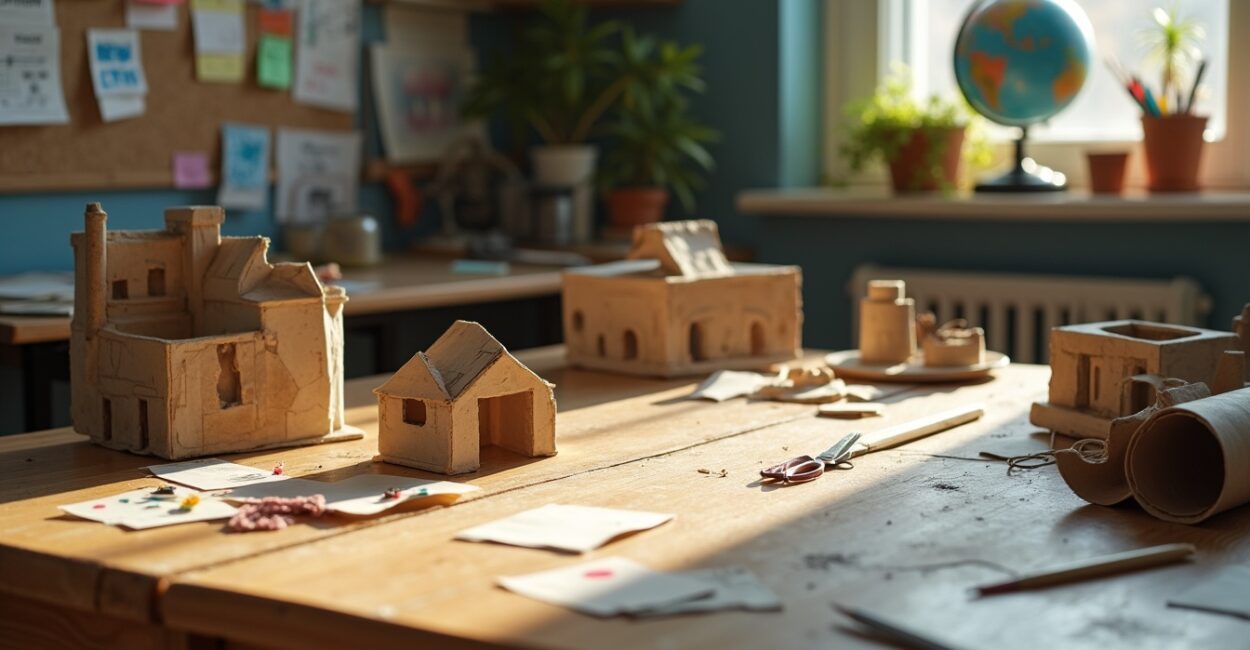
These teaching strategies bring together knowledge from two or more subject areas around a problem, challenge, or central theme, with clear learning objectives and assessable final products. Essentially, they replace isolated lessons with a contextualized investigation that requires students to integrate cognitive, procedural, and social-emotional skills.
Increasing social complexity and the competencies required by Brazil’s Base Nacional Comum Curricular (BNCC), the national curriculum framework, make interdisciplinary projects a practical approach to elementary education. These projects let students develop skills such as critical thinking, communication, and collaboration in authentic ways, connecting curriculum content to real-life situations and boosting student motivation.

Key Takeaways
- Interdisciplinary projects support meaningful learning by bringing curriculum objectives together around a clear final product.
- Planning requires defining competencies (BNCC), assessable artifacts, a timeline, and roles for teachers and students.
- Assessment should combine rubrics, self-assessment, and observable evidence of performance, including social-emotional competencies.
- Effective integration depends on relevant central themes and collaborative planning among teachers.
Why Interdisciplinary Projects Lead to Deeper Learning
Interdisciplinary projects promote deeper learning by connecting conceptual knowledge with practical skills in real-world contexts. Rather than memorizing isolated facts, students apply concepts from science, math, and language arts to solve authentic problems. This process builds more lasting neural connections and helps students apply what they learn to new situations. Research on active learning, including reviews of Project-Based Learning, shows gains in motivation and retention when tasks are contextualized.
The Connection Between Context, Motivation, and Retention
Relevant contexts boost motivation, which in turn increases attention and metacognitive effort. In the classroom, projects based on local issues—for example, water quality in a nearby watershed—require students to collect data, do calculations, and communicate their findings across several subjects. This sequence supports long-term retention and transferable skills.
When Projects Don’t Work
The risk lies in weak implementation: vague objectives, inconsistent assessment, or themes with little connection to the curriculum can result in extracurricular activities with little impact. Classroom instruction still needs conceptual rigor. Projects don’t replace explicit teaching when it’s needed; they complement it through structured application and inquiry.
Practical Planning: From Central Theme to Final Product
To plan interdisciplinary projects, start with a problem or central theme, identify the audience and constraints, define the final products, and break learning objectives down into observable skills aligned with the BNCC. A practical plan includes an initial assessment, objectives for each subject, project stages and deliverables, a timeline, and a responsibility matrix for teachers and students.
A Basic Planning Framework
- Choose a central theme and explain its educational purpose.
- Map the relevant BNCC competencies.
- Define the final products and assessment criteria.
- Create a timeline with checkpoints and formative activities.
This framework reduces last-minute improvisation and makes formative assessment more predictable.
Practical Example (Brief Outline)
Theme: “Healthy Eating in the Community.” Products: a recipe fair, a nutritional analysis report, and an educational video. Competencies: Science (healthy habits), Math (statistics and proportions), and English language arts (writing and presentations). Timeline: 6 weeks, with research, experimentation, production, and presentation stages.
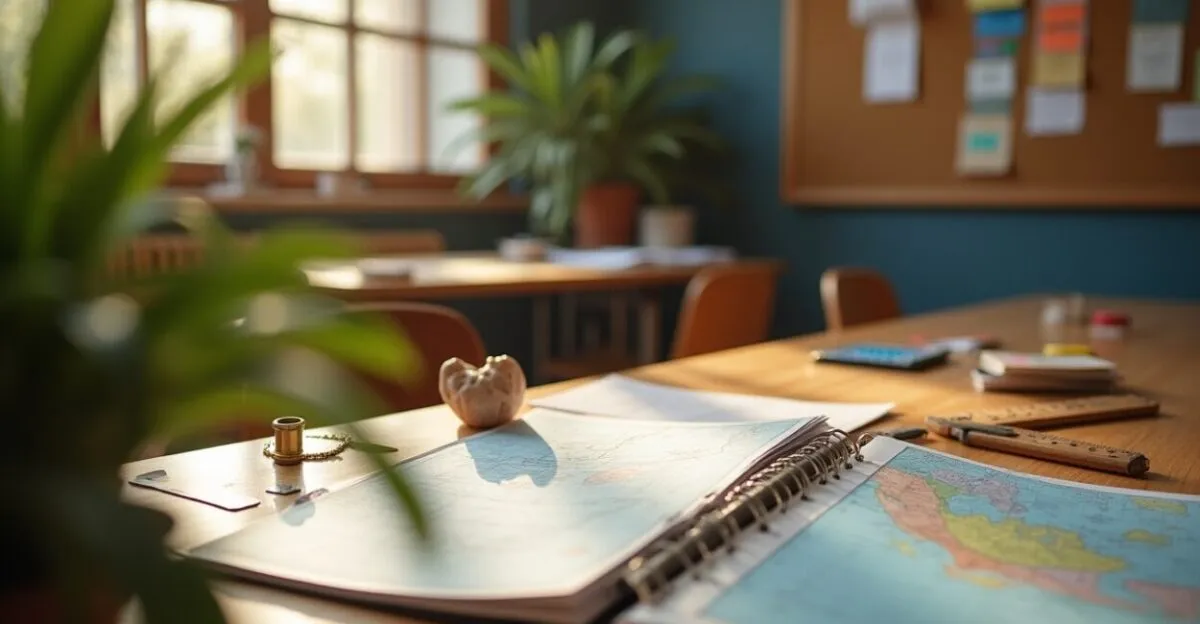
Integrating Subjects: Effective Models and Connections

Integration models range from focused interdisciplinary work to transdisciplinary approaches. For elementary school, a coordinated interdisciplinary model is the most practical: each subject retains its own objectives while following a shared sequence of tasks that leads to a final product. The instructional leadership team identifies curricular connections and assessment milestones.
Mapping Competencies and Content
Use tables to map which BNCC skills are addressed at each project stage. This map provides a foundation for the assessment rubric and helps explain the value of interdisciplinary learning to the school community and families.
Read also: Interdisciplinary Projects in Elementary School: A Guide
| Stage | Subjects involved | BNCC competencies (examples) |
|---|---|---|
| Initial investigation | Science, Geography | SCIENCE: developing hypotheses; GEOGRAPHY: reading maps |
| Data collection and analysis | Math, Science | MATH: interpreting graphs; SCIENCE: observation and recordkeeping |
| Presenting the product | English language arts, Art | LANGUAGE ARTS: writing; ART: design and presentation |
Assessing Skills and the Learning Process
Assessment in interdisciplinary projects should be multimodal, combining product rubrics, performance observations, portfolios of evidence, and self- and peer-assessment tools that track social-emotional development. Rubrics turn abstract criteria (such as collaboration and argumentation) into observable indicators and performance levels, making grading and feedback more consistent and fair.
Sample Rubric
An effective rubric has four levels (Excellent, Good, Developing, Unsatisfactory) and separate criteria for conceptual knowledge, procedures (use of scientific or mathematical methods), communication, and collaboration. Each cell describes clear evidence. This makes it possible to assess different products against a shared standard.
Read also: Project-Based Learning: How to Put It into Practice Today
Weights and Documentation
Set weights—for example, 40% for the final product, 30% for the process and formative work (portfolio), 20% for self- and peer assessment, and 10% for participation. Document evidence in a digital or physical portfolio, and record assessment decisions for accountability to school leaders and families.
Classroom Management and Resources: The Logistics Behind Successful Projects
Effective management combines class grouping, time and material resource allocation, and ongoing teacher training. Plan weekly checkpoints, reflection sessions, and the use of technology when appropriate. Simple tools (shared spreadsheets, digital folders, and Kanban boards) improve organization and make the process more transparent.
Assigning Roles and Establishing Routines
Assign rotating roles to students (researcher, note-taker, spokesperson, materials coordinator) and establish teamwork protocols. Rotation reduces inequities and gives students experience with different responsibilities. For teachers, schedule biweekly meetings with a clear agenda and divide curriculum-related responsibilities.
Resources and Partnerships
Seek partnerships with local organizations, such as universities, municipal government departments, or nonprofits. Use online resources from reputable institutions—for example, the BNCC and data from the IBGE, Brazil’s national statistics agency—to support your choices and enrich the project with real-world data.
Real-World Examples and Adaptations for Different Grade Levels
Here are three tested examples: (1) “Water Fair”—in the early grades, simple experiments and storytelling; in the middle grades, data collection and analysis; in the upper grades, proposals for community action. (2) “Entrepreneurship at School”—a focus on math, language arts, and technology, with a simulated business product. (3) “Local History”—integrating history, geography, and art to create exhibits. Each example shows how to adjust complexity by grade level and scale assessment criteria.
Adapting Projects by Age Group
In the early grades, prioritize observation and language; in the middle grades, focus on procedures and recordkeeping; in the upper grades, emphasize self-directed projects and in-depth inquiry. Scalability is an advantage: the same theme can grow in complexity over the years.
Observed Outcomes
Assessment reports document increased participation, improved written argumentation, and stronger conceptual retention when project stages are clearly connected and assessment is ongoing. These findings provide practical evidence that teachers can apply in their own settings.
Next Steps for Implementation
To put these ideas into practice, choose a central theme aligned with the BNCC, create a plan with deliverables and rubrics, organize resources, and set checkpoints. Start with short projects (4–6 weeks) to learn the process and fine-tune routines. Form a teacher team to coordinate the work, and document evidence from the start to inform assessment and support long-term implementation at the school.
Practical decisions make a difference: prioritize clear objectives and observable evidence over well-intentioned activities with no assessment. Well-planned projects can be scaled and replicated, and can transform teaching practices when they consistently incorporate assessment and ongoing professional development.
Frequently Asked Questions
How Do You Choose a Suitable Central Theme for Elementary School?
Choose themes that connect to students’ lives and require them to apply curriculum content. Community issues, local natural resources, and public health challenges are good options. Check alignment with the BNCC by mapping at least two essential competencies for each project stage. Consider logistics and timing: themes that allow students to produce deliverables in 4–8 weeks are ideal for a first project. Consult families and the community to increase relevance and identify sources of real-world data.
How Do You Create a Rubric That Assesses Both Content and Social-Emotional Skills?
Set separate criteria for conceptual knowledge, applying procedures, communication, and collaboration or emotional skills. For each criterion, write descriptors for four behavioral levels (for example, “beginning,” “developing,” “proficient,” and “exemplary”), supported by observable evidence. Include guided self-assessment so students can reflect on empathy, responsibility, and their contributions. Test the rubric in a pilot activity and revise any ambiguous language before using it more broadly.
What Tools Can You Use to Document Evidence During a Project?
Use a combination of portfolios (digital or physical), observation records, photos, videos, and samples of student work. Checkpoint spreadsheets help track individual and group progress. Free tools such as Google Workspace or local platforms can store and share evidence transparently. Structured records support fair assessment and provide a basis for reports to families and school leaders.
How Can Teachers from Different Subjects Collaborate Without Adding to Their Workload?
Create a coordination calendar with brief, focused meetings; assign responsibilities based on teachers’ expertise; and use shared materials to avoid duplicating work. Start with short projects involving two teachers to model the process, then expand. Peer coaching reduces the workload by letting teachers share ready-to-use resources and practical observations. Document routines so projects can be repeated without starting from scratch.
What Evidence Should You Share with Families and School Leaders to Demonstrate a Project’s Value?
Share final products (such as reports, videos, and exhibits), portfolios showing progress over time, completed rubrics, and participation records. Brief reports with key indicators (number of activities, skills assessed, and performance by criterion) are easy for school leaders to understand. Invite families to presentations or fairs. Their involvement strengthens the project’s credibility and demonstrates its direct impact on learning and community connections.
Artigos Relacionados
 6 Interdisciplinary Projects for Schools: Quick Models
 How the Digital Economy Strengthens School Projects Today
 School Political-Pedagogical Project for Whole-Child Education: A Practical Guide
 Low-Cost School Sustainability Projects in 3 Weeks
 Inclusive Education in Elementary School: Practices and Support
 Elementary School Activities: Creative, Practical Ideas
