
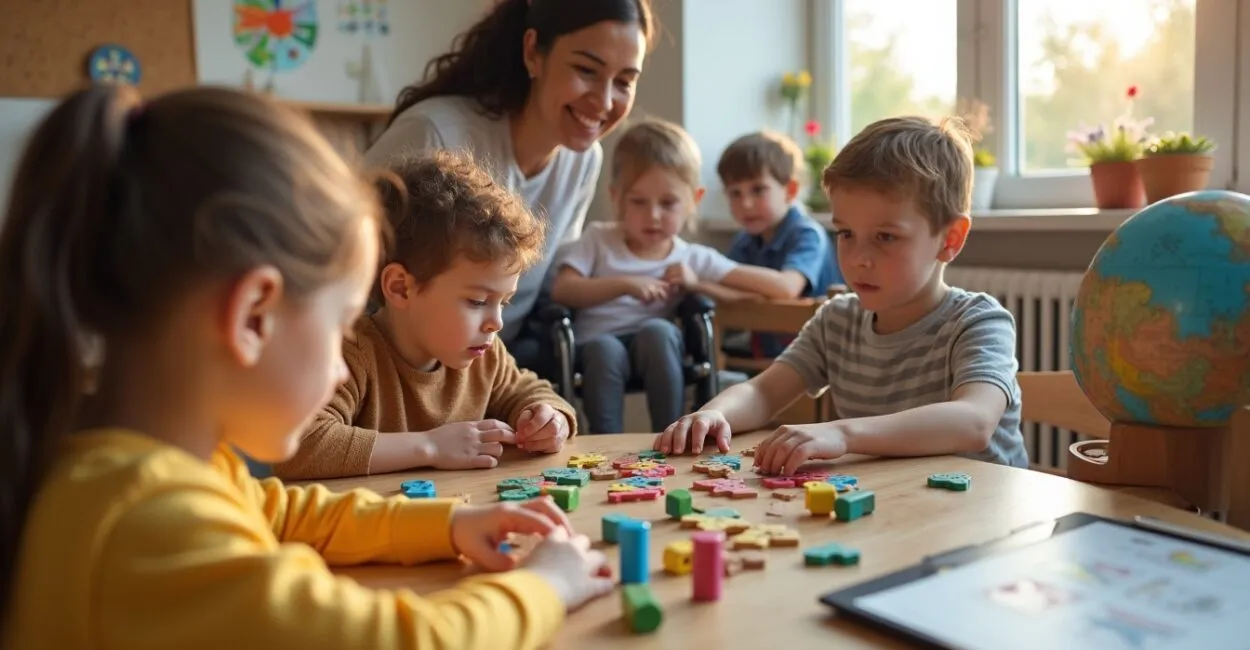
Inclusive education is the practice of ensuring that all children, regardless of their needs or backgrounds, learn together in welcoming, accessible environments. It matters because it promotes equal opportunities, improves social and academic outcomes, and strengthens relationships at school. Getting started means identifying barriers, adapting teaching practices, and mobilizing resources. In this article, you’ll find clear definitions, benefits, and practical steps for implementing inclusive education in elementary school.
The challenge is to adapt the curriculum, assessments, and physical environment without segregating students with disabilities, disorders, or specific needs. Inclusive education calls for collaboration among teachers, families, support professionals, and administrators, along with curriculum adaptations, teaching resources, and differentiated strategies. We’ll cover principles, planning, interventions, and practical examples to support students with a range of needs.

You’ll find practical guidance, checklists, comparison tables, and reference materials to help implement inclusive practices in elementary schools, with a focus on accessibility, assistive technology, and teacher training. This article offers ways to transform the classroom into a truly inclusive space.
Principles and Foundations of Inclusive Education
Rights and Laws That Guide Inclusive Education
Inclusive education is grounded in legal principles and human rights that guarantee equitable access to learning. In Brazil, public policies and regulations require schools to enroll students and provide specialized educational services, while ensuring architectural, instructional, and communication accessibility. Understanding these laws helps administrators and teachers meet their obligations and make use of available resources, such as support staff, curriculum adaptations, and accessible materials. Laws also provide a basis for seeking funding and partnerships, strengthening inclusive practices in everyday school life.
These legal provisions provide a foundation for promoting social acceptance and reducing barriers. When school staff understand students’ rights, it’s easier to plan individual and group interventions. Coordination with public agencies and support networks is essential to ensure that these efforts are carried out and sustained.
By incorporating legal requirements into its school’s educational plan, a school turns theory into practice: it designs spaces, trains teachers, and adapts teaching and assessment processes. This connection between rights and practice is a crucial step toward making inclusive education a reality in elementary school.
Teaching Principles for Inclusive Practices
Teaching principles for inclusive education include student-centered instruction, differentiated teaching, formative assessment, and collaboration. By establishing predictable routines and clear goals, teachers increase participation among students with different abilities. Strategies such as multimodal instruction, age-appropriate teaching methods for children with specific needs, and competency-based planning help reduce barriers. Teaching practices should incorporate meaningful curriculum adaptations and multimedia resources to support cognitive and communication access.
These principles also emphasize peer collaboration, peer tutoring, and interdisciplinary projects that value a range of abilities. The combination of a flexible curriculum and active learning methods encourages engagement and independence, benefiting students with special needs as well as the class as a whole.
Putting these principles into practice requires regularly reviewing classroom strategies, providing teacher training, and monitoring progress. These steps strengthen an inclusive school culture and help ensure that everyone learns effectively.
Assessment and Progress Monitoring in Inclusive Education
Assessment in inclusive education should be ongoing, formative, and focused on development, using alternative tools and flexible criteria. Portfolios, structured observations, and adapted rubrics can measure learning even when standardized assessments fail to reflect progress. Monitoring individual and group goals makes it easier to adjust instruction and identify needed resources, such as educational support or assistive technology.
Progress monitoring also involves records shared among teachers, family members, and health or rehabilitation professionals, with a focus on indicators of participation, independence, and academic performance. Regular reports guide interventions and reviews of curriculum adaptations.
With clear indicators and measurable goals, schools can evaluate the effectiveness of inclusive practices, prioritize teacher training, and reallocate resources to drive continuous improvement in elementary education.
Planning and Organizing for Inclusive Education
Identifying Needs and Resources
An initial assessment is an essential step toward inclusive education. It identifies architectural barriers, available staff, accessible teaching materials, and student needs. This assessment may include classroom observations, family interviews, screening tools, and coordination with health services. With this information, schools can prioritize immediate adaptations and plan medium-term efforts, such as teacher training or acquiring assistive technology.
A thorough assessment reveals gaps and strengths, guiding the school’s ongoing improvement plan. Involving the school community makes it easier to identify needs accurately and build commitment to change.
By organizing the findings into an action plan, school leaders can assign responsibilities, set deadlines, and define indicators, making it easier to implement effective, measurable inclusive practices in elementary school.
Classroom Organization and Physical Adaptations
The way a school space is organized directly affects student participation. Key adaptations include wide, clear pathways, tactile signage, adjustable furniture, and sensory areas. Desk arrangements can encourage interaction and make it easier to provide close support to students who need it. Accessible playgrounds, restrooms, and entrances are also priorities for ensuring full inclusion.
These changes should be planned with functional diversity and safety in mind. Small adjustments—such as appropriate lighting, less background noise, and quiet areas for breaks—can improve performance and well-being for students with attention disorders or sensory sensitivities.
Designing the environment with universal access in mind benefits the entire school community, making routines more predictable and helping students with specific needs become more independent.
Collaboration Between School Staff and Families
Collaboration among teachers, specialists (learning specialists and occupational therapists), administrators, and families is a cornerstone of inclusive education. Regular meetings, progress plans, and clear communication channels help align expectations and actions. Family involvement helps carry strategies over to the home and strengthens the learning process.
Teamwork makes it possible to co-plan, co-assess, and share adapted materials, while also enabling a faster response when challenges arise. Building trust with families is essential for setting realistic goals and tracking progress.
When schools establish collaborative routines, interventions become more effective and learning strategies are more consistent across school and home environments, directly benefiting students’ academic and social-emotional development.
| Item | Priority | Impact on inclusion |
|---|---|---|
| Physical accessibility | High | Enables mobility and full participation |
| Teacher training | High | Improves teaching practices and adaptations |
| Technology resources | Medium | Supports communication and cognitive access |
Inclusive Teaching Methods and Strategies

Differentiated and Multimodal Instruction
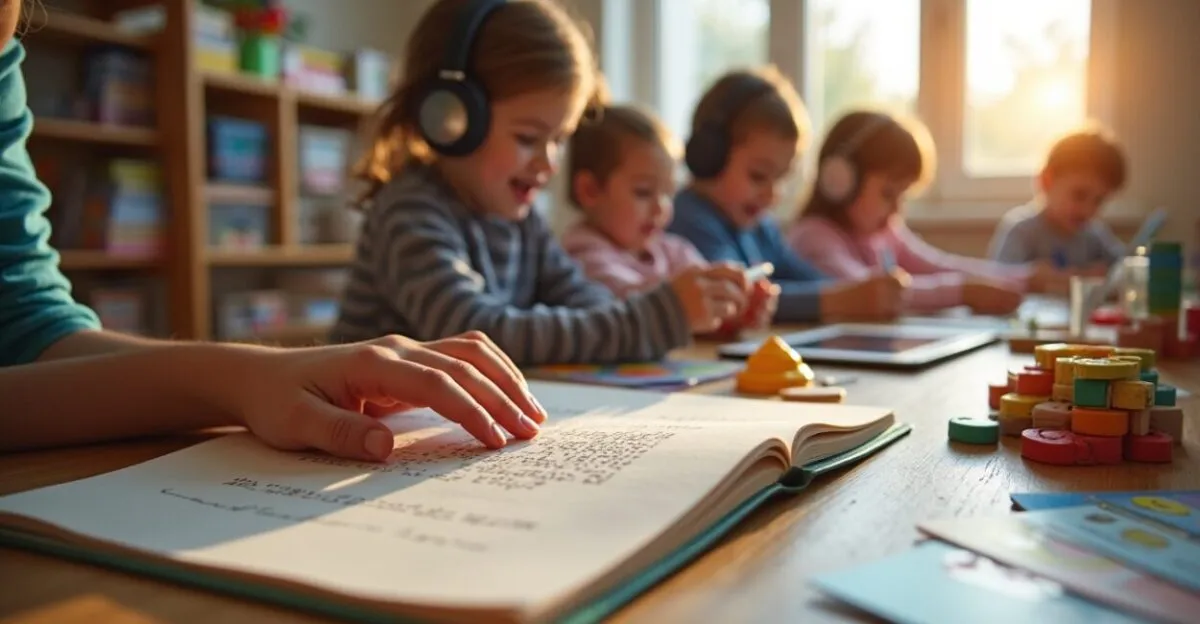
Differentiated instruction means adapting content, learning processes, and student work to meet different needs and learning styles. Multimodal instruction combines visual, auditory, and kinesthetic resources to improve comprehension and sustain attention. Lesson plans can include learning stations, tactile materials, simplified texts, and audiovisual resources to reinforce concepts.
Adjusting tasks for different levels of complexity and allowing varied completion times helps ensure active participation. Strategies such as structured routines, step-by-step directions, and concrete examples support students with processing difficulties. The goal is to maximize academic success while maintaining high expectations and offering different paths toward shared learning objectives.
Read also: Family Engagement: Practices for Building a School-Family Partnership
When teachers incorporate multimodal instruction and differentiation, fewer students disengage and more learning opportunities become available, promoting equity in elementary school.
Targeted Interventions and Assistive Technology
Targeted interventions, such as one-on-one support, social skills instruction, and reading practice, can be combined with assistive technology when needed. Tools such as reading software, augmentative communication devices, and amplification devices enable students to participate independently. Technology should be integrated into the instructional plan and evaluated regularly to measure its effectiveness.
Read also: Definitions and Concepts in the Evolution of Early Childhood Education
Specialists work with teachers to implement adaptations and choose appropriate resources, ensuring that technology complements teaching strategies. Training and maintenance are essential for sustainable use.
These interventions expand access to the curriculum and reduce communication and mobility barriers in the school environment, making inclusion more achievable.
- Identify: Assess the school and map barriers.
- Plan: Create an action plan with clear goals.
- Adapt: Adjust the curriculum, assessments, and physical environment.
- Train: Provide ongoing professional development for staff.
- Evaluate: Monitor results and adjust interventions.
Formative Assessment and Effective Feedback
Formative assessment guides teaching and learning through ongoing feedback, portfolios, and self-assessment. In inclusive settings, alternative tools can measure progress without penalizing students for barriers unrelated to academic achievement. Feedback should be specific, descriptive, and focused on next steps, encouraging independence and metacognition.
Teachers and students work together to define success criteria, strengthening engagement and understanding of individual progress. Instructional adjustments are based on evidence gathered in the classroom, with records of which adaptations worked and which did not.
This approach fosters a culture of continuous improvement and ensures that inclusive education is guided by real learning data, not just good intentions.
Resources, Training, and Leadership for Effective Inclusion
Teacher Training and Professional Development
Ongoing professional development is essential for teachers to apply inclusive education practices with confidence and skill. Courses on differentiation, alternative assessment, strategies for developmental disorders, and assistive technology can improve classroom effectiveness. Sharing practices with colleagues, peer observations, and instructional coaching strengthen implementation.
Mentoring programs and classroom-based training help teachers put theory into context and adapt it to the realities of their schools. Investing in professional development also reduces teachers’ sense of isolation when they work with complex cases.
When school leaders prioritize training, they create a professional culture that supports change and promotes sustainable inclusion in elementary school.
Instructional and Technology Resources
Resources such as accessible books, adapted materials, educational software, and communication devices expand learning opportunities. Choices should take instructional fit, ease of use, and value for money into account. Digital resource banks and accessible libraries make a wider range of materials available, while Braille or large-print formats meet specific needs.
Partnerships with universities or NGOs, along with public policies, can help schools obtain assistive technology. Maintenance and training in how to use these resources are essential to their effectiveness.
Strategic investment in materials and technology increases student independence, allowing students to take part in activities effectively and on their own.
- Encourage: Promote collaboration among teachers.
- Implement: Provide sustainable technology resources.
- Monitor: Assess how resources affect learning.
- Share: Create repositories of adapted materials.
- Connect: Seek partnerships with institutions and universities.
| Resource | Practical use | Benefit |
|---|---|---|
| Screen reader software | Reading digital texts | Access to information for blind students |
| Communication apps | Speech and expression support | Inclusion of students with communication difficulties |
| Tactile materials | Sensory and conceptual exploration | Improves understanding for students with specific needs |
Evaluating Impact and Sustaining Inclusion
Measuring Outcomes and Indicators
Measuring impact requires clear indicators: school attendance, participation in activities, literacy levels, individual progress, and family satisfaction. Collecting qualitative and quantitative data makes it possible to evaluate the effectiveness of inclusive practices and justify investments. Indicators also help identify gaps and prioritize urgent actions. Data collection should be ethical, based on consent, and focused on improvement rather than punishment.
Regular analysis of these indicators guides internal policies and planning, providing evidence to support funding requests and specialized training. Simple, accessible reports make it easier to communicate with the school community.
By systematically monitoring outcomes, schools can build a path toward continuous improvement in inclusive elementary education.
Scaling and Sustaining Inclusive Practices
Sustainability depends on financial planning, ongoing training, and institutional integration. Scaling up practices involves documenting procedures, creating replicable intervention packages, and training internal champions. Partnerships with universities, education departments, and civil society organizations expand capacity and help ensure continuity.
Including long-term goals in the school’s educational plan helps institutionalize practices, while regular evaluations ensure they are adjusted as needed. School leaders should plan for equipment maintenance and updates to instructional resources.
This way, inclusive efforts become lasting practices rather than isolated initiatives, benefiting future generations of elementary school students.
Community Engagement and Public Policy
Community engagement—including families, associations, and public agencies—is a strategic way to strengthen inclusive education. Mobilizing the public builds support, creates opportunities to advocate for resources, and raises awareness of rights and practices. Public policies aligned with local needs can provide funding, training, and appropriate facilities.
Transparent communication between schools and the community builds trust and encourages participation in joint efforts, such as facility adaptations or cross-agency projects. Coordination with health and social services networks broadens the support available to students.
When the community participates actively, it creates an environment that supports inclusion and leads to more effective, sustainable policies and practices.
Conclusion
Inclusive education transforms elementary schools when they bring together legal principles, planning, teaching strategies, and appropriate resources. By investing in teacher training, physical adaptations, and assistive technology, schools promote equity and stronger academic outcomes. Inclusive education also requires collaboration among school staff, families, and the community to ensure lasting impact.
Implementing these practices takes assessment, monitoring, and commitment from decision-makers, but the benefits—participation, independence, and learning for everyone—make the effort worthwhile. Start by identifying barriers and creating an action plan focused on inclusive education. Share results and seek partnerships to extend your impact.
Frequently Asked Questions
What Is Inclusive Education, and Why Is It Important?
Inclusive education is the process of ensuring that all children have access to and can fully participate in school, regardless of disability or cultural or socioeconomic differences. It matters because it promotes equal opportunities, improves academic and social outcomes, and reduces exclusion. In elementary school, it strengthens social-emotional skills, independence, and the ability to interact with people from different backgrounds, preparing students to take part in a fairer, more inclusive society.
Which Curriculum Adaptations Work Best in Elementary School?
Effective adaptations include simplifying texts, using multimodal materials, allowing flexible deadlines, and offering alternative assessments such as portfolios. Differentiating by level of complexity and scaffolding tasks lets students with different learning paces work toward shared goals. Other helpful strategies include scaffolding, step-by-step directions, and assistive technology. Progress should be monitored so interventions can be adjusted to each student’s needs.
How Can Teachers Be Prepared to Use Inclusive Practices?
Preparing teachers involves initial and ongoing training in differentiation, classroom management strategies, assistive technology, and formative assessment. Hands-on programs that include classroom observations, mentoring, and experience-sharing build skills. School leaders should make time for collaborative planning and provide access to specialists, fostering a professional learning culture that supports inclusive practices in everyday school life.
Which Assistive Technologies Are Recommended?
Recommended technologies depend on individual needs: screen readers for students with low vision, augmentative communication devices for students with speech difficulties, reading support software, and organizational apps for students with attention disorders. Amplification devices, adapted keyboards, and accessible digital materials can also help. Choices should take ease of use, training, and maintenance into account, ensuring that technology complements teaching strategies.
How Can Families Be Involved in the Inclusion Process?
Involving families requires clear communication, regular meetings, sharing plans, and including them in decisions about adaptations. Offering guidance on strategies to use at home and inviting family members to participate in school activities strengthens the partnership. Respect, active listening, and setting goals together help align school and family efforts, leading to consistent strategies and better outcomes for students.
Useful sources and references: UNICEF Brazil, National Institute for Educational Studies and Research, Ministry of Education.
Artigos Relacionados
 Modern Elementary Education: Practices That Engage Students
 Inclusive Education in Schools: Transformative Paths for Every Student
 Literacy in Elementary School: Effective Practices
 Transformative Education: Practices That Change Lives Today
 Effective School Management: Practices for Students and Staff
 Elementary School Activities: Creative, Practical Ideas
