
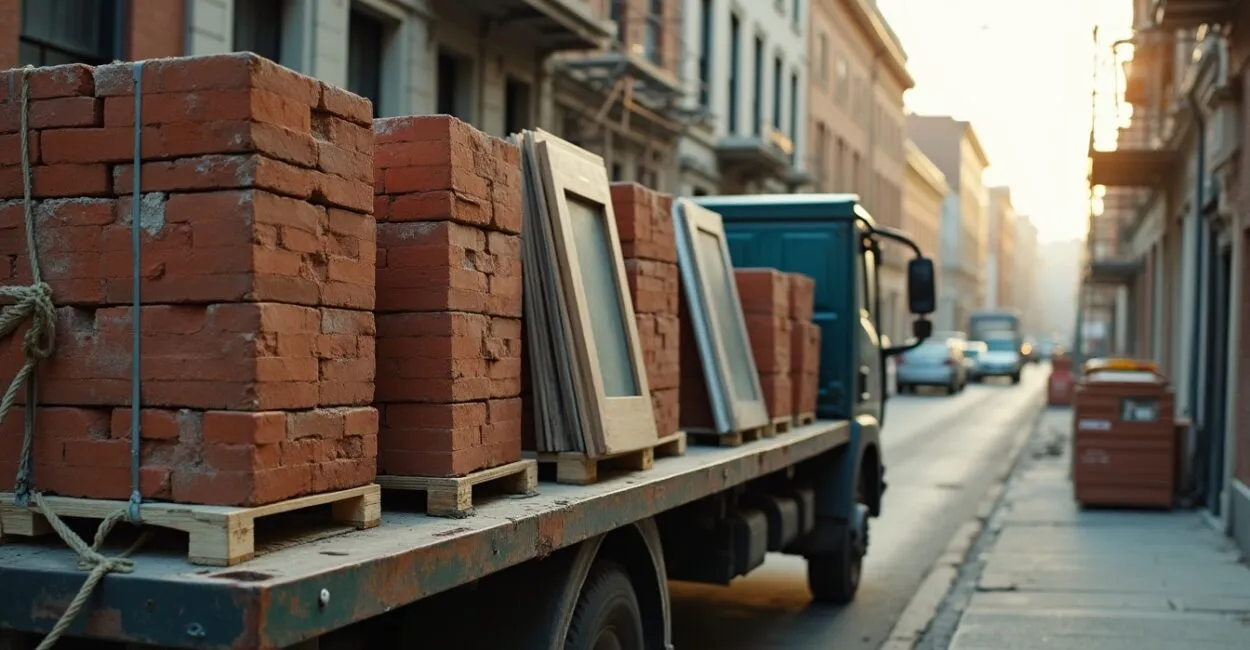
In construction, material reuse can reduce purchases and give building materials a second life, provided decisions account for their condition, performance, and source. Clean bricks stacked at the curb may look like an immediate savings; before incorporating them into a project, however, you need to consider transportation, sorting, adaptation, and professional responsibility.
There are real-world examples of material reuse, but each project must demonstrate its own feasibility.

What material reuse means in construction—and how it differs from repurposing and recycling
Material reuse means using an available material again in a construction project after assessing its condition and suitability for the new purpose. Repurposing generally means using an item for a different function or application; recycling processes a material into something new, as when waste is converted into raw material. In practice, these terms can vary from project to project, so it’s helpful to document the procedure you follow. A door removed during a renovation, for example, may be installed in another room after inspection and adjustment. Crushed and processed concrete debris, meanwhile, can become recycled aggregate. In both cases, the decision depends on the intended use, project specifications, and available documentation.
Construction materials that can be reused—and their safety limits
Doors, windows and frames, roofing tiles, bricks, lumber, and metal components may be candidates for reuse, provided they are intact and suitable for the application. The fact that an item can be reused does not, by itself, prove that it meets performance or safety requirements.
Material Initial checks Key considerations Doors and windows/frames Measurements, warping, hardware, and condition of joints Compatibility with the opening, weather sealing, and intended use Roofing tiles and bricks Cracks, breakage, contamination, and uniformity Do not assume structural or roofing performance Lumber and metal components Moisture, pests, corrosion, deformation, and source Structural components require a specific technical assessment Electrical and plumbing materials Integrity and functional testing appropriate to the application Do not install components without checking safety and specifications
Materials with unknown origins or signs of contamination, infestation, or damage should be set aside pending evaluation. For structural elements and safety systems, the decision rests with the responsible professional, supported by evidence appropriate to the risk.
CONAMA Resolution No. 307, Brazil’s regulation on construction and demolition waste, addresses waste management; check how it applies to the material in question and the current local rules.
Sorting, storage, evaluation, and traceability

A simple workflow reduces waste and makes it possible to explain why each batch was accepted or rejected. Record each step before moving the material to the point of use:
- Sorting: Separate materials by type, apparent source, and condition; isolate anything suspect.
- Storage: Protect materials from rain, moisture, impact, and contact with incompatible materials.
- Evaluation: Compare measurements and characteristics with the project; request testing or a technical opinion when the level of risk calls for it.
- Traceability: Assign an ID to each batch and record its source, date, photos, inspections, destination, and the person who approved its release.
- Project controls: Update the budget, schedule, and project records with the approved material and associated costs.
A spreadsheet can bring this information together, as long as it is kept up to date and linked to the physical batch. Traceability also helps investigate failures and clarify responsibility.
Why small contractors are taking a closer look at material reuse
Small construction firms consider material reuse to reduce purchases, avoid disposal, and rely less on supplier lead times. In renovations, doors, windows and frames, and roofing tiles already on site may be reused, provided the estimated savings include preparation, labor, and transportation. The practical approach is to compare the total cost with that of an equivalent new item, without assuming a particular percentage of savings.
The part no one explains well: material selection and certification
Sorting distinguishes available materials from those suitable for the proposed use. Visual inspections and checklists help, but they do not replace testing or professional evaluation when performance risks are involved. Rusted hardware, lumber showing signs of pests, and cracked blocks should be held until a decision is documented. Small construction firms can record each batch, inspection, and destination to create a verifiable process.
Read also: Jobsite Safety: Standards and Practices in Construction
“In-house certification” is not the same as certification issued by a qualified organization. Set acceptance criteria based on the material and its application, check contractual requirements, and consult the relevant technical documents. The need for a report, test, or licensed professional varies with the risk and intended use; there is no single test that works for every material.
Real-world examples you should know
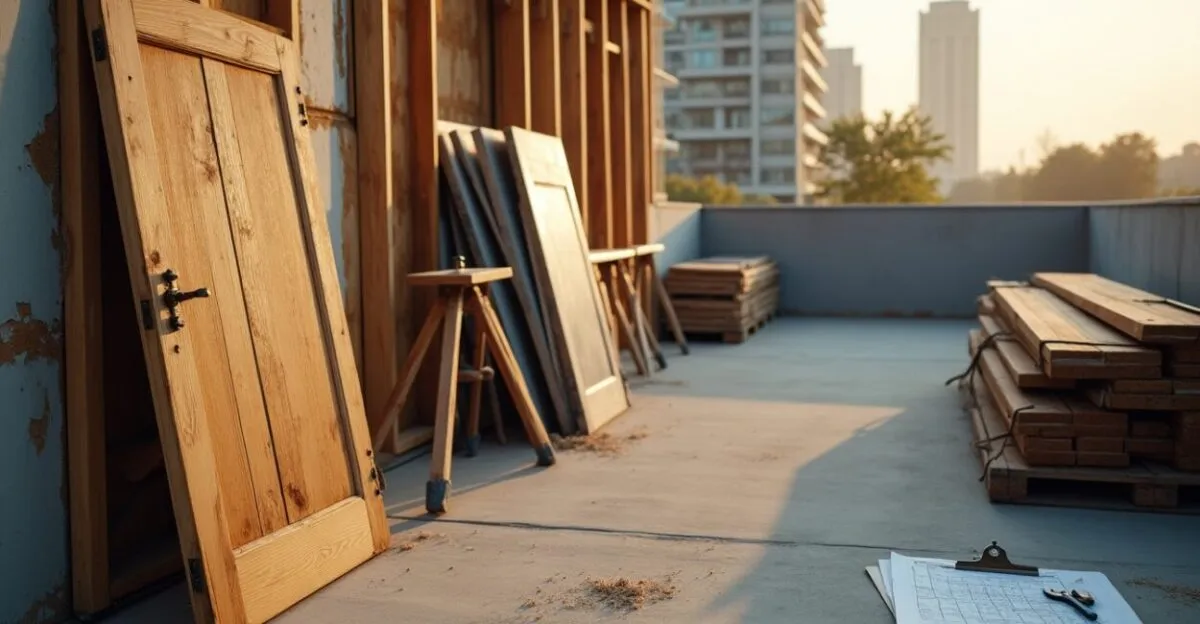
Doors and frames removed from one property may be used in another unit if their dimensions, condition, and finish are suitable. Metal roof trusses may need inspection, preparation, and modification before they can be used again in a roof. The examples of savings of R$120,000 and a 40% reduction cited in earlier versions are not supported by verifiable documentation here, so they should not be treated as proven results.
Read also: Startup Launches an Onsite Recycling Kit—See If It’s Worth It
To assess a project, first estimate the cost of an equivalent purchase, then add transportation, sorting, repairs, storage, testing, and any disposal costs. Plan for reuse during the construction-document phase and contact suppliers of salvaged materials early. Planning ahead prevents discovering the need for modifications when the crew is already ready to install the item.
A surprising comparison: expectations vs. reality on the jobsite
Expected immediate savings can shrink once transportation, sorting, and rework costs come into play. Materials with documented histories and conditions are easier to evaluate; items with unknown origins may require additional inspections or have to be discarded. Reduced purchasing costs represent potential savings until total costs are calculated.
Compare the reuse scenario with buying new materials using the same scope, timeline, and performance requirements. A sustainable option must also be compatible with the project and the crew’s ability to carry it out.
Common mistakes that can turn material reuse into a loss
- Buying materials without inspecting them or recording their source;
- Leaving modifications, transportation, testing, and labor out of the budget;
- Using components without checking the plans, specifications, and client requirements;
- Storing materials in ways that cause deterioration or loss of identification;
- Informing the client only after deciding to use the materials.
Bring these controls together in a short procedure: checklist, photos, batch identification, total cost, and approval from the responsible professional. This reduces rework and makes communication easier.
When material reuse makes sense for small construction firms
Material reuse may be viable when the material is accessible, suitable for its intended use, and less expensive in the full cost analysis than the new alternative. Renovations and retrofits often offer opportunities because some items can stay in place or be removed for reinstallation, but every case requires evaluation.
Compare purchase price, preparation, transportation, storage, testing, schedule, and risk of failure. Record estimated savings separately from savings confirmed after the work is complete. Contracts should define responsibilities, acceptance criteria, and communication with the client; insurance and technical evaluation may be necessary depending on the scope.
Industry concerns you can’t ignore
Concerns include safety, performance, compliance, contamination, and responsibility for defects. The response should be based on evidence: a known source, documented inspection, release criteria, and transparency with the client. CONAMA Resolution No. 307 is an official reference for managing construction and demolition waste in Brazil; also check local requirements and technical documents relevant to the application.
The Central Bank of Brazil publishes economic data and analysis, but its statistics page does not, by itself, prove savings from using reused materials in construction. Academic reviews can help explain assessment methods, but each finding depends on the material and study conditions. The SciELO homepage does not identify a specific study, so it cannot serve as evidence for a particular claim.
For a small construction firm, decisions should be based on total cost, expected performance, and traceability. Without these elements, projected savings can turn into delays or replacement costs.
Frequently asked questions
Is material reuse worthwhile for every type of construction project?
No. It may work well for renovations and retrofits, but it depends on the item’s condition, the project, and the full cost. Structural elements require technical evaluation appropriate to the risk; a visual inspection alone does not prove they are safe.
What certifications or minimum tests are required?
There is no universal set of tests for every material. Depending on the application and project requirements, evaluation may include inspection, measurement, testing, or functional checks. Confirm current contractual and technical requirements with the responsible professional instead of assuming a basic report is enough.
How much can you realistically save by reusing materials?
There is no percentage that applies to every project. Calculate the difference between the cost of an equivalent purchase and the full cost of reuse, including preparation, transportation, inspection, labor, and the risk of rework. Savings are only confirmed after actual costs have been recorded.
How can you tell clients about material reuse without losing their trust?
Explain the material’s source, observed condition, checks performed, and limits on its use. Share estimated costs, potential risks, and responsibilities before work begins, and document approval in the contract or an amendment. Early communication prevents surprises.
What mistakes do small construction firms make when they first try to reuse materials?
The most common mistakes are failing to identify batches, underestimating modification costs, and accepting materials without quality criteria. A process that includes a checklist, photos, a comparative budget, and technical approval helps prevent these problems.
How can you verify the source of a used material?
Ask for source records, an invoice or transfer document if available, photos from removal, and batch identification. If the source cannot be confirmed, document that limitation and assess whether additional inspections are sufficient for the intended use; if there is significant uncertainty, do not approve the material for use.
Can material reuse affect the construction warranty?
It can affect coverage if the material does not meet specifications, is installed incorrectly, or is excluded under the contract. Put in writing who approves, supplies, and installs the material and which warranties apply. Also check the contract terms and manufacturer’s conditions, if applicable.
How should reused materials be recorded in the budget and project tracking?
Create a separate budget line item showing the quantity, source, removal cost, transportation, preparation, inspection, and installation. In project tracking, link the item to its batch, photos, approvals, and location of use; then update actual costs to calculate the realized savings.
Artigos Relacionados
 Construction Costs: How to Optimize Project Budgets
 Construction Technology for Engineering and Building Projects
 Efficient Construction Project Management for Engineering and Construction
 Sustainable Projects in Engineering and Construction
 Engineering and Construction: Building Profitable Projects
 Interactive Features in Digital Learning Materials
