
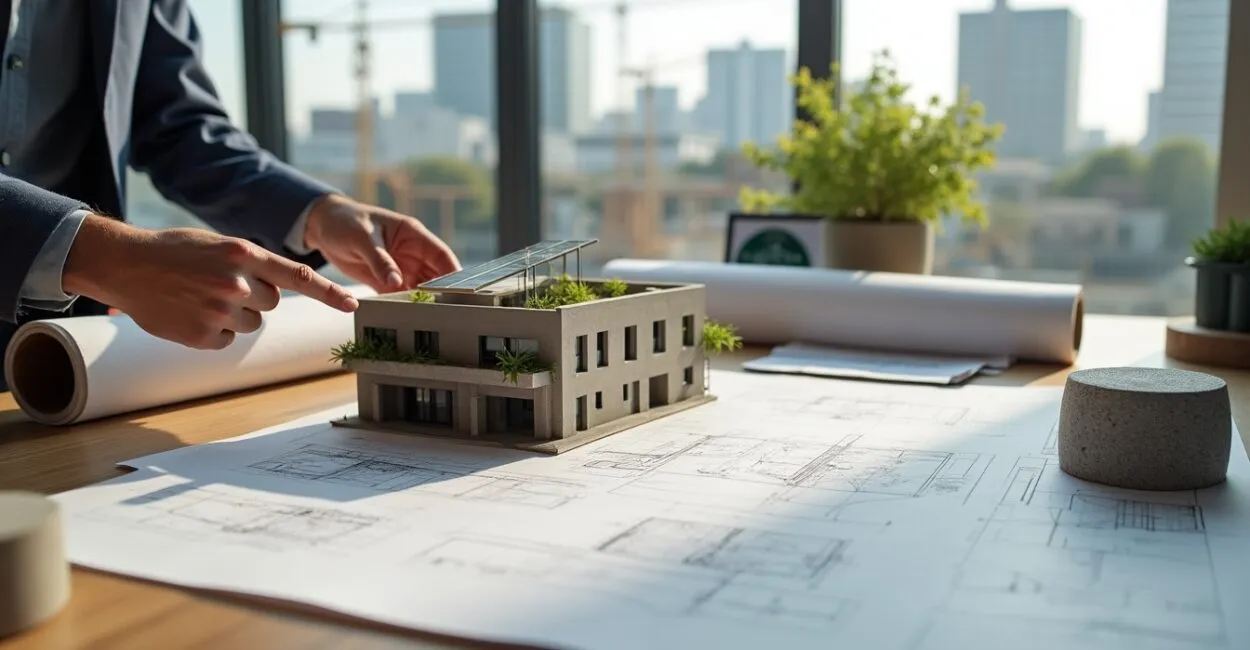
Sustainable projects are central to discussions about the urban and environmental future, combining efficiency, reduced impact, and innovation. Sustainable projects bring engineering and construction practices together to reduce resource consumption, improve energy performance, and increase the resilience of buildings and infrastructure.
The construction industry accounts for a large share of emissions and material consumption, making sustainable projects an opportunity to cut operating costs and meet environmental standards. This article explores concepts, practices, certifications, and examples applicable to engineering and construction, along with practical guidance for implementation.

Essential concepts in sustainable projects
- Energy efficiency: reducing consumption through design and technology.
- Low-impact materials: reuse, life-cycle considerations, and sustainable selection.
- Water management: collection, reuse, and reduced demand.
- Design for disassembly: making recycling and maintenance easier.
Definition and scope of sustainable projects
Sustainable projects include approaches that minimize environmental, social, and economic impacts throughout a project’s life cycle. In practice, they involve material selection, energy efficiency, waste management, and preventive maintenance strategies. By integrating these elements from the design stage, engineering teams can reduce emissions and operating costs while extending the service life of structures and creating more resilient, adaptable buildings.
Incorporating life-cycle assessments and clear targets makes it possible to measure benefits and guide technical decisions. Multidisciplinary teams—including architects, engineers, and environmental specialists—are essential for translating sustainability requirements into project specifications and ensuring measurable results.
Adopting performance indicators and digital tools makes evaluation easier and supports integration with recognized certifications, making sustainable projects more transparent and attractive to investors and users.
Technical principles that guide practice
Technical principles include optimizing the building envelope, solar orientation, natural ventilation, daylighting, and integrating passive systems with efficient active solutions. These principles guide engineering decisions that affect energy consumption and thermal comfort.
In addition, analyzing structures to reduce material use without compromising safety (value engineering) and using BIM technology improve design precision and reduce construction waste. Real-time monitoring and automation help maintain performance during building operations.
Sustainable projects also prioritize flexible use, allowing buildings to adapt and reducing the need for future demolition. This saves resources and reduces the overall environmental impact of construction.
Related regulations and public policies
Land-use laws, municipal building codes, and technical standards (such as ABNT NBR standards, issued by Brazil’s national standards body) influence minimum requirements for sustainable projects. Tax incentives and public programs can improve the economic feasibility of sustainable improvements.
In Brazil, certification programs and state or municipal guidelines (such as thermal performance requirements) often supplement national standards. Professionals must pay close attention to compliance and available benefits.
Understanding local policies and incentive programs is essential for planning investments and achieving a return, since many sustainable projects become more attractive when aligned with current regulations and subsidies.
Methods for sustainable construction projects
- Assess the site and local climate conditions.
- Size passive lighting and ventilation strategies appropriately.
- Select materials with a lower environmental footprint and a known life cycle.
- Implement water collection and energy-efficiency systems.
- Monitor performance and make adjustments during operation.
Integrated planning and design
Integrated planning brings disciplines together from the start of a project to optimize performance and reduce rework. Engineers, architects, energy consultants, and sustainability managers collaborate to align functional goals with environmental targets.
This approach reduces conflicts and ensures that decisions about structures, systems, and façades account for their combined impacts, avoiding isolated solutions that could compromise efficiency or durability.
Digital tools such as BIM and energy simulations support integrated design by enabling virtual models that predict performance and costs, making it easier to make data-driven decisions.
Performance modeling and simulation
Thermal simulations, daylight analyses, and energy modeling predict how a building will perform before construction begins. These studies help optimize insulation, shading, and HVAC systems, reducing consumption and thermal hotspots.
Specialized software generates indicators that help projects meet energy-use targets and improve comfort. Validating passive strategies can reduce dependence on expensive, energy-intensive mechanical solutions.
Data collected during building operations can also feed back into models, enabling adjustments and continuous performance improvements throughout the building’s service life.
Waste management and the circular economy
Implementing construction-site waste management policies is vital to reduce landfill waste and encourage reuse. The circular economy in construction prioritizes material recovery, component reuse, and the specification of recycled or recyclable materials.
Waste management plans developed during the design phase set targets for sorting, quantifying leftovers, and reverse logistics, reducing disposal costs and environmental impacts. Engineers should plan collection points and processes that make recycling easier.
Sustainable projects that embrace the circular economy can reduce construction waste by up to 30%, improving efficiency and supporting corporate and regulatory targets.
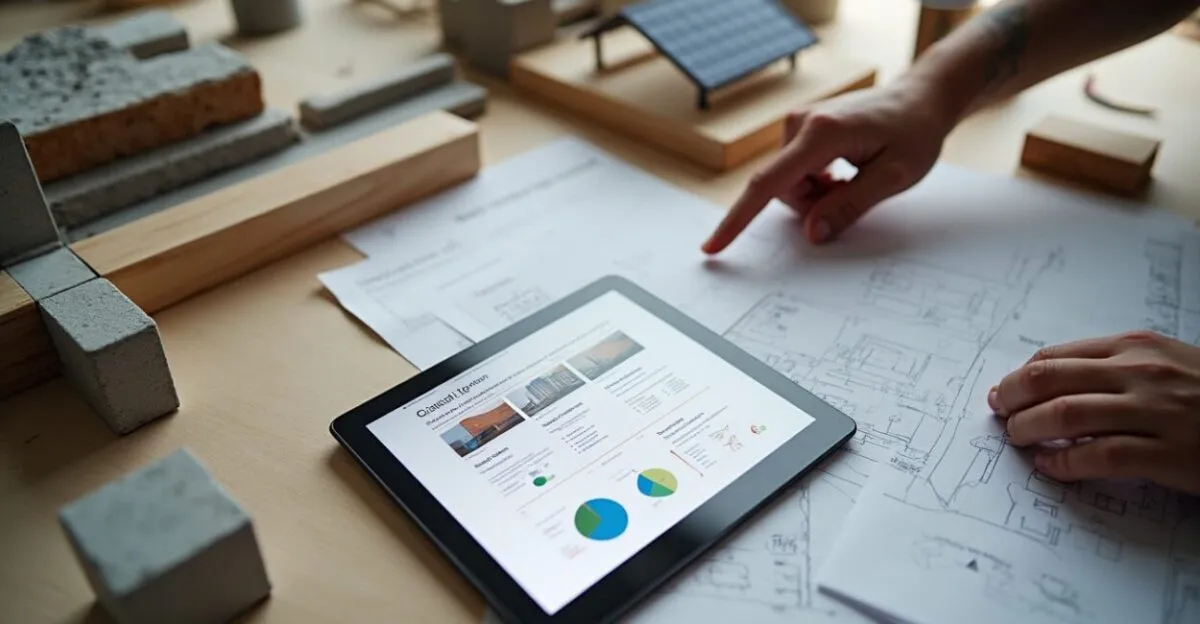
Materials and technologies for eco-efficient construction

Low-impact and recyclable materials
Choosing materials with a lower carbon footprint and recycling potential is central to sustainable projects. Examples include concrete with supplementary mineral materials, recycled steel, and certified wood, all of which reduce resource extraction and associated emissions.
Material specifications should account for durability, maintenance, and local availability, balancing performance and sustainability. Sourcing certifications and life-cycle assessment (LCA) reports help verify environmental benefits.
Materials salvaged from demolition and manufactured products designed to minimize waste through prefabrication also contribute to cleaner construction with less waste.
Active technologies: BMS, efficient HVAC, and renewable energy
Building management systems (BMS) and high-efficiency HVAC equipment reduce operating energy use while maintaining comfort. Integration with sensors and adaptive controls enables automatic responses to occupancy and environmental conditions, preventing wasted energy.
Photovoltaic panels, small-scale power generation, and solar water-heating solutions complement the energy strategy and reduce reliance on the grid. Combining renewable sources with efficiency measures creates buildings with near-zero energy use.
The initial investment may be recovered in 5–10 years, depending on the project. Many developments achieve attractive payback periods through incentives and lower operating costs.
Construction technologies and prefabrication
Methods such as modular construction and prefabrication improve precision, reduce rework and waste, and speed up schedules. Components manufactured in a controlled environment allow for better quality control and less waste on-site.
These technologies also improve safety and cost predictability, supporting shorter schedules and reducing disruption in urban areas. BIM integration makes coordination across disciplines and assembly logistics easier.
Prefabrication can reduce construction time by up to 60% on certain projects and cut material waste by 20–30%, depending on the construction type.
Comparing methods and certifications
Major certification systems and their scope
Several certifications assess environmental performance and efficiency, including LEED, BREEAM, and AQUA/SiAC. Each system has its own criteria covering energy, water, materials, indoor environmental quality, and construction management.
The choice of certification depends on project goals, market, and local requirements. Some emphasize innovation and performance, while others focus on technical compliance and construction processes. Evaluating cost-effectiveness and documentation requirements is essential.
Certifications not only attest to environmental quality but also add market value, reduce risk, and make properties more attractive to tenants and investors.
Comparing construction methods
Comparing traditional and alternative methods (prefabrication, structural masonry, and steel framing) involves considering costs, timelines, thermal performance, and waste generation. Each option has advantages that vary with the scale and context of the project.
Technical decisions should account for logistics, labor availability, and regional practices. Dry and modular methods tend to reduce schedules and waste, while traditional methods may be more cost-effective in areas with an abundant labor supply.
Integrating life-cycle analysis and simulations helps quantify impacts and select the most sustainable option for each project.
| Method | Main advantage | Applications |
|---|---|---|
| Prefabrication | Less waste and shorter construction time | Modular buildings, rapid housing |
| Structural masonry | Lower cost for local projects | Small residential buildings |
| Steel framing | Lightweight and precise | Mid-rise buildings and complex façades |
| Engineered wood | Low carbon footprint | Bioclimatic and mid-size projects |
Evaluation criteria and metrics
Common metrics include energy use in kWh/m², carbon intensity (kgCO2e/m²), water use, and the percentage of recycled materials. These metrics make it possible to compare alternatives and monitor performance over time.
Quantitative indicators help projects meet corporate targets and certification requirements, and provide a basis for environmental reporting. Monitoring tools help measure deviations and implement corrective actions.
According to the USGBC, LEED-certified buildings can reduce energy consumption by up to 25% compared with conventional projects, depending on certification level and the measures adopted.
Economic and environmental benefits of sustainable projects
Cost savings and return on investment
Investments in efficiency and renewable energy typically generate significant operating savings. Reducing energy and water use directly lowers ongoing expenses, improves cash flow, and increases property value.
In many cases, payback ranges from 3 to 12 years, depending on the technologies adopted, available incentives, and project scale. These savings make sustainable projects financially competitive and attractive to investors focused on ESG.
According to the IEA, building efficiency measures could reduce the sector’s energy demand by up to 30% by 2030 when combined with appropriate policies.
Environmental and social benefits
Sustainable projects reduce greenhouse gas emissions, conserve water resources, and lower consumption of virgin raw materials. They also provide healthier indoor environments with better air quality and natural lighting, improving occupant well-being.
Reducing environmental impact supports corporate and regulatory targets while improving an organization’s reputation. Local communities benefit from less pollution and more efficient use of resources.
According to a study by the World Green Building Council, sustainable buildings can boost occupant productivity and reduce healthcare expenses in corporate settings.
- Save energy and water, reducing operating costs.
- Lower the carbon footprint and meet sustainability targets.
- Increase asset value and liquidity in the real estate market.
- Improve occupant comfort and health, reducing absenteeism.
- Reduce waste and the amount sent to landfills.
Measuring impact and certifying results
Continuous performance measurement through sensors, energy audits, and sustainability reports is essential for verifying benefits. Validated indicators make it possible to earn certifications and demonstrate actual ROI.
Digital platforms and energy performance contracts (EPCs) set targets and verification mechanisms, transferring risk and ensuring results. Transparent reports help stakeholders understand material and environmental gains.
Using standardized metrics makes comparisons and compliance with investor and regulator requirements easier, increasing confidence in sustainable investments.
Drawbacks, risks, and limitations
Technical and market barriers
Some limitations include the local availability of sustainable materials, higher upfront costs, and a shortage of skilled labor for innovative techniques. Emerging markets may lack the infrastructure needed to support certain technologies.
Cultural resistance and limited awareness of long-term benefits can also slow adoption. Training and planning are needed to overcome these barriers.
Regulatory risks and changes in incentives may affect financial feasibility. For this reason, sensitivity analyses and risk mitigation are recommended during planning.
Performance risk and warranties
Innovative solutions may fail to meet performance expectations if design, installation, and commissioning are not rigorous. Control and maintenance failures can reduce benefits and increase costs.
Technical warranties, commissioning, and maintenance contracts are essential to ensure systems operate as designed. Documentation and training for operations teams reduce the risk of premature deterioration.
Sustainable projects should include monitoring and contingency plans to adjust systems and maintain efficiency targets over time.
- Higher upfront costs and greater capital requirements.
- Limited availability of materials or specialized technicians.
- Performance risks if commissioning is inadequate.
Economic and scale limitations
For small projects or in markets without incentives, the cost-benefit ratio may be less attractive, making appropriately scaled solutions necessary. Large projects benefit from economies of scale that are not easily replicated in smaller improvements.
Financing and business models that distribute costs and benefits (such as performance contracts) can help make initiatives feasible at different scales. Public policies and subsidies can correct temporary economic imbalances.
Integrating projects with urban strategies and regional planning increases their impact and creates conditions for wider adoption of sustainable projects.
Practical implementation: case studies and examples
Notable commercial buildings
Real-world examples show how combined strategies can deliver savings and certifications. Buildings with shaded façades, BMS, and solar panels have achieved energy-use reductions of 30% to 50% compared with local standards.
These projects often incorporate landscaping to manage stormwater and create outdoor spaces that improve urban quality of life. Public-private partnerships and tax incentives have accelerated financial feasibility in several cases.
Documenting results and publishing real metrics encourages others to replicate these practices and attracts investors who value proven performance.
Residential projects and social housing
In social housing, low-cost strategies such as proper orientation, cross-ventilation, and reflective roofs improve comfort without requiring major investments. Local materials and efficient construction techniques reduce costs and environmental impact.
Government programs that combine subsidies with efficiency requirements make it possible to scale solutions and improve housing conditions. Pilot projects have demonstrated reductions of up to 40% in energy use and household utility bills.
Community engagement and training support maintenance and proper use of adopted technologies, ensuring the social and technical sustainability of improvements.
Sustainable infrastructure and civil works
In infrastructure, techniques such as permeable pavements, sustainable drainage systems (SuDS), and recycled materials in paving reduce urban impacts and improve resilience to extreme events. These solutions can also lower maintenance costs.
Water and wastewater network projects that incorporate reuse and decentralized treatment improve efficiency and reduce pressure on water resources. Sustainable infrastructure engineering involves integrated planning and data-driven maintenance.
According to a World Bank study, investments in resilient infrastructure can reduce economic losses by up to 60% in vulnerable areas, underscoring the economic benefits of sustainable practices.
| Project type | Technical benefit | Practical example |
|---|---|---|
| Commercial | Energy efficiency and certification | Building with LEED Platinum certification and solar power generation |
| Residential | Thermal comfort and savings | Social housing community with white roofs and natural ventilation |
| Infrastructure | Stormwater management | SuDS and permeable pavement |
Best practices, tips, and recommendations for adoption
Set measurable targets
Set targets for energy use, water use, and waste management at the start of the project. Measurable targets make it easier to choose technical solutions and track progress with standardized indicators.
Contracts that tie part of the payment to meeting targets encourage strong performance and team accountability. Regular audits and transparent reports build trust among stakeholders.
Use simulations and cost-benefit analyses to prioritize measures with the best environmental and financial returns, ensuring resources are allocated efficiently.
Team training and coordination
Investing in training for design and construction teams ensures sustainable solutions are implemented correctly. Coordination across disciplines prevents conflicting project requirements and reduces rework.
Offer workshops, installation manuals, and hands-on training for suppliers and construction workers. Skilled teams reduce the risk of failure and ensure technical innovations deliver the expected performance.
Involving end users in the implementation process improves acceptance and proper use of adopted solutions, maximizing long-term benefits.
- Set measurable targets and performance indicators.
- Use energy simulations during conceptual design.
- Choose solutions that are easy to maintain and have predictable costs.
- Bring multidisciplinary teams together from the design stage.
- Document and report results so successful practices can be replicated.
Monitoring, commissioning, and maintenance
Thorough commissioning and continuous monitoring are critical to ensuring systems deliver their projected performance. Sensors and platforms help detect deviations and optimize operations.
Preventive maintenance plans and contracts with qualified suppliers help maintain efficiency over time. Proper technical procedures and documentation extend system life and protect the return on investment.
Implementing a continuous improvement cycle with annual reviews ensures sustainable projects remain efficient and adaptable to changes in use or regulations.
Conclusion
Sustainable projects offer a clear path to reducing environmental impacts, lowering operating costs, and increasing asset value in engineering and construction. Integrating passive strategies, responsible materials, efficient technologies, and metrics-driven management is the foundation for eco-efficient projects.
Adopting sustainable projects takes planning, training, and monitoring, but delivers proven economic and social returns. Consider starting with measurable targets and pilot phases to scale effective practices across your projects.
Frequently asked questions about sustainable projects
What are sustainable projects?
Sustainable projects are engineering and construction initiatives designed to reduce environmental, social, and economic impacts throughout a project’s life cycle. This involves choosing low-impact materials, improving energy efficiency, managing water and waste, and focusing on durability and maintenance. Integrating these practices aims to balance technical performance with environmental responsibility and financial feasibility, delivering measurable benefits for users and investors.
How does the certification process for sustainable projects work?
The certification process involves a document and technical review of the project against the criteria of the selected system (e.g., LEED, BREEAM, or AQUA). It typically requires project documentation, measurements during construction, system commissioning, and performance reports. Independent auditors verify compliance and award points. After verification, certification is granted at levels that reflect environmental performance, encouraging continuous improvement and transparency.
What is the difference between sustainable projects and conventional construction?
Sustainable projects prioritize resource efficiency, life-cycle analysis, and impact reduction, while conventional construction often focuses on upfront costs and schedules without a comprehensive assessment of environmental performance. Sustainability involves integrated planning, efficient systems, and maintenance, resulting in lower energy use, fewer emissions, and greater comfort. By contrast, conventional construction can lead to higher operating costs and more waste over time.
When should prefabrication be used in sustainable projects?
Use prefabrication when you need to shorten construction time, improve quality control, and reduce waste. This method is recommended for projects with repetitive elements (such as housing and commercial modules) and where logistics allow panels or modules to be transported and assembled. Prefabrication improves precision, integration with BIM, and material management, making it particularly useful for mid-size to large projects where schedule savings and greater environmental efficiency are priorities.
How much does it cost to implement sustainable projects?
Costs vary based on project scale, technologies adopted, and local conditions. Initial investments may be 5% to 15% higher than conventional solutions, but typical payback periods range from 3 to 12 years, depending on the measures used (efficiency, renewable energy, and automation). Tax incentives and performance contracts can reduce the financial impact. Detailed cost-benefit assessments early in the process are essential for estimating investment and returns.
Artigos Relacionados
 Engineering and Construction: Building Profitable Projects
 The Importance of the Regional Council of Engineering and Agronomy
 School Gardens as Learning Labs: Inspiring Projects for 2025
 5 Composting Projects for Schools and Apartment Buildings
 Why Sustainable Eating Matters Now
 Construction Foreman: A Complete Guide to This Essential Career
