
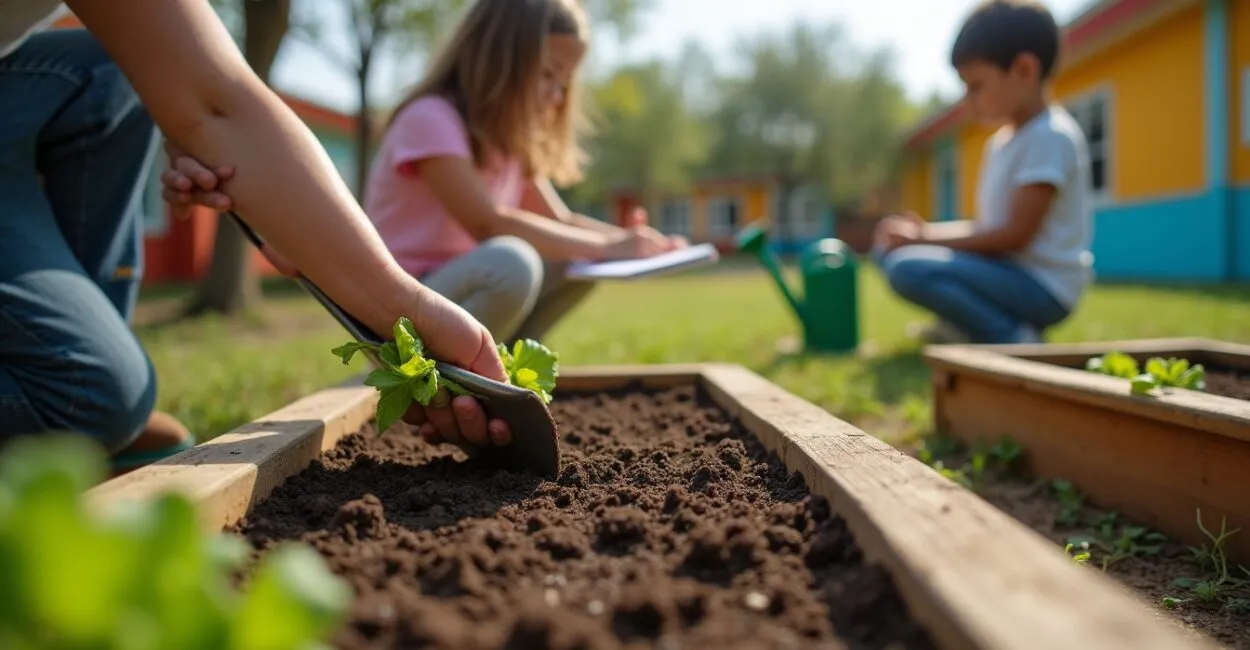
A school garden connects children with healthy eating and environmental stewardship, turning learning into hands-on experience. This article shows how a school garden can provide fresh salad ingredients and hands-on lessons, inspiring other schools.
Today, projects such as the garden at a CEI (Early Childhood Education Center) in Curitiba highlight the importance of environmental education, food security, and social-emotional skills. Here, you’ll find examples, practical guidance, benefits, and steps for starting your own school garden. Explore real-world models, educational activities, nutrition outcomes, and a straightforward guide to getting started. This article focuses on practical experience, trusted guidance, and solutions educators and administrators can put to use.

Why Start a School Garden: Educational and Social Benefits
Hands-On, Interdisciplinary Learning
A school garden brings science, math, and language to life through hands-on activities and direct observation. Children learn by doing, connecting theory and practice in concrete, memorable ways. The garden builds motor skills, responsibility, and teamwork—essential to children’s overall development and civic engagement—while strengthening connections between families and schools.
Health, Nutrition, and Food Security
By growing salad ingredients and vegetables, a school garden can encourage children to accept healthy foods, reduce waste, and add nutritional variety to meals. Children discover fresh foods through their flavor. Well-run projects can shape lasting eating habits, help prevent childhood obesity and chronic diseases, and make a direct difference in the school community.
Practical Models: The Curitiba CEI and Other Inspiring Projects
The Curitiba CEI Project
At a CEI (Early Childhood Education Center) in Curitiba, the school garden provides fresh salad ingredients for meals and serves as a living classroom. Children take part in planting, harvesting, and simple food preparation, building a stronger connection with what they eat. Teachers have observed greater interest in vegetables and healthier eating habits. A partnership with the city government and volunteers helped make the project sustainable and ensure it could continue.
Other Projects and Local Partnerships
Hospitals, universities, and nonprofits run similar programs, providing technical training and resources. These partnerships improve school gardens and expand access to supplies and expertise.
Programs supported by organizations such as city governments and Embrapa, Brazil’s agricultural research agency, extend their reach and make it possible to scale and replicate projects across municipal and state school systems.
- Integrate the garden with school meals
- Hold workshops for children and families
- Train teachers
Essential Planning for a Successful School Garden

Location, Soil, and Materials
Choose a spot with plenty of sunlight and good drainage. Healthy soil and organic compost are the foundation for nutritious harvests from a school garden, while reducing the need for chemical inputs.
Use raised beds, containers, and repurposed materials to make gardening easier and involve students in creative, sustainable solutions.
Scheduling, Logistics, and Management
Plan planting schedules around the seasons and school meal menu. Share responsibilities among teachers, students, and volunteers to keep the project going.
Track activities, inventory, and results for accountability and to promote the project within the school community.
Learning Activities and Curriculum Integration
Hands-On Activities for Different Ages
Offering simple activities such as sowing seeds, watering, and harvesting to younger children, and more complex growing projects to older students, supports steady learning at every stage.
Experiments, measurements, and record-keeping deepen understanding and introduce ecology, botany, and home economics concepts through the school garden.
Assessment, Documentation, and Communication
Use field journals, photos, and observations to assess learning. These records make results visible to families and administrators, strengthening the project’s credibility.
Read also: School Playroom: How to Create an Inspiring Space
Showcase harvests at school fairs and prepare simple recipes with students, connecting theory, practice, and local food traditions.
- Map the space and define learning goals.
- Prepare the soil with compost and amendments.
- Choose seeds and plant according to the season.
- Set up a care schedule with students and staff.
- Harvest and incorporate the food into school meals.
Resources, Funding, and Sustainable Partnerships
Funding Sources and Materials
Look for municipal grant opportunities, university partnerships, and donations from local businesses. Recyclable materials and composting lower costs and make school gardens more sustainable.
Projects that document their results can attract new funders and strengthen fundraising efforts by showing a direct impact on the community.
Involving the Community and Volunteers
Invite families, neighbors, and organizations to volunteer workdays and events. Community involvement helps ensure maintenance and safety while connecting the school with its surrounding community.
Workshops for parents and ongoing teacher training spread knowledge and establish the garden as an educational and social resource.
- Municipal grant for food education
- Partnerships with universities and nonprofits
- Volunteer shifts with a set schedule
Measuring Impact: Health, Learning, and Sustainability
Nutrition and Food Acceptance Indicators
Track how much salad children eat at meals and which foods they prefer. Simple indicators can show whether vegetables are becoming more popular at school and at home.
Record attendance, the quantity of vegetables harvested, and reductions in outside purchases to measure the school garden’s contribution to the menu.
Educational and Environmental Impact
Assess social-emotional skills, scientific knowledge, and sustainable behaviors. Projects with structured evaluation build credibility and attract institutional support.
Less waste, composting, and resource savings demonstrate the environmental and economic benefits for the school.
How to Scale and Replicate a School Garden Successfully
Guidelines, Manuals, and Training
Document processes in manuals and offer training for teachers and administrators. Standardized guidelines make it easier to replicate the project at other schools and across school systems.
Ongoing training helps keep the school garden thriving, educational, and aligned with the school system’s curriculum and nutrition goals.
Public Policy and Advocacy
Work with education and health departments to include school gardens in public policy. Official programs can expand their impact and unlock more resources.
Share local events and results to inspire other schools and strengthen the role of school gardens in education and food security.
| Indicator | Metric | Annual Goal |
|---|---|---|
| Harvest | kg/year | 200 kg |
| Workshops | number/year | 24 |
| Children served | students | 180 |
Conclusion: Harvesting More Than Food—Harvesting Learning
A school garden turns a school into a living environment for learning, health, and civic engagement. Projects such as the one at a CEI (Early Childhood Education Center) in Curitiba show that it’s possible to provide fresh salad and hands-on learning.
By using simple methods and involving the community, any school can plant the seeds of lasting change. Go back to the beginning and imagine the next generation of children learning as they care for the land.
Frequently Asked Questions
How can we start a school garden on a tight budget?
Start with recycled materials such as pallets and bottles, and learn to compost kitchen scraps. Recruit parent volunteers and seek partnerships with universities, municipal grant programs, and nonprofits. Plan simple steps, track results, and make a case for support to school administrators. Small steps help ensure sustainability and community involvement.
Which plants are best for young beginners?
Choose quick-growing, easy-to-manage crops such as lettuce, arugula, scallions, cherry tomatoes, and culinary herbs. These plants are ready to harvest quickly and work well for short educational activities. Short growing cycles also keep children interested and help the project get off to a successful start.
How can we integrate a school garden into the curriculum?
Map skills and learning goals to each subject: explore life cycles in science, take measurements in math, and write observations and reports in language arts. Create hands-on lesson plans connected to harvesting and the school kitchen. Documentation and assessments show what students have learned and strengthen the project’s educational rationale.
What food safety measures are needed when serving garden produce to students?
Follow food safety best practices: wash produce thoroughly, handle food hygienically, control pests without chemical pesticides, and keep records of where produce comes from. Train food service staff and consult public health professionals for guidance on procedures. These practices help ensure food safety and build families’ confidence in the school garden.
How can we measure a school garden’s social and educational impact?
Use simple indicators such as how often children eat vegetables, the number of workshops, the amount harvested, and teacher feedback. Survey families and students, and document photos and qualitative observations to show behavioral and educational changes. This strengthens accountability and fundraising efforts.
Useful sources and references: City of Curitiba, Embrapa, Brazil’s agricultural research agency, Brazil’s Ministry of Education.
Artigos Relacionados
 How to Strengthen Memory for School Learning
 Social-Emotional Learning in Schools: Transforming Learning and Whole-Child Development
 Fake News: How to Address the Topic Effectively in School Projects
 How Artificial Intelligence Is Revolutionizing Learning in 21st-Century Schools
 5 Composting Projects for Schools and Apartment Buildings
 How to Create an Entrepreneurship Project at School
