
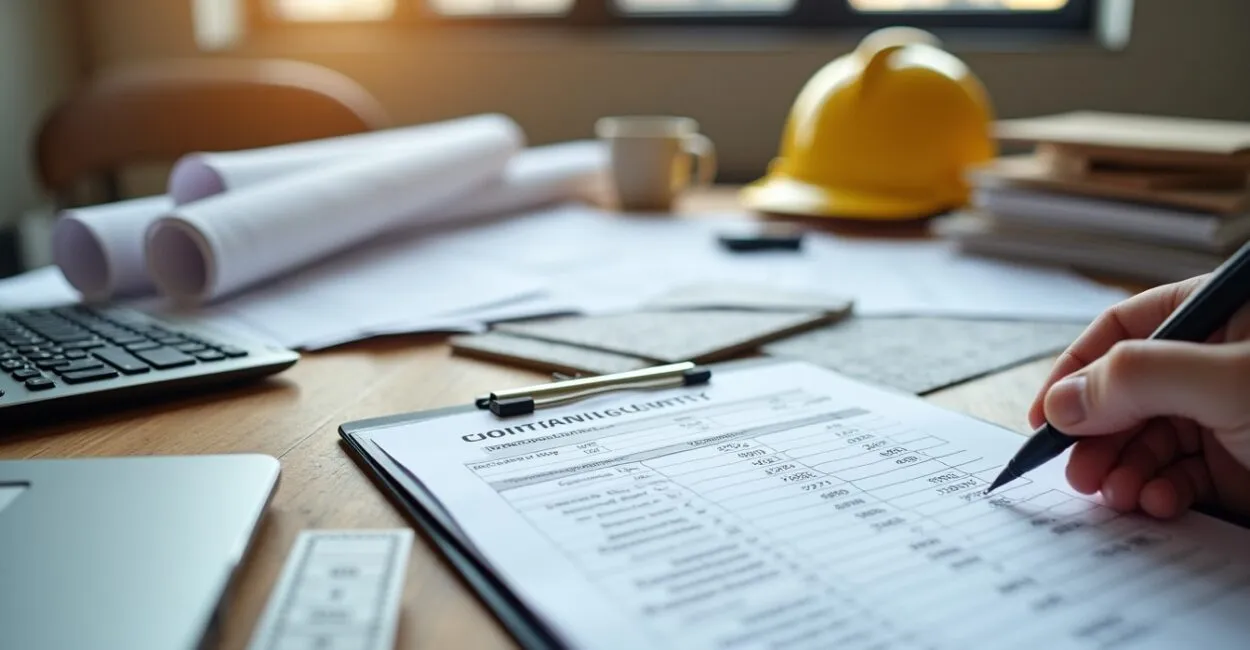
Managing construction costs is essential to protecting profits, preventing budget overruns, and completing projects on schedule. Construction costs include expenses for materials, labor, equipment, and related charges. Controlling them is the first step toward financial and operational efficiency.
Accurate estimates and optimization techniques reduce risk and waste while improving project predictability. This article covers practical tools, negotiation strategies, risk analysis, and concrete steps for optimizing project budgets.

Definitions and key construction cost concepts
- Direct costs: materials, labor, and equipment used in construction.
- Indirect costs: project administration, safety, and jobsite expenses.
- Fixed vs. variable costs: recurring expenses and costs that vary with project volume.
- Contingency: funds set aside for unforeseen risks.
- Baseline budget vs. awarded contract: the initial estimate and the contracted bid.
Main budget components
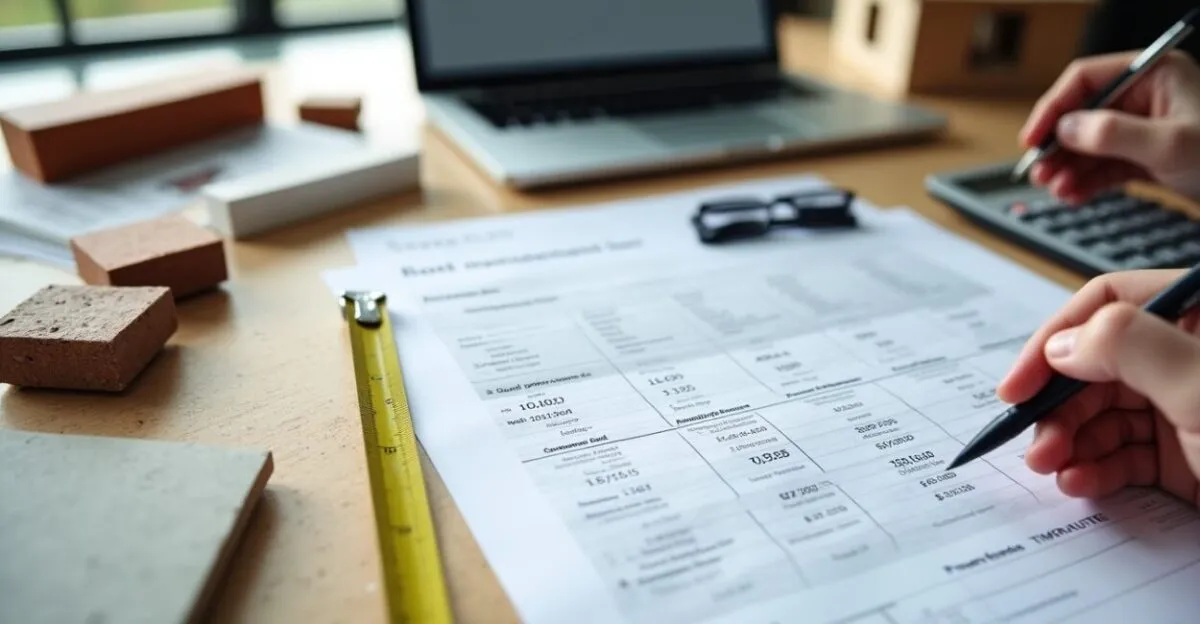
The main components of construction costs are materials, labor, and equipment, which account for a large share of the budget. Materials can represent up to 40% of residential project costs, while labor may range from 25% to 45%, depending on complexity. Each component should be itemized in spreadsheets to make costs traceable and easy to update based on actual quotes.
Including payroll costs and taxes in the estimate prevents underestimating expenses. Accounting for material losses during transportation and storage also helps avoid surprises during construction.
Essential terms and metrics
Metrics such as cost per square foot, productivity per workday, and price adjustment rates are essential. Cost per square foot makes it easier to compare similar projects and benchmark performance. Crew productivity (square feet per hour or units per day) directly affects labor and schedule estimates.
Using clear KPIs, such as budget variance and schedule variance, supports quick decisions about corrective action and renegotiation.
Risks and financial reserves
Contingency reserves and risk provisions help protect cash flow. A reserve of 5% to 10% of the total budget is recommended, depending on project complexity. According to Sinduscon, a Brazilian construction industry association, setting aside about 7% reduces the likelihood of work stoppages due to unforeseen events.
Classifying risks (technical, market, and weather-related) and assigning probability and impact ratings helps determine more realistic reserves and avoid tying up too much capital.
Step-by-step planning for construction costs
- Map out the activities and quantify the required materials and resources.
- Request updated quotes from local suppliers.
- Estimate crew productivity and task durations.
- Include contingency and review the budget with stakeholders.
- Monitor performance and adjust plans regularly.
Quantity takeoffs
A detailed quantity takeoff is the first practical step in controlling construction costs. List every work item along with its quantities and technical specifications, from masonry to finishing. Use estimating software to prevent omissions and ensure consistency across project documents.
Accurate quantities reduce rework and make it easier to get precise supplier quotes, lowering the margin of error in the budget.
Supplier quotes and negotiations
Requesting at least three proposals and negotiating delivery schedules and discounts are key strategies for reducing costs. Negotiate payment terms, freight, and warranties; consider consolidating purchases to secure volume discounts. Local suppliers may reduce freight costs and lead times, directly affecting construction costs.
Use straightforward but clear contracts, with price adjustment clauses tied to recognized indexes to mitigate price volatility.
Scheduling and schedule control
Coordinating materials, crews, and equipment helps prevent downtime and cost overruns. Create a detailed schedule with material delivery milestones and work windows for each task. According to Caixa Econômica Federal, Brazil’s federal savings bank, average delays of 10–20% on residential construction projects significantly increase indirect costs.
Project management tools (Gantt charts, CPM) and weekly meetings help identify variances and reallocate resources in time.
Methods for calculating and comparing costs

Resource-based vs. parametric estimating
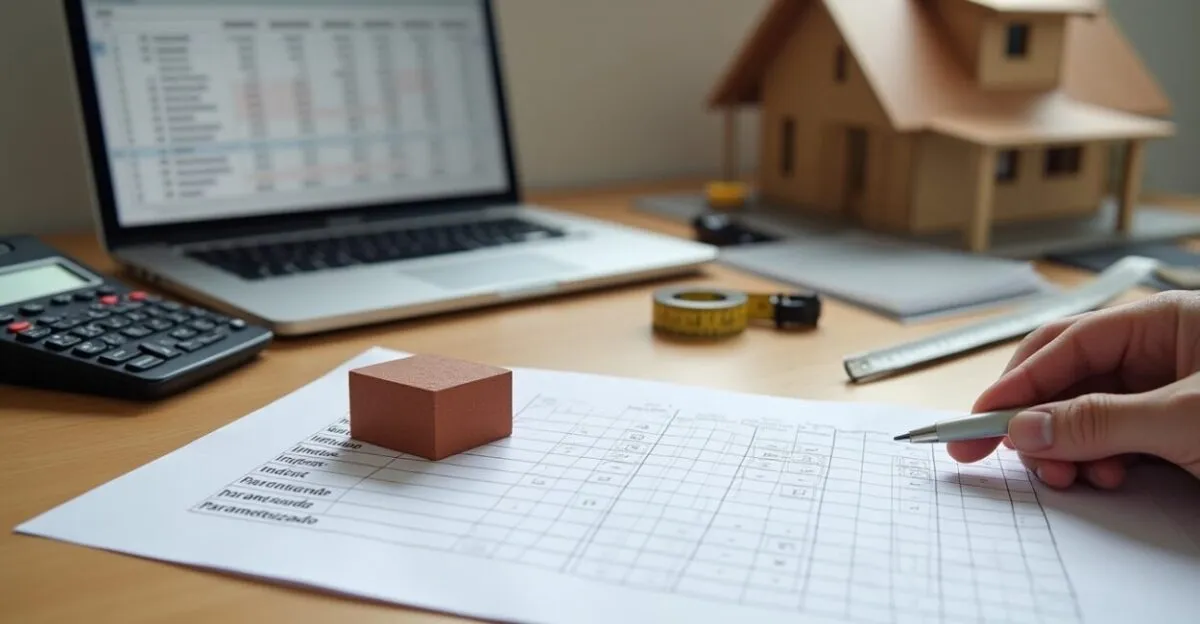
Resource-based estimating itemizes materials and services, making it more accurate for new or complex projects. Parametric estimating uses benchmarks such as cost per square foot and is useful for early estimates. Each approach is suited to a different phase: parametric estimating for feasibility, and resource-based estimating for execution and contracts.
Combine the methods: use parametric estimates for initial screening and resource-based estimates to prepare the final budget.
Cost-benefit analysis of technical alternatives
Comparing construction solutions (masonry vs. prefabricated structures, for example) requires evaluating initial costs, construction time, and maintenance. Consider life-cycle costs and thermal performance, which affect future operating expenses. Simulations and separate estimates for each alternative help inform technical and financial decisions.
Include factors such as sustainability and local material availability in the analysis.
Comparison table of methods
| Method | Recommended use | Accuracy |
|---|---|---|
| Resource-based estimating | Detailed budgets and contracts | High |
| Parametric estimating | Feasibility and early estimates | Moderate |
| Analogous estimating | Repeat projects | Variable |
| Phase-based estimating | Cost control during construction | Moderate to high |
Supplier negotiations, purchasing, and materials logistics
Purchasing strategies to reduce construction costs
Consolidate orders, negotiate delivery schedules, and seek volume discounts to reduce unit costs. Scheduling purchases in batches prevents excess inventory and reduces the amount of capital tied up in materials. Use supply agreements with pricing terms and staggered deliveries to balance cost and availability.
Approved suppliers and long-term agreements often offer better commercial terms and technical warranties.
Inventory and jobsite management
Inventory controls reduce losses from damage and theft, both of which drive up construction costs. Establish procedures for receiving, inspecting, and properly storing materials. Use a coding system and cycle counts to maintain minimum stock levels and avoid emergency purchases at a premium.
Training warehouse staff improves efficiency and reduces waste.
Advantages and benefits of optimized logistics
- Lower costs from reduced material loss and breakage.
- Improved cash flow by purchasing as needed.
- More predictable project schedules.
- Greater leverage in supplier negotiations.
- Less working capital required.
Financial controls, contracts, and risk analysis
Contract types and essential clauses
Choosing between unit-price, lump-sum, or task-based contracts directly affects construction costs and financial risk. Include clauses for price adjustments, payment milestones, late penalties, and quality guarantees. Price review clauses tied to official indexes help protect against material inflation.
Clear contracts reduce disputes and make it possible to take corrective action quickly when variances arise.
Financial control mechanisms
Use controls such as cost S-curves, periodic progress measurements, and invoice reviews to prevent improper payments. Prepare monthly actual-versus-budget reports and variance analyses to identify trends. According to IBGE, Brazil’s national statistics agency, projects with formal controls reduce budget variances by an average of 15%.
Automating financial reconciliations helps detect anomalies faster and frees managers to focus on strategic actions.
Drawbacks and limitations of common practices
- Initial estimates may be too low due to incomplete data.
- Contract adjustments can lead to disputes.
- Excessive reliance on a small number of suppliers.
Methods for optimizing and reducing construction costs
Designing to reduce costs
Applying streamlined design principles and modularity reduces waste and construction time. Projects with consistent elements and standardized components benefit from economies of scale and simpler logistics. Value engineering studies can reduce costs by 10–25%, depending on the initial level of waste.
Bringing the design and construction teams together early helps ensure more cost-effective construction solutions.
Labor and productivity techniques
Investing in training and standardized processes increases productivity and reduces rework, positively affecting construction costs. Efficient assembly tools, well-sequenced tasks, and ongoing technical supervision speed up delivery while minimizing overtime and waste.
Tracking productivity by task and adjusting crew sizes to meet demand keeps unit costs under control.
Tips and best practices for saving
- Standardize materials and components.
- Negotiate delivery schedules and payment terms with suppliers.
- Implement strict inventory controls.
- Use contracts with fair price adjustment clauses.
- Conduct value engineering early in the process.
- Invest in job training and workplace safety.
Evaluation, monitoring, and performance indicators
Metrics for tracking construction costs
Indicators such as cost variance (CV), the cost performance index (CPI), and cost per unit of work are essential. Monitoring CPI and CV shows whether the project is delivering the expected value; a CPI below 1 indicates a cost overrun. Updating these indicators weekly helps teams make quick corrections.
Clear stakeholder reports keep everyone aligned and make timely adjustments easier.
Audits and lessons learned
Conducting periodic audits and consolidating lessons learned at the end of each phase supports continuous improvement in budgeting processes. Recording variances, their causes, and corrective actions creates a valuable knowledge base for reducing costs on future projects. Post-project reviews can help prevent recurring mistakes and improve future estimates.
Documenting standards and updating unit cost catalogs ensures more accurate budgets on upcoming projects.
Table: pros and cons of monitoring systems
| System | Advantage | Disadvantage |
|---|---|---|
| Construction ERP | Integrates finances and project operations | High implementation cost |
| Advanced spreadsheets | Low upfront cost | Prone to manual errors |
| BIM software | Coordination and fewer clashes | Steep learning curve |
Conclusion
Controlling construction costs requires detailed planning, smart negotiations, risk management, and ongoing monitoring. By applying estimating techniques, strategic purchasing, and robust metrics, you can reduce waste and improve financial results. Well-managed construction costs make projects more competitive and predictable.
Start by putting the suggested actions into practice and establish a regular review routine: prepare detailed estimates, negotiate with suppliers, and monitor indicators to ensure efficiency and stay within budget.
Frequently asked questions
What are construction costs?
Construction costs include all expenses required to complete a project, including materials, labor, equipment, indirect costs, taxes, and contingencies. These expenses cover everything from purchasing materials to administrative charges and insurance. Controlling costs is essential to protecting profit margins, meeting deadlines, and avoiding budget overruns. It also directly affects project feasibility and strategic decisions.
How does the construction budgeting process work?
The budgeting process involves preparing quantity takeoffs, requesting supplier quotes, estimating productivity, calculating unit costs, and consolidating them into a total budget. Contingency is then added, and the budget is reviewed and approved by stakeholders. Comparing periodic progress measurements with the plan makes it possible to adjust as needed. Digital tools and project history improve the process’s accuracy and speed while reducing uncertainty.
What is the difference between resource-based and parametric estimating?
Resource-based estimates itemize materials, labor, and equipment, providing a high level of accuracy for construction. Parametric estimates use benchmarks such as cost per square foot, making them useful in early project stages and for quickly comparing alternatives. Resource-based estimates are better suited to contracting and cost control; parametric estimates are useful for feasibility studies and project screening.
When should contingency be included in a budget?
Include contingency whenever there is technical uncertainty, an incomplete scope, or market risk, especially on new projects or those involving untested technology. Typical allowances range from 5% to 10% of the total budget, adjusted according to the risk assessment. Contingency protects the project from unforeseen events and helps prevent work stoppages. It should be documented and used only with management approval.
How much does it cost to hire a professional estimator?
The cost of professional estimating services varies by scope and complexity, typically ranging from 0.5% to 3% of the project value for standard projects. Complex projects or those requiring a high level of detail may cost more. According to industry studies, companies that invest in professional estimating reduce average budget variances by approximately 15% (Source: Sinduscon, a Brazilian construction industry association).
Sources and recommended reading: Sinduscon, IBGE, Caixa Econômica Federal.
Artigos Relacionados
 Construction Technology for Engineering and Building Projects
 Efficient Construction Project Management for Engineering and Construction
 Sustainable Projects in Engineering and Construction
 Engineering and Construction: Building Profitable Projects
 School Gardens as Learning Labs: Inspiring Projects for 2025
 5 Composting Projects for Schools and Apartment Buildings
