
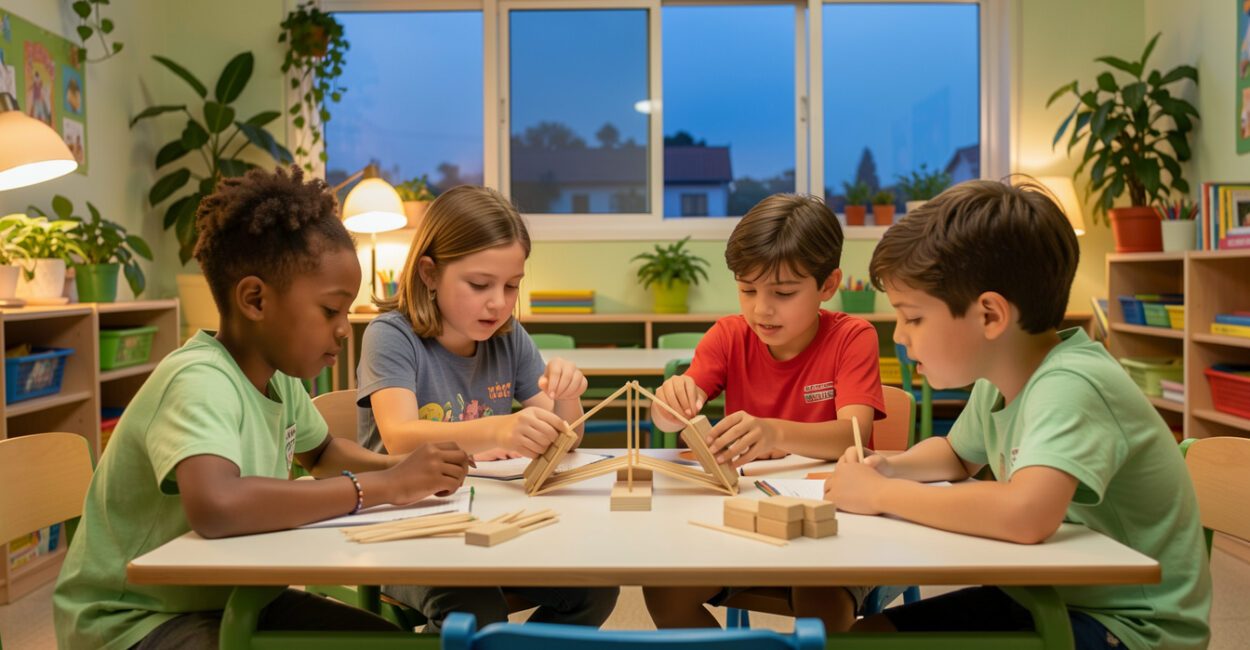
A workshop can end with colorful posters and still leave little evidence of learning. Hands-On Learning Workshops are planned activities in which students learn by investigating, creating, testing, or solving a task tied to a curriculum goal.

For a workshop to work, each activity needs an observable goal, suitable materials, teacher guidance, and some way to document what students were able to do.
This format helps connect concepts to real-world situations, but it is not equally useful for every topic or stage of learning. The right choice depends on students’ ages, the time available, the resources on hand, and the type of learning you want to observe.
At a Glance
- Format: An activity organized around a central task and a learning goal.
- Participants: Students working individually, in pairs, or in groups.
- Common stages: Introduction, exploration, creation or problem-solving, sharing, and feedback.
- Materials: Selected for the task; may include paper, reusable objects, books, or digital resources.
- Assessment: Observation of the process and review of students’ work, explanations, or records.
What Hands-On Learning Workshops Are and What They’re For
An educational workshop is a teaching strategy organized around a task that prompts students to apply what they know, try out procedures, and create a product or explanation. Put simply, students learn by doing something purposeful while the teacher guides them and observes how they think and act.
This approach is connected to active learning: students take part in constructing knowledge rather than simply receiving information. The activity, however, needs to align with the curriculum and include time for reflection.
A hands-on experience without a discussion of what happened may be engaging, but it does not necessarily show whether the intended learning took place.
A workshop has educational value when the task makes it possible to observe the reasoning a student uses to arrive at an answer or create something.
This format is useful for exploring students’ prior ideas, applying concepts, practicing procedures, and building collaboration. A direct explanation, guided reading, or set of practice problems may be a better fit for introducing a new topic, reinforcing a procedure, or addressing a specific need. A workshop complements these strategies; it does not replace instructional planning.
The Base Nacional Comum Curricular (Brazil’s national curriculum framework), published by the Ministry of Education, can help connect an activity to the learning goals set for each grade level. Start with a skill or area of knowledge to develop, rather than choosing an activity simply because it seems fun.

How to Plan and Lead an Educational Workshop at School
To run an educational workshop, first decide what students should be able to demonstrate by the end. Then design a task that lets them practice that knowledge and plan how you will monitor their progress. This sequence helps align the goal, activity, and assessment, even when you need to adapt the lesson as it unfolds.
- Write an observable goal. “Understand measurement” is broad. “Compare the lengths of three objects using the same unit and explain the method” tells you what to look for.
- Choose the main task. It should require the targeted skill and fit the time and resources available.
- Plan your prompts. Prepare questions that help students move forward without giving away the answer: “How can you check that measurement?” or “What evidence supports that conclusion?”
- Plan the opening and wrap-up. Introduce the challenge, set expectations for using materials, and leave time for students to show or explain what they did.
- Plan your feedback. Decide how you will respond to students’ work and what evidence you will document.
The length of a workshop depends on the task’s complexity, the students’ ages, and the time needed to move between stages. Rather than using the entire class period for creating, leave time to distribute materials, explain the challenge, check in with groups, and discuss the results. For activities with several stages, splitting the work across two sessions may be more effective.
Read also: Moving from 5th to 6th Grade: How to Support Students
Materials, Space, and Safety: How to Prepare Your Class

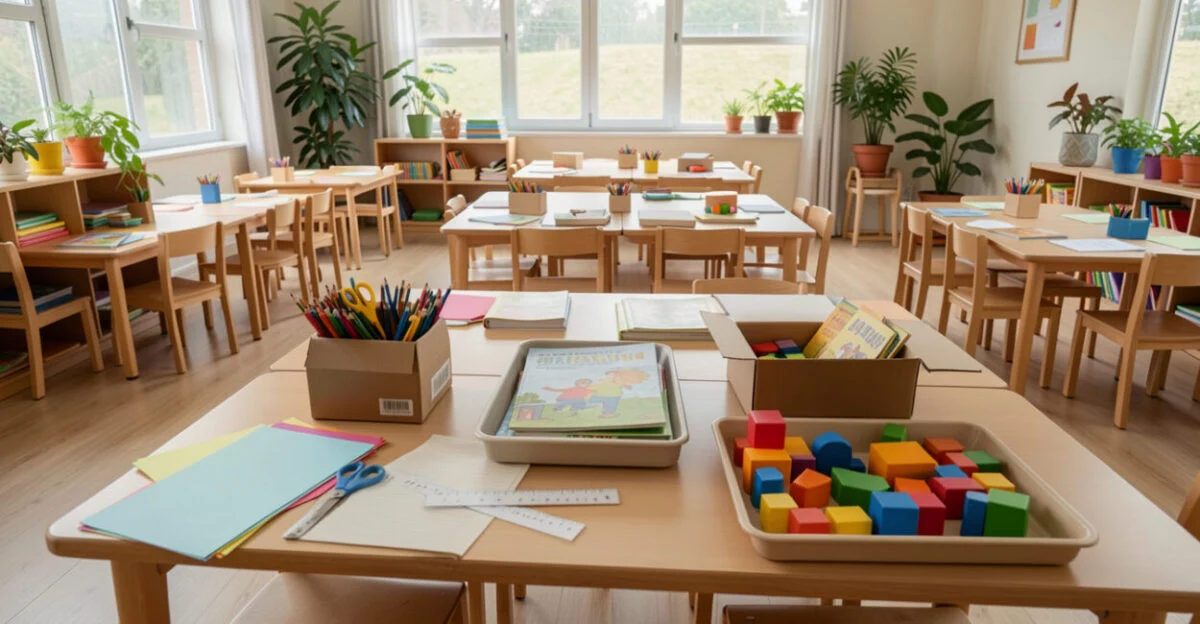
The right materials are those that let students complete the task safely and give you a way to observe their learning; there is no one-size-fits-all list for workshops. Paper, pencils, clean packaging, books, building pieces, and everyday objects can support different goals. Digital tools are worth using when they add meaningful value and everyone can access them.
Before class, try out the task with the materials you have chosen. Check that there are enough supplies, that everything is in good condition, and that the desks are arranged to allow movement and group work. Sharp tools, small parts, or substances that require special handling call for a specific safety review and supervision appropriate for the students’ ages.
A useful adaptation is to prepare a backup for materials that may be unavailable: for example, measure with footsteps or strips of paper instead of using specialized tools. You can also provide visual examples, step-by-step instructions, or different ways to record an answer without removing the intellectual challenge.
Workshop Ideas for Preschool and Elementary School
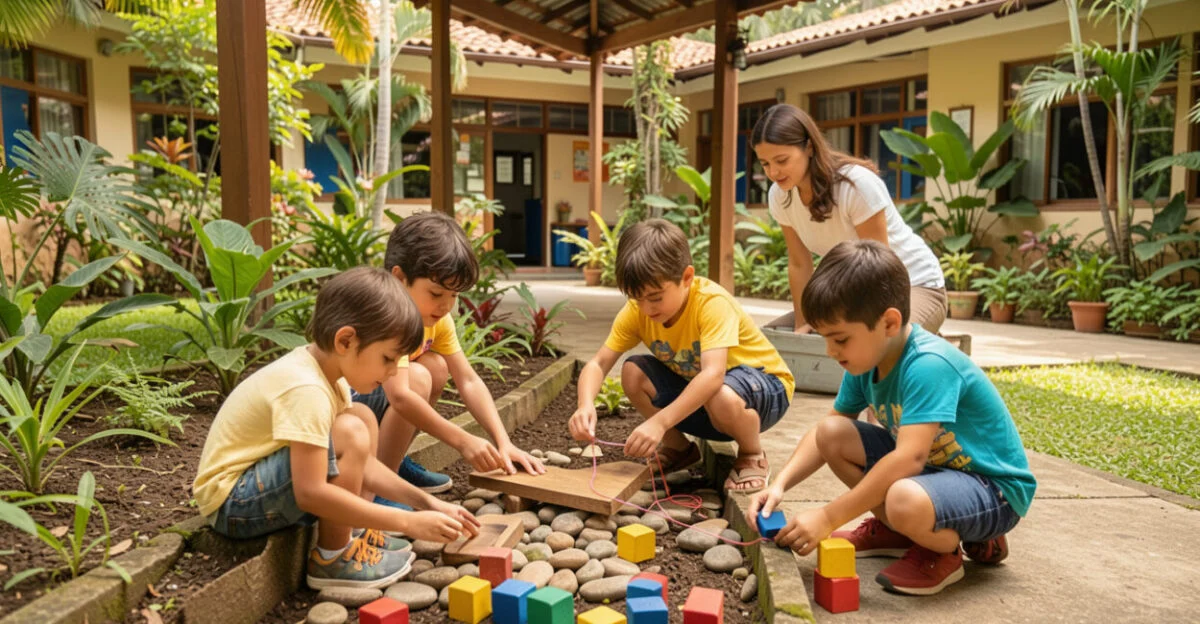
To adapt a workshop, consider what students can already do, how much independence you expect, and how they can express what they have learned. The same activity can be made more or less challenging without losing its central goal.
| Grade level and activity | Goal and task | Possible adaptation |
|---|---|---|
| Preschool: Shape hunt | Notice and sort shapes found in classroom objects. | Use large pieces and pictures; invite children to point or name shapes without requiring written work. |
| Preschool: Storytelling with objects | Put together a story sequence using pictures or objects. | Provide illustrated cards and let children tell the story aloud, act it out, or arrange the sequence with support. |
| Elementary school: Measuring the classroom | Compare lengths and record how the measurements were taken. | Start with nonstandard units and move on to a ruler or tape measure, depending on what students already know. |
| Elementary school: Model water filter | Investigate how different materials trap particles in a demonstration setup. | Use illustrated steps, assign group roles, and discuss why water filtered in the model is not safe to drink. |
For example, in a measurement workshop, each group picks three objects, measures all of them using the same strip of paper, and records how many units it used. Then the class compares results and identifies why the unit needs to stay the same. The teacher observes both the comparisons and students’ explanations of their methods.
For students who need another way to participate, consider offering oral and visual instructions, accepting spoken answers, or using accessible materials. The right option depends on students’ needs and the curriculum goal: making participation more flexible should not obscure the knowledge students are meant to develop.
How to Assess Whether a Workshop Led to Learning
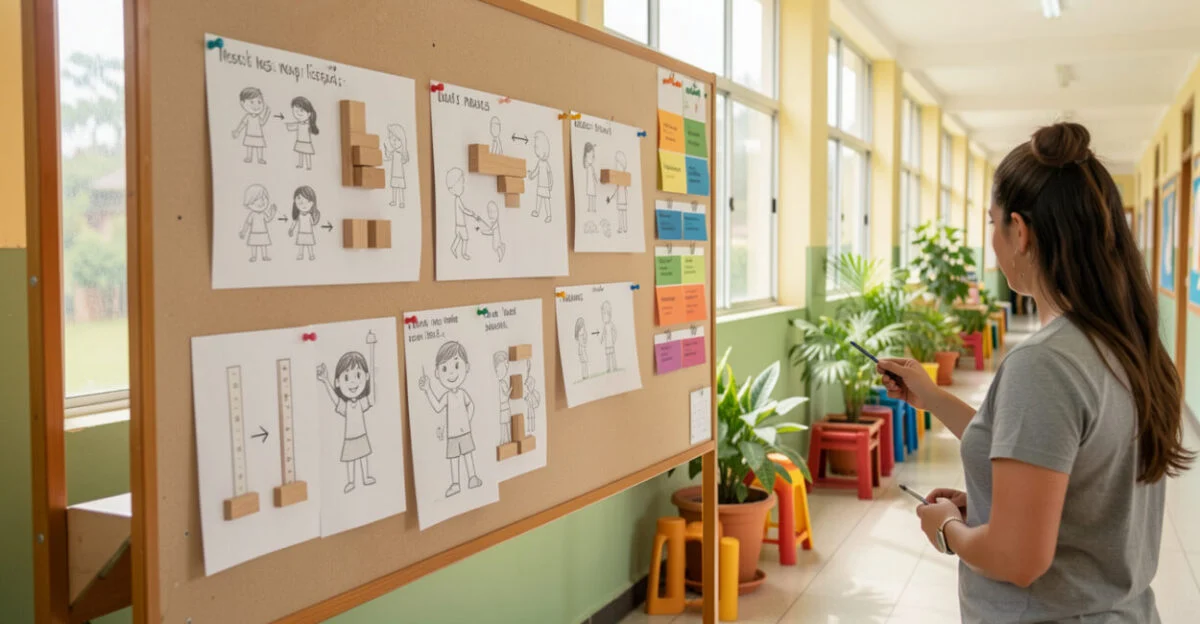
A workshop has worked educationally when there is evidence that students made progress toward the stated goal—not simply when they finished a project. That evidence might appear in an oral explanation, a comparison, a procedure they carry out, a written record, or a revision they make after receiving feedback.
During the activity, focus on just a few criteria at a time. In a measurement workshop, for example, look for whether the group uses the same unit, compares results, and explains how it reached its conclusion. A short checklist, notes on each group, or photos of student work can help with your review, as long as you follow school policies for recordkeeping and image use.
At the end, ask students to explain a choice, identify a challenge, or say what they would do differently. This conversation helps distinguish a result reached by trial and error from a procedure the student understands. Formative assessment, as described by the Instituto Nacional de Estudos e Pesquisas Educacionais Anísio Teixeira (Inep), Brazil’s National Institute for Educational Studies and Research, can serve as an institutional reference for thinking about assessment and monitoring learning. The tools you use, however, should fit the activity and the school.
The most useful record shows what a student did, explained, or revised in relation to the stated goal.
Common Mistakes and Adjustments That Help a Workshop Succeed
A common mistake is choosing an engaging activity first and trying to fit a goal to it afterward. This can lead to lively tasks without clear criteria for determining what students learned. Defining the evidence you want before gathering materials helps keep the activity on track.
- Instructions that are too long: Break the challenge into steps, and keep a model or diagram visible when the task has several parts.
- Materials that become distractions: Hand out what students need for the current stage and explain when to use each resource.
- Groups without clear roles: Assign rotating roles, such as recording ideas, organizing materials, and presenting.
- Rushed wrap-up: Shorten work time if needed to preserve the discussion about what students learned.
Group work does not benefit every class at every point. If an activity requires individual focus or students are unfamiliar with the procedures, start with a brief demonstration or a guided step. A workshop can also fall short when students need systematic instruction before exploring a topic. In that case, combine direct instruction, practice, and discussion rather than forcing a single format.
Next Step: Turn a Topic Into an Observable Challenge
Choose a topic the class is already studying and write a sentence that begins, “By the end, students will be able to…” Then create a short task that lets you check for that skill and decide what work or explanation will count as evidence. If the goal cannot be observed during the activity, refine it before preparing the materials.
Frequently Asked Questions
Does a workshop have to end with something students made?
No. The outcome might be an explanation, a classification, a recorded strategy, or a demonstration of a procedure. The format should serve the learning goal.
Are educational workshops and therapeutic workshops the same thing?
No. An educational workshop has teaching and learning goals within a school context. A therapeutic activity is guided by care and professional support goals, which should not be confused with educational objectives.
How can I organize a workshop when materials are limited?
Use fewer materials per group, set up rotations, or replace supplies with accessible alternatives that preserve the goal. Before class, check that the alternative allows students to perform the same action you plan to assess.
Artigos Relacionados
 The Flipped Classroom in Hybrid School Learning
 Fun Classroom Activities: 8 Quick Ideas for School in 20 Minutes
 Creative Curriculum: 7 Hands-On School Activities for 2025
 Elementary School Activities: Creative, Practical Ideas
 School Gardens as Learning Labs: Inspiring Projects for 2025
 2025 Environmental Education Workshops: Hands-On Activities
