
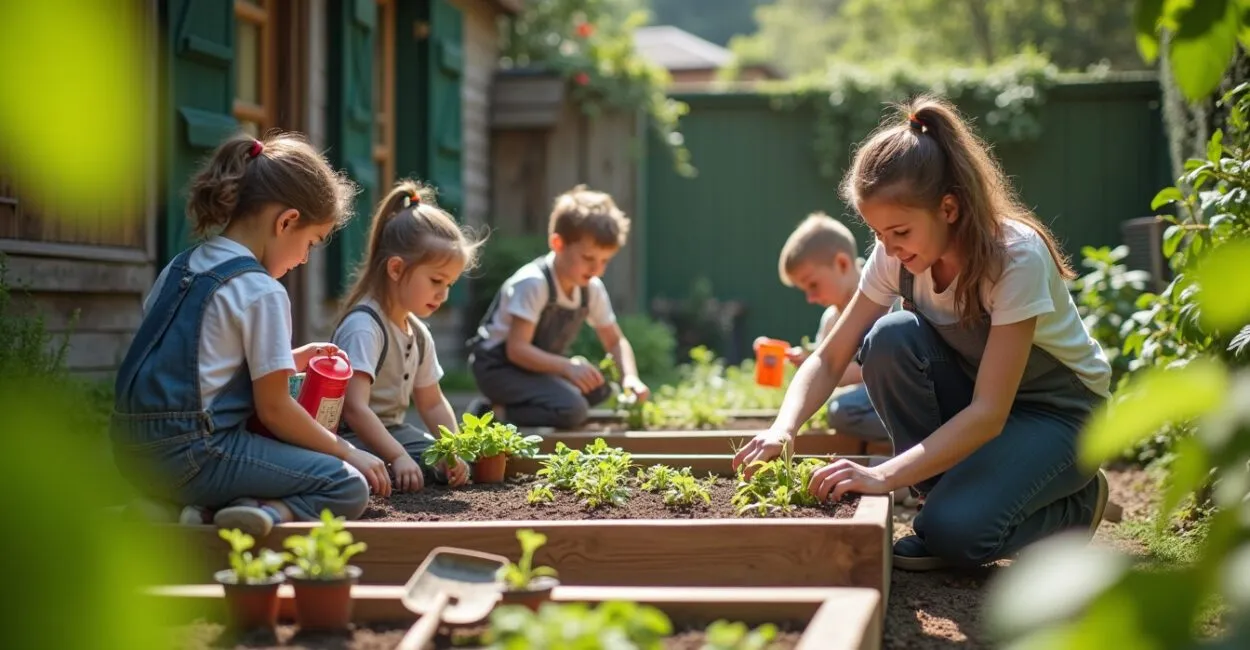
With a small group, a school garden is easier to manage, safer, and much more engaging than it might seem.
School Garden: Simple Planting Activities for Kids

When the group is small, every child gets to take part—and that changes everything. Instead of a decorative activity, the school garden becomes part of the daily routine, teaching responsibility and discovery through short tasks, low-cost materials, and visible results in just a few days.
The smartest approach isn’t to start big. It’s to start right: choose fast-growing plants, divide up the jobs, and avoid tasks that require strength, height, or dangerous tools. That’s how a school garden works best.
Why School Gardens Work So Well with Small Groups
A school garden with just a few students doesn’t depend on scale; it depends on attention. In practice, that’s a huge advantage: each child touches the soil, observes a seedling, waters it carefully, and sees the effects of their own actions. Learning becomes tangible.
Anyone who works in education knows that smaller groups mean fewer distractions and a stronger connection to the process. There’s another, quieter benefit: children learn that plants aren’t decorations. They’re living things. That’s why school gardens often engage kids more than ready-made paper-and-pencil activities.
According to the FAO’s educational materials on food and agriculture, involving children in growing plants helps them understand care, where food comes from, and sustainability. It’s no teaching miracle. It’s meaningful repetition.
The Easiest Place to Start: Three Garden Beds or Even Containers
You don’t need a perfect plot of land. For a school garden, plastic bins, clean tires, buckets with drainage holes, or narrow garden beds will do. The key is to keep things simple and make ongoing care manageable.
If your school has limited space, start with containers lined up in a row. If there’s a sunny courtyard, use a patch of ground. The layout matters less than accessibility. Children should be able to reach, see, and care for the plants without too much effort.
In practice, the best school garden is the one that fits into the school’s routine—not the one that looks good in a photo.
Affordable Materials That Solve Almost Everything

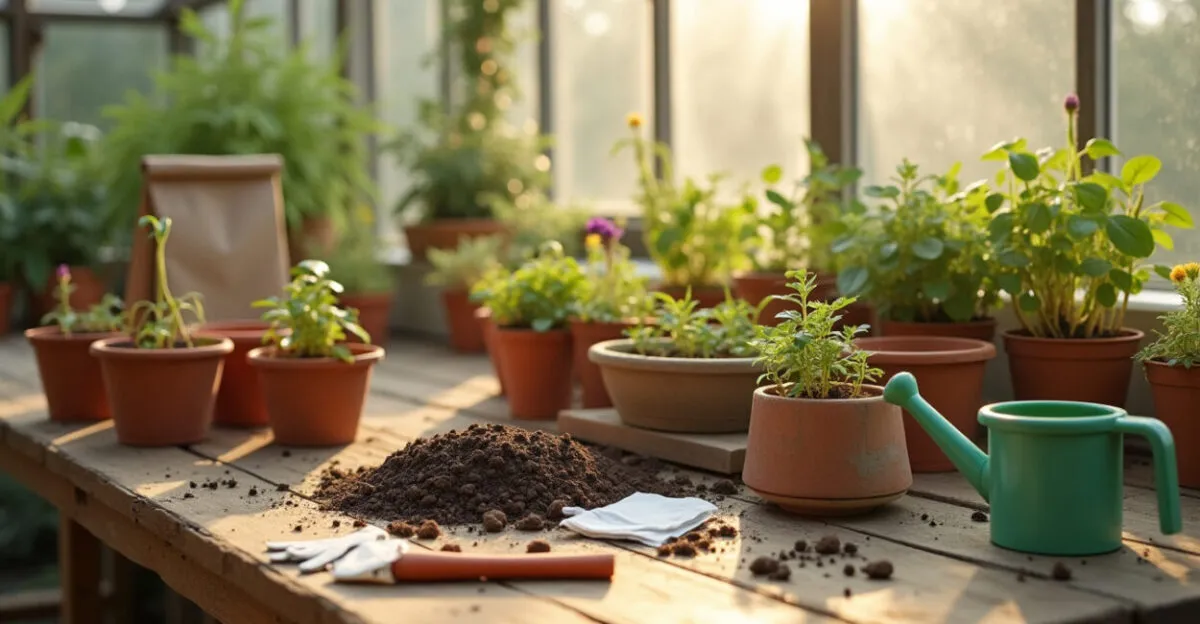
You can set up a school garden with simple items without making major purchases. What matters is functionality: good drainage, light soil, and safe tools. Avoid heavy or overly sharp objects when working with a small group.
- Enriched soil or potting mix
- Fast-growing seeds
- Small watering cans or bottles with holes
- Child-size plastic or lightweight metal trowels
- Gloves that fit the children
- Labels with plant names
Here’s a useful comparison: many people try to set up a school garden as if they were preparing an entire fair. It works better when you think of it as a living experiment. Fewer parts, more consistency.
Read also: School Playroom: How to Create an Inspiring Space
First Plants That Almost Always Thrive
Choosing the right plants helps prevent frustration. A school garden needs plants that grow quickly, have short growing cycles, and can handle small care mistakes. Lettuce, arugula, scallions, cilantro, and radishes are usually good choices for beginner projects.
The reason is practical: children see changes quickly. That keeps them interested. A project that takes months to show results can feel abstract; a sprout appearing in a few days becomes a topic of conversation at recess.
Here’s something few people mention: slow-growing plants require more patience than beginners may have. In a school garden, speed is part of the lesson, too.
How to Divide Up Tasks Without Chaos or Risk
With a small group, task assignments should be simple. A school garden runs smoothly when each child has a clear, short, and safe job. Avoid vague instructions like “help out a little.” Young children do better with a specific task.
- One child measures the soil
- Another spreads the seeds
- A third waters with a small amount of water
- Another checks the labels
A realistic example: A teacher set up a school garden with six students and let everyone do whatever they wanted. Two children tried to dig at the same time, others poured on too much water, and no one knew which garden bed was which. The following week, she made one change: she created a task rotation. In 10 minutes, chaos turned into focus. The solution wasn’t new supplies. It was organization.
What to Avoid So Your School Garden Doesn’t Die in Week Two
The most common mistake is treating a school garden as an event instead of a habit. Plant one day, take pictures the next, and abandon it the following week. Plants don’t follow an event schedule; they need a routine.
Also avoid these common mistakes:
- Overwatering
- Plants that are difficult for beginners
- Sharp tools without supervision
- A spot without enough sunlight
- Soil with poor drainage
According to growing guidelines from Embrapa Hortaliças, Brazil’s agricultural research agency, sunlight, the right amount of water, and well-prepared soil make a big difference in early growth. It sounds basic. It is. But those basics determine whether a school garden thrives or fades away.
How to Make a School Garden Part of Everyday Learning
A school garden’s real value becomes clear when it becomes part of classroom conversations. Each time the students water the plants, they can measure growth, record changes, compare leaves, and write short observations. The garden becomes a way to teach science, math, and language arts all at once.
You can ask, “What changed today?” “Which plant needs more care?” “How many days did it take for the sprout to appear?” These are simple but powerful questions. They connect hands-on experience with thinking—and that learning sticks.
When children care for a plant, they learn that good results rarely come from rushing.
If the school can keep up this routine, the school garden stops being a side project and becomes part of everyday life. That’s when the best part happens: learning doesn’t stay on the page. It grows along with the leaves.
Keep the cycle going with consistency, not haste. A small, well-tended school garden teaches more than a huge garden left on its own.
Frequently Asked Questions About School Gardens
When Is the Best Time to Start a School Garden?
The best time is when the school can maintain a basic care routine, not when the calendar seems perfect. In general, starting during milder weather helps reduce stress on seedlings. But access to water and sunlight, along with regular supervision, matters most. A well-tended school garden in any season usually does better than one started on a whim.
How Many Children Can Participate at Once?
With a small class, it’s best to work in groups of 4 to 8 children. This makes supervision easier and keeps students from having to wait too long. Each child can take on a short step, such as adding soil, sowing seeds, or watering. In a school garden, smaller groups often learn more because every student gets hands-on experience. In a large group, the task can turn into passive observation and lose its educational value.
Do You Need a Lot of Space to Set Up a Garden?
No. A school garden can start in bins, large pots, narrow garden beds, or even repurposed tires, as long as they have drainage and get sunlight. The ideal space is one the school can maintain easily. Instead of thinking about square footage, think about access and routine. A small, well-organized space often works better than a large, neglected plot.
Which Plants Are Easiest for Children to Grow?
The easiest plants are fast-growing and simple to care for, such as lettuce, arugula, scallions, and radishes. They show results early, which helps keep children interested. That makes a big difference in a school garden, where students can see progress in just a few days. Avoid plants that need pruning, complicated transplanting, or a long time to harvest.
How Can You Keep a School Garden Safe?
Safety starts with choosing the right tasks. Use seeds, small watering cans, and lightweight tools; keep sharp materials out of children’s reach. Adult supervision and simple rules also help, such as no running near the garden beds and no handling plants without guidance. A safe school garden lets children participate while keeping clear boundaries in place.
Artigos Relacionados
 Financial Literacy Activities for Kids at School
 How to Teach Elementary School Kids About Money
 What Age Should Kids Start School in Europe? A Guide
 Mother’s Day Activities for Elementary School
 Women’s Day Cards for Early Childhood Education: Creative Ideas, Inspiring Messages, and Fun Activities to Celebrate Gender Equality
 Creative Icebreakers: 7 Innovative Activities to Help Middle School Students Connect
