
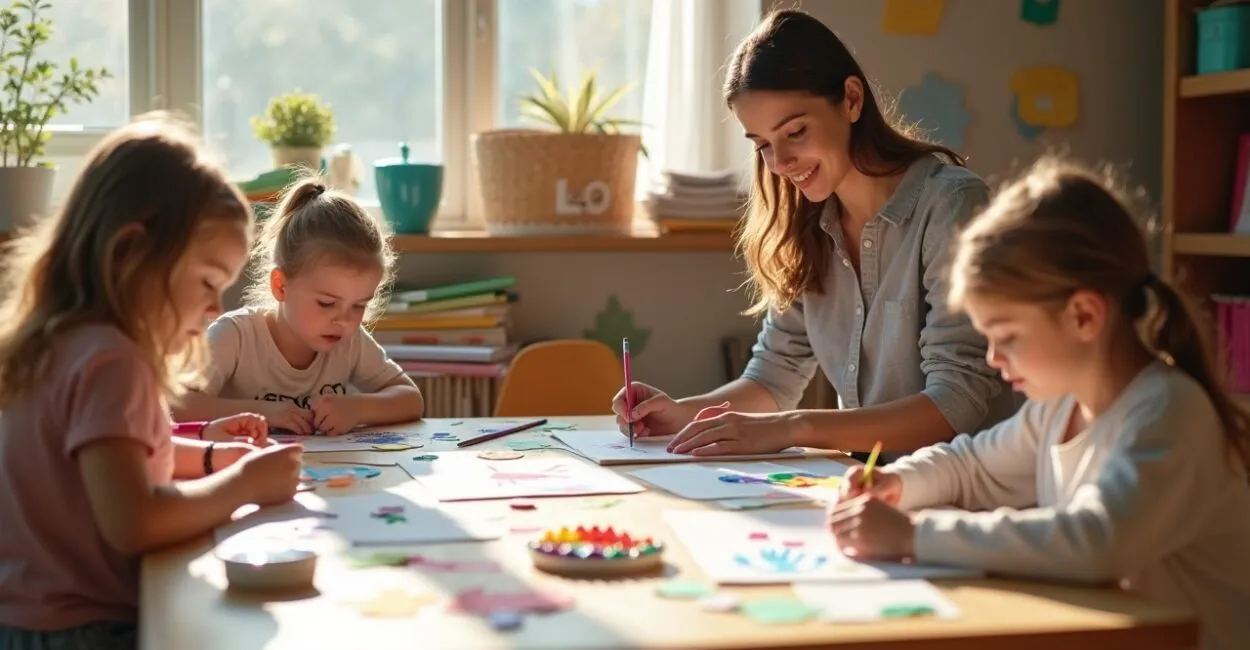
A good Mother’s Day activity at school doesn’t have to be expensive or “cute” just for the sake of it. It should have a clear educational purpose and fit into the class’s real-world schedule. When we talk about activities for Mother’s Day in elementary school, we mean projects that bring together emotional connection, language, creative work, and learning with purpose—not just a pretty gift to take home.
In practice, the best approach is to pair a simple task with a thoughtful, heartfelt result. Anyone who works in a classroom knows that if an activity is too complicated, it turns into a scramble; if it’s too generic, it loses its meaning.

Below, you’ll find ideas for different grade levels, guidelines for choosing the right project, and ways to adapt activities for classes with different circumstances—including when the focus needs to shift from “Mom” to a caregiver.
What You Need to Know
- The best Mother’s Day activities for elementary school combine original student work, low costs, and a short completion time.
- For grades 1–3, drawing, collage, dictation, guided writing, and origami work better than long or highly abstract assignments.
- For grades 4–5, raise the bar with letters, poems, how-to writing, simple graphs, interviews, and cards with more developed messages.
- A good celebration should reflect diverse families; a child’s primary caregiver isn’t always their mother.
- The most meaningful activities usually end with a clear, heartfelt takeaway: a card, bulletin board, booklet, keepsake, or short presentation.
Mother’s Day Activities for Elementary School: Planning, Goals, and Grade Levels
Before deciding what the class will do, it helps to answer a practical question: what do you want students to develop beyond the tribute itself? That matters in school. A Mother’s Day activity can work on writing, speaking, motor skills, reading, logical sequencing, and emotional awareness all at once. Without a clear goal, the project becomes nothing more than decoration.
The Educational Thinking Behind the Activity
In educational terms, this is a learning experience with a sociocultural purpose: students create something for a real recipient, with emotional meaning. Put simply, children write, draw, make, or present something with a specific person in mind—and that changes how engaged they are.
This kind of assignment fits well with the organization of elementary education in Brazil and the BNCC, Brazil’s national curriculum framework, which emphasizes language practices and meaningful work.
How to Choose the Right Grade Level
In grades 1–2, activities should be visual, brief, and closely guided. By grade 3, students can write short sentences and work on group writing. In grades 4–5, students can handle more independence, revision, and attention to visual details. If an activity requires extensive reading, intricate cutting, or a lot of writing, it can fall apart in the early grades and lead to frustration.
A Mother’s Day activity works best when children understand who they’re making it for, why they’re making it, and what they’re expected to complete.
A common mistake is choosing a pretty keepsake that has no connection to learning. It might make for a good photo, but it doesn’t support the educational purpose. In practice, a simple sequence makes the activity stronger: introduction, guided work, finishing touches, and presentation. This structure keeps things manageable and makes it more likely that students will create something truly special.
Ideas for Grades 1–5 That Won’t Turn Into a Scramble
If you need projects that fit into one class period or a short project, avoid ideas that require lots of materials or a lengthy assembly process. The formats below tend to work well in both public and private schools and are easy to adapt for different classes.
1. Card with a Guided Message
A card is simple, but it doesn’t have to be basic. In the early grades, students can complete sentence starters such as “My mom likes…” or “I admire you because…”. In grades 4–5, they can write a short message with an opening, a thank-you, and a closing. The key is not to demand perfect handwriting; focus instead on purpose, legibility, and sincerity.
2. A Class Poem
The teacher writes verses with input from the class, and then each student illustrates one stanza. This is an excellent option for classes with a range of abilities because everyone can participate, including children who find writing more challenging.
It looks beautiful on a bulletin board and often makes for a very moving presentation.
3. Origami with a Message Inside
A flower, heart, dress, cup, or decorated envelope: origami makes an eye-catching project that looks polished. Inside, the child writes a sentence or draws a special moment. If you’ve tried this, you know the outside catches the eye, but the message inside is what makes the keepsake meaningful.
4. A “Someone Special to Me” Mini-Book
This format works especially well when a school wants to extend the tribute beyond a child’s biological mother. Students fill in simple pages about someone who cares for them, with prompts such as “a meal they make,” “a habit I like,” and “what I want to thank them for.” It’s a thoughtful and more inclusive activity.
For example, in a fourth-grade class, the teacher could pair students up to review their work. One child reads what they wrote, while the other helps correct a word. Then they both check that the message is clear. This kind of teamwork often improves the final result without making the lesson feel like a chore.
What makes a school keepsake memorable, rather than simply nice, isn’t the material—it’s having a clear recipient and letting the child’s own voice shine through.
How to Adapt the Activity for Each Grade Level

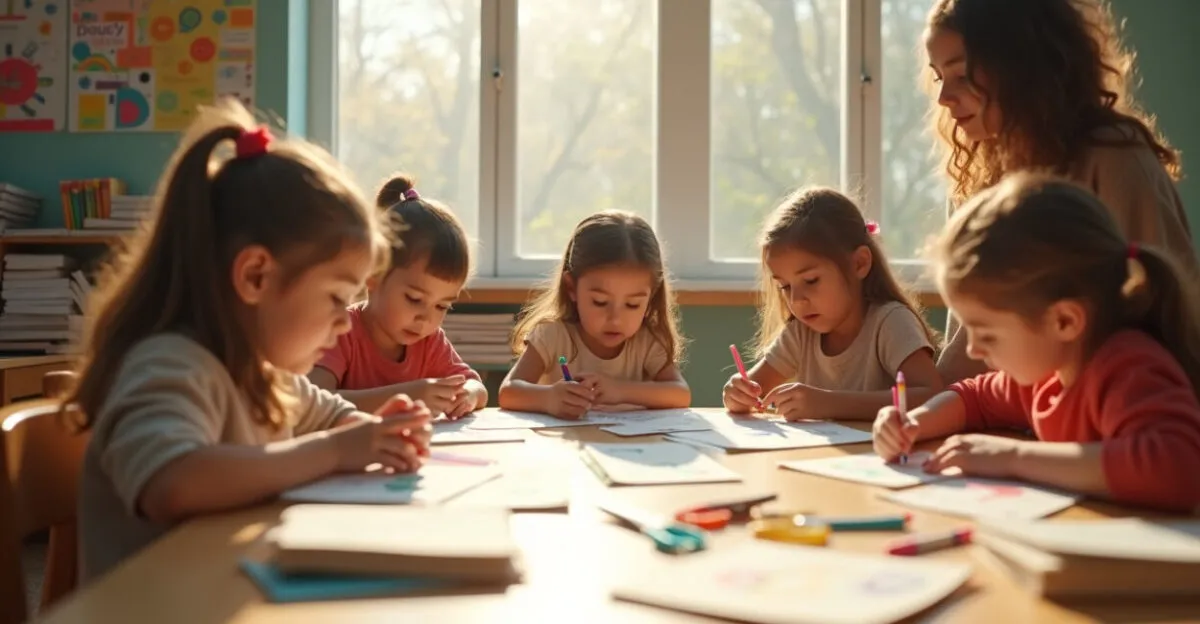
The same idea can produce very different results depending on students’ ages. That’s because writing skills, fine motor coordination, and independence change considerably between grades 1 and 5. Adaptation isn’t a minor detail; it determines whether the activity will flow or stall.
Read also: Reading Comprehension Questions: How to Create Effective Activities
Grade
Best format
Level of guidance
Expected outcome
Grade 1
Drawing, collage, and a sentence starter to complete
High
A visual, heartfelt keepsake
Grade 2
Card with a word bank and guided writing
High to moderate
First sentences written with some independence
Grade 3
Poem, note, and short text
Moderate
More original work
Grade 4
Text with revision and artistic finishing touches
Moderate to low
A complete, well-organized message
Grade 5
Letter, interview, or themed booklet
Low
Stronger language skills and presentation
When the Guidelines Don’t Apply
Not every class is at the expected level for its grade. Some fourth-grade classes include children who are still learning to read and write, while some second-grade classes are already well ahead in their writing. So grade level is a guide, not a hard-and-fast rule. The best approach is to assess the class’s actual abilities and adjust the amount of writing and independence required.
To inform your approach, consider learning and development resources such as UNICEF Brazil, which discusses education and childhood through a rights-based lens, as well as educational publications on reading and writing. In holiday activities, the educational goal shouldn’t get lost behind the decorations.
Simple, Affordable, and Effective Materials for Your Lesson
Anyone who has organized this celebration at school knows that the hardest part usually isn’t coming up with an idea—it’s the logistics. If you rely on hard-to-find supplies, you lose time and risk not having enough for half the class. The best option is to use materials most schools already have.
Materials That Really Help
- Colored paper or plain white paper, both of which work well for cards and origami.
- Colored pencils, crayons, and markers for decorating and personalizing.
- Blunt-tip scissors and glue sticks to keep the mess to a minimum.
- Old magazines, fabric scraps, buttons, and ribbons for collage and texture.
- Envelopes, string, and kraft paper for presenting the finished work on a bulletin board or in a folder.
If the school has a printer, you can save time with ready-made templates, decorative borders, and worksheets with sentence starters. But these are extras, not requirements. Often, the most beautiful projects come from making thoughtful use of limited resources.
A Realistic Time Frame
For a 50-minute class, choose an activity with a clear beginning, middle, and end. A project spread over two or three sessions can include writing, revision, and more detailed decoration. If you’re doing it in one day, cut any nonessential steps. Schools don’t reward extra steps; they reward work that can be completed well.
Inclusion, Family Diversity, and Thoughtful Messaging
This is where sensitivity matters most. Not every child lives with their mother, and not every mother is actively involved in school life. Some children are raised by grandparents, aunts or uncles, fathers, stepparents, two moms, or legal guardians. If an activity ignores that, it can hurt instead of celebrate.
How to Write Prompts That Include Everyone
A practical solution is to replace “What do I love about my mom?” with “Someone who takes care of you deserves to be celebrated because…”. This keeps the warm, heartfelt tone while making room for everyone to participate. Instead of imposing an emotional expectation, the activity becomes a genuine expression of appreciation.
This adaptation doesn’t “ruin” the tradition; it makes the activity more thoughtful. And there’s an important distinction: a school tribute doesn’t have to follow a rigid family model to be respectful. When a school welcomes different family situations, the activity becomes more meaningful and avoids putting children in an uncomfortable position.
Celebrating Mother’s Day at school isn’t about repeating a single model of family; it’s about creating a tribute that reflects children’s real lives.
What to Avoid
- Texts that treat a mother as the only possible caregiver.
- Activities that draw attention to an absent caregiver without emotional preparation.
- Comparisons between families, even indirect ones.
- Requiring students to share personal stories in order to participate.
Presentation, Assessment, and Turning the Occasion into Learning
After students finish their work, treat the presentation as part of the activity, not just a way to wrap things up. A class bulletin board, a hallway display, a short presentation, or a decorated envelope can change how children view their own work. Having a recipient gives their effort meaning.
Simple Assessment Criteria
Instead of judging only how it looks, assess three things: participation, whether the task suits the class’s level, and how clearly the message comes across. These matter more than filling the page with decorations. A keepsake with legible writing and a well-expressed idea is often more valuable than one covered in cutouts but lacking the child’s own voice.
If the school wants to document the project, take photos of each step, save samples, and create a small portfolio. These materials help the team repeat what worked the next year and adjust anything that felt too demanding. Here’s a practical benefit: well-organized holiday activities tend to require less rework than projects thrown together at the last minute.
For curriculum guidance, the BNCC, Brazil’s national curriculum framework, offers useful guidelines on language, art, and meaning-making. A good place to start is the Base Nacional Comum Curricular (Brazil’s National Common Core Curriculum) and to connect the activity to what the class has already been learning. The celebration is much more meaningful when it connects to the curriculum instead of feeling tacked on.
Next Steps for Using These Ideas with Your Class
If your priority is a beautiful result in a short amount of time, choose one activity and simplify the materials. If your priority is learning, turn the tribute into a lesson sequence: a short reading, planning the message, writing, and revision. This structure cuts down on chaos and makes it more likely the class will create something heartfelt.
Here’s the best way to decide: the activity should fit the schedule, suit the students’ grade level, and recognize the diversity of the class. When those three things come together, the celebration stops feeling like a calendar obligation and becomes a meaningful school experience.
Frequently Asked Questions
What’s the Best Mother’s Day Activity for Elementary School?
The best activity combines writing or creative work with a real recipient and a realistic time frame. Cards, class poems, mini-books, and origami often work well because children can contribute their own ideas without needing complicated materials. Choose an activity that fits the students’ ages and the time available rather than attempting something elaborate and risking the loss of its educational purpose.
How Can You Adapt the Activity for Students Who Are Still Learning to Write?
For children in the early stages of learning to read and write, the best strategy is to use sentence starters, a word bank, dictation to the teacher, and visual support. Drawing and collage also help because children can express their message without words. The goal isn’t perfect spelling; it’s meaningful participation and a finished project that’s appropriate for each student’s stage of learning.
What Should You Do If a Child Doesn’t Live with Their Mother?
In that case, broaden the activity to recognize the person who cares for the child, whether that’s a grandparent, father, aunt or uncle, stepparent, legal guardian, or another important person in their life. Rephrasing the prompt as “someone who takes care of me” avoids exclusion and discomfort. The school doesn’t lose anything by broadening the tribute; on the contrary, it makes the activity more respectful, thoughtful, and appropriate for diverse families.
How Long Should an Activity Like This Take?
For a single class period, 40 to 60 minutes is ideal, with clear steps for instruction, creating, and finishing. If you have more than one session, you can add revision, personalization, and a bulletin board display. The most common mistake is planning an activity that’s too long for the time the class actually has, leading to delays, stress, and a rushed final result.
Do You Need to Spend a Lot to Make a Great School Keepsake?
No. The most effective projects usually use paper, colored pencils, glue, blunt-tip scissors, and recycled materials. What makes an activity special isn’t how much it costs; it’s the clarity of the instructions, the child’s own contribution, and how the finished work is presented. With good planning, even simple supplies can produce something beautiful and memorable without putting extra pressure on families or the school.
Artigos Relacionados
 Elementary School Activities: Creative, Practical Ideas
 Mother’s Day in Early Childhood Education: 7 Memorable Activities
 Play-Based Learning in Elementary School: Learning Through Play
 Elementary School: A Complete, Practical Guide
 Inclusive Strategies for Students with ADHD: Practical Accommodations and Academic Outcomes for Elementary School Teachers
 Creative Icebreakers: 7 Innovative Activities to Help Middle School Students Connect
