
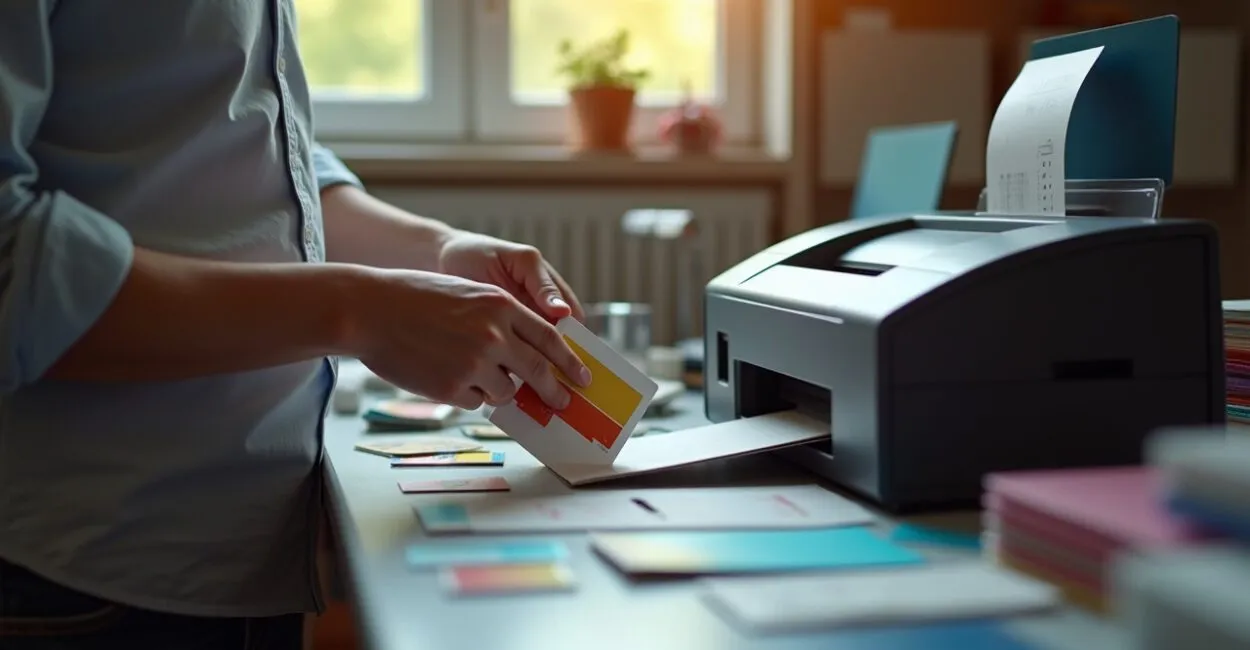
Event badge printing is the technical and logistical process of producing physical identification that combines readability, security, and durability for attendees, staff, and visitors. It involves selecting materials, designing a layout, choosing a printer, and applying the right finish to prevent check-in problems and create a professional experience. A well-printed badge reduces lines, prevents simple fraud, and improves the event’s image.
Key Takeaways
- The badge material (PVC, laminated cardstock, or Tyvek) determines durability, cost, and printing method. There’s no single “best” option—choose what fits the use case.
- Thermal transfer printers are ideal for high durability and solid colors; laser and inkjet printers work well for smaller runs and lower upfront costs.
- Finishes such as lamination, cutting, and eyelet reinforcement extend badge life and improve readability. Matte lamination reduces glare and visible fingerprints.
- Layout planning—including contrast, font size, and QR codes—affects check-in speed and integration with access control.
Why Event Badge Printing Shapes the Attendee Experience
A badge is the first physical point of contact between an attendee and an event. When it’s easy to read and durable, it speeds up entry, makes networking easier, and helps staff identify people’s roles. Poorly produced badges, on the other hand, cause lines, mix-ups, and damage to the event’s brand. Event badge printing is therefore both an operational and branding decision, with a direct impact on satisfaction and efficiency metrics.

Readability and Usability
Readability depends on contrast, font style and size, and layout. Sans-serif fonts between 10 and 14 pt work well for names; use 8–12 pt for companies and job titles. Avoid blocks of text; use icons where appropriate. Leave a 3–4 mm safe margin to prevent information from being cut off. QR codes and barcodes need a clear area around them (a quiet zone) and should be at least 1.2 cm square for quick scanning.
Operational Impact
Durable badges reduce reprints during the event and cut down on requests at the check-in desk. For events using optical scanners, standardize the layout. For multi-day events, consider badge holders or removable sleeves to protect badges between sessions. These small details have a compounding effect: fewer interruptions, a more focused team, and a better attendee experience.
How to Choose Materials: PVC, Laminated Cardstock, Tyvek, and More
Choosing a material depends on the event’s duration, budget, and potential risks, such as rain or heavy handling. Each material involves clear trade-offs in cost, printability, and durability.
Understanding these trade-offs helps avoid unnecessary expenses and ensures the badge does its job reliably.
PVC (Plastic Cards)
PVC is about as durable as a credit card and supports direct thermal transfer printing. It’s ideal for recurring events, permanent credentials, and RFID integration. The per-unit cost is higher than standard cardstock, but the longer lifespan pays off when badges are reused. PVC requires a compatible printer and the right heat settings to bond the ink.
Laminated Cardstock and Paperboard
Laminated cardstock is a budget-friendly option for short-term events. Print it with a laser or inkjet printer, then apply thermal or adhesive lamination. Lamination improves resistance to water and tearing. For large runs, combining roll printing with automatic lamination lowers the cost per badge. Unlaminated paperboard isn’t recommended for events with extreme temperatures or heavy handling.
Tyvek and Lightweight Options
Tyvek is tear-resistant and inexpensive, making it a common choice for lab credentials and outdoor events. It doesn’t work with thermal transfer printing in the same way as PVC, so it requires offset preprinting or a specialized digital printing process. It’s ideal when mechanical durability and low cost matter more than appearance.

Printer Types: When to Use Thermal, Laser, Inkjet, or DTF

Choose a printer based on two main factors: volume and durability requirements. Thermal retransfer and dye-sublimation printers are the top choices when durability and color quality are critical. Laser and inkjet printers work well for short runs and flexible printing needs. Understanding their technical limitations helps prevent rework and added costs.
Thermal Retransfer and Dye-Sublimation Printers
Retransfer and dye-sublimation printers produce vivid colors and crisp edges, with excellent adhesion to PVC. They’re recommended for badges exposed to sunlight or heavy handling. Professional equipment may include overlaminate modules for textures and security features such as holograms.
Laser and Inkjet
Laser printers are fast and ideal for high-volume printing on paper and laminated cards, making them a good choice for text-based identification and barcodes. Inkjet printers offer flexible color printing and may be more cost-effective for complex images in small runs. Both require lamination to ensure the badges are durable enough for event use.
DTF and Industrial Printers
Direct-to-film (DTF) and industrial printers serve specialized needs, such as printing on fabric, producing very large runs, or printing on unusual materials. These solutions are expensive and operationally complex, but offer excellent durability and versatility when a project calls for distinctive visuals or integration with event merchandise.
Finishes and Lamination: How to Ensure Durability and a Professional Look
Finishes determine resistance to scratches, moisture, and wear. Matte laminates reduce glare, while gloss enhances contrast in deep colors. The finish can also affect optical scanning and the feel of the badge. A good finish reduces logistical problems and improves the event’s image.
Thermal vs. Adhesive Lamination
Thermal lamination provides a better seal and greater water resistance. It’s recommended for badges used for several consecutive days or in outdoor settings. Adhesive lamination is simpler and less expensive, making it suitable for small runs. Lamination also protects retransfer and laser prints from abrasion.
Cutting, Eyelets, and Attachments
Precise cutting prevents sharp corners and ensures a proper fit in holders. A metal eyelet reinforces the hole in badges worn with lanyards or clips. For high-traffic events, choose a reinforced eyelet and a lanyard with a swivel clasp to reduce badge damage.
Security Features
Holograms, UV ink, and microtext help protect against fraud. Security features are a cost-effective choice when access to restricted areas is valuable. For VIP or staff credentials, combine high-resolution printing with holographic lamination or a tamper-evident adhesive seal.
Production Workflow: From Design to Event Distribution
Planning the workflow prevents bottlenecks on event day. The typical sequence is layout design, digital proofing, batch production, finishing, and packaging by group. For large events, prepare a 3–5% contingency batch and set up an extra on-site printing station for emergencies.
Preproduction and Proofs
Physical proofs are essential for checking colors, cuts, and QR codes. A digital proof doesn’t guarantee readability with physical scanners. Test at least one batch using the final material and selected finish. Check contrast under ambient lighting similar to the event venue.
Last-Mile Logistics
Sort badges alphabetically, by role, and by expected arrival time. Use envelopes or divided boxes with clear labels to speed up check-in. For events that allow on-site registration, keep a reprint kit ready and have a trained operator on hand to prevent long lines.
Costs, Volume, and Sustainability
Costs vary by material, technology, and finish. PVC has a higher per-unit cost; laminated cardstock falls in the middle; and Tyvek is inexpensive per unit. In many cases, economies of scale kick in after 500 units. Also consider environmental impact and recyclable options to reduce waste and disposal costs.
Calculating Cost per Unit
To estimate cost, add up materials, printing, finishing, labor, and logistics. For example, PVC with retransfer printing may cost between $0.90 and $2.40 per unit, depending on volume; laminated cardstock may range from $0.24 to $0.70. Always allow for losses and reprints (3–7%).
Practical Sustainability
Sustainable options include cards made with recycled PVC, certified paper, and systems for reusing badges at recurring events. Return programs reduce waste. When choosing recyclable materials, check local recycling infrastructure to avoid options that seem sustainable but end up as technical waste.
How to Put This Knowledge into Practice
Choose the material that balances durability and cost. Select a compatible printer and finish. Plan physical proofs and distribution logistics. Train staff to handle reprints and equipment failures. These decisions reduce hidden costs and improve the attendee experience.
Quick Operational Checklist
- Define how long badges will be used and the environmental requirements;
- Choose a matching material and printing technology;
- Run a physical proof and adjust the layout;
- Plan for 3–5% extra badges and an on-site printing station;
- Document the process so it can be reused for future events.
References and Further Reading
For event and audience statistics, consult IBGE, Brazil’s national statistics agency, and local tourism agencies. For technical standards on materials, check ABNT, Brazil’s standards organization. Equipment sources and case studies can help fine-tune budgets and production decisions. Practical examples and cost comparisons make it easier to choose the right option.
Frequently Asked Questions
What’s the Best Material for a Two-Day Event with Heavy Attendee Traffic?
For a two-day event with heavy traffic, I recommend PVC with matte lamination. PVC resists tearing and works exceptionally well with retransfer printing; matte lamination reduces glare and wear from handling. Although it costs more per unit than laminated cardstock, it prevents reprints and improves code readability. If the budget is tight, laminated cardstock with thermal lamination is an alternative, but consider adding a reinforced eyelet to prevent damage around the badge hole.
How Do You Choose Between a Retransfer and Laser Printer for a Run of 1,000 Badges?
For 1,000 badges, choose retransfer printing if you need durability, accurate colors, and resistance to wear. Retransfer printers have a higher upfront cost but deliver a low defect rate and consistent quality on PVC. Laser printers cost less initially and are suitable for laminated cardstock when badges will be used for a short time. Calculate the total cost, including lamination and reprints; retransfer often pays for itself by reducing operational problems.
Which Finishes Do the Most to Reduce Event-Day Reprints?
Full thermal lamination and metal eyelets do the most to reduce reprints. Lamination protects prints from abrasion and moisture, preventing fading and smudging, while eyelets prevent tears around holes caused by lanyards. For maximum protection, combine lamination with a tamper-evident seal on credentials for critical access areas. These investments minimize check-in disruptions and event-day operating costs.
Can Printed QR Codes Be Used for Reliable Access Control?
Yes, as long as you follow size, contrast, and print-quality standards. Printed QR codes should be at least 1.2 cm square, with a clear quiet zone around them and strong contrast between the code and background. Also test scans on different devices and under the venue’s lighting conditions. For high-traffic events, use monochrome codes printed at high resolution to prevent slow scans or errors.
How Can You Balance Cost and Sustainability in Badge Printing?
Balancing cost and sustainability means choosing lower-impact materials without compromising functionality. Recycled PVC cards or recyclable paper with compostable lamination are options. Reusing badge holders and offering return programs reduces waste. Consider the total cost, including disposal and reverse logistics; investing in durable materials and collecting badges after the event can sometimes be more economical and environmentally friendly than using cheap disposable materials.
Artigos Relacionados
 Event Badges: Design, Printing, and Logistics for Professional Identification
 In-Person Event Checklist: 30 Essential Logistics, Equipment, and Safety Items for Smooth, Well-Run Presentations
 Interactive Features in Digital Learning Materials
 Agricultural Machinery: How to Choose and Finance Equipment
 Complete Study Prep Materials: Books, Plans, and Practice
 3D Printing: The Technology Revolutionizing Modern Manufacturing
