

These are visual identifiers designed to recognize and classify attendees, staff, and vendors, and to make it easier for them to interact at an event. They combine design, technology, and logistics to support security, networking, and the user experience—not just aesthetics.
Today, events need more than a piece of plastic with a name on it. They require credentials that support access control, quick identification, real-time data, and brand impact. The push for efficient setup, security, and sustainability makes badge planning a key factor in an event’s operational success and professional image.

Key Takeaways
- Well-designed badges reduce security failures and speed up check-in by combining visual IDs with technology such as RFID or QR codes.
- Material and finish affect cost, durability, and image; rigid PVC, laminated card, and sustainable alternatives each suit different event lengths and budgets.
- Logistics start with the brief: defining attendee profiles, access levels, on-demand personalization, and check-in flow tests helps prevent bottlenecks on event day.
- Direct thermal and retransfer printing deliver photographic quality; fast digital printing and mobile encoding are practical options for events with high variability.
- Post-event measurements—wait times, loss rates, and satisfaction—turn badges into a tool for continuous improvement at future events.
Why Design and Function Determine the Success of Custom Event Badges
Design and function go hand in hand when efficiency and security are the goals. A good badge communicates identity and access level at a glance, while its function includes technology and durability for real-world use throughout the event.
Legibility and Visual Hierarchy
Legibility comes first: font size, contrast, and spacing should make text readable from 3–6 feet away. Visual hierarchy determines what viewers see first—name, title, company, or access code—reducing manual interactions and speeding up verification.
Integrating Technology Without Sacrificing Aesthetics
RFID, NFC, QR codes, and barcodes require space and careful placement from the start of the layout process. Technology must not cover essential information, so the design needs a clear area for manual reading and enough physical space for antennas or chips.
Choosing Materials and Finishes: Trade-Offs Between Cost, Image, and Sustainability
Material affects cost, presentation, and environmental impact. Rigid PVC conveys a premium image and lasts for years; laminated card is an economical choice for short events; alternatives such as recycled PET reduce the carbon footprint but require specialized suppliers.
A Practical Comparison of Materials
| Material | Advantages | Limitations |
|---|---|---|
| Rigid PVC | Durable, premium appearance, compatible with encoding | Higher cost, difficult to recycle |
| Laminated card | Inexpensive, lightweight, recyclable in some programs | Less resistant to water and bending |
| Recycled PET | Lower environmental footprint, good durability | Availability and cost vary |
Use the table to choose based on event length and the image you want to project. For annual trade shows, investing in PVC may pay off over multiple editions; for one-time workshops, laminated card with an adhesive RFID tag is practical.
Types of Printing and Encoding: When to Use Each Technology

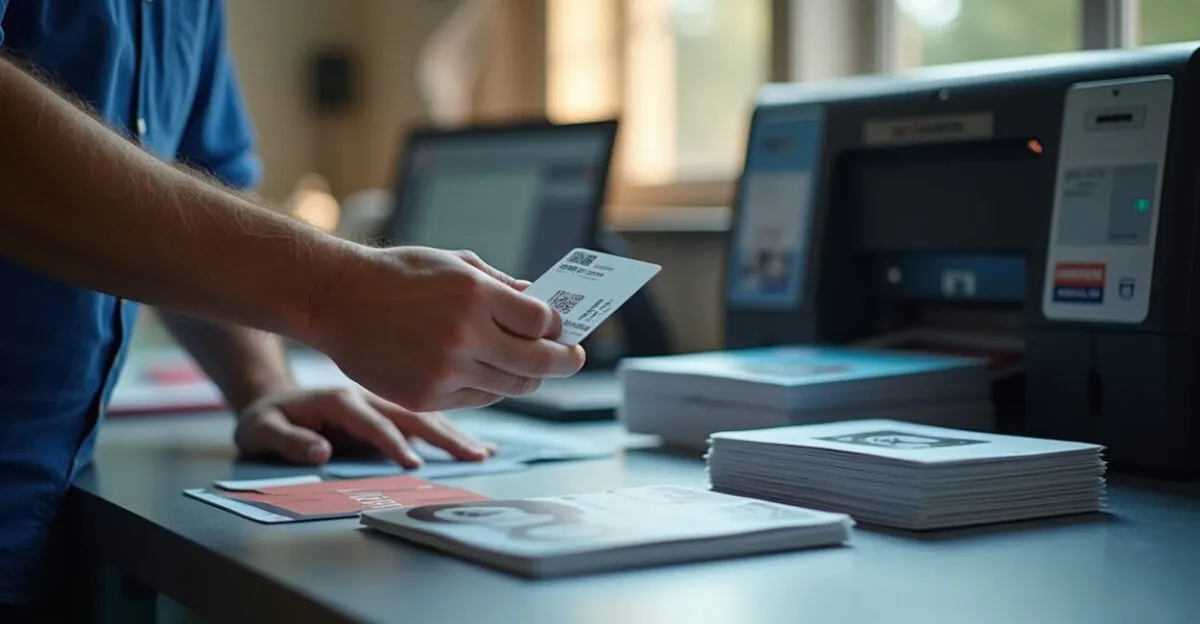
The printing method affects quality, production time, and cost per unit. Direct thermal printing is fast and inexpensive; retransfer and dye-sublimation printing deliver photographic quality. Encoding (magstripe, RFID, or QR) determines integration with access control systems and data collection.
Direct Thermal Printing vs. Retransfer
Direct thermal printing is ideal for names and simple colors on short-term cards. Retransfer printing supports full-bleed images and high-precision printing on rigid PVC. Choose retransfer when crisp photos and durability are essential, such as for VIP credentials.
Encoding for Access Control and Analytics
QR codes are inexpensive and versatile for smartphone check-in. RFID and NFC speed up entry through gates and enable real-time traffic metrics. Magstripe is legacy technology and useful only when older systems require it. Choose based on the venue’s infrastructure and the estimated number of readers.
Effective Briefing: Turning Event Goals Into Badge Specifications
A well-prepared technical brief reduces rework and costs. It should map audience profiles, access levels, brand requirements, and logistical constraints. Asking the right questions in the brief helps prevent surprises on event day.
Minimum Briefing Checklist
- Attendee profile (number, nationalities, languages)
- Credential types and access levels
- Required technology (RFID, QR, NFC) and venue infrastructure
- Printing deadlines, on-site personalization, and contingency plans
- Sustainability and disposal requirements
After completing the checklist, confirm the specifications with the supplier and the venue’s technical team. Small-scale tests before mass production help prevent encoding incompatibilities and scanning failures.
Production and Delivery Logistics: Timelines, Quality Control, and Contingencies
Badge production includes several stages: final artwork, proofing, printing, encoding, assembly, and delivery. Each stage carries risks, so building in time buffers and checkpoints is essential. Don’t treat production as a black box.
Managing Deadlines and Checkpoints
Set internal deadlines: final artwork (D-21), proof approval (D-14), printing (D-7), assembly and encoding (D-3), and delivery (D-1). Include batch checks for color, legibility, and code scanning. Document nonconformities and corrective actions.
Contingency Plans for Last-Minute Changes
Plan resources for on-demand personalization at the venue: portable printers, trained staff, and extra materials. Supplier contracts should include provisions for rush printing and replacement of defective batches. This reduces check-in lines and improves the attendee experience.
Event-Day Operations: Check-In, Security, and the Attendee Experience
Check-in operations are the real-world test of the badge design. Well-designed flows and staff training reduce wait times and errors. The ideal badge makes it easier to welcome, monitor, and connect attendees.
Check-In Desk Layout and Attendee Flow
Separate areas by purpose: advance pickup, express pickup, on-site badge issuance, and technical support. Clear signage and pre-event communication with instructions help reduce crowding. Use portable scanners to keep lines moving and digital displays to show wait-line status.
Security and Verification Procedures
Combine visual verification (photo on the badge), automated scanning, and manual checks in sensitive areas. Record denied access attempts for post-event analysis. Train staff to be firm and courteous—this protects security without compromising the attendee experience.
Measuring Results and Continuous Improvement
Measurement turns badges into a source of insight. Operational and attendee experience metrics show return on investment and guide decisions for future events. Without data, changes are based on guesswork.
Essential Metrics
Measure average check-in time, scan failure rate, badges lost per 1,000 attendees, cost per unit, and attendee satisfaction. Automated data collection through scanners and post-event surveys provides reliable information for analysis.
How to Use Data for Improvement
Use analytics to adjust materials, service points, and technology. If lines get longer at specific points, adjust staffing or use mobile scanners. Document lessons learned in a technical report for suppliers and event organizers.
Next Steps for Implementation
Start with a detailed technical brief that connects security, branding, and attendee experience goals. Choose materials and technology that fit the event’s audience and the venue’s infrastructure. Build timelines with room for testing and contingencies, and include metrics to evaluate performance.
When you treat badges as part of the event product, not just an operational detail, you reduce risks and improve the event’s professional image. Start with a small pilot at a smaller event and document the results before scaling up to large trade shows or conferences.
How Long Does It Take to Produce 1,000 RFID-Encoded Badges?
Producing 1,000 RFID-encoded badges typically takes 3 to 7 business days, depending on layout complexity, chip availability, and the supplier’s workload. The process includes purchasing tags, printing, inserting the chip, encoding, and testing scans. Suppliers with in-house equipment and chips in stock can reduce turnaround to 1–2 days for rush orders. Always allow an extra 24–48 hours for batch testing and reprinting nonconforming badges.
What’s the Most Common Briefing Mistake That Leads to Printing Rework?
The most common mistake is failing to standardize variable fields: name font size, use of diacritics, and title variations. Excel files with inconsistent columns or long names that haven’t been accounted for can lead to clipped text and reprints. Another frequent mistake is failing to validate the encoding format required by the venue’s access control system. Standardize templates and run a sample proof with 10–20 badges before mass production.
How Can You Reduce the Environmental Impact of Badges Without Compromising Durability?
There are three ways to reduce impact: use recyclable materials such as recycled PET, provide return stations for reuse, and choose modular designs (reusable cards with paper inserts). Replacing PVC with recycled alternatives can reduce the carbon footprint, but make sure suppliers are certified. Post-event returns and incentives for returning badges increase recovery rates and reduce improper disposal. Always communicate the environmental policy to attendees.
When Should You Choose On-Demand On-Site Printing?
On-demand printing is a good choice when final attendance numbers are uncertain, multilingual options are needed, or last-minute credentials are required. It’s also useful for limiting inventory and enabling instant personalization. It requires investment in fast printers, extra supplies, and trained staff. Compare the per-unit cost with the logistical risk: for events with high variability, on-demand printing often pays off by preventing shortages or excess inventory.
Which Suppliers and Standards Should You Consult for RFID Compatibility in Brazil?
Look for suppliers certified to ISO/IEC 14443 and 15693 for contact and proximity applications, and confirm UHF compatibility (ISO 18000-6C) if you need traffic tracking. In Brazil, local suppliers such as Identix and TagMyID, along with major international integrators, have a track record in this area. Also consult ANATEL, Brazil’s national telecommunications agency, about the venue’s radio frequency requirements, and confirm that its readers support the standard you choose. Always field-test samples before placing a bulk order.
Artigos Relacionados
 In-Person Event Checklist: 30 Essential Logistics, Equipment, and Safety Items for Smooth, Well-Run Presentations
 Certificate Templates for Talks: 12 Professional Designs, Design Tips, and Free Tools to Download Now
 Certificando.PRO – Organize Your Event or Course, Automatically Generate Certificates, Attendance Sheets, and Badges
 Professional Certifications: Which Ones Are Most Valuable in the Job Market?
 Professional Growth: 7 Habits That Accelerate Your Career
 How to Plan Corporate Presentations: A Complete Guide to Content, Time Management, and Resources That Engage Professional Audiences
