
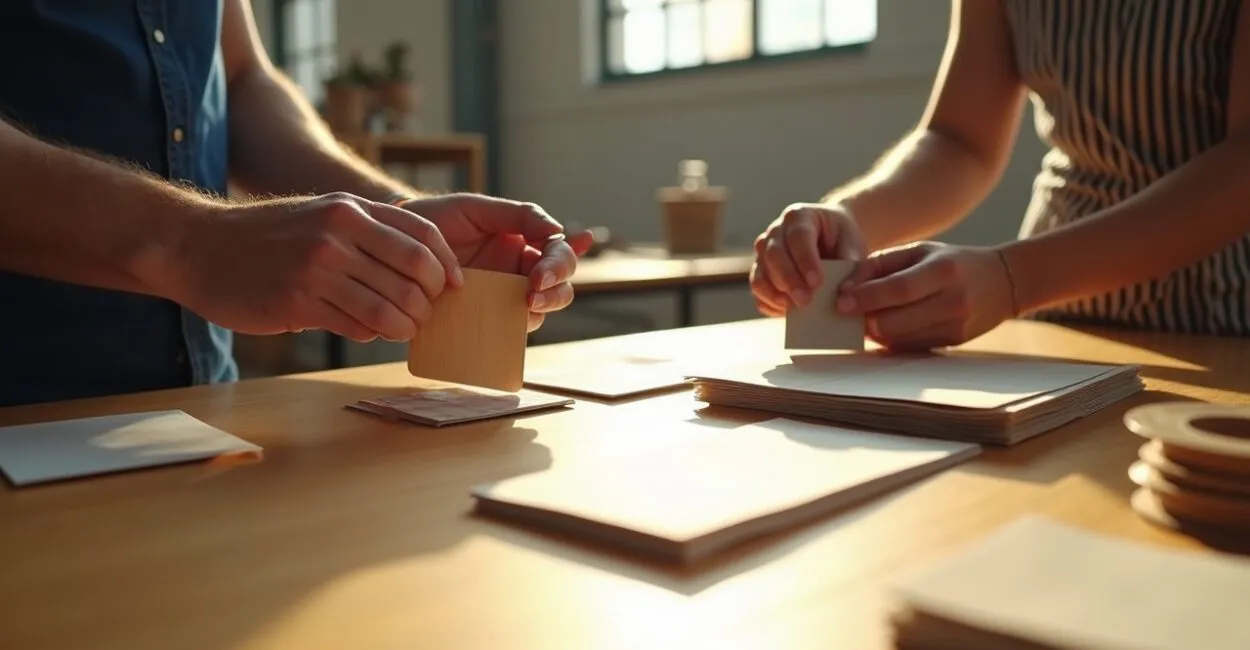
These are the physical substrates—such as PVC, PET, bamboo, and reinforced paper—used to create badges that meet requirements for cost, durability, appearance, and environmental impact. Essentially, the goal is to match a material’s technical properties (strength, printability, and finish) to the event’s needs: security, brand image, and badge lifespan.
Choosing the right material matters because badges make an immediate impression on attendees and reflect how well an event is organized. They also generate logistical costs and can have a significant environmental impact when produced at scale. Short, high-traffic events call for inexpensive, disposable options; longer events or those that reuse badges require materials that combine durability with a lower environmental impact. Below, I offer a practical, technical analysis to help you make an informed choice.

Key Takeaways
- PVC is highly durable and offers excellent print quality, but it has a high environmental cost. It’s ideal when a badge needs to last more than six months.
- Recycled PET balances durability with a lower environmental impact, making it the best choice when you want a long-lasting option with a sustainability focus.
- Bamboo is renewable and distinctive in appearance, making it a great fit for branded events that prioritize sustainability and moderate durability.
- Reinforced paper with lamination lowers costs and carbon footprint for short events. Choose FSC-certified paper and recyclable lamination.
- When deciding, weigh the cost per unit, length of use, security requirements (including anti-counterfeiting), and disposal or recycling logistics.
Why Material Selection Is Key to Choosing the Best Materials for Event Badges
Choosing the right badge material affects four operational factors: direct cost, user experience, logistics, and brand image. Start by quantifying these variables. For cost, add up manufacturing, printing, labor, and disposal. For user experience, consider feel, weight, and visual quality. For logistics, think about storage, shipping, and replacement needs. For your brand, assess whether the material fits the event’s positioning.
Operational Impact
A PVC badge may increase the cost per unit, but it reduces replacements and failures at longer trade shows. Laminated paper lowers production costs for large events but is more prone to tearing and damage. Bamboo and recycled PET require specialized suppliers and certifications, which can increase lead times. Measure these operational trade-offs using life cycle cost (LCC).
Technical Selection Criteria
Use four basic metrics: tensile and tear strength (N/mm or grades), moisture resistance (absorption level), print quality (dpi and ink compatibility), and recyclability or compostability. Request technical data sheets (TDS) and the supplier’s environmental certifications before signing a contract. Without data, you’re only guessing at the risks and actual costs.
Technical Comparison: When Traditional PVC Is the Right Choice
PVC (polyvinyl chloride) is the standard material for rigid badges because it combines stiffness, ease of printing, and moderate cost. It’s well suited to extended professional use, systems with cardholders, and settings where scratch resistance matters. However, its environmental impact calls for responsible management.
Properties and Applications
Rigid PVC badges are typically 0.75–1.0 mm thick. They support direct CMYK printing, lamination, and guillotine cutting. With normal use, they can last more than three years. For events with RFID access control, PVC is compatible with inlays and NFC, making it a versatile security option.
Environmental Impact and Mitigation
PVC has drawbacks: it isn’t easily recycled at all facilities, and it can release harmful additives if burned. Use certified phthalate-free PVC or choose PVC covered by the manufacturer’s take-back program. For information on the chemical risks of PVC, see the European Chemicals Agency: ECHA.

PET and Recycled PET: A Balance of Performance and Lower Environmental Impact

PET (polyethylene terephthalate)—especially recycled PET (rPET)—offers excellent mechanical strength, transparency, and high recyclability in markets with curbside recycling. For events that prioritize sustainability without sacrificing durability, rPET is often the best compromise.
Practical Advantages
rPET makes thin, rigid badges with good impact resistance. It supports UV printing and adhesive labels. Compared with PVC, rPET generally generates fewer emissions during production and is more likely to reenter recycling streams. At higher order volumes, its cost is similar to PVC.
Limitations and Logistics
Quality rPET availability varies by region, so check whether local recyclers can handle it after use. If an event requires a highly flexible badge, such as a foldable one, rigid PET isn’t suitable—choose flexible PET or laminated reinforced paper instead.
Bamboo and Lignocellulosic Materials: A Premium, Renewable Option
Bamboo and wood-based composites offer a distinctive look and a strong sustainability story, thanks to rapid renewability and low embodied carbon. They’re excellent choices for conferences, brand launches, and events with an environmentally conscious audience.
When to Choose Bamboo
Choose bamboo when the badge is part of the event’s visual identity and attendees value natural materials. Bamboo that’s 1–2 mm thick and finished with varnish or UV printing can withstand daily use. The cost per unit is higher than plastic, but the perceived value can make up for it at premium events.
Risks and Certifications
Check the material’s origin and certification (FSC or equivalent) to avoid greenwashing. Water-repellent and durability treatments may involve resins, so assess recyclability and whether the material can be industrially composted. The FAO documents responsible bamboo management: FAO.
Reinforced Paper and Laminated Cardstock: A Low-Cost, Low-Impact Alternative
Reinforced paper—heavyweight cardstock with lamination—is the most economical option for short events. Matte or gloss lamination improves water resistance and appearance. When FSC-certified paper is paired with recyclable lamination, the environmental footprint can be significantly reduced.
Useful Specifications
Use 300–400 g/m² paper with 75–125 µm lamination for good stiffness. Both offset and digital printing work well. To reduce waste, choose recyclable or reusable lanyards and clips, and ask attendees to return their badges at the end of the event.
Practical Limitations
Laminated paper tears more easily than plastic and doesn’t support electronic inlays. Avoid it for events that require badges to last for months. In terms of total cost, paper has an advantage when order volumes are high and the event is short.
How to Choose Based on Event Type and Duration
The choice between PVC, PET, bamboo, and paper depends mainly on how long the badge will be used, its visual purpose, security requirements, and budget. Below are straightforward recommendations for common scenarios and a quick decision guide.
Recommendations by Scenario
- One-day events with large crowds (major trade shows): laminated reinforced paper with a badge return system.
- Two- to five-day conferences: rPET or reinforced paper for a balance of durability and cost.
- Annual events with badge reuse and access control: PVC or rPET with an RFID inlay.
- Premium, sustainability-focused events: bamboo with UV printing and certified natural-fiber lanyards.
These choices account for cost per unit, replacement needs, and the client’s image. Run total cost simulations (production + logistics + disposal) before placing an order.
Common Mistakes When Choosing Badge Materials—and How to Avoid Them
Many problems stem from decisions made in isolation: choosing the lowest unit price without considering replacement costs, overlooking recycling logistics, or failing to test printing and finishing before large-scale production. Addressing these issues reduces rework and protects your brand image.
Common Technical Mistakes
- Not requesting a substrate data sheet (actual thickness, composition, and ink compatibility).
- Skipping durability tests (abrasion, bending, and sun exposure). Run a pilot batch.
- Buying materials without a local recycling stream, making proper disposal difficult.
After narrowing down your options, test 20–50 units under real-world conditions. This can reveal issues with printing, cutting, and fit in badge holders.
Next Steps for Implementation
Map out your requirements: duration of use, security needs, budget, and brand image. Request samples and technical data sheets from at least three suppliers, then compare LCC (life cycle cost). Include end-of-life criteria: return, recycling, or composting. Building these steps into the brief will help prevent surprises and lower the effective cost per attendee.
If you’d like, I can create a custom LCC spreadsheet for your event, including cost per unit, estimated disposal costs, and certified suppliers in Brazil.
Frequently Asked Questions
Which Material Has the Lowest Total Cost for a Short, Large-Scale Event?
For short events with large crowds, laminated reinforced paper usually has the lowest total cost. Paper weighing 300–400 g/m² with 75–125 µm lamination balances durability and price. Be sure to factor in badge return logistics to reduce waste. If high water resistance is required, consider thicker laminates, but they’ll increase costs. Always run a 100-unit pilot to validate printing and finishing before mass production.
How Can I Compare the True Sustainability of PVC and rPET Badges?
Assess the full life cycle: raw material extraction, production energy, transportation, use, and end-of-life disposal. rPET generally has lower CO2 emissions and higher post-consumer recycling rates where local collection is available. PVC may last longer, offsetting some of its impact if the badge is reused for years. Request emissions reports and certifications from suppliers, and favor take-back programs for industrial recycling. Compare kg CO2e per badge when possible.
Can I Use Bamboo Badges at Events with RFID Access Control?
Yes, RFID inlays can be integrated into bamboo badges, but the manufacturer will need to design the badge accordingly. The inlay must be embedded without compromising the badge’s stiffness or appearance. This increases cost and lead time. Check reading compatibility (LF/HF/UHF frequency) and run field tests before the event. For small or premium conferences, this combination can add significant brand value.
What Specifications Should I Request from Suppliers to Prevent Printing and Cutting Issues?
Request a technical data sheet with actual thickness and paper weight, cutting tolerances (mm), compatibility with printing technologies (offset, digital, and UV printing), color profiles (CMYK/ICC), and finishing options (lamination, varnish, and die-cutting). Ask for printed samples using the final artwork to check colors and edges. Specifying 3 mm of bleed and a 1 mm cutting tolerance reduces rework and production waste.
How Can I Plan Post-Event Disposal or Reuse to Reduce Costs and Environmental Impact?
Include end-of-life plans in the budget and contract. Common options include returns, recycling through a local partner, or composting for biodegradable materials. For paper, use FSC-certified stock and recyclable lamination. For plastics, arrange industrial recycling or a take-back program. Track the expected return rate and offer incentives (discounts or giveaways) to encourage returns. Planning ahead lowers costs and enhances the organization’s image.
Artigos Relacionados
 Event Badge Printing: Materials, Equipment, and Finishes for Durability and Professionalism
 Technology-Enabled Access Control Badges: 8 RFID, NFC, and QR Code Options for Event Security and Speed
 Event Badges: Design, Printing, and Logistics for Professional Identification
 Certificando.PRO – Organize Your Event or Course, Automatically Generate Certificates, Attendance Sheets, and Badges
 Streaming Platforms for Talks: Zoom, StreamYard, and YouTube Compared
 Interactive Features in Digital Learning Materials
