

Study prep materials are a collection of resources—books, study plans, and practice exercises—designed to make studying for exams, competitive entrance exams, and certifications more effective. They matter because they organize content, guide practice, and speed up learning, helping students know where to start and what to prioritize.
Finding the right study prep materials helps resolve uncertainty about which sources to use, how to create study plans, and how to incorporate practice tests into your learning. The right materials can reduce redundant work and improve efficiency.

This article covers which materials to choose, how to use them in practice, sample study plans, how to integrate lessons and practice tests, and tools and tips for measuring progress.
Essential Study Prep Resources
Recommended Books and Study Guides
Textbooks and study guides are the backbone of any study prep toolkit because they provide structured theory, worked examples, and concept maps. When choosing materials, prioritize recent editions, reputable authors, and resources with explained answers. Look for collections whose content aligns with your target syllabus or exam outline to ensure you cover all required topics.
Pair a core textbook with a practice workbook to balance theory and application. Use highlighting, notes, and chapter summaries to reinforce retention. Creating mind maps and flashcards from the book’s content can make review more active.
For complex topics, include reference materials such as official manuals, technical literature, and legal guides when relevant. These supplements help fill knowledge gaps and provide quick references when reviewing before practice tests and exams.
Digital Resources and Online Platforms
Online platforms and video lessons complement study prep materials by offering flexibility and access to recorded classes, discussion forums, and interactive quizzes. Choose services with updated question banks, automatic grading, and performance statistics to identify weak areas. Video lessons are useful for walking through problem-solving step by step and clarifying abstract concepts.
Flashcard apps and Pomodoro timers can help you manage spaced reviews and focused study sessions. Build these tools into your study plan to create consistent review cycles and track progress with performance dashboards.
Check that digital materials work with your devices, and review the provider’s update and support policies. Quality platforms often offer study paths, timed practice tests, and reports that help you fine-tune your preparation plan.
Support Tools and Supplementary Materials
Mind maps, summaries, formula sheets, and checklists are practical additions to study prep materials that make review faster. They condense large amounts of information into easy-to-reference formats, making them ideal for the day before an exam. Create or purchase concise, up-to-date versions for each subject.
Explained exercises, topic-based question banks, and past exams are essential for building problem-solving skills and managing your test time. Create a collection organized by topic and difficulty level to support steady progress and focus on critical areas.
Include practice exam software, timers, and progress-tracking spreadsheets. These tools provide objective metrics—correct answers, time per question, and areas with the most errors—to guide decisions about review and repeating study cycles.
How to Build a Study Plan With Prep Materials
Set Goals and Create a Realistic Schedule
Start by identifying your target exam date and setting measurable goals: study hours per week, topics to cover each week, and target scores on practice tests. A realistic schedule accounts for personal commitments and includes focused study blocks, spaced reviews, and days for practice tests. Set interim deadlines so you can adjust your pace and avoid falling behind.
Use backward planning: start with the exam date and distribute topics across the weeks, prioritizing subjects that carry more weight. Schedule active review with flashcards and topic-specific questions. Review your schedule monthly based on practice test performance.
Record your plan in a spreadsheet or study management app and review it weekly. Adjust your workload as you progress, and use performance data from your prep materials to dedicate more time to areas where you need the most improvement.
Structure Study and Review Cycles
Organize cycles that alternate between theory, practice, and review: learn the material, work through exercises, and review at spaced intervals (1 day, 7 days, and 30 days). This cycle takes advantage of the forgetting curve and improves retention. Also include quick 10–20-minute reviews of facts and formulas.
Prioritize active problem-solving: once you have had an initial introduction to a topic, try answering questions before reviewing the theory, then revisit the concepts behind any mistakes. This helps you identify gaps faster and recognize the patterns used in exam questions.
Include full-length practice tests at the end of each longer cycle—monthly or every two weeks—to build mental stamina, time management, and strategic review skills. Use the results to refocus your next study cycles.
Track Progress With Objective Metrics
Track study hours, correct answers by topic, average time per question, and practice test scores. These metrics turn your prep materials into actionable data, helping you prioritize topics where your performance is low. Even a simple spreadsheet can give you a clear picture of your progress and help predict your likely score.
Set weekly goals and compare them with your actual results. If you fall short, identify the reasons—such as material quality, insufficient practice, or lack of review—and make adjustments. Digital tools often generate automatic reports to simplify this analysis.
Use confidence ratings for each topic (for example: strong, partial, or weak) and update them after each study cycle. This helps you decide whether a topic needs intensive review or just occasional attention in your schedule.
Study Strategies With Books and Practice Exercises

Active Reading and Effective Note-Taking
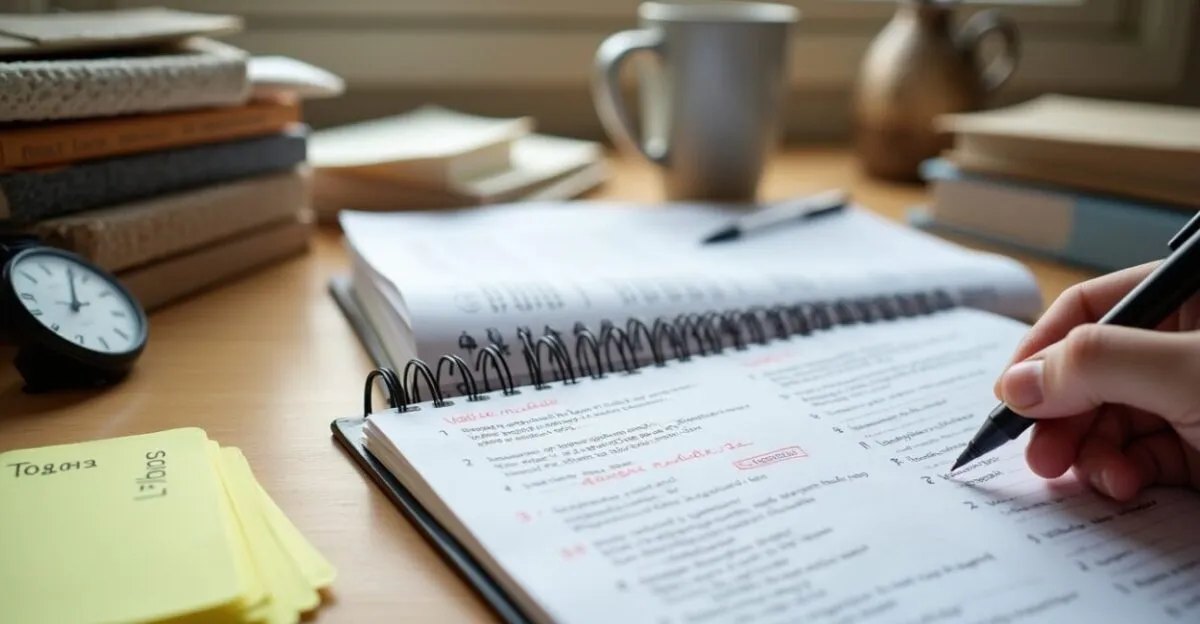
Active reading turns passive reading into genuine learning: highlight key points, ask questions, summarize chapters, and connect ideas. Notes with key points, examples, and questions make quick reviews easier. Organize notes by objective: definitions, formulas, exceptions, and real-world applications.
At the end of each chapter, write 3–5 self-assessment questions based on what you read. Answer them without looking at the text, then check your answers and record any mistakes. This improves retention and helps identify gaps in your prep materials.
You can also use your notes to compile step-by-step worked examples, turning solutions into guides you can review quickly before practice tests. Keep notes organized by topic to make them easy to find.
Deliberate Practice With Feedback
Deliberate practice focuses on exercises that challenge your weak areas, with close attention to your problem-solving approach. Work through topic-specific questions, check your answers with an answer key that explains the reasoning or with an instructor, and rewrite each solution explaining every step. Feedback is essential to avoid repeating mistakes.
Set performance goals for each session (for example, reduce your average time per question by 10% or increase your correct-answer rate by 15%). Track recurring mistakes and create a plan to address them with targeted reading and specific exercises from your prep materials.
Combine individual study sessions with group reviews or feedback from classmates or a mentor. Discussing solutions offers alternative perspectives and strengthens your understanding of the concepts.
Manage Practice Volume Without Sacrificing Quality
Prioritize quality over quantity: choose representative questions at varying difficulty levels. Use a sample of questions across topics and exam providers to cover different approaches. Simply answering questions without analyzing mistakes can create a false sense of progress.
Create a personal question bank of problems you got wrong and review it systematically. Try those questions again after 7 and 30 days to confirm you understand the concepts. Targeted repetition can turn isolated mistakes into lasting knowledge.
Alternate high-volume sessions with slower, thoroughly explained problem-solving sessions. This balance helps you build speed while taking the time to deepen your reasoning when needed, making the most of your available prep materials.
Integrating In-Person Classes and Study Materials
How to Align Classes With Your Study Materials
Before class, review relevant topics in your prep materials to build a foundation. During class, focus your notes on questions and practical examples. After class, work through exercises to reinforce what you learned. This before-during-after routine helps you retain more and get the most out of your instructor’s explanations.
Ask your instructor for specific references to study materials, such as chapters and exercises, and add them to your schedule. Use class time to clarify complex points and review recurring mistakes you have noticed in practice tests or question banks.
Record classes—with permission—and create written summaries to supplement your prep notes. Combining notes from books and classes gives you a richer, more contextualized resource for review.
Strategies for Getting More Out of Class
Prepare questions before class based on your reading and practice exercises. Taking part actively by asking specific questions makes it more likely that you will get an in-depth explanation and relevant examples. Prioritize your questions so you can make the most of your time with the instructor.
Ask your instructor to review your solutions in class so you can see alternative approaches. If available, request short in-class practice tests to check everyone’s understanding and get immediate feedback on performance and solution time.
Form study groups with classmates to discuss class topics and compare solutions. This exchange helps you spot exam patterns faster and expands your problem-solving toolkit.
Prep Materials to Complement Remote Classes
For remote classes, organize your prep materials into digital learning paths with video timestamps, reading links, and quick quizzes. Divide modules by topic and pair each section with exercises to maintain a steady pace and track engagement. Asynchronous feedback, such as online grading, is essential for making adjustments.
Use forums and chats to ask specific questions, and take advantage of automatic quizzes that accompany video lessons. These tools help you stay on track and let instructors tailor lessons to the areas students find most challenging, as shown by performance metrics.
Combine interactive prep materials—such as practice exam software and shared notes—with remote classes to encourage active learning. Keep documents and notes in one accessible repository for future review.
Practice Tests, Assessments, and Study Prep Materials
Schedule Regular Practice Tests With a Clear Purpose
Practice tests should recreate real exam conditions, including time limits, question order, and the testing environment. Schedule them regularly—monthly or every two weeks—as part of your study plan to assess stamina, pacing, and strategy. Use the results to update your score estimates and adjust your focus across your prep materials.
Add topic-specific practice tests when you finish a study cycle on a particular subject. These tests help you assess your grasp of each topic and identify conceptual errors that need immediate review.
Record your results: correct answers by topic, average time per question, and unanswered questions. These indicators help you realign your study plan and prioritize subjects in your prep materials.
Review Results Methodically and Create an Action Plan
Analyze practice test results by classifying mistakes as conceptual, calculation-related, interpretation-related, or due to distraction. Create an action plan for each category. After reviewing the theory, redo the questions you missed and record whether the same mistakes appear on subsequent practice tests.
Use your study prep materials—books, guides, and explained questions—to support a cycle of correction and relearning. Your action plan should include targeted reading, specific exercises, and active review sessions for critical topics.
Schedule a review 1–3 days after each practice test, followed by a comprehensive review after 30 days. This helps ensure that corrections lead to lasting improvements in performance and understanding.
Step-by-Step Checklist for Taking Practice Tests
- Plan: set a date, duration, and clear scope.
- Set up: recreate the exam environment and rules.
- Take the test: complete it without interruptions.
- Analyze: categorize mistakes and calculate metrics.
- Take action: adjust your plan using your prep materials.
| Practice test type | Frequency |
|---|---|
| Full-length | Monthly |
| Topic-specific | Weekly/every two weeks |
Comparing and Choosing the Best Study Prep Materials
Criteria for Evaluating Materials
Evaluate materials based on how current they are, how closely they align with the exam outline, the quality of their questions, whether they include explained answers, and whether they offer digital supplements. Check the author’s or publisher’s reputation, student feedback, and how often the materials are updated. These criteria help ensure your prep materials are reliable and effective.
Consider the format: print materials support focused reading, while digital materials offer convenience and interactive features. Give different features different weight based on your approach. For example, materials with a robust question bank may be a priority for intensive practice.
Consider value for money: free official resources, such as laws and manuals, can be paired with paid books and platforms to create a complete toolkit without overspending. Look for integrated packages that make it easier to manage your studies.
Comparison Table of Popular Options
| Material | Advantage | Best for |
|---|---|---|
| Core textbook | In-depth theory | Getting started |
| Practice workbook | Targeted practice | Topic-based practice |
| Online platform | Practice tests and metrics | Review and progress tracking |
How to Combine Materials for Better Results
Pair a core textbook for theory with workbooks for guided exercises and an online platform for practice tests and metrics. This three-part approach creates productive reinforcement across theory, practice, and assessment. Schedule each resource so you can alternate your focus throughout your study cycles.
For topics you find difficult, add reference materials and targeted video lessons. For your final review, use summaries, flashcards, and short practice tests drawn from your prep materials to maximize retention in less time.
Buy materials and subscriptions gradually, testing each resource first. Adjust your choices based on actual practice test results and how easily each resource fits into your study method.
Advanced Tips for Getting the Most Out of Your Prep Materials
Memorization Techniques and Active Review
Use spaced repetition, flashcards, and active recall techniques to build long-term memory. Turning notes and study cards into questions forces you to retrieve information, which is more effective than passively rereading your prep materials. Schedule reviews at gradually increasing intervals for each item.
Add anecdotes and practical examples to your notes to create mnemonic associations. Mix subjects during study sessions to improve your ability to distinguish contexts and apply knowledge in different situations.
Track the effectiveness of these techniques with quick quizzes and adjust your review schedule based on how easily you can recall each topic. Record your results to improve your plan over time.
Time Management and Practical Productivity
Use study blocks with techniques such as Pomodoro (25/5) or 50/10 intervals to stay focused. Schedule morning sessions for tasks that require more concentration and afternoon sessions for practice. Keep a study journal to track productivity and identify the times when you work best.
Eliminate digital distractions by turning on “Do Not Disturb” mode and using apps that block websites during study blocks. Keep your study space organized and physical and digital materials within reach to make it easier to get started each session.
Adjust your weekly workload to prevent burnout and keep up with spaced reviews. Schedule breaks and mental recovery activities to maintain a consistent study routine with your prep materials.
Recommended Tools and Additional Resources
Useful tools include question platforms with automatic grading, flashcard apps (Anki, Quizlet), note-taking apps, and spreadsheet-based schedules. For video lessons, platforms with timestamps and built-in notes make it easier to pull content into your study cards.
Use official sources for laws and manuals, such as government websites and institutions, and consult education studies and research for learning techniques. Helpful links: Official source and Academic research.
Combine these tools with your prep materials to build a routine that can scale and be measured. Adjust your resources based on practice test results and progress toward your goals.
Conclusion
Study prep materials are essential for organizing effective study: books, plans, and exercises provide theory, practice, and assessment. With a well-structured schedule and an integrated approach to classes, digital resources, and practice tests, you can achieve better results in less time.
Use study cycles with spaced reviews, track your metrics, and adjust your resources based on performance. Make strategic use of your prep materials, and start planning your next study cycle now to maximize your results.
Frequently Asked Questions
How do I choose the best prep materials for my exam?
Choose materials based on how closely they align with the exam outline, the quality of their questions and explanations, how recently they were updated, and the author’s or publisher’s reputation. Try free samples, check the question banks, and look for materials with explained answers. Pair a core textbook with practice workbooks and an online platform for practice tests. Consider value for money and adjust your choices based on practice test results.
How often should I take practice tests using my prep materials?
Take a full-length practice test at least once a month to assess your stamina and strategy. Topic-specific practice tests can be weekly or every two weeks, depending on your schedule. Adjust the frequency based on your progress: take more tests if gaps persist, and reduce them only when your performance metrics are stable. Use practice tests to guide your review of your prep materials.
Is it better to study with print books or digital platforms?
Both have advantages: print books encourage focused reading and note-taking, while digital platforms offer practice tests, performance metrics, and flexibility. Ideally, combine them: use books for theory and platforms for practice and progress tracking. The best choice depends on your learning style and the features you need in your prep materials.
How do I organize an effective study schedule?
Start with your target date and spread topics across the weeks, with daily goals and spaced reviews. Include blocks for theory, practice, and practice tests, and adjust your workload based on your performance. Work backward from the exam date, track your mastery of each topic, and reserve time to review mistakes. Record your schedule and review it weekly based on metrics from your prep materials.
What tools can help me track my study progress?
Progress-tracking spreadsheets, platforms with reports, flashcard apps, and time management tools such as Pomodoro timers are effective. Track study hours, correct answers by topic, average time per question, and practice test results. This data helps you make informed decisions about how to reallocate your time and choose prep materials that address your weak areas.
Artigos Relacionados
 A Practical Study Plan for More Effective Exam Prep
 A Practical Study Plan for Moms With Kids
 Educational best practices: A complete guide to transforming teaching
 Study Time for Civil Service Exams: A Complete Guide to Managing and Improving Your Preparation
 Lawyer: A Complete Guide to Requirements, Practice Areas, and Career Tips
 Realistic Practice Tests That Mirror Exams and Boost Scores
