
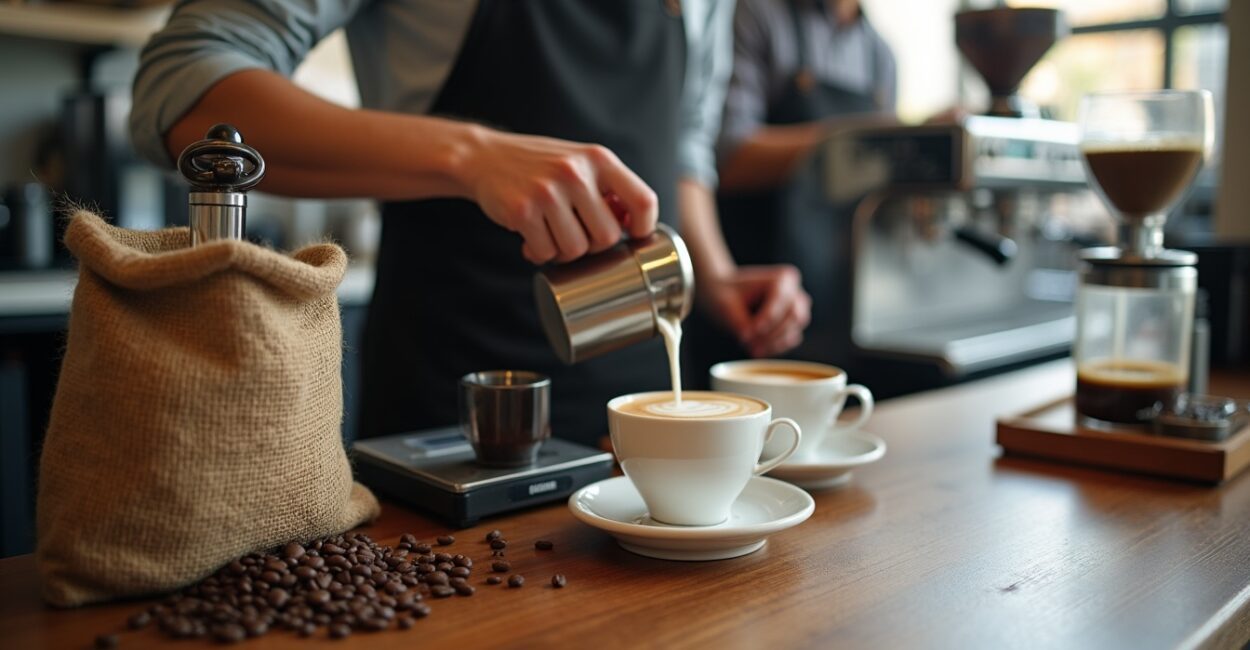
A coffee can start with exceptional beans, an expensive machine, and fresh milk—and still come out unbalanced if the person behind the counter doesn’t know how to dial in extraction, grind size, and milk steaming. A barista turns technique into consistency, adjusting small variables that make all the difference in the cup.
In practice, this work affects flavor, service speed, and even a business’s profits. People entering the field need to understand espresso, pour-over methods, steamed milk, equipment cleaning, and customer service because the job combines precision with the pace of service.

Here’s what the job involves, which skills really matter, and how careers in the field tend to develop.
What You Need to Know
- A barista isn’t just “someone who makes coffee.” They control grind size, dose, extraction time, and drink texture.
- Good work shows in repeatability, not in getting one shot right by chance.
- Cleanliness, grinder calibration, and espresso machine maintenance prevent waste and keep flavors from deteriorating.
- Customer service matters as much as technique because baristas also help customers understand the menu.
- Careers in the field advance faster with strong sensory skills, speed, and consistent service.
Barista Work and the Technical Side of Coffee Extraction
Technically speaking, a barista is a professional who specializes in preparing coffee-based drinks by controlling extraction variables, standardizing recipes, and paying attention to flavor. Put simply, a barista makes sure the coffee “comes out the same” time after time, even when the bean batch, the day’s humidity, or the customer volume changes.
Espresso is at the heart of the job. Grind size, dose, distribution, tamping, and extraction time all need to work together.
If the grind is finer, the drink tends to take longer to extract and may taste bitter. If it’s coarser, water passes through too quickly, and the result is often sour and weak.
What separates an average coffee from a consistently good cup isn’t the machine alone—it’s the ability to adjust small variables without losing consistency throughout a shift.
Anyone who works in a coffee shop knows that the first hour of the morning tends to expose every setup mistake: stale coffee in the grinder, a portafilter that hasn’t been dried properly, milk at the wrong temperature, and an incorrectly dialed-in recipe. Technique helps cut through the noise.
Variables That Have the Biggest Impact
- Grind size: Determines how much resistance the water encounters as it passes through the grounds.
- Dose: Affects concentration, body, and balance.
- Extraction time: Helps identify under- or over-extraction.
- Milk temperature: Changes sweetness, texture, and perceived body.
Coffee Shop Equipment Every Barista Needs to Know
A good drink depends on understanding the equipment, not just buying good equipment. An espresso machine, grinder, scale, tamper, milk pitcher, thermometer, and filters form the core setup. Beginners often underestimate the grinder, even though it has one of the biggest effects on the final quality.
Espresso machines require regular cleaning, purging, and pressure checks. Grinders need frequent adjustment based on the roast, humidity, and burr wear. When that’s neglected, service becomes inconsistent, and the team spends the day “fixing the coffee” instead of serving consistently good drinks.
In practice, there’s no magic piece of equipment. An expensive machine that’s poorly calibrated can’t compete with a basic setup operated by someone who understands extraction and knows how to read the coffee.
Most-Used Tools Behind the Counter
- Espresso machine with a steam wand.
- On-demand grinder with fine adjustment settings.
- Scale for measuring dose and yield.
- Tamper, distributor, and milk pitcher.
- Filters, Hario V60, Chemex, or French press for shops that serve brewed coffee.
Sensory Skills and Customer Service That Make a Difference

The sensory side of the job goes beyond “liking coffee.” Baristas need to recognize acidity, sweetness, bitterness, body, and finish because these qualities show whether a recipe works with the beans. The same coffee can taste sweeter as a pour-over and more intense as espresso, and that’s one way sensory judgment guides the choice of brewing method.
Customer service is another part of the job that can turn a technically capable coffee counter into a genuinely great experience. Explaining the difference between light and dark roasts, recommending a brewing method based on a customer’s preferences, and answering questions without sounding condescending are all part of the routine. A packed coffee shop doesn’t call for fancy explanations; it calls for clarity and speed.
Baristas serve as interpreters. They turn terms like “ratio,” “crema,” and “body” into practical choices for customers and the business. That ability matters more than memorizing recipes.
A good barista isn’t someone who impresses people with technical jargon. It’s someone who can deliver the same quality during a rush without losing sight of how the drink tastes.
What Customers Notice Even If They Can’t Explain It
- Whether the coffee tastes balanced or harsh.
- Whether the milk is sweet and silky or just foamy.
- Whether service is quick and helpful or creates frustration.
Training, Certifications, and How to Get Started
There’s no single path into the field, but one rule of thumb applies: people who learn only by watching videos tend to hit a wall early. Progress comes from supervised repetition, extraction practice, sensory evaluation, and real-time corrections. Training courses are most helpful when they include hands-on practice, not just theory.
Organizations such as the Specialty Coffee Association influence standards used in the specialty coffee industry, while technical training programs and culinary schools help build a solid foundation. In Brazil, it’s also worth exploring resources from research and extension institutions such as Embrapa, Brazil’s agricultural research corporation, which publishes useful materials on coffee, cultivation, and bean quality.
A good way to start is to learn espresso, master cleaning, practice steaming milk, and work under real service pressure. Certification can help your resume, but time behind the counter shows who can really keep up.
Three Common Ways to Get Started
- Short course and internship: Ideal for getting started behind the counter quickly.
- Specialty coffee training: A good fit for those who want to grow their skills in quality and consistency.
- On-the-job training at a coffee shop: Can work well, but requires a good mentor and discipline.
Job Market and Career Opportunities
There are many opportunities for baristas beyond neighborhood coffee shops. They can work in restaurants, hotels, upscale bakeries, corporate offices, trade shows, roasteries, and events. In cities with a strong specialty coffee scene, baristas can also work in training, operations consulting, and launching new locations.
Public data helps put Brazil’s service sector in context. It continues to play an important role in employment and income. The IBGE, Brazil’s national statistics agency, publishes economic and employment statistics that show the strength of the food service sector, where many counter-service jobs are found. For consumer trends, the ABIC, the Brazilian Coffee Industry Association, is also a useful resource.
One important point: not every barista becomes a specialty coffee expert, and that’s fine. In some settings, speed, consistency, and customer service matter more than sensory competitions. In others, technical standards are high and there’s little room for error. The field is broad enough for different kinds of professionals.
Career Paths to Consider
- Coffee shop associate focused on drinks and service.
- Lead barista or team trainer.
- Menu and operations consultant.
- Brand ambassador for a roastery or at events.
Common Mistakes That Hurt Coffee Quality
The most common mistakes rarely seem serious at first. The coffee is “fine,” but not great. The shot pulls too quickly, the milk gets overheated, or the group head is cleaned in a rush. Over time, these issues degrade flavor and increase waste.
I’ve seen entire coffee shops blame the beans when the real problem was a grinder that hadn’t been calibrated at the start of the shift. The opposite happens, too: a team keeps adjusting settings without properly cleaning the equipment. Not every issue has the same cause; the problem could be the beans, the water, the machine, or the process.
Mistakes That Need Immediate Attention
- Not adjusting the grind daily.
- Steaming milk past the point where it tastes sweet.
- Old residue in the filter basket or group head screen.
- Making drinks without a scale or recipe log.
- Rushing customer service to the point that quality problems go unnoticed.
How to Grow from Beginner to Consistent Professional
Anyone who wants to advance should treat every shift as a chance to practice and repeat. Tracking dose, time, yield, and tasting notes speeds up the learning curve. What isn’t measured becomes a guess, and guesses can be misleading when it comes to coffee.
A quick story illustrates the point: at a small coffee shop, the morning espresso was always inconsistent, but the team blamed it on “the rush.” After three days of tracking extraction, they discovered that the grinder was set too fine at closing, and no one reset it in the morning. The problem wasn’t the customer volume; it was the procedure.
For anyone serious about entering the field, the next step is to find a workplace with real training, track settings for a week, and check whether the drinks are consistent. A career improves when professionals stop guessing and start measuring, comparing, and making adjustments.
Frequently Asked Questions About Baristas
Are Baristas and Specialty Coffee Baristas the Same?
Not exactly. Anyone who prepares coffee drinks with skill can be called a barista, but the job can differ considerably between a regular coffee shop and a specialty coffee shop. Specialty coffee usually demands greater consistency, knowledge of bean origins, and sensory skill.
Do You Need Training to Work as a Barista?
Not everywhere, but it helps a lot. A good course shortens the learning curve by teaching espresso, milk steaming, cleaning, and the basics of flavor. Without supervised practice, learning is usually slower and more prone to bad habits.
What’s the Most Important Skill to Start With?
Consistency. Being able to make a good drink the same way several times is more valuable than pulling one excellent shot by chance. After that, focus on grind size, milk, cleanliness, and customer service.
Do Baristas Only Work with Espresso?
No. At many coffee shops, baristas also make pour-over coffee, iced drinks, milk-based drinks, and signature creations. Espresso is the most common foundation, but it doesn’t define the entire profession.
How Can You Tell if Coffee Was Extracted Properly?
Pay attention to extraction time, yield, and flavor. If the drink tastes very sour and watery, it may be under-extracted; if it’s bitter and heavy, it may have gone too far. In general, diagnosis is more reliable when you compare recipe measurements with what you taste in the cup.
Artigos Relacionados
 Paramedic: The Complete Guide to This Essential Healthcare Profession
 Pathologist: A Complete Guide to the Profession and Its Importance in Medicine
 Speech-Language Pathologist: A Complete Guide to the Profession and Its Importance
 Gardener: The Complete Guide to Mastering the Profession and Advancing Your Career
 Psychologist: A Complete Guide to the Profession
 Pharmacist: A Complete Guide to the Profession and Career Opportunities
