
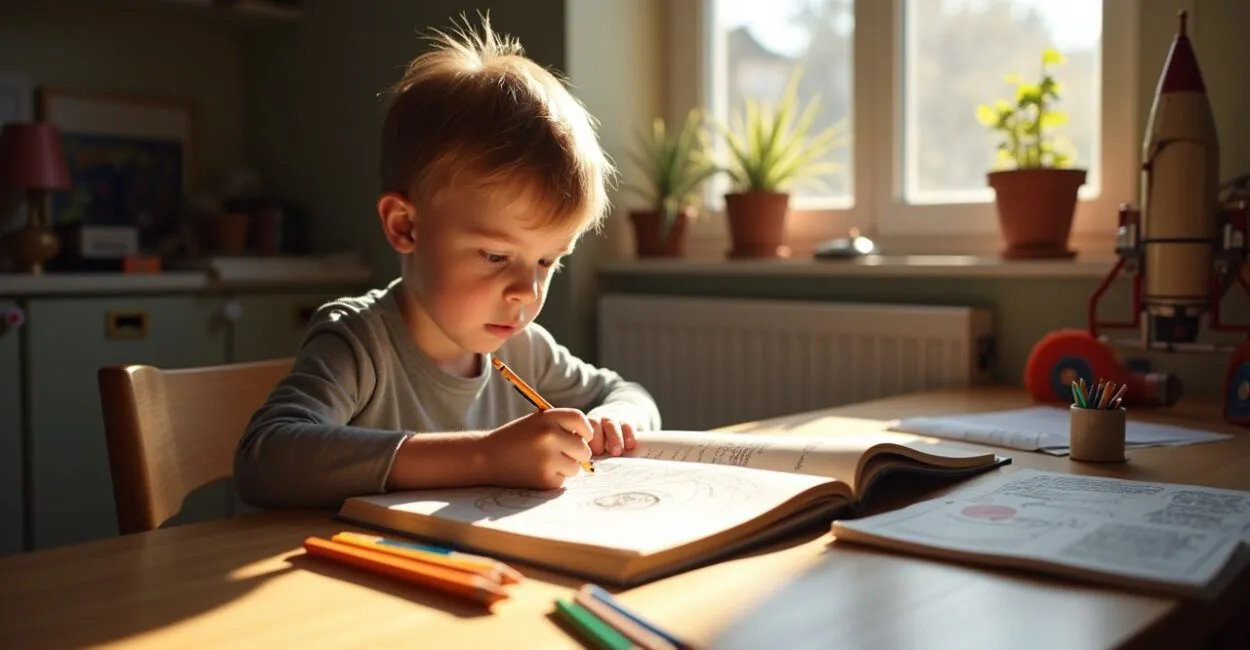
Imagine your child, around age 10, taking in new knowledge not as an obligation, but as an adventure. It’s a time when curiosity grows and every discovery opens the door to a world of possibilities. We’re talking about elementary school, a crucial period that shapes not only a child’s academic future but also how they see and interact with the world. But let’s be honest: the journey isn’t always easy. Parents and educators often face challenges that can feel overwhelming, leading to anxiety and uncertainty. What if I told you there’s a way to navigate this stage with more confidence and less stress, turning obstacles into stepping stones to success? Stick with me as we uncover how to make elementary school easier to navigate.
The Unvarnished Truth: What Really Defines Success in Elementary School
Forget the idea that success in elementary school is all about getting top grades. In practice, students who truly thrive are the ones who build a strong foundation of social-emotional and cognitive skills. Think critical thinking, problem-solving, collaboration, and a healthy dose of resilience. Anyone who works in education knows that a student who knows how to learn, isn’t afraid to make mistakes, and knows when to ask for help has already made tremendous progress. It’s about building a solid foundation where knowledge becomes a tool for life, not just a set of facts to memorize for a test.

Read also: Interactive Lessons: Activities and Teaching Resources
Common Mistakes That Hurt School Performance (and How to Avoid Them)
Who hasn’t found that even the best intentions can lead to frustrating results? In elementary school, some missteps happen so often they’ve practically become a guide to what not to do. One of the biggest is parents failing to stay consistently involved because they assume the school can handle everything. Another major mistake is putting too much pressure on kids to get immediate results while ignoring the learning process. The key is to understand that education is a partnership, with parents, the school, and the student working together. Avoiding constant comparisons with other children and focusing on each child’s individual development can make a huge difference.

Elementary School: What No One Tells You About Its Impact on Adult Life

Have you ever thought about how the way we handle a simple math problem at age 10 might affect how we make financial decisions at 30? It may sound like a stretch, but it isn’t. Elementary school is a training ground for life. It’s where we learn to manage our time, deal with frustration when we can’t solve a problem right away, and work as a team on projects. Research from UNESCO, the United Nations Educational, Scientific and Cultural Organization, indicates that the quality of basic education is directly linked to productivity and well-being in adulthood. Ignoring this stage is like building a house without a foundation.
Read also: Homework: How to Help Your Child Without Doing It for Them
The Surprising Connection Between Play and Learning in Elementary School
If you think play is just a way to pass the time, get ready to change your mind. Play is actually one of the most powerful drivers of learning in elementary school. Board games, for example, teach strategy, patience, and how to handle winning and losing. Building with blocks encourages creativity and spatial awareness. Even a simple game of make-believe helps develop language, empathy, and conflict-resolution skills. Deep learning often happens when children feel engaged and entertained, making learning a joyful discovery rather than a chore.
Elementary School in the Digital Age: Balancing Screens and Notebooks
We live in a world where digital technology is everywhere, and elementary school is no exception. On the one hand, technology offers incredible tools for making learning more dynamic and accessible. On the other, too much screen time can be harmful. The challenge is finding the right balance. That means using technology as an ally by exploring educational apps, doing online research, and even taking interactive lessons. But it’s also essential to set clear limits, encourage offline activities, and make sure face-to-face connections and social interactions aren’t replaced by pixels. The key is to use technology mindfully and intentionally.
Debunking Myths: What Really Matters in Elementary School
Let’s clear up a few common misconceptions about elementary school. Myth number one: “My child needs to be a genius from an early age.” The reality: development is a process, and every child has their own pace. Myth number two: “The important thing is to memorize enough to pass.” The reality: rote memorization doesn’t last; what sticks is understanding and the ability to apply what you’ve learned. The most valuable things to nurture in elementary school are curiosity, a love of learning, and self-confidence. These are the tools that will stay with your child for life, long after they’ve forgotten their math formulas.
Why Is Elementary School Considered the Foundation of Education?
Elementary school is where the building blocks of knowledge are established, laying the groundwork for every stage of education that follows. During this period, students develop basic reading, writing, and math skills—essential tools for understanding more complex subjects. Elementary school also plays a crucial role in children’s social and emotional development, teaching them how to interact with others, respect differences, and build healthy relationships. It prepares them as a whole for the challenges of school and personal life.
How Can Parents Effectively Support Their Children’s Learning in Elementary School?
Parental involvement in elementary school goes far beyond checking homework. It’s important to create a supportive home environment by showing genuine interest in your child’s school activities and experiences. Setting a consistent study routine, even a short one, and encouraging daily reading are powerful practices. Maintaining open, positive communication with the school by attending meetings and events also helps align everyone’s efforts and identify any challenges early. Most important, build your child’s confidence and praise effort, not just the final result.
Why Is Social-Emotional Development Important in Elementary School?
Social-emotional development in elementary school is just as vital as academic learning because it helps children navigate the world with greater confidence and empathy. Skills such as self-awareness, self-management, social awareness, relationship skills, and responsible decision-making are developed during this stage. They help students understand and manage their emotions, build positive relationships, handle challenges constructively, and make ethical decisions. Strong social-emotional development contributes directly to well-being, school performance, and the growth of more aware and engaged citizens.
How Can Technology Enrich Elementary School?
When used strategically and in moderation, technology can be a powerful tool for enriching the elementary school experience. Digital tools provide access to multimedia resources, such as educational videos, interactive simulations, and games that make learning more dynamic and engaging. Online platforms can personalize instruction to each student’s pace and provide instant feedback. Technology can also make it easier for students and teachers to collaborate and prepare students for an increasingly digital world by teaching them how to research, evaluate information, and use technological tools productively and safely.
How Can You Identify and Address Learning Difficulties in Elementary School?
Identifying and addressing learning difficulties in elementary school requires close attention and collaboration between parents and educators. Signs such as persistent difficulty reading or writing, trouble with numbers, pronounced inattention, or reluctance to go to school may signal the need for a closer assessment. Once a difficulty is identified, it’s essential to seek support from specialists, such as educational psychologists or speech-language pathologists. The school may offer curriculum accommodations and differentiated teaching strategies, while parents can reinforce learning at home with patience and appropriate materials, always focusing on building the child’s confidence.
Artigos Relacionados
 School–Community Integration: A Complete Practical Guide
 School Bullying: A Complete, Practical Guide
 Active Learning Methods for Elementary School: A Practical Guide
 Inclusive Strategies for Students with ADHD: Practical Accommodations and Academic Outcomes for Elementary School Teachers
 Why Certificates Matter: A Complete, Practical Guide
 School Political-Pedagogical Project for Whole-Child Education: A Practical Guide
