
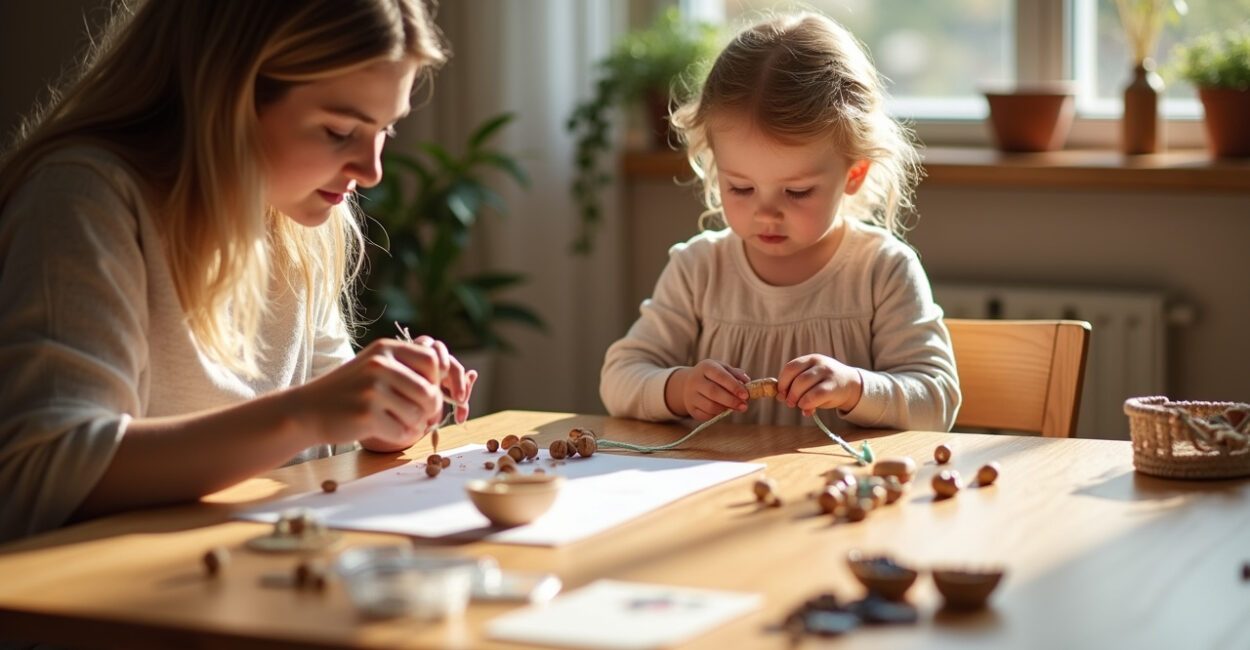
A child might spend several minutes trying to clip a clothespin onto the edge of a container. In the process, they practice movements they also use when drawing, getting dressed, and handling objects. A fine motor coordination activity offers challenges that help children control their hands and fingers precisely, using their vision to guide their movements.
You can start with everyday items and adjust the difficulty to match each child’s pace.

The best place to start is usually a short task with a clear goal and materials the child can handle. The ideas below include options for home and early childhood education, along with ways to make each activity easier or more challenging without turning it into a chore.
At a glance
- Skill practiced: Hand and finger control guided by vision.
- Where to practice: At home or in an early childhood setting, with appropriate supervision.
- Materials: Paper, clothespins, lids, play dough, and large, safe objects.
- Time: Start with a few minutes and stop before the child gets tired or frustrated.
- How to progress: Observe precision, movement control, and independence.
What a fine motor coordination activity can develop
Fine motor coordination is the ability to control the small movements of the hands and fingers to complete precise tasks, integrating visual perception with action. In everyday life, it comes into play when holding a pencil, fitting a piece into place, opening a lid, or fastening a button. Activities offer opportunities to practice this control, but every child develops at their own pace.
Squeezing, pinching, tearing, fitting pieces together, and tracing all involve different movements. Varied repetition helps children explore force and direction, while a short task lets them try again without making the activity feel like an obligation. For general information about preschool development, see the CDC’s guidance on child development.
The goal isn’t to do everything quickly. For example, if a child grips a pencil too tightly, they may need a simpler activity or a different tool, such as a short crayon. Any adaptation should take into account what the child can do now, rather than a rigid expectation of performance.
Fine and gross motor coordination: everyday examples
Fine motor coordination involves smaller, more precise movements, such as fitting pieces together or buttoning a shirt. Gross motor coordination uses larger muscle groups for actions such as running, jumping, and kicking a ball.
The two often work together. For example, when drawing while standing at a board, a child stabilizes their body and moves their arm while adjusting their fingers to hold the chalk. To focus on hand precision, however, the main challenge should be the task itself, without also requiring difficult balance or large movements.
12 activities to try at home or in an early childhood setting

You can do the activities below at a table or in an organized space in the room. Choose one at a time. When it becomes easy and the child is interested, change just one feature, such as the size of the object or the level of precision required.
- Transfer with tongs: Move large pom-poms or paper balls from one container to another using child-safe tongs. If that’s difficult, start with fingers, then try larger tongs.
- Clothespins on a card: Clip clothespins onto a sturdy card. Count them together or sort them by color. Start with just a few and help the child open the first one.
- Sorting lids: Sort large lids by color or size, then match each one to a container. If twisting the lid is difficult, practice just placing it over the opening.
- Tear and glue: Tear paper into pieces and glue them inside a drawn shape. To make it easier, use soft paper and a large area.
- Play dough pieces: Squeeze, roll, and flatten play dough to make balls or snakes. Softer dough usually takes less hand strength.
- Large building pieces: Build with blocks or fit together pieces that are a safe size. If the child gets frustrated trying to line them up, offer larger pieces and a stable base.
- Trace with a short crayon: Trace wide lines or outline a large object with a short crayon, which can make it easier to use the fingers. Narrow the path as control improves.
- Pick-and-place collage: Pick up large pieces of paper with the thumb and index finger and place them on a picture. Keep the glue in a stable container and supervise.
- String large pieces: Thread wide rings or purpose-made pieces onto a sturdy cord. If the end slips away, tape it to the table.
- Twist-open containers: Open and close plastic containers with simple screw-top lids. Offer different lid sizes and avoid containers that could pinch fingers.
- Follow a path with a cotton swab or finger: Follow a wide path drawn on paper with a finger or cotton swab. The child can then try using a crayon or thick pencil.
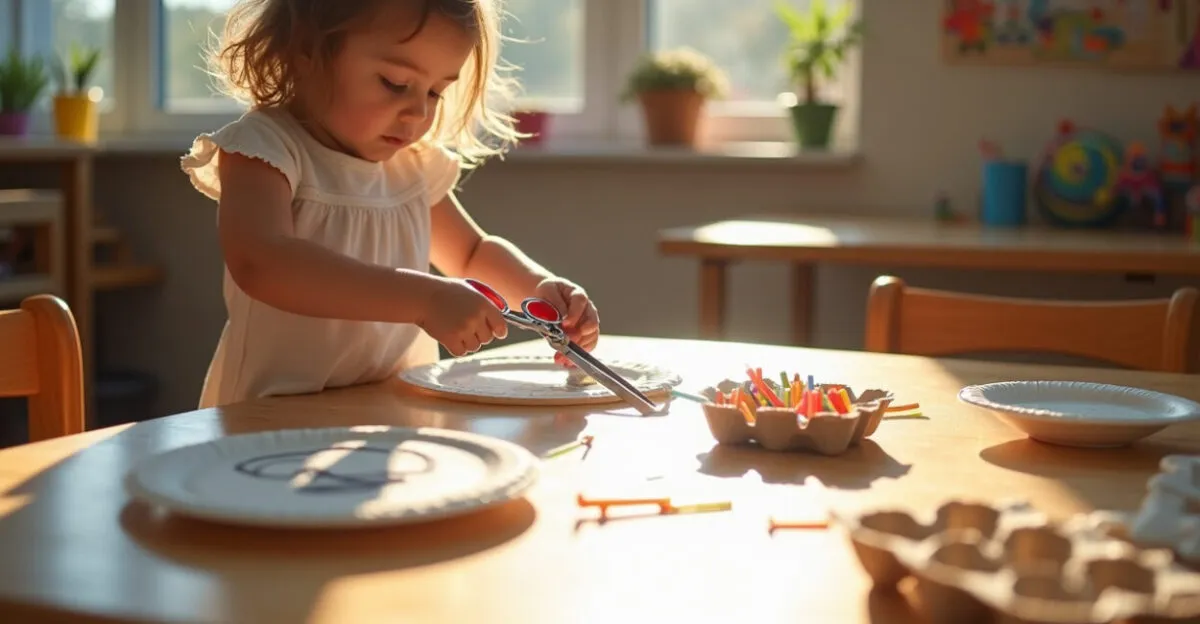
- Supported cutting: Cut wide strips of paper with child-safe scissors suited to the child’s hand. An adult should supervise closely. If the child doesn’t have enough control yet, tear the paper instead.
One detail that can affect how an activity goes: the piece slips, and the child starts using the other hand to hold it instead of practicing the intended movement. Securing the container with a non-slip base or an adult’s hand can help. When using beans, beads, or other small pieces, consider the risk of putting them in the mouth and provide direct supervision.
To connect these activities with other classroom topics, there are also activities about careers in education. Material safety and the safety of the activity itself require care; this link covers a different context but preserves the reference in the original content.
Affordable materials and printable worksheets
You don’t need to buy an educational activity kit to get started. Clean cardboard, scrap paper, play dough, plastic containers, and clothespins can all be useful, as long as they’re in good condition and appropriate for the child’s age and abilities. The link about materials discusses sensory resources and supports in a different context.
Worksheets with paths, tracing, and matching activities can be useful when a child can already stay focused on a tabletop task. They provide a visual target, but they don’t replace hands-on experiences with objects, textures, and varied movements. If you’re looking for printable activities or a fine motor coordination activity PDF, you can draw a wide path on a regular sheet of paper without needing a ready-made file.
Activity Skill focus Materials Adaptation Transfer with tongs Pinching with the fingers and visual control Child-safe tongs and large pom-poms Start with fingers and use larger pieces Tear and glue Finger strength and two-handed coordination Paper and glue Use soft paper and larger pieces Printed path Tracing control and visual attention Paper and crayons Draw a wider path or let the child follow it with a finger Clothespins on a card Finger pressure and alignment Sturdy card and clothespins Use just a few clothespins and help position the first one
For ideas about accessibility and supports, you can also consult content about activities in a different context. What works depends on each child’s preferences, sensitivities, and abilities.
Read also: Early Writing: 7 Activities to Build Spelling Skills
Preparing hands for writing and moving to the next level
These activities can offer experiences related to writing, such as adjusting pressure, coordinating both hands, and guiding a movement by sight. They don’t guarantee that a child will learn to write, and they don’t replace writing instruction. They’re opportunities to explore movement that can be part of a broader routine.
A useful way to track progress is to look at three things: precision, or whether the child reaches the target; control, or whether they can regulate their movements without squeezing too hard or dropping things; and independence, or whether they can start and finish the task with less help. If one of these still takes a lot of effort, keep the task at the same level or make it simpler.
Example: A child tries to move pom-poms into a container, but the tongs slip and the container moves.
The adult steadies the container and switches to larger tongs.
Once the child has better control, the adult switches back to the smaller tongs or uses smaller pom-poms.
The American Occupational Therapy Association offers information about fine motor skills and their role in everyday activities. The support a child needs depends on the task and the child; one adaptation won’t work for everyone.
Keeping children interested and adapting activities
A short session may be enough to try an activity. Start with a few minutes and see whether the child stays engaged. If they lose interest, stop or offer a choice between two activities instead of insisting until play turns into a struggle. At home, five focused minutes may be more useful than stretching out an activity until it becomes frustrating.
For an autistic child, observe how they respond to sounds, textures, smells, predictability, and changes in routine. Some children prefer to know the steps before they begin; others may reject a material because of how it feels. Introduce one change at a time and respect signs of discomfort without assuming that all children have the same preferences.
It may also help to alternate tabletop tasks with everyday activities, such as opening an easy-to-use container or helping put away large objects. Other activities can add more options. To talk with a child about objects and choices, see the content about what a child can receive.
When to watch for difficulties and seek an evaluation
Consider talking with your pediatrician if difficulties with hands-on tasks persist, limit everyday activities, or are accompanied by distress and avoidance. Examples include significant difficulty handling age-appropriate objects, using utensils, or taking part in drawing and self-care activities. A single sign does not establish a diagnosis.
Write down specific examples: which task was difficult, what help was offered, and what happened. These observations can help guide a conversation with your pediatrician and, if recommended, with professionals such as an occupational therapist. An evaluation considers the child’s overall development, environment, and specific needs. The Child Mind Institute explains why these skills matter in everyday life.
To get started today, choose an activity with safe materials and an easy-to-understand goal. Notice whether the child becomes more precise, controls their movements better, or completes more steps on their own. These observations can help you decide whether to repeat the activity, adapt it, or seek professional guidance.
Frequently asked questions
What’s the best activity to start with?
Moving large objects between two containers is usually an accessible place to start. If the tongs make it difficult, let the child use their fingers and introduce the tool later.
How many minutes a day are enough?
There’s no single duration that works for every child. Start with a few minutes and adjust based on attention, interest, and signs of fatigue, without requiring the child to finish the task.
Do I need to buy expensive educational materials?
No. Paper, cardboard, play dough, and clean containers can support many activities. Safety and suitability for the child matter more than the brand or price of the materials.
Can a printed worksheet replace activities with objects?
No. A worksheet can help a child follow a path or match items, but it offers a different experience from squeezing, fitting together, or handling objects. Alternating between formats creates more opportunities for movement.
How can I adapt an activity for a child who dislikes a certain texture?
Swap the material for something that offers a similar challenge, such as paper instead of play dough, and observe the child’s reaction. Don’t force contact; sensory preferences and needs vary from child to child.
Is cutting with scissors necessary?
No. Cutting is an option, not a required step for every child. If it’s difficult or unsafe, tear paper instead and try scissors again only when the child can use them with appropriate supervision.
Artigos Relacionados
 Activities for Early Childhood Education: Practical Ideas
 Women’s Day Cards for Early Childhood Education: Creative Ideas, Inspiring Messages, and Fun Activities to Celebrate Gender Equality
 Easy Christmas Goodie Bags: Simple Ideas
 Fun Classroom Activities: 8 Quick Ideas for School in 20 Minutes
 Elementary School Activities: Creative, Practical Ideas
 Easy Chicken Dinner Recipes for Busy Nights: 12 Practical, Budget-Friendly Ideas
