
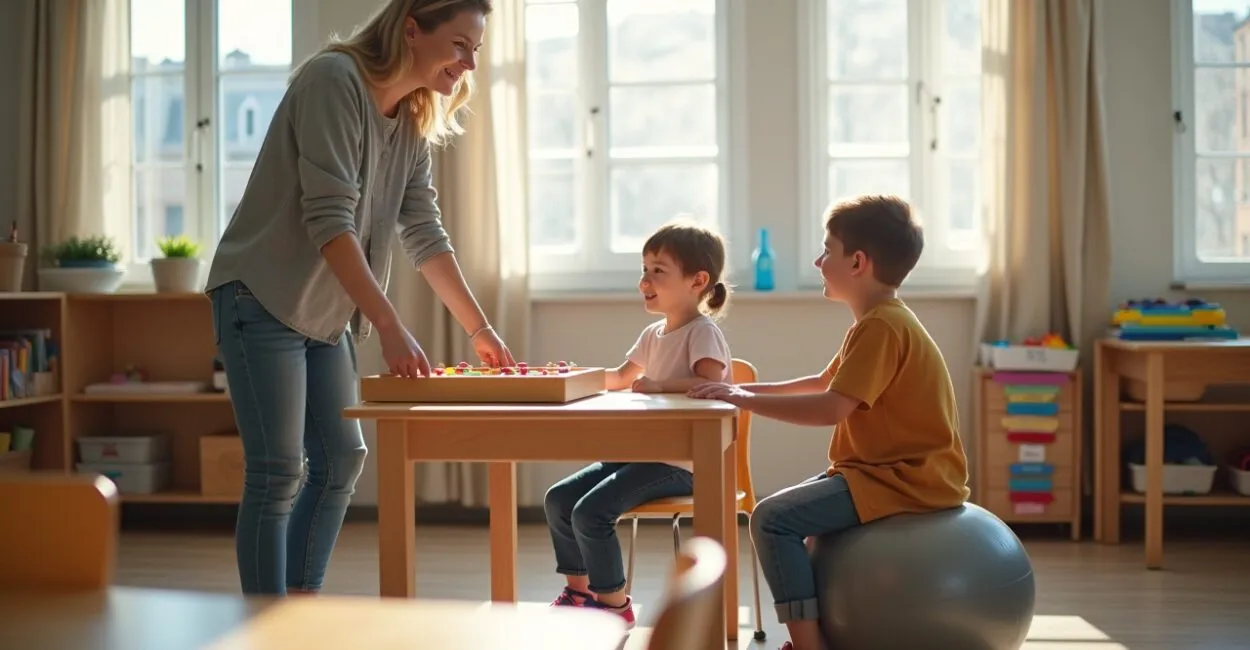
This refers to the physical organization of a space and material adaptations that reduce distractions and improve focus, emotional regulation, and school participation for children with attention-deficit/hyperactivity disorder (ADHD). It involves combining layout, furniture, tactile and vestibular input, lighting, and routines to create a predictable space that responds to individual sensory needs.
Key Takeaways
- Inclusive environments and sensory supports for ADHD reduce external distractions through designated work zones, visual cues, and furniture that helps organize attention.
- Sensory materials (stability balls, purposeful fidgets, tactile surfaces) work best when tied to learning goals and used for a limited time.
- Diffuse lighting, noise control, and neutral colors reduce sensory overload; direct natural light should be managed with curtains and diffusers.
- A flexible layout with clearly defined zones (quiet, group, movement) encourages independence and reduces the executive demands of transitions.
- Simple measures (checklists, visual routines, behavior tracking) turn environmental changes into actionable data.
Why Inclusive Environments and Sensory Supports for ADHD Set the Stage for Learning Success
When a physical space accommodates sensory differences, the ability to stay focused and complete tasks improves measurably. Studies show a decrease in disruptive behavior when irrelevant stimuli are minimized and self-regulation options are provided. The environment, then, is more than a backdrop; it is an early intervention that changes cognitive and emotional demands. Intentional design allows teachers to spend less time managing the classroom and more time on targeted instruction.

Executive Demands and Sensory Load
Children with ADHD have a limited capacity to filter stimuli and plan actions at the same time. A noisy or visually cluttered environment increases executive demands, making it harder to start or finish tasks. Clearing visual clutter from around a desk and using designated areas for extracurricular materials reduces the amount of information the brain has to process each minute.
Measuring Impact
Use simple measures: time on task, interruptions per hour, and weekly progress records. Compare these indicators before and after environmental changes to see their real effects. Brief, repeated data collection is enough to support quick decisions in the classroom.
Classroom Layout: Zones That Guide Attention and Movement
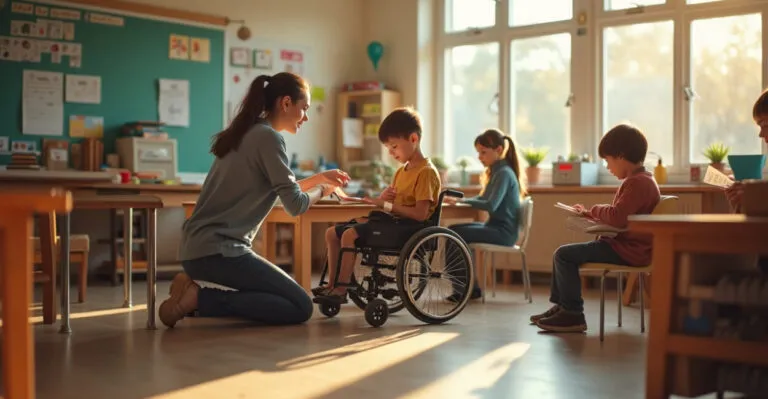
A good layout divides the classroom into functional zones with clear rules. Zones reduce uncertainty about where to do each activity, which is essential for students with ADHD. Separating quiet work, collaboration, and movement areas makes transitions predictable and offers opportunities for self-regulation without requiring students to travel far.
Setting Up Practical Zones
I recommend at least three zones: a Focus Zone (individual desks or small clusters with low dividers), a Group Zone (tables for collaborative work), and a Movement/Regulation Zone (a mat with sensory materials, a stability ball, and space to stretch). Place the Movement Zone near the exit to minimize traffic through areas where students are concentrating.
Visual Signs and Rules
Use simple signs and symbols to show the purpose of each zone. Visual timers, task boards, and soft colors help children understand expectations without constant verbal reminders. Keep materials organized the same way in each zone to reduce unnecessary decisions.

Sensory Materials That Work—and How to Use Them Correctly

Sensory materials are useful when applied with a learning goal, a time limit, and clear criteria. Popular tools—lightweight weighted items, stability balls, silent fidgets, and manipulable textures—can help maintain alertness or promote calm, depending on the task.
Choosing Materials and Setting Use Guidelines
Select materials after a brief assessment: observe the child’s response over 1–2 sessions. Set rules for when to use them, how long to use them, and what behavior goals they support. For example, a stability ball might be allowed for 10–15 minutes during reading tasks; a fidget might be allowed if it doesn’t draw attention away from the material. Short protocols improve effectiveness and prevent overreliance.
Risks and How to Reduce Them
Avoid excessive sensory multitasking. Some tools can increase hyperactivity rather than promote calm. Record each child’s reactions and replace anything that causes overstimulation. Involve families and teachers in choosing materials to ensure consistency between home and school.
Lighting, Color, and Acoustics: Details That Can Change Behavior
Lighting, color, and noise directly affect alertness and anxiety. Cool, bright lighting can increase restlessness; bulbs that are too warm can cause drowsiness. Fine-tuning these elements helps reduce fluctuations in attention throughout the day.
Read also: Improving Basic Education: Practical, Measurable Strategies
Practical Guidelines for Lighting and Color
Choose diffuse lighting with a color temperature between 3500K and 4500K; use diffusers to prevent glare. Neutral wall colors (light gray, soft beige) reduce visual stimulation; save bright colors for signs and positive reinforcement. Avoid complex patterns near students’ work areas.
Managing Classroom Noise
Intermittent noise is especially disruptive for students with ADHD. Install acoustic panels, heavy curtains, and carpeting in strategic locations. Passive or noise-reducing headphones may be an option for individual use. Use a simple app to measure noise and keep levels below 50–55 dB during focused activities.
Visual Routines, Organization, and Reduced Cognitive Demands
Routines and organization help compensate for executive function challenges. Visual lists, step-by-step schedules, and designated areas for materials reduce the need to plan every task from scratch. This saves cognitive effort and improves success with independent activities.
Effective Visual Tools
Boards with illustrated steps, visual timers, and labeled bins with photos help children start and finish tasks without constant supervision. Weekly checklists and daily goals build small habits that become established over time.
Organizing Materials
Keep frequently used materials within reach and put distracting items away. Use clear, labeled bins and a personal kit with self-regulation tools. Limit the number of choices available at once: providing only the materials needed for a task reduces the temptation to get distracted.
Measurement, Adaptation, and Staff Training
Creating an inclusive environment is an ongoing process that requires measurement and teacher training. Without data and training, changes tend to be inconsistent and short-lived. A quick cycle of action, evaluation, and adjustment helps sustain impact.
Practical Indicators and Measurement Routines
Useful indicators include time on task (observed for 5 minutes each hour), frequency of interruptions, number of tasks completed, and simple student self-reports. Collect data for 2 weeks before an intervention and 2 weeks afterward to assess its effectiveness. Use simple spreadsheets or classroom apps.
Staff Training and Engagement
Train teachers in basic sensory principles, how to use materials, and how to interpret data. Involve caregivers and mental health professionals to ensure interventions are consistent between school and home. Brief weekly meetings help keep adjustments practical and responsibilities clear.
A Practical Comparison of Materials and Adaptations: Choose Based on the Goal
Not every tool is right for every goal. The table below can help you select tools based on the desired outcome (focus, calm, motor regulation) and related risks. Use it as a guide for quick decisions and to explain choices in school reports.
| Tool | Primary Goal | When to Avoid / Risk |
|---|---|---|
| Stability ball | Improve posture and alertness | Avoid during fine-motor tasks; risk of excessive movement |
| Silent fidget | Reduce restlessness without drawing attention | Avoid if it encourages distraction through handling |
| Noise-reducing headphones | Reduce auditory distractions | Avoid continuous use that could lead to social isolation |
| Visual timer | Improve time management and transitions | May not help children who don’t understand visual countdowns |
For more information, consult guidelines from the American Academy of Pediatrics and studies published in special education journals. For example, recommendations for sensory management appear in academic systematic reviews and practical guides for inclusive schools.
Useful links: CDC – ADHD, ScienceDirect (reviews on sensory interventions).
Next Steps for Implementation
Start with low-cost, high-impact changes: reorganize zones, reduce visual stimuli, and introduce visual timers. Measure results for two weeks and make adjustments. Then introduce sensory materials with clear protocols and train staff. Document results to support larger investments, such as acoustic panels.
Plan quarterly reviews and involve families and health professionals. Scaling up depends on simple data, consistency across environments, and the team’s ability to adapt solutions to individual needs.
How Can You Adapt This Model for Public Schools with Limited Resources?
Use locally available, low-cost solutions: recycled cork panels to divide spaces, bins labeled with photos, free timer apps, and homemade sensory materials (weighted cushions, sandbags). Prioritize changes that reduce noise and clutter. Encourage teachers to train one another so practices can continue without relying exclusively on outside specialists.
What Immediate Changes Can Reduce Classroom Distractions for Students with ADHD?
Immediate changes include rearranging desks into small clusters, reducing visual items on walls near work areas, using visual timers, and creating a personal box with essential materials. Placing movement areas away from focus zones reduces interruptions. Visual routines for transitions and clear signs also help. Simple changes often quickly improve time on task and make it possible to assess specific sensory needs before making larger investments.
How Do You Choose Between Different Sensory Materials for a Specific Student?
Choose based on brief observation: offer one tool at a time during 10–15-minute sessions and record behavior and performance. Favor quiet materials with a clear purpose (e.g., a stability ball for posture, a fidget for restless hands). Ask family members about the child’s responses at home. If an item increases distraction, remove it and try another option. Set usage rules and behavioral goals to measure effectiveness.
How Can You Measure Whether Environmental Changes Actually Help Learning?
Use simple, repeatable indicators: time on task observed at short intervals, interruptions per hour, completed tasks, and student self-assessments. Collect data for at least two weeks before and two weeks after the intervention. Look at trends rather than isolated events. Combine quantitative observations with qualitative feedback from teachers and family members to get a complete picture of the impact.
What Are the Signs That a Sensory Support Is Doing More Harm Than Good?
Warning signs include increased distraction, greater restlessness, social isolation, or dependence on the tool to start any activity. If its use leads to a drop in fine-motor task performance or repetitive behaviors that replace learning, reassess the approach. Try less stimulating alternatives and record any changes. Gradually phasing out the tool can help determine whether the problem lies with the tool itself or how it is being used.
How Can You Ensure Sensory Strategies Are Consistent Between School and Home?
Create a simple shared plan describing approved materials, usage rules, duration, and goals. Provide brief training for caregivers and send photos or videos showing how the classroom is set up. Use communication forms to record responses and weekly progress. Consistency improves skill retention and reduces confusion; small local adaptations are fine as long as the goals and rules stay the same.
Artigos Relacionados
 Inclusive Strategies for Students with ADHD: Practical Accommodations and Academic Outcomes for Elementary School Teachers
 Classroom Routines and Accommodations for ADHD: Organization and Behavior Management Strategies for Teachers
 Learning Environments: How to Support Developing Brains
 Parents and Speech: Practical Strategies to Encourage Conversation
 Play Environment: Creating Spaces That Encourage Play
 Inclusive Workshops: Strategies for Inclusive Education
