

The first-grade supply list has been a hot topic at school this week: the city updated its guidance and changed which items are required and which are only suggestions. This affects families’ budgets and teachers’ daily routines. In just a few minutes, you’ll learn what’s changing, why classrooms may look different, and what to avoid when buying supplies.
What’s Really Changed in the City’s Guidance
The biggest change: fewer required items and more teaching recommendations. In the past, many schools asked families to buy complete kits. The new city guidance identifies essential items—such as notebooks, pencils, and erasers—and notes which others can be shared at school. The result: lower upfront costs for families, but a greater need for school organization. In the classroom, that means rotating supplies and clear protocols for hygiene and maintenance.

Why This Change Affects Teachers’ Daily Work
Teachers will manage resources, not just lessons. With fewer required individual supplies, teachers need to plan activities that use shared materials and keep track of who gets to use them and when. This takes extra time for organization and requires simple rules. Some schools create kits for each class; others keep shared supplies on hand. The change makes collaborative activities easier, but adds to teachers’ responsibility for care and logistics.
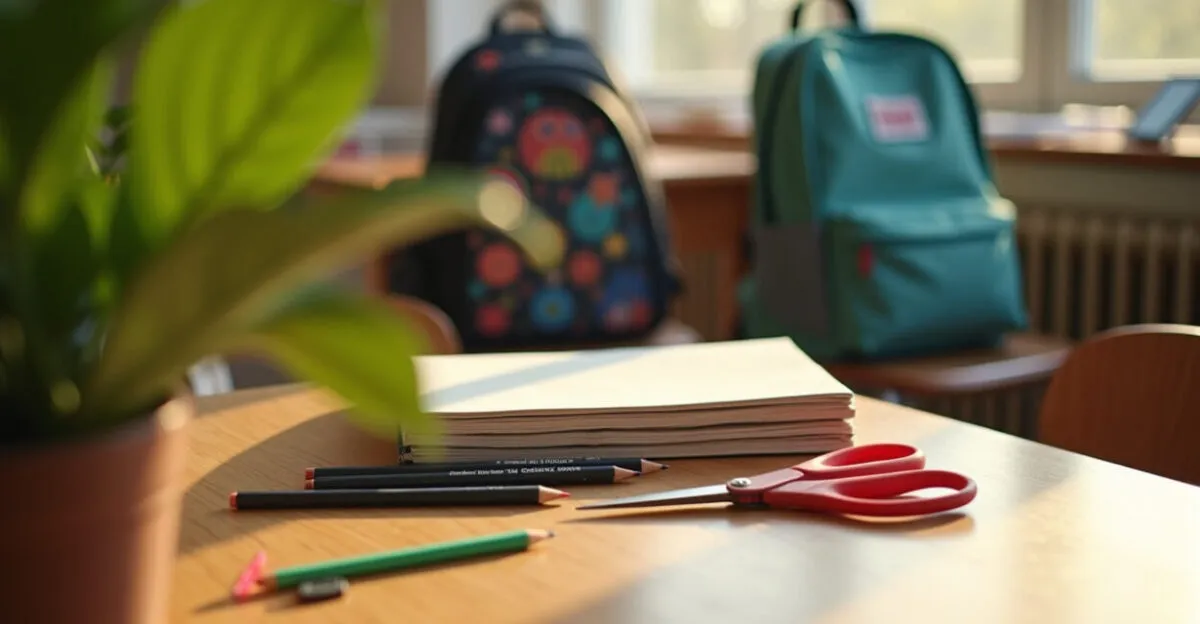
Practical Guide: What’s Required and What’s Only Suggested

Knowing what’s essential helps avoid unnecessary spending. Here’s a quick guide to the city’s first-grade recommendations.
| Required | Suggested |
|---|---|
| Hardcover notebook (5 small sections) | Rolling backpack |
| No. 2 pencil, eraser, sharpener | Decorated pencil case |
| Blunt-tip scissors and glue | Extra plastic eraser |
| Textbook (when provided by the city) | Tablets or digital materials |
Common Mistakes When Putting Together the List (and How to Avoid Them)
Buying everything “just in case” is the biggest trap. Families often pay for items the school already provides or the class shares. Avoid this by checking your school’s city guidance. Another mistake is choosing expensive supplies when a basic version will do. And don’t wait until the last minute; sales can help cut costs, but poor planning can lead to impulse purchases.
A Helpful Comparison: Before vs. After
Expectation: long lists that protect students. Reality: high costs and unused supplies. Before the new city guidance, parents bought complete kits out of habit. Now that the essential items are clearly identified, school routines are likely to become more collaborative. The comparison shows that fewer individual purchases can mean more group activities and savings, but they also require better coordination between teachers and families.
Read also: School Supplies for Early Childhood Education: Safe Choices
Short Story: How a Municipal School Saved 30% in Its First Month
At Santa Maria Municipal School, the administration followed the new city guidance and centralized purchases of hygiene supplies and glue. The school’s academic coordinator created a weekly use chart, and each student brought only the essentials. After four weeks, the school had enough money left to buy extra books. The teacher noticed more time for group reading. A small change made a big difference: families saved 30% on their budgets, and less went to waste.
Practical Tips for Families and Teachers — Quick Checklist
A clear list prevents confusion when school starts. Before shopping, check your school’s city guidance. Prioritize required items, coordinate swaps with other parents, and find out whether the school provides shared supplies. Teachers should document what the school provides and communicate that information in advance. Use these tips:
- Ask the school for its official supply list in writing.
- Compare prices at least two stores or shop at a warehouse club.
- Consider reusable, durable supplies.
- Set up a rotation for supplies shared by the class.
According to the Brazilian government portal, recent public policies encourage centralized purchasing to reduce costs. Early childhood education studies at universities also show that classrooms with shared supplies encourage collaboration (academic source).
Long-Term Impact: What to Expect in the Coming Years
This city guidance is about more than saving money—it could change teaching practices. We can expect less emphasis on individual consumption and more on group activities and sustainability. This may ease families’ financial stress and make room for school projects. But it requires cities and schools to communicate clearly and invest in supply management.
When the city provides clear guidance and the community works together, everyone benefits: lower costs, more learning activities, and less waste. The question is: has your school updated its list to reflect the new city guidance, or is it still in the pilot stage?
Which Official Documents Can You Refer to for the City’s Guidance?
Look for an ordinance or technical standard issued by the municipal education department. These documents explain what is required and what is recommended at each grade level. Purchasing notices and school circulars also supplement the city’s guidance by outlining the school’s responsibilities. Check the city’s website and the school bulletin board. If anything is unclear, ask the school administration for a printed copy to avoid different interpretations among parents and teachers.
What Should You Do If the List Includes Supplies That Are Too Expensive?
Talk with the school administration and the School Council: many items can be replaced with simpler versions without losing functionality. In some cities, the city’s guidance allows for centralized purchasing; ask whether that’s an option. Group purchases with other parents and local cooperatives can also lower costs. If the problem continues, contact the municipal education ombudsman to report the issue and request a review of the list.
How Can You Keep Shared Classroom Supplies Hygienic?
Set simple, visible rules: clean supplies with alcohol or soap and water, take turns using them, and store them properly. Teachers can create a usage schedule and labeled bins for each type of supply. The city’s guidance often includes hygiene protocols; adapt them to the classroom’s daily routine. Oversight by the school administration and parents’ participation in the rotation help maintain standards and reduce risks.
Teachers: How Can You Document What the School Provides to Avoid Duplicate Requests?
Create a paper or digital list, publish it through the school, and have it signed by the administration. Include items provided by the city, items provided by the school, and items parents need to bring. Share the list before the school year begins and keep copies in the classroom and main office. This prevents parents from buying supplies the school already has and makes recordkeeping easier. Simple transparency prevents conflict and waste.
When Should the City Review Its School Supply Guidance?
Reviews usually take place every year before the school year begins to account for prices, educational needs, and available resources. Emergency changes may be needed for health, budget, or new public policy reasons. Parents and teachers can request a review through the School Council or the ombudsman’s office. Taking part in these discussions makes it more likely that the list will reflect the school community’s needs and reduce unnecessary purchases.
Artigos Relacionados
 School Supply List Apps Are Taking Off: Why Parents and Public School Leaders Use Apps to Organize Purchases
 Sustainable School Supplies Are on the Rise: Why Public Schools Are Adopting Eco-Friendly Items—and What It Means for Families
 Collective Buying on the Rise: How Parent Groups Cut Costs and Streamline Purchases for Municipal Schools
 Teacher-Created Lesson Plans: 7 Practical Models
 End-of-Year Teacher Message: Templates and Tips
 The Facilitator Teacher: A Key to Real Student Autonomy
