

It is an organized set of goals, curriculum adaptations, and assessment strategies designed to promote academic progress and inclusion. At its core, it is a plan centered on the functional needs of a student with attention-deficit/hyperactivity disorder (ADHD), with measurable goals, clearly defined responsibilities, and periodic reviews. The plan may take forms such as a PDI (Plano de Desenvolvimento Individual, Brazil’s Individual Development Plan) or a PAI (Plano de Atendimento Individualizado, Brazil’s Individualized Support Plan), as long as it documents objectives, procedures, and evidence of progress.
Key Takeaways
- Specific, measurable goals are the foundation of individualized planning for students with ADHD; without them, accommodations lose focus and assessment becomes subjective.
- Accommodations should be distinguished from curriculum modifications: accommodations support access (e.g., extra time), while modifications change the curriculum (e.g., reducing content). Each choice should have clear criteria.
- Frequent formative assessments and objective evidence make it possible to adjust interventions quickly and justify instructional decisions.
Why Measurable Goals Define Success in Individualized Planning for Students With ADHD
Measurable goals guide instruction and make it possible to evaluate progress. ADHD symptoms vary: sustained attention, impulsivity, and emotional regulation affect learning in different ways. Vague goals like “improve attention” aren’t useful; measurable goals specify what, how much, and by when. For example: “Complete 8 out of 10 classroom activities with fewer than two teacher prompts within four weeks.” This kind of goal guides the choice of strategies and data collection.

How to Build SMART Goals Adapted for ADHD
Use SMART goals: Specific, Measurable, Achievable, Relevant, and Time-bound. Specify an observable behavior; measure it by frequency, percentile, or accuracy rate; set short deadlines (2–8 weeks) to allow for adjustments; and set the target level based on data. Include criteria for generalization (classroom, playground, homework) to ensure skills transfer across settings. Avoid setting goals that depend exclusively on the environment (for example, “fewer teacher interruptions”), as these don’t capture changes in the student.
Practical Measurement: Tools and Data Routines
Track simple data: number of correct responses, time on task, and number of prompts needed. Use spreadsheets or tracking apps. Collect data daily or weekly to support timely decisions. Triangulating sources—teacher, caregiver, and guided self-assessment—increases validity. Objective data reduces debate about effectiveness and supports adjustments to the PDI/PAI.
How to Choose Accommodations That Really Work
Choosing accommodations requires distinguishing between making content accessible and changing the content itself. An access accommodation keeps curriculum goals the same; a modification changes the expected level. For students with ADHD, prioritize accommodations that reduce cognitive load and increase predictability. Decisions should be based on a functional assessment of behavior and evidence that can be collected readily.
Access Accommodations: Examples and Applications
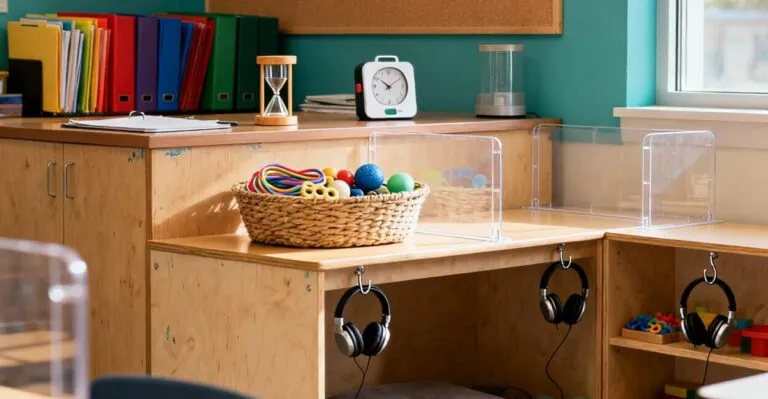
Examples include extended test time, written and oral instructions, breaking tasks into steps, a low-distraction testing location, and visual timers. These measures don’t reduce content; they simply allow students to demonstrate what they know. Document each accommodation in the PDI/PAI, including criteria for its use and periodic review.
Curriculum Modifications: When They’re Needed
Modifications are appropriate when a functional deficit prevents a student from reasonably meeting a standard objective, even with accommodations. Examples include reducing the number of test items or prioritizing essential skills. Decisions should be documented and supported by data; always consider the impact on social inclusion and access to future opportunities.

Effective Teaching and Instructional Strategies for ADHD

Active learning methods and structured instruction benefit students with ADHD. Multimodal teaching, predictable routines, concise instructions, and checks for understanding are more effective than long lectures. Evidence-based interventions, such as direct instruction and self-control training, show consistent effects in educational studies. The key is to implement them faithfully and adapt them continuously based on data.
Routines and Classroom Organization
A predictable environment reduces demands on executive functioning. Use a visual schedule, written task steps, dedicated time to organize materials, and schedules with visual cues. Many challenges for students with ADHD stem from managing time and materials; simple strategies like color-coded folders or checklists can make an immediate difference.
Teaching and Monitoring Social-Emotional Skills
Include emotional regulation and social skills training in the plan. Self-instruction techniques, contingent reinforcement, and scheduled breaks can help with impulse control. Assess progress through observations and standardized scales. Social-emotional skills affect engagement, peer relationships, and students’ ability to meet school expectations.
Read also: Active Learning in Lesson Planning: Practices and Examples
Differentiated Assessments That Support Progress and Inclusion
Regular formative assessments are essential for adjusting the PDI/PAI. Rather than relying only on summative tests, use competency-based assessments, portfolios, and structured observations. For students with ADHD, tools that capture the learning process—such as work samples, rubrics, and checklists—provide evidence of actual learning, even when performance on individual tests is inconsistent.
Assessment Design and Clear Criteria
Design assessments with transparent criteria and detailed rubrics. A rubric breaks performance down into observable criteria and allows for objective feedback. For modified assessments, document what changed and why. Use assessments at multiple points to track progress and generalization.
Using Technology in Assessment
Digital tools allow for adaptive assessments, recording oral responses, and tracking time on task. Platforms can generate automatic reports to inform decisions in the PDI/PAI. However, technology is a tool, not a solution; instructional planning remains central.
Measuring Effectiveness and Reviewing the PDI/PAI
The PDI/PAI should be a living document, reviewed at the end of each short cycle (4–12 weeks). Use predefined criteria to keep, adapt, or discontinue strategies. If a goal doesn’t progress after a consistent intervention, conduct a detailed functional assessment to identify barriers and revise the plan. The team should document evidence and decisions in objective language.
Criteria for Keeping, Adjusting, or Discontinuing Actions
Define levels of response: expected progress (goal met), partial response (50–79% of the goal), and no response (<50%). For a partial response, adjust the intensity; for no response, revisit the functional hypothesis. Discontinue an accommodation only when data indicate the student can sustain independence under standard conditions.
Documentation and Team Responsibilities
Document who is responsible, deadlines, and success criteria. Include the family and, when possible, the student in decision-making. Clear reports support continuity across the student’s education and help explain decisions to administrators and family members.
Practical Tools: Templates, Checklists, and Accommodation Comparisons
Providing standardized templates improves planning fidelity. A basic form includes: functional assessment, SMART goals, accommodations, instructional procedures, assessment metrics, responsible parties, and a timeline. Checklists help ensure all essential items are in place before implementation.
| Type | Example | Criteria for Use |
|---|---|---|
| Access accommodation | Extended test time | Attention deficit affects speed; curriculum goals remain the same |
| Curriculum modification | Reducing the number of assessment items | Functional ability prevents the student from demonstrating learning at the standard level |
| Behavioral support | Reinforcement plan for completing tasks | Low engagement and limited task persistence |
Useful resources: Brazilian government services and international ADHD guidelines, such as those from the CDC. Recent studies in behavioral education journals also inform intervention practices.
Next Steps for Implementation
Start by creating a pilot PDI/PAI for 2–3 students, using SMART goals, weekly data collection, and a review after 6 weeks. Train the team to collect simple data and use rubrics. Involve families from the beginning and document decisions. Begin with low-complexity adjustments (routines, concise instructions) before making major curriculum changes. This approach supports evidence-based decisions, minimizes risks, and promotes sustained inclusion.
How to Apply This Knowledge in School
Put administrative processes in place: a standard form, a review calendar, and multidisciplinary meetings. Clearly assign responsibilities: who collects data, who analyzes it, and who communicates changes. Provide ongoing teacher training on instructional strategies for ADHD. Measuring outcomes is as important as choosing interventions; without data, decisions become preferences rather than justified practices.
Decisions That Make a Difference
Make decisions based on practical evidence: keep accommodations that support access, modify content only when necessary, and adjust interventions based on data. What really makes a difference is responding quickly to the data—reviewing progress in short cycles allows the team to change course before the student falls behind. Prioritize clarity, documentation, and student and family involvement to ensure that individualized planning for students with ADHD is effective and fair.
Question 1: How Do You Distinguish an Accommodation From a Modification in a PDI/PAI?
An accommodation keeps the same curriculum objective but changes how the student demonstrates learning, such as allowing extra test time or providing a less distracting environment. A modification changes the objective or expected content, such as reducing the number of items or simplifying concepts. The decision should be based on performance evidence and a functional assessment. Document the choice, explaining why an accommodation wasn’t sufficient before making a modification, and review it periodically based on progress data.
Question 2: What Data Should You Collect Weekly to Monitor ADHD Goals?
Effective data collection includes objective measures: number of tasks completed, accuracy rate, minutes on task, and number of prompts needed. Use simple spreadsheets or apps to log data daily and summarize it weekly. Include brief qualitative notes on motivation and behavior. When possible, triangulate data with family reports and guided self-assessment. Consistent data collected over short cycles (2–4 weeks) make it possible to evaluate responses to interventions and quickly guide adjustments to the PDI/PAI.
Question 3: When Should You Involve External Professionals in Individualized Planning?
Involve a psychologist, speech-language pathologist, or pediatric neurologist when difficulties persist despite well-implemented school interventions, or when co-occurring conditions are suspected (anxiety, language difficulties, learning disorders). External professionals can help identify underlying causes and guide targeted interventions. Collecting school data in advance makes external assessments easier and helps ensure recommendations are more specific. Collaboration among the school, family, and specialists requires communication protocols and consent.
Question 4: How Can You Adapt National Assessments for Students With ADHD Without Compromising Fairness?
Valid accommodations for standardized assessments include extra time, a separate setting, and clarified instructions without changing the test items. Modifications that change what is being assessed may compromise comparability. Document all accommodations and, when possible, request approval from the responsible agencies in advance. Review performance on adapted assessments alongside formative evidence to understand the student’s learning profile and plan interventions that provide access to future opportunities without creating an unfair advantage.
Question 5: What Are Common Mistakes When Implementing a PDI/PAI for ADHD?
Common mistakes include vague goals without measurable criteria; lack of systematic data collection; treating an accommodation as a complete solution; failing to involve the family or student; and reviewing the plan too infrequently. Another mistake is adopting complex interventions without monitoring implementation fidelity. Avoid these pitfalls by establishing simple data collection routines, setting SMART goals, holding brief, regular meetings, and clearly documenting responsibilities and deadlines.
Artigos Relacionados
 Inclusive Strategies for Students with ADHD: Practical Accommodations and Academic Outcomes for Elementary School Teachers
 Attention Teachers: Changes to the School Routine for Students with ADHD
 Career Counseling for High School Students: Planning Ahead
 Formative Assessment in Elementary School: How to Use It
 Classroom Routines and Accommodations for ADHD: Organization and Behavior Management Strategies for Teachers
 Creative Icebreakers: 7 Innovative Activities to Help Middle School Students Connect
