
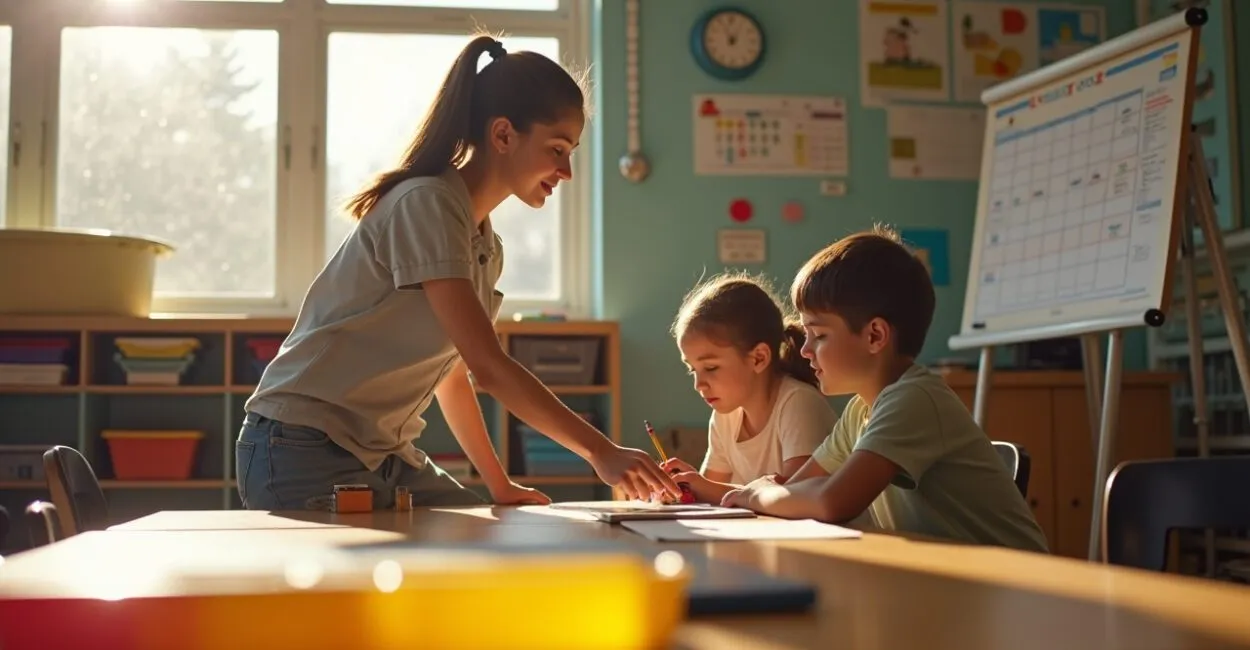
These are organized sets of practices, resources, and environmental and instructional adjustments designed to reduce distractions, increase engagement, and support learning for students with attention-deficit/hyperactivity disorder (ADHD). Essentially, they are proactive, predictable measures that structure students’ time, space, and cognitive demands by combining behavioral strategies, visual supports, and curricular adjustments.
These routines and accommodations have become increasingly important as ADHD diagnoses rise and the need for meaningful inclusion in diverse classrooms grows. Teachers face practical challenges: maintaining classwide attention, differentiating assignments, and responding to behavioral fluctuations without disrupting the class.

Effective solutions are practical, evidence-based, and easy to use in the school day.
Key Takeaways
- Predictable routines with visual cues and timed transitions reduce distractions and increase productive learning time for students with ADHD.
- Environmental accommodations—strategic seating, reduced stimuli, and workstations—are just as important as instructional strategies.
- Systems for brief reinforcement and immediate intervention scripts keep students engaged without interrupting the flow of the lesson.
- Daily visual schedules and checklists promote independence; teaching students how to use these resources is part of the routine.
- Minimal data collection (10–15 minutes per week) guides adjustments and shows progress to families and multidisciplinary teams.
Why ADHD Classroom Routines and Accommodations Are Key to Learning Success
Students with ADHD have difficulty regulating attention, time, and impulsivity. This can create a gap between cognitive ability and academic performance. ADHD classroom routines and accommodations act as scaffolds: they simplify choices, reduce the demands of self-regulation, and turn shifting expectations into actionable steps. Predictability reduces anxiety and increases productive attention. In practice, a well-structured routine breaks complex tasks into clear sequences, improving retention and reducing disruptive behavior.
Neurobehavioral Foundations
Neuroscience studies show that students with ADHD respond better to external cues than to internal demands. Visual cues, timers, and frequent reinforcement activate reward circuits and make desired behaviors more likely to recur.
This explains why seemingly simple adjustments can have a big impact: they externalize the executive control that students may have difficulty maintaining.
Practical Implications
Teachers who understand these foundations prioritize predictability, external cues for self-management, and immediate reinforcement. This changes classroom practice: instead of punishing distraction, they restructure the task, signal the next step, and offer prompt feedback.
The result is less wasted time and more consistent academic progress.
Daily Routines in Detail: Morning, Transitions, and Dismissal
Daily routines should cover key moments in the school day: arrival, the start of class, transitions (activity to instruction, classroom to recess), and dismissal. Each moment calls for different tools: visual cues on arrival, timers for transitions, and checklists at dismissal. Keep the routine short, repeatable, and included in the classroom’s visual schedule.
Arrival Routine (5–10 Minutes)
Set up an arrival station with a supply bin, a list of the day’s tasks, and a short goal for the day. The student completes 2–3 simple actions: put away supplies, check the schedule, and begin a 5-minute activity. This reduces anxiety and helps prepare the brain to focus.
Transitions and Dismissal
Use a visible timer, a gentle auditory cue, and three-step instructions for transitions. At dismissal, a four-item visual checklist helps the student review their work, put away supplies, and write down their homework. These steps minimize wasted time and conflict.
Environmental Accommodations That Reduce Distractions and Improve Focus

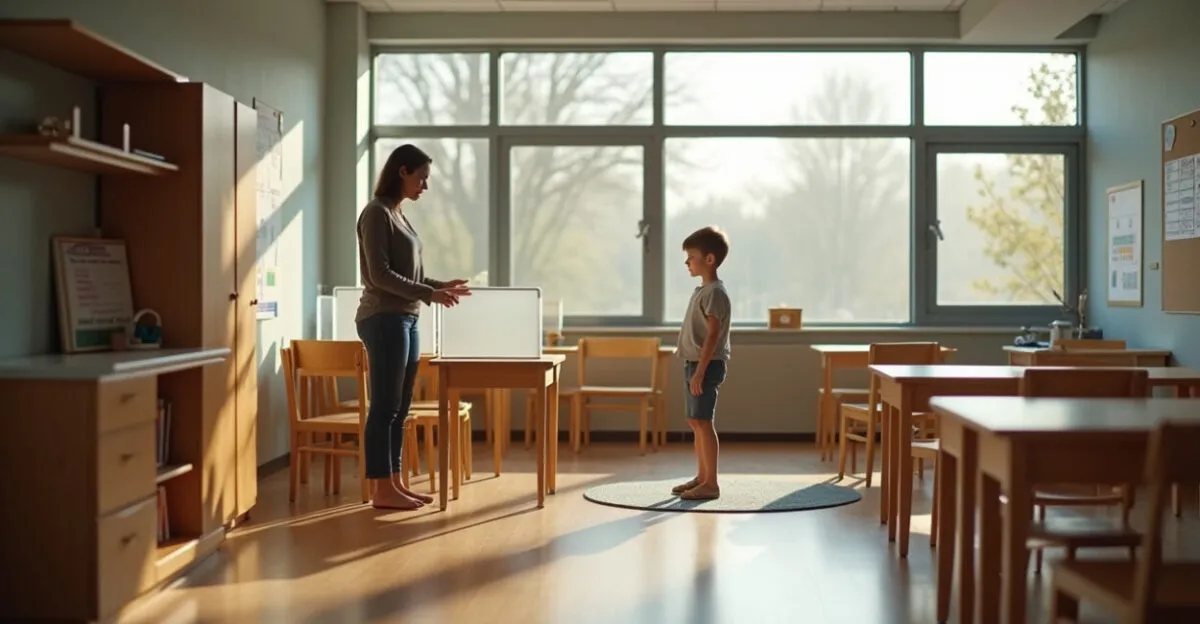
The physical environment is an essential part of ADHD classroom routines and accommodations. Classroom changes should prioritize reducing visual and auditory stimuli, creating clear spaces, and providing options for movement. There is no one ideal setup; the best choice depends on the class and the student.
Seating and Classroom Layout
Seating near the teacher and away from doors and windows reduces outside distractions. Grouped desks encourage structured collaboration; individual desks with low dividers help students who need sensory isolation. Allowing students to change positions at scheduled intervals can help channel the need for movement.
Self-Regulation Resources
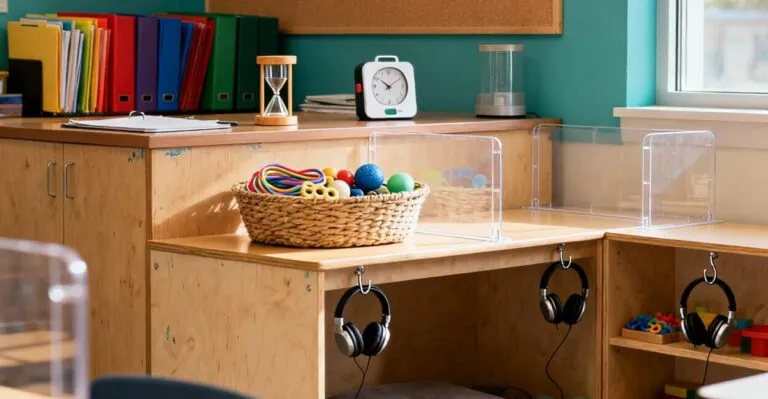
Short break stations (2–3 minutes), focus mats, discreet fidgets, and noise-reducing headphones are all valid accommodations. Be sure to teach students how to use them and document when and how they can access these resources to prevent misuse and maintain fairness in the classroom.
Visual Schedules, Checklists, and Cues: Essential Tools
Visual schedules and checklists make working memory demands more manageable. They guide students through tasks and support independence. Quick visual cues (color cards, icons) communicate expectations and reduce the need for lengthy verbal instructions.
How to Create an Effective Schedule
An effective schedule has 6–8 visual blocks per day, each with a clear duration and symbol. Use consistent colors for different types of activities (blue = reading, green = practice). Leave room to adjust for the actual time needed: track estimated versus actual time each week to fine-tune the schedule.
Practical Checklists
Create checklists with 4–6 steps. Put them in chronological order and include visual indicators of completion (stars, stamps). Teach students how to use the checklist during the first few weeks until it becomes automatic. This builds a sense of competence and reduces the need for teacher intervention.
Reinforcement Systems, Intervention Scripts, and Behavior Management
Effective systems for reinforcing students with ADHD are frequent, immediate, and graduated. Social reinforcement (specific praise), small tangible rewards, and self-rewards work well. Brief teacher scripts for redirection maintain authority without disrupting the pace of the lesson.
Sample Reinforcement System
Example: use a token board with a daily goal. Each target behavior (sitting down, starting a task, staying focused for 10 minutes) earns 1 token. Once the student earns 5 tokens, they trade them in for a chosen reward. Rewards should vary and be appropriate for the student’s age and the school’s rules.
Brief Intervention Scripts
Script 1 (redirect): “Name, hands on the desk, eyes on the board—great, that’s 3 points; keep going.” Script 2 (de-escalate): “I’ll count to three. When I get to three, you choose what to do: come back or talk with me afterward.” Brief scripts reduce confrontations and make expectations predictable for the student.
Monitoring, Adjusting, and Communicating with Families and the Team
Minimal data collection helps guide decisions. Track behavior frequency, time on task, and progress toward weekly goals. Simple data (5–10 entries per week) makes it possible to adjust routines and demonstrate their effectiveness to parents and specialists.
Practical Metrics
Track indicators such as minutes of attention per activity, the number of prompts needed, and the number of interruptions per class. A four-week log can reveal patterns (worse at the end of the day or after recess). These metrics guide specific changes to routines and accommodations.
Communication with Families and the Team
Brief weekly reports (three sentences) with concrete examples are more useful than vague opinions. Share what worked, what will be adjusted, and invite the family to align strategies at home. Monthly multidisciplinary meetings help maintain consistency among the school, psychologist, and family.
Common Mistakes and How to Avoid Them
Many interventions fail because they are applied inconsistently, are too complex, or lack supporting data. Avoid routines that require students to remember too many steps; use external supports instead. Don’t replace support with punishment. The key is simplicity, consistent implementation, and evidence-based adjustments.
- Mistake: routines that are too long—fix it by reducing the number of steps.
- Mistake: infrequent reinforcement—fix it by providing immediate, incremental reinforcement.
- Mistake: accommodations that stigmatize students—fix it by offering options to the whole class.
Always weigh the benefits against the costs of a change, and document its impact before abandoning a strategy.
Next Steps for Implementation
Start with a brief assessment: identify two challenging situations (e.g., transitions and independent work). Choose two accommodations (one environmental adjustment and one visual schedule) and a simple reinforcement system. Use them for 4 weeks, record 10–15 minutes of data each week, and review the results. Small wins build confidence and make it possible to gradually expand ADHD classroom routines and accommodations.
For additional support, consider developing an individualized plan with the school team and consulting the research literature: PubMed and documents from the WHO offer reviews of evidence-based strategies.
Frequently Asked Questions
How Can I Get Started Without Overwhelming the Teacher?
Start small: identify one challenging routine (arrival or transitions) and introduce one accommodation (a visual schedule or strategic seating). Teach the routine to the class over 5 days and use brief scripts for responses. Track focus time and interventions for 10 minutes each week. Review the results and make adjustments. Gradually add another accommodation if you see improvement. This way, the teacher doesn’t have to create everything at once and can stay focused on what actually works.
Which Visual Cues Work Best for Students with ADHD?
Simple, consistent cues work best: schedules with icons for each block, color cards for different activities, and “time remaining” indicators (a visual timer or a shrinking bar). Icons should be large and high-contrast. Avoid putting too much information on the same display. Teach students to check the cue and link it to a predictable outcome (starting an activity, taking a break, or earning reinforcement). This builds an association between the cue and the action.
How Can I Adjust Reinforcement to Avoid Creating Dependence on External Rewards?
Use a plan that gradually shifts control from external to internal: start with frequent, tangible rewards, then reduce their frequency and increase social reinforcement and self-assessment. Introduce self-monitoring checklists and small goals that the student can evaluate at the end of an activity. Help the student make decisions using structured feedback. The goal is for the student to recognize effort and progress without relying solely on external rewards.
What Minimum Data Should I Collect to Evaluate Whether an Accommodation Is Working?
Track three simple indicators: productive attention time per activity (in minutes), the number of teacher prompts per class, and task completion (percentage or check mark). Record these data 3 times a week for 4 weeks. Compare weekly averages to identify trends. Also note the context (time of day, type of activity). These basic data support quick, evidence-based decisions and adjustments without excessive paperwork.
How Can I Provide Specialized Support Without Labeling the Student in Class?
Make accommodations available to everyone when possible: visual schedules for all, accessible movement areas, and sensory tools available to any student. Use discreet cues for individual access (e.g., a card on the board) and standardized redirection scripts. Communicate with families and specialists through objective reports. This approach protects the student’s self-esteem and promotes inclusion while keeping the team informed and aligned.
Artigos Relacionados
 Inclusive Strategies for Students with ADHD: Practical Accommodations and Academic Outcomes for Elementary School Teachers
 Attention Teachers: Changes to the School Routine for Students with ADHD
 Childhood Memory: Strategies for an Active Classroom
 Play-Based Learning: Practical Strategies for Teachers
 Strategies to Improve Attention in the Classroom
 Teacher Skills: Key Competencies for Today’s Classrooms
