
A beaded bracelet can take just a few minutes to make and become a keepsake treasured for years. When choosing creative Mother’s Day gifts for young children, look for short, safe projects suited to their age, with room for kids to choose colors, designs, and messages. The ideas below work at home or at school and include affordable materials, estimated time, and the level of adult help needed. There are also options for honoring another caregiver, since not every child wants to or can make a gift for their mother.
At a glance
- For young children, choose activities with large pieces, just a few steps, and close supervision.
- Drawings, cards, and collages require few materials and let children of different ages take part.
- A repurposed box can become a jewelry box or a place to keep notes and keepsakes.
- A child can give the gift to their mother, another caregiver, or choose not to take part in the celebration.
How to choose creative Mother’s Day gifts for young children
The best creative Mother’s Day gifts for early childhood education are projects children can genuinely take part in, using age-appropriate materials and a level of adult help that makes sense. In general, choose an activity that fits the time available, allows for personal choices, and does not rely on tools or small parts that could pose a risk. In early childhood education, the project can also encourage self-expression, exploration, and social interaction, in keeping with the learning domains of Brazil’s Base Nacional Comum Curricular (BNCC), Brazil’s national curriculum framework. There’s no need to turn the keepsake into a rigid school assignment: children can experiment with materials, talk about what they’re making, and decide how to present the finished project.

A practical rule of thumb can help: if a child still puts objects in their mouth, avoid beads, buttons, and small decorations; if they can handle these materials safely, supervise them and limit how many are within reach. Age ranges can offer guidance, but they don’t replace observing each child’s skills and needs.
Bracelets and accessories in colors chosen by the child
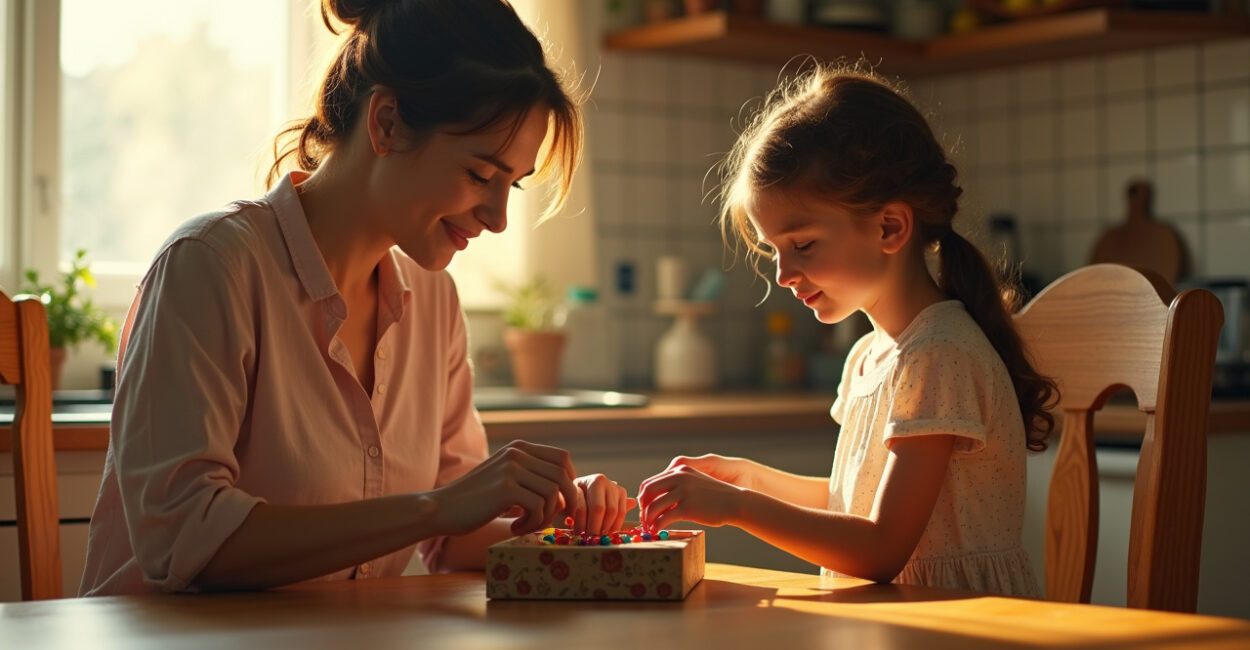
A beaded bracelet is an affordable option for children who can safely handle small pieces. Set out cotton cord or jewelry-making elastic, large beads, and safety scissors, which should be handled by an adult. The child chooses the colors and the order of the beads; an adult can tape one end of the cord to the table to make it easier to work with. When the bracelet is finished, check the knot and trim the excess. For younger children or those who still put objects in their mouths, swap the beads for wide strips of paper to decorate or a bracelet drawing on cardstock.
An adult can prepare the materials, but the child should choose the pattern. This activity also offers a chance to talk about patterns and planning, without expecting every child to make the same thing.
When children choose the details and take part in each step, the gift reflects their own ideas.
Decorated cardboard boxes for keepsakes

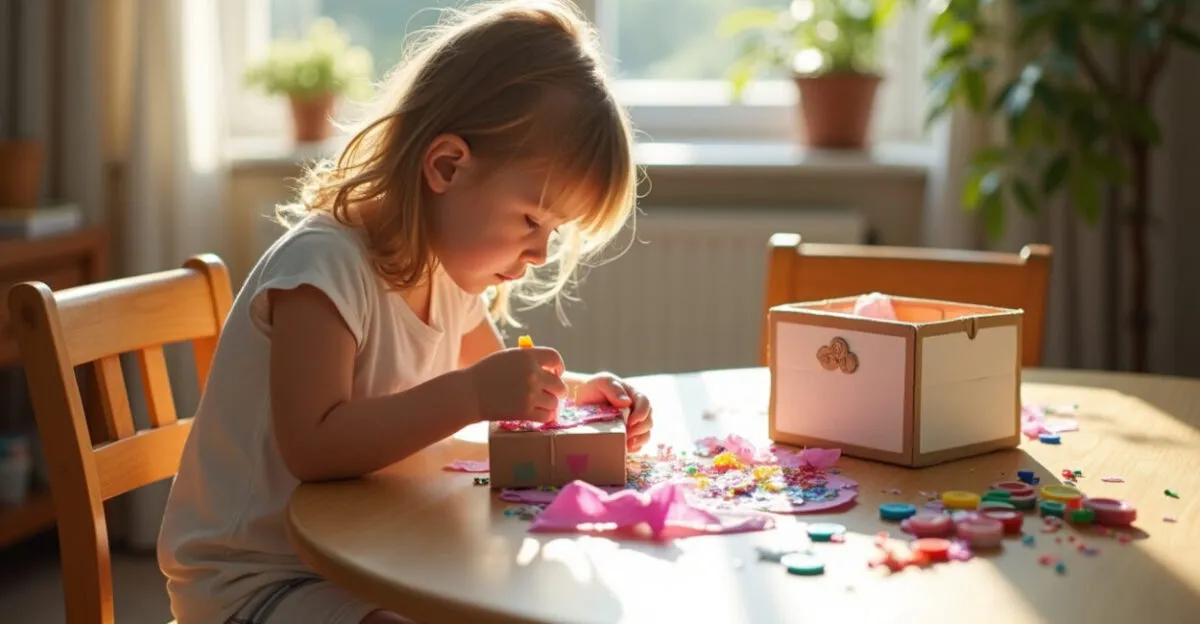
A clean cardboard box can become a jewelry box, a catchall, or a little place to keep notes. This project reuses materials the school or family may already have, and it usually works best when an adult prepares the box before the activity. Cover the table and offer colored paper, child-safe glue, and pictures cut out ahead of time by an adult. The child can tear or glue pieces of paper, draw on the lid, and choose how to decorate the box. To avoid frustration, use a sturdy box with no exposed staples or sharp edges.
For example, each child in a class could decorate a small box with a drawing and choose a note to put inside. Children who prefer not to write can dictate a sentence to an adult or add just an illustration. The finished box works as both a gift and a container for keepsakes.
There are many projects that reuse materials; here, the focus is on choosing clean supplies and letting the child decide how to put them together. A handmade gift is more meaningful when it doesn’t have to look perfect.
Artwork with drawings, collages, and handprints
A drawing mounted on cardstock makes an affordable keepsake that can be adapted for different ages. Children can draw with crayons, glue on paper shapes, or create a scene with leaves and large cutouts; an adult can make the frame by folding cardstock. If the school can’t use paint, colored pencils and collage offer alternatives that don’t involve handprints. When using paint, choose a product intended for children, protect their clothes, and check for sensitivities beforehand. Handprints aren’t necessary to make the project personal.
Drawing and exploring different materials can support early childhood learning and the experiences outlined in the BNCC. The finishing touches should help display the work, not take the place of the child’s participation.
Little books and cards with messages from the child
A folded card or a short booklet can turn drawings and words into a keepsake that’s easy to take home. An adult can fold and punch the paper if needed; the child draws, chooses the page order, and dictates a sentence for someone to write down. Instead of asking for a prepared declaration, invite the child to finish prompts such as “I like it when…,” “Something we do together…,” or “I want to tell you….” They may also prefer to draw without writing. For children who don’t yet speak or don’t want to answer, offer choices of colors, pictures, and ways to take part.
This kind of attentive listening fits with early childhood education approaches that respect different ways of expressing oneself. Don’t edit a child’s dictated words to make them sound more grown-up; preserve their words, helping as needed to write them down.
Useful keepsakes and care kits made at school
A school keepsake can be useful without including cosmetics, food, or items that aren’t appropriate for children. Bookmarks, fabric sachets sewn by an adult, and small decorated planters are options; the class can choose just one to keep things simple. To make a bookmark, cut cardstock strips before the activity and let the children draw or glue on large shapes. For a planter, reuse a clean container with no broken edges; an adult should handle the planting and any tools. If you use seeds or plants, take allergies and family circumstances into account.
The Sociedade Brasileira de Pediatria (Brazilian Society of Pediatrics) publishes guidance on accident prevention and child safety. Since risks vary depending on the child’s age and the materials, schools should assess each project and provide direct supervision, especially when it involves small parts, scissors, or glue. A gift a child doesn’t want to give to their mother can be for a grandmother, aunt, godmother, guardian, or another important person. It’s also fine to take part in the activity without making a keepsake to give away.
Planning a school activity: time, cost, and adult help
A well-organized activity starts with choosing a project that fits the class schedule and preparing in advance any steps that require tools. The table compares options in relative terms; costs depend on what the school already has and what materials are available in the community.
Project Suggested age Estimated time Relative cost Adult help Drawn card Ages 2 and up 15 to 25 minutes Low Low, with help folding or writing Collage picture Ages 3 and up 20 to 35 minutes Low to moderate Moderate, to prepare cutouts and the frame Decorated box Ages 3 and up 25 to 40 minutes Low Moderate, with the box prepared ahead of time Beaded bracelet For children who can safely handle small pieces 20 to 30 minutes Low to moderate High, with continuous supervision
These times are estimates for planning the schedule, not goals for the children. If the class needs more time, split the project across two sessions: first, choosing and creating; then, finishing and wrapping.
To reduce lines and waiting, set up the tables before the children arrive and hand out a few materials at a time. In a classroom, it usually works better to prepare boxes and cutouts in advance than to try to fix an item while the group waits. This setup also makes it easier to adapt the project for children with different motor, sensory, or communication skills.
These activities can be part of early childhood education experiences without turning the celebration into an obligation. Schools can draw on education as a framework for lesson planning, but the choice of keepsake should reflect the class’s actual circumstances.
Frequently asked questions
What’s the best age to start making gifts?
There’s no single right age: even young children can take part by scribbling, choosing colors, and gluing large pieces. The activity should suit each child’s coordination, interest, and safety needs.
How can I help without making the gift for the child?
Prepare the space, organize the materials, and demonstrate a step if needed. Then let the child choose and do what they can; an adult can handle tasks like cutting cardboard, tying secure knots, and writing down a dictated message.
What should I look for in a printable keepsake template?
Choose a simple template with just a few parts and room for the child to draw or write. Before printing it for the class, check the size and readability, and make sure the activity still allows for personalization rather than simply asking children to fill in a finished design.
How can I adapt the keepsake for a child who doesn’t celebrate Mother’s Day?
Present the activity as a way to honor someone important, or let the child make something for themselves without having to explain their choice to the group. Taking part can be optional; no one should be pressured to share details about their family life.
To get started, choose one project based on the children’s ages, the time available, and the materials the class already has. Prepare any steps involving tools in advance, and decide how to make participation inclusive before introducing the activity to the children.
Artigos Relacionados
 Creative Women’s Day Keepsakes: Simple, Affordable Gifts Kids Can Make
 Creative International Women’s Day Gifts for Kids: Simple, Personalized Ideas to Celebrate and Honor Women
 Women’s Day Cards for Early Childhood Education: Creative Ideas, Inspiring Messages, and Fun Activities to Celebrate Gender Equality
 Christmas Gifts for Preschoolers: 25 Ideas
 Mother’s Day in Early Childhood Education: 7 Memorable Activities
 Exploring the World Through the Senses: 10 Creative, Safe Sensory Activities to Support Early Childhood Development
