
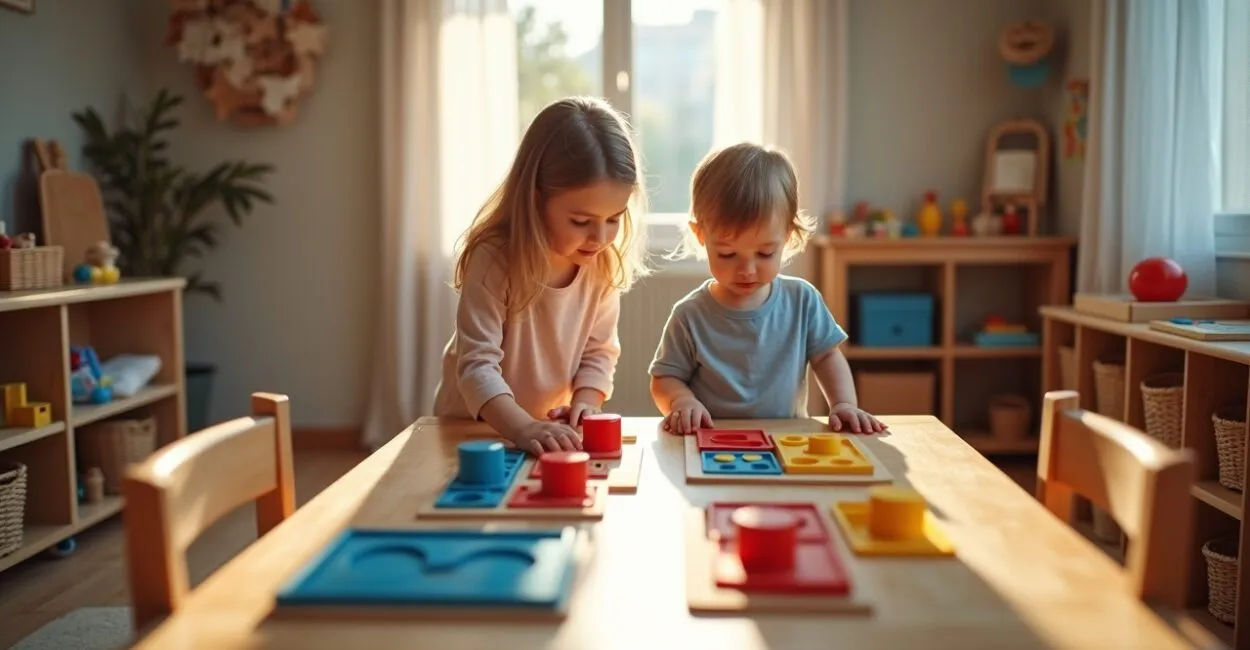
The magic isn’t in the game itself—it’s in how it gets the brain to connect the dots.
When a colors and shapes activity is thoughtfully designed, it stops feeling like “just a pastime” and becomes a powerful tool for perception, language, and reasoning. And it does all that without pressure, screens, or feeling like schoolwork.

In practice, contrast is what holds a child’s attention: a blue circle next to a red triangle, one piece that “matches” another, or a game where getting it right means looking, touching, and comparing. It sounds simple. It isn’t.
What This Activity Does for the Brain Before It Looks Like “Just Play”
From a technical standpoint, a colors and shapes activity develops visual discrimination, matching, categorization, and fine motor skills. In plain English: children learn to notice differences, group similar items, and respond more accurately to what they see.
This goes well beyond learning to read and write. When a child sorts blocks by color, fits geometric shapes together, or matches identical pictures, they’re practicing sustained attention and working memory. It may seem like a small exercise, but it lays the groundwork for bigger learning later on.
And here’s where a lot of people get it wrong: it’s not the number of pieces that makes the activity effective—it’s the quality of observation it requires. Five blocks can teach more than fifty if the activity calls for real comparison.
4 Visual Activities That Work Without Creating Chaos
When an activity gets confusing, learning gets scattered, too. That’s why the most effective activities tend to be visual, uncluttered, and built around one main rule at a time.
- Sort by color: Group bottle caps, cards, or blocks by color.
- Match shapes: Pair triangle with triangle, circle with circle, and square with square.
- Match color and shape: Find the right item in a mixed group.
- Complete patterns: Red, blue, red, blue… until the child can predict what comes next.
These four ideas may seem ordinary, but they can make a big difference when you use strong contrast and keep distractions to a minimum. A white background, for example, makes a colors and shapes activity stand out. That’s why so many activities fall flat: the problem isn’t a lack of content, but too much visual noise.
Anyone who works with children knows that a pretty worksheet doesn’t always teach more. Sometimes the most effective version is the simplest—and the easiest on the eyes.
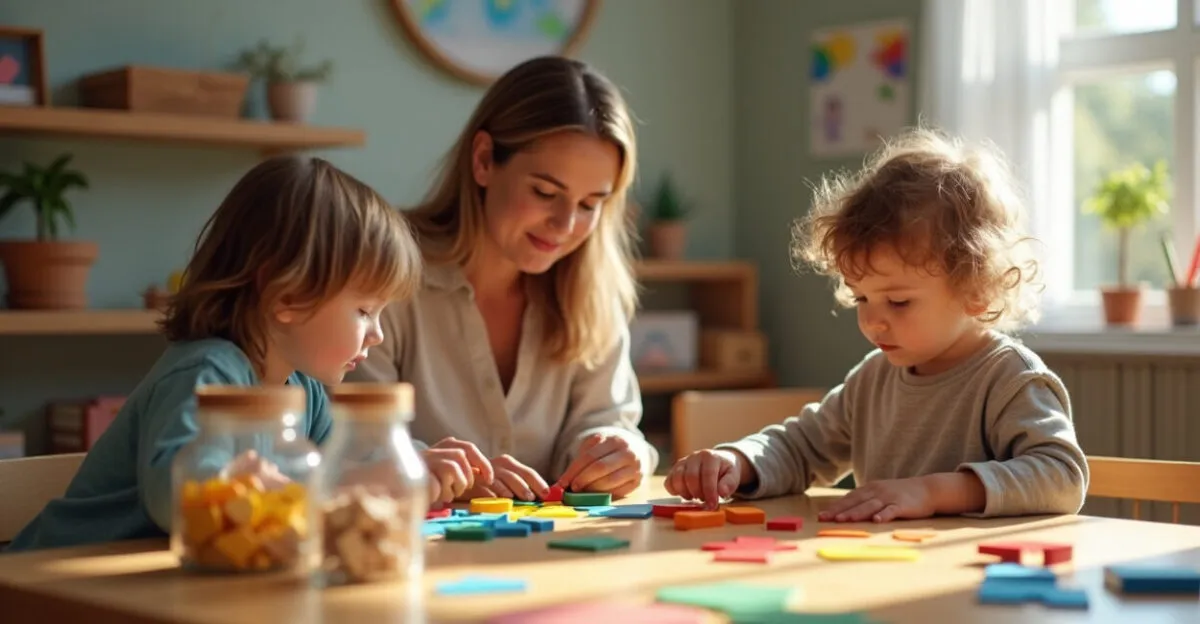
How to Create a Colors and Shapes Activity That Really Holds a Child’s Attention

A good activity starts with the rule, not the materials. First, decide what you want to teach: color recognition, naming geometric shapes, or matching identical items. Then choose the objects.
Here’s a good approach:
- choose 2 to 4 colors;
- use 2 to 3 shapes at a time;
- mix items that are similar in size;
- limit visual cues at first;
- gradually increase the complexity.
In practice, this helps avoid a classic pitfall: the child guesses correctly because one clue stands out more than the others. If the triangle is always huge and red, the child isn’t learning the shape; they’re learning to guess based on size and color.
A Quick Story: When Too Much Gets in the Way
I saw a common example: a teacher put together a colors and shapes activity with beautiful pieces in lots of colors, textures, and shiny finishes—even adding numbers. The kids were excited at first, but by the second minute, they’d stopped getting the answers right. There was too much competing for their attention. The next day, she replaced everything with simple cards, three colors, and two shapes. The mood changed right away. Less decoration. More focus.
Sometimes removing one detail teaches more than adding another.
The Best Games for Teaching Matching Without Overdoing It
If you want children to match items naturally, try matching games. They build a bridge between looking and making a decision—and that bridge is at the heart of the activity.
These activities work especially well:
Read also: Childhood and learning: how they shape adult life
- matching pairs of identical cards;
- fitting shapes into matching templates;
- color and picture dominoes;
- boards with shadows and matching objects;
- visual memory games with pairs of colors or shapes.
These games are great because they call for direct comparison. Children don’t need to memorize a long explanation; they need to observe, try, and adjust. That’s what strengthens their ability to match items.
But there’s an important caveat: not every child responds at the same pace. Some need to touch the pieces, some need to name them out loud, and others need to make a mistake before they understand the rule. That variation isn’t a flaw in the method—it’s part of the process.
The Most Common Mistake: Turning Visual Learning Into a Race to Get It Right
The most common mistake is rushing the answer. When an activity becomes a competition to “see who gets the most right,” the focus shifts from observation to performance. Children stop paying attention to the shape and start looking for approval.
It’s easy to spot when this is happening:
- they answer before really looking;
- they get upset over small corrections;
- they copy another child without understanding;
- they identify the color but ignore the shape.
Learning colors and shapes isn’t about racing to win; it’s about learning to see more clearly. That’s worth remembering at home and at school.
One more thing: don’t mistake difficulty for disinterest. Sometimes there are too many options, the contrast is too weak, or the instructions aren’t clear. An activity can be well designed in principle and still fall short if its layout is confusing.
How to Adapt the Challenge for Different Ages
A colors and shapes activity should grow with the child. If it’s too easy, they’ll get bored. If it gets too hard too soon, they’ll get frustrated.
For younger children, start with direct matching: same color, same shape, same picture. Then you can add variations like different sizes, mixed patterns, and category-based matching. Ideally, the transition should feel almost seamless.
Challenge level
Example
What the child practices
Beginner
Sort pieces by color
Visual identification
Intermediate
Match shapes to templates
Comparison and fitting
Advanced
Follow mixed color and shape patterns
Sequencing and prediction
Today, in 2026, many people are looking for activities that don’t rely on screens, and there’s a clear reason: hands-on activities foster a kind of attention that digital ones rarely sustain for as long. The point isn’t to demonize technology. It’s to remember that hands, eyes, and brains still make a highly effective team.
Why Sensory Activities Make Learning Stick Better Than You Might Expect
When children touch, move, fit together, and rearrange objects, learning becomes concrete. Shapes gain substance. Colors become more than names—they become experiences.
That’s because sensory activities create multiple memory cues. It’s not just “seeing the blue circle.” It’s seeing it, picking it up, comparing it, hearing its name, adjusting its position, and noticing the result. The more senses involved, the more likely the learning is to stick.
The brain learns more when the hands join the conversation.
For a broader perspective, research on development and active learning can help explain why. UNICEF’s overview of early childhood development highlights how early experiences affect language and cognition. And the CDC’s overview of child development reinforces the value of activities that combine observation, interaction, and repetition.
At school or at home, this can be as simple as swapping a printed worksheet for colorful bottle caps. The impact is often greater than it might seem at first.
How to Tell Whether the Activity Really Worked
The best sign isn’t a quick right answer. It’s a change in strategy. When a child starts looking more carefully, saying what they see, or explaining their choice, they’ve moved beyond “guessing” and started “understanding.”
Look for these signs:
- they identify colors without help;
- they distinguish similar shapes, such as a square and a rectangle;
- they spot patterns before the sequence is complete;
- they correct their own mistakes without getting discouraged.
This method works very well for introducing and reinforcing concepts, but it may fall short if you expect it to solve everything on its own. Not every learning difficulty can be addressed with visual materials. Sometimes language, attention, coordination, or developmental concerns call for a different kind of support.
A good activity doesn’t prove that a child got the answer right; it shows that the child has learned to think in a new way.
Frequently Asked Questions About Colors and Shapes Activities
What’s the Best Age to Start a Colors and Shapes Activity?
You can start very early with simple, sensory activities, as long as they’re appropriate for the child’s developmental stage. For babies and toddlers, focus on contrast, naming colors, and large shape sorters. As children grow, you can introduce geometric shapes, sorting, and matching. The key is to keep things simple at first and gradually add complexity without turning play into a test.
Do I Need to Buy Ready-Made Materials for These Games?
No. In fact, plenty of great activities can be made with things you already have at home: bottle caps, blocks, colored paper, containers, large buttons, and handmade cards. Ready-made materials can be convenient, but they don’t guarantee a high-quality activity. In general, a clear rule matters more than the price of the pieces. If the activity is well planned, household items work just fine.
How Can I Tell Whether a Child Is Learning Colors and Shapes or Just Memorizing?
See whether they can apply what they’ve learned in a different setting. If they recognize a circle on a card, in a toy, and in an object around the house, they’re making real progress. If they get it right only because they memorized where the pieces go, their learning is still limited. Changing the materials, rearranging the pieces, and switching locations can show whether their understanding is solid or just based on repetition.
Do Colors and Shapes Activities Help Children Learn to Read and Write?
Yes. They build visual attention, comparison, organization, and naming skills—all of which support reading and writing. Children learn to distinguish lines and shapes, notice similarities, and follow sequences, which later helps with letter and word recognition. But these activities don’t replace direct reading and writing instruction. They provide a foundation, not a magic shortcut.
What Should I Do When a Child Keeps Getting the Same Shape Wrong?
Try reducing the number of choices and increasing the contrast between them. Repeated mistakes often aren’t a sign of low ability; the shapes may simply look too similar, or the instructions may be confusing. You can start with two very different shapes, like a circle and a triangle, and add similar ones, like a square and a rectangle, later. Small adjustments can make a big difference.
When thoughtfully designed, what looks like a game about colors and shapes becomes attention training that children can carry with them for life.
And maybe that’s the best test: if the activity helps a child look more carefully at what’s in front of them, it’s already taught them more than it seemed to.
Artigos Relacionados
 Play-Based Learning in Elementary School: Learning Through Play
 Exploring the World Through the Senses: 10 Creative, Safe Sensory Activities to Support Early Childhood Development
 A Guide to Early Childhood Education: Best Practices, Play-Based Activities, and Innovative Approaches to Whole-Child Development
 Fun Middle School Activities to Engage Students and Make Learning Stick
 Fun First-Grade Math: Games, Activities, and Hands-On Ways to Explore Numbers, Shapes, and Logic
 Language-Building Play: 10 Activities to Get Kids Talking
