
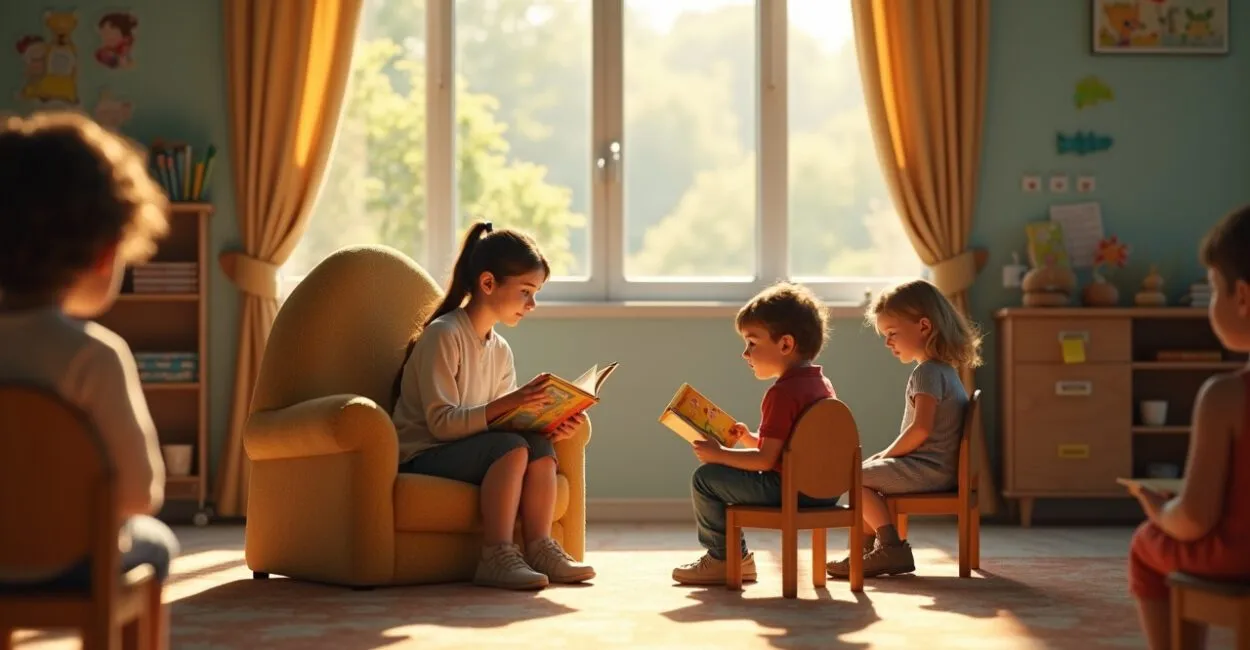
When a story becomes an attention-grabbing game, students stop watching the clock and start imagining together.
A well-planned storytelling activity does more than “pass the time”: it builds vocabulary, sharpens listening skills, and gets children thinking before they answer. The key is to treat the story as an experience, not as a routine read-aloud.

Here’s the detail many people miss: it’s not the story itself that holds students’ attention. It’s how you draw them in with your eyes, voice, and curiosity from the very first minute.
Why Storytelling Activities Engage Students Even When They Seem Too Simple
The technical definition is straightforward: storytelling is an oral practice that uses voice, gestures, rhythm, and interaction to create shared meaning. In everyday terms, it’s when you invite students into the story instead of simply reading a prepared text aloud.
The most common mistake is thinking that reading well is enough. It isn’t. Anyone who works with storytelling knows that engagement comes from creating just the right tension: a pause at the right moment, an unexpected question, an object in your hand, or a shift in tone. Children don’t follow along with their ears alone; they use their whole bodies.
In practice, a well-designed storytelling activity turns distraction into anticipation. And anticipation is invaluable in the classroom because it holds students’ attention without threats, grades, or shouting.
If you want students to participate, think of the story as a scene. And every scene takes preparation—starting well before “Once upon a time.”
What to Prepare Before Storytime So Students Don’t Lose the Thread
Materials aren’t just decorations. They give the imagination something to build on. An illustrated book, puppets, character cards, story-related objects, an opening song, or even a surprise box can completely change the energy of a storytelling activity.
Picture two scenes: In the first, the teacher opens a book and starts reading. In the second, she pulls a feather, a key, and a glove from a bag, then asks students to guess what the three items have in common. The second scene draws them in. The first simply delivers information.
- A book or source text with images everyone can see;
- A story-related prop to spark interest;
- An organized space where the group can see and hear;
- A prepared voice that can vary pace, volume, and pauses;
- A participation plan to keep students from becoming a passive audience.
This preparation doesn’t have to be expensive. It does need to be intentional. The difference between the two approaches shows even before the first sentence of the story.
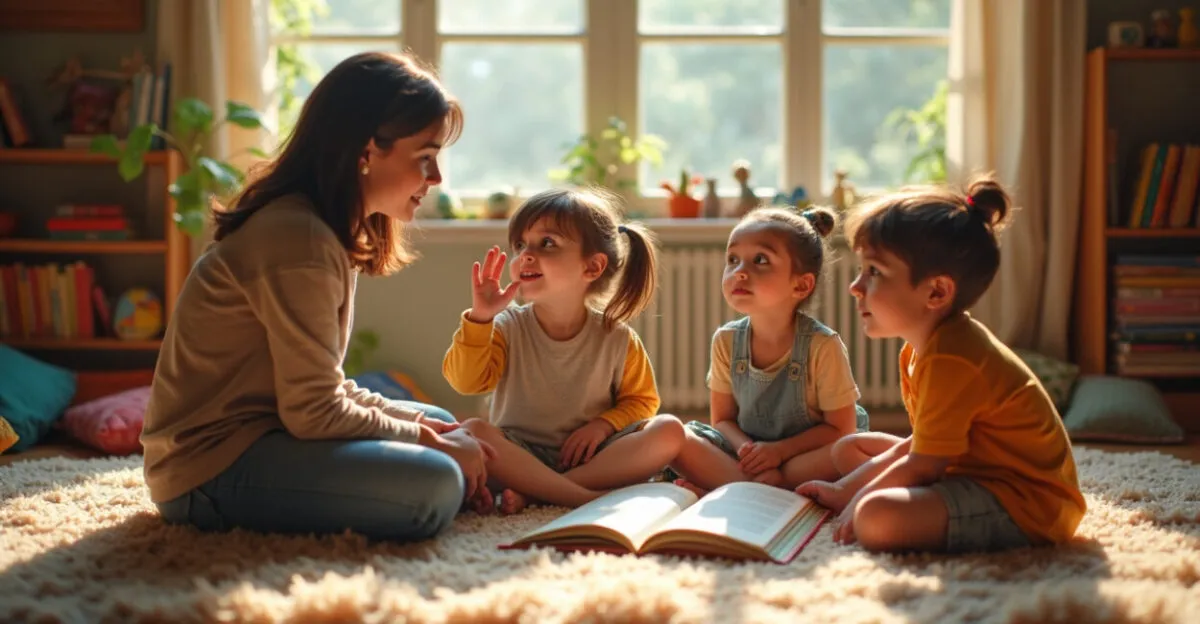
Questions That Help a Story Grow in a Child’s Mind

Asking good questions is almost an art in its own right. A storytelling activity becomes more powerful when you go beyond obvious questions and prompt students to infer, predict, and compare. That’s when language skills grow.
Ask questions that open doors rather than shut down conversation. Instead of “Who is the main character?” try “Why do you think they decided to do that?” or “What would change if this character were brave?” These questions get children thinking beyond the surface.
The best question isn’t always the hardest one; it’s the one that makes students think for themselves.
- “What do you think will happen next?”
- “Which part left you wondering?”
- “If you were there, what would you do?”
- “Which character surprised you the most?”
- “What does this story remind you of?”
This kind of conversation keeps the story going after it ends. That’s where activities come in, because the story doesn’t have to end on the last page.
Activities That Turn Listening Into Real Participation
If students only listen, half the potential is lost. A storytelling activity becomes much richer when children act out, complete, rearrange, and recreate what they’ve heard. This builds language, memory, and imagination all at once.
A good activity can be as simple as asking students to retell the story in pairs, changing the order of events. Another option is to assign roles: one group does the voices, another makes the sound effects, and another holds the scene cards. The content changes little; the experience changes everything.
I’ve seen classrooms labeled “rowdy” become wonderfully focused when students were given clear roles. It wasn’t magic. It was structure. Students who know how to participate do it better.
There’s a myth worth dispelling: a participatory activity isn’t just chaos with a nicer name. Good participation has rules, limits, and a purpose. Without them, the whole activity can unravel.
The Mistake of Making the Activity Feel Like Mere Entertainment
The educational purpose doesn’t ruin the magic—it gives it direction. When a storytelling activity becomes nothing but fun, without guidance, it misses the chance to develop background knowledge, speaking skills, and attentive listening. The opposite is just as bad: too much correction kills the magic.
The balance is in guiding without making the activity rigid. You can invite students to interpret, put events in order, make predictions, and retell the story without turning every answer into an oral exam. Children need to feel free to take a chance.
A good story isn’t one students hear in silence; it’s one that keeps working in their minds after it ends.
Common mistakes that undermine engagement:
- reading too quickly, without pausing;
- asking only about details stated explicitly in the story;
- not giving students time to answer;
- using difficult vocabulary without explaining it;
- ending the activity without a follow-up or creative response.
This approach works very well with young children and older students, too, but it can fall flat if the class is tired, time is short, or the room is very noisy. The way you guide the activity needs to fit the situation.
How to Build Language and Imagination Without Overdoing It
Language grows when a story introduces new words in a meaningful context. That’s why listing difficult terms outside the narrative doesn’t help much. Instead, revisit phrases from the text, compare meanings, and ask students to use a word in a different sentence.
You can also play with alternatives: “How else could the character say that?” “Which word best matches this feeling?” or “Did that scene feel sadder, funnier, or more mysterious?” A storytelling activity becomes a language lab without feeling like a mechanical exercise.
When it comes to imagination, the trick is to leave things open-ended. Don’t explain everything. Don’t draw everything. Don’t fill in all the pictures for the students. Children’s minds fill in the gaps surprisingly quickly—as long as you don’t spell everything out for them.
If you’re looking for outside resources, check out UNICEF Brazil’s materials on reading and oral language at UNICEF in Brazil, as well as guidance on literacy and language development from universities such as Harvard University. These are useful references for understanding why telling stories, listening, and responding form a powerful cycle.
A Practical Plan That Works, Even When Students Are Restless
If you want to move beyond improvising, follow a simple sequence: warm-up, storytelling, interaction, and recreation. This structure holds students’ attention without making the activity feel rigid. It works especially well for storytelling activities with children who tend to lose focus quickly.
Here’s a realistic example: Students arrive restless, and no one is looking up front. You show them a strange object and ask them to guess what it might be. Then you begin the story in a quiet voice, with a long pause, stop at the point that raises the biggest question, and give groups a retelling challenge. The noise gradually fades—not because the students “obeyed,” but because they want to know what happens next.
Step
What to do
Goal
Warm-up
Object, question, or sound
Spark curiosity
Storytelling
Voice, pauses, gestures, and images
Hold attention
Interaction
Questions and predictions
Activate language skills
Recreation
Drawing, retelling, or acting
Reinforce meaning
If you’re interested in reading data and cultural habits, Brazil’s IBGE (Brazilian Institute of Geography and Statistics) offers useful surveys on education and reading habits that help put the role of schools and facilitation in context. And one detail matters: not every class responds the same way, so observing the group is just as valuable as following a plan.
The point is simple and a little uncomfortable: if a storytelling activity doesn’t change the classroom, it has become nothing more than a rehearsed reading. When it does make a difference, students notice before you even explain why.
What a Good Storytelling Session Leaves Behind
After the story ends, the mood in the room tells you everything. If students want to comment, repeat lines, invent endings, and discuss characters, you’ve hit the mark. If no one remembers anything, the story may have passed through the classroom without reaching anyone.
Real success isn’t measured by silence. It’s measured by what stays with students. One child takes a new word to recess, another imitates the narrator’s rhythm, and someone asks to hear the story again. That’s learning in action.
And perhaps that’s what matters most: a well-guided storytelling activity doesn’t end on the last page—it continues in conversation, drawing, play, and the way children see the world.
An engaging story isn’t one that ends beautifully; it’s one that makes the class want to start again.
Frequently Asked Questions
How Do I Choose a Good Story for the Activity?
Choose stories with a clear plot, an easy-to-understand conflict, and characters children can picture. Repetition, rhythm, and vivid imagery work especially well because they help students predict what comes next and participate. Consider the age group, too: the younger the children, the more concrete and lively the story should be. If the story is long, trim it thoughtfully while preserving its emotional core.
Do I Need to Use Puppets, Books, and Props Every Time?
No. These resources can help, but they aren’t required. Sometimes voice, pauses, and eye contact are all you need. The best guide is what the group needs that day: more visuals, more movement, or more listening. A good resource strengthens the story without competing with it for attention.
How Can I Get the Class to Participate Without Creating Chaos?
Give students roles and simple rules. Instead of saying “participate,” explain exactly how: one group makes sound effects, another answers questions, and another puts the events in order. When children understand the format, participation increases and noise decreases. A storytelling activity can be lively and organized because students’ energy has direction.
What Should I Do When Children Don’t Answer Questions?
Replace closed-ended questions with choices or imaginative prompts. Sometimes students don’t answer because the question is too difficult, too broad, or disconnected from the story. Start with simple options, use clues from the narrative, and give them real time to think. A brief silence isn’t a problem; too much pressure can freeze even students who know the answer.
Does This Activity Work with Older Children, Too?
Yes—and often better than you might expect. Older children enjoy interpreting stories, comparing versions, discussing characters’ motives, and creating alternate endings. The key is to raise the level of discussion without making the facilitation feel childish. Instead of asking “Who is the hero?” try “What is the character hiding from themselves?” That changes everything.
Artigos Relacionados
 Fine Motor Coordination Activities: 12 Easy Ideas
 Fun Middle School Activities to Engage Students and Make Learning Stick
 Colors and Shapes Activities: Learning Through Play
 Activities for Early Childhood Education: Practical Ideas
 Mother’s Day Activities for Elementary School
 Cut-and-Paste Jobs: A Playful Preschool Activity
