
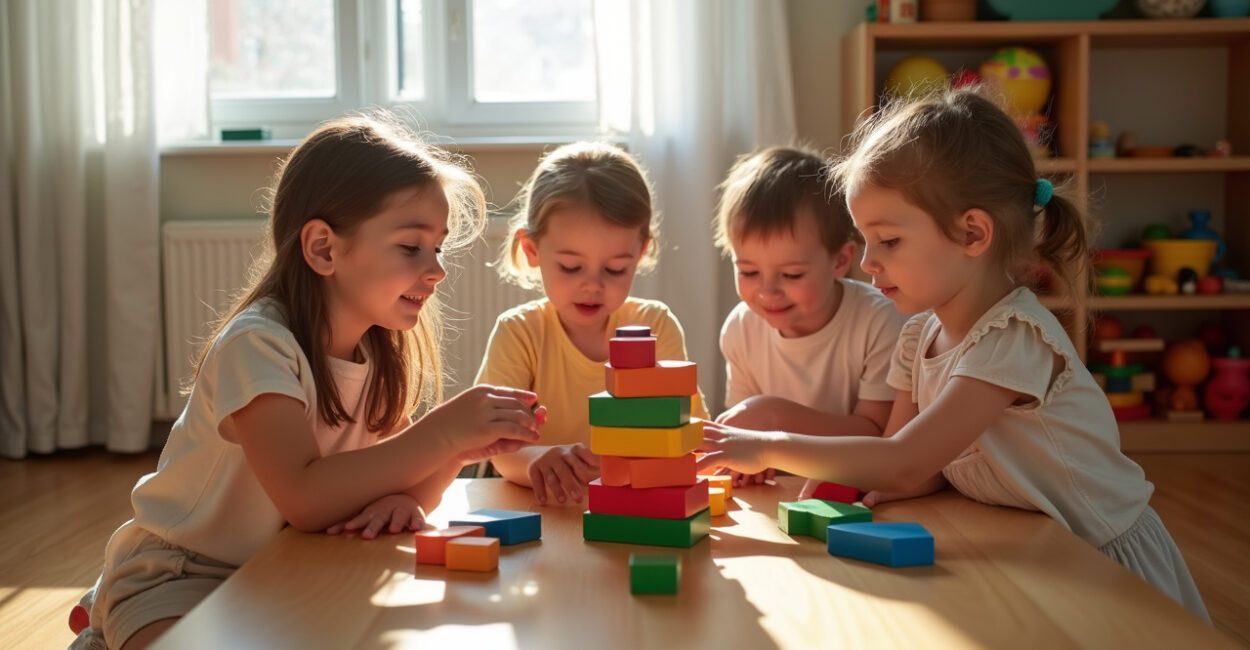
When a child loses a turn in a game, an adult can stop the playtime to scold them—or help them recognize their frustration and find a way forward. Social-emotional development takes shape in moments like this: it involves learning to understand emotions, relate to others, and choose how to respond. In childhood, these skills grow through everyday relationships at home and at school. They help children ask for help, handle boundaries, cooperate, and take part in learning activities.
Each child’s path varies based on age, temperament, and experiences. That’s why observing changes over time is more useful than comparing siblings or classmates.

Quick facts
- What it involves: emotions, self-regulation, empathy, relationships, and social interaction.
- Where it develops: through relationships and experiences at home, at school, and during play.
- Who is involved: children, family members, educators, and other trusted adults.
- How to track it: observe behaviors in different settings without treating them as a diagnosis.
- Key references: Brazil’s National Common Curricular Base (BNCC), UNICEF, and resources from the Ayrton Senna Institute.
What Is Social-Emotional Development in Childhood?
Social-emotional development is the process through which children build the ability to recognize and regulate emotions, understand other people, form relationships, and navigate social interactions. In everyday life, this shows up when a child can wait, express discomfort, accept help, or make amends after hurting someone.
Emotional development mainly involves recognizing and regulating one’s own emotions. The social dimension adds the ability to read interpersonal situations, communicate, and get along with others. These dimensions influence each other: a highly frustrated child may have more difficulty listening to a classmate, while a secure relationship can help them calm down.
The process starts early. Babies respond to voices and facial expressions, and young children learn from adults’ reactions. UNICEF’s early childhood development resources offer information on development and learning in the early years.
Social-Emotional Skills and Their Connection to the BNCC
Social-emotional skills include self-regulation, empathy, cooperation, communication, and decision-making. Classifications vary because institutions and researchers group different abilities according to their goals; no list should be treated as universal.
Brazil’s National Common Curricular Base (BNCC), issued by the Ministry of Education, guides basic education through core competencies that include self-awareness, empathy, cooperation, responsibility, and citizenship. This connects social-emotional education with the curriculum, but it doesn’t mean every emotion needs its own lesson or activity.
Resources from the Ayrton Senna Institute also address social-emotional skills and their connection to education. When considering support strategies, it’s useful to take a child’s individual needs and opportunities to participate into account, without reducing their behavior to a label.
Social-emotional skills show up in the choices children are able to make in everyday relationships.
How These Skills Support Learning

Paying attention, remembering directions, and controlling impulses are abilities related to executive function, which helps children plan actions and adjust their behavior. When a child feels distressed or insecure, they may need more support to follow an activity, even if they’re interested in taking part.
Relationships with trusted adults give children a secure base for exploring their surroundings, trying tasks, and asking for help. This doesn’t mean children have to be calm all the time to learn: intense emotions are part of childhood. Adults can acknowledge a child’s feelings while still maintaining the boundaries needed to get along with others.
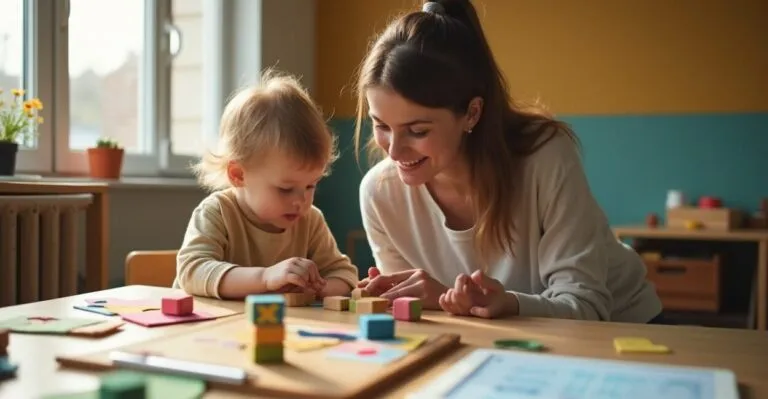
Games involving colors and shapes, for example, let children learn to wait, follow agreed-upon rules, and cope when things don’t go as planned. The goal doesn’t have to be performance: how a child responds and gets back to playing can also offer clues about the skills they’re practicing.
The Role of Family and School in Getting Along
Home and school provide different but complementary settings. At home, children learn through familiar, repeated routines. In early childhood education settings, they interact with other children, take part in group agreements, and navigate transitions and different interests.
Read also: Social-Emotional Development: A Guide for Schools
Consistency among adults doesn’t require identical rules everywhere. It means clearly explaining important boundaries and enforcing them without shaming children. If a school notices a child pushing classmates over toys, a conversation with the family can help identify patterns and agree on ways to teach the child how to ask and take turns.
Here’s a common example: two children want the same toy, and one pulls it out of the other’s hand. The adult stops the action, names what happened, and helps each child say what they want. Then the adult suggests taking turns or finding another option. This kind of support teaches children to resolve conflict without pretending their feelings don’t exist.
A predictable environment can reduce uncertainty, but it won’t eliminate conflict or ensure that all children respond the same way. Temperament, communication, past experiences, and support needs all influence what works. When it comes to children’s technology use, for example, adults can also agree on boundaries and routines that work for their family and school.
Ways to Build Skills at Home and at School
The most consistent opportunities come up in everyday routines; not every conversation needs to become a lesson. Adults model how to handle feelings, maintain boundaries, and invite children to help find solutions.
- Name what you notice: “You’re frustrated because your drawing ripped.” This gives children words to express how they feel.
- Set clear boundaries: “It’s okay to be mad; it’s not okay to hit. Let’s move our hands away and talk.” The rule protects people without dismissing the emotion.
- Prepare for transitions: Give a heads-up when playtime is about to end and use a predictable sequence, such as putting toys away before washing hands.
- Help make things right: After a conflict, help the child understand its impact and think of a way to make amends, without demanding an automatic apology.
- Agree on realistic expectations: Keep a few rules clear, and check with other adults that they’re being applied consistently.
A common mistake is talking at length while a child is very upset. In that moment, they may not be able to follow a long explanation. First, the adult makes sure everyone is safe and helps lower the intensity of the situation. Then, when the child is more receptive, they can revisit what happened and agree on alternatives.
A clear boundary works best when it protects everyone and teaches the child what to do next.
Play, Stories, and Games for Practice
Play lets children try out roles, rules, and emotions in lower-pressure situations. Choose activities based on the child’s interests and the group’s needs; the same activity may be easy for one child and challenging for another.
Skill Activity Adult’s role Recognizing emotions Read a story and talk about what a character might be feeling. Ask open-ended questions and accept that the child may interpret the scene differently. Waiting and following rules Play a board game or a turn-taking game. Calmly remind the child of the rule and support them when they miss a turn. Cooperating Build something together using blocks, drawing, or interlocking pieces. Encourage shared decisions without doing everything for the child. Resolving conflicts Use dolls or figures to act out a disagreement over toys. Suggest alternatives and let the children try to choose a solution.
Games with rules can be frustrating, especially when children lose or have to wait. That’s part of the learning opportunity, as long as adults adjust the difficulty and avoid turning play into a test of behavior. Resources for organizing materials and steps can also help educators make activities more predictable.
How to Track Progress and When to Seek Support
Notice whether the child develops a wider range of responses over time: they start asking for help, recover from frustration with support, or take part in a game for more turns. One difficult day doesn’t, on its own, indicate an ongoing challenge. Write down specific situations, including what happened beforehand, how the child responded, and what helped.
Use this chart as a guide for discussion, not as a diagnostic tool:
Setting Signs of progress When to talk with the school or seek guidance Home Expresses discomfort with words or accepts help calming down. Frequent difficulty participating in routines or conflicts that continue despite consistent support. School Begins following group agreements and asking for help in challenging situations. Repeated barriers to participating, playing, or getting along with others, observed at different times. Play Can take turns, negotiate roles, or return to the activity after a disagreement. Intense distress or conflicts that interfere with participation or the safety of the child or classmates.
If a concern appears in more than one setting, continues over time, or affects the child’s well-being and participation, talk with the school team and share specific observations. Families can seek guidance from qualified professionals; this chart is not a substitute for an evaluation. The CDC provides information about child development, but general milestones don’t, by themselves, determine what a particular child can do.
A good next step may be to choose a recurring situation, such as a dispute over toys or difficulty ending an activity. Family members and educators can agree on a shared response, observe what changes, and adjust their support without comparing the child with others.
Frequently Asked Questions
Does a shy child have social-emotional difficulties?
Not necessarily. Shyness is a possible temperament trait; it may be worth looking into when it’s accompanied by ongoing distress or keeps the child from taking part in situations that matter to them.
Do children need to learn the names of every emotion?
There’s no required list. Start with emotions that come up in everyday life, such as happiness, fear, sadness, and frustration, and add words as the child shows interest or needs to express themselves.
What should I do if my child doesn’t want to talk after a conflict?
Prioritize safety and give them some time to regroup. Later, revisit what happened with simple, specific questions. Pressing for a long explanation while the child is still upset can increase tension.
Can social-emotional development be tracked with a PDF or checklist?
Printed materials can help adults record observations and plan activities, but they shouldn’t be used as diagnostic tests. Choose resources from reputable organizations and talk with the school if your observations point to an ongoing challenge.
Artigos Relacionados
 Extracurricular Activities for Social-Emotional Development at School
 Social-Emotional Learning in Schools: Transforming Learning and Whole-Child Development
 Social-Emotional Development for Schools
 Parents and Social-Emotional Development: How to Support Children
 Family Engagement in Schools: Effective Strategies
 Early Learning: Strategies to Foster Development from the Start
