
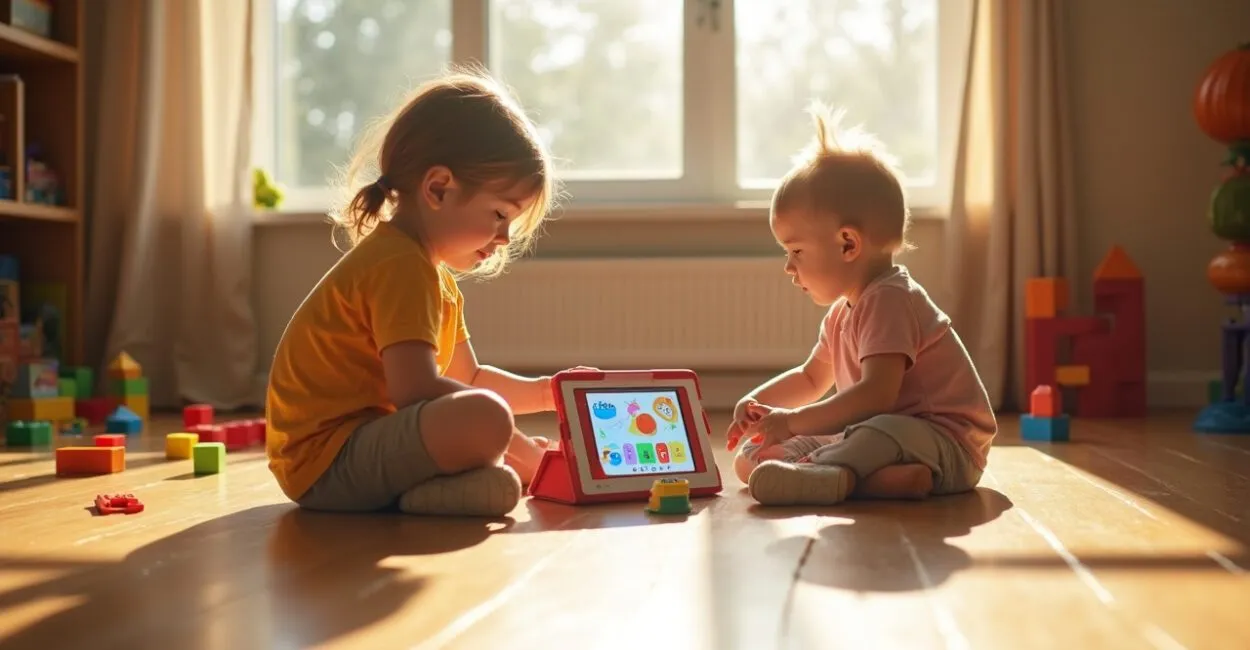
Imagine a classroom where tablets glow with vibrant colors and interactive apps promise magical learning. Sounds like the future, right? But for many parents and educators, that picture also brings a touch of concern: Is technology in early childhood education becoming more of a villain than an ally? The truth is that, as with most things in life, the key is balance.
Integrating digital tools thoughtfully and effectively is the real challenge. The good news is that technology can absolutely become a powerful ally in children’s development.

The debate over technology’s impact on young children is complex. On one hand, it can engage children, personalize instruction, and prepare them for an increasingly digital world. On the other, excessive use can lead to social isolation and hinder motor and cognitive development. But what if the line between beneficial and harmful is thinner than it seems? The key to navigating this landscape is understanding that technology isn’t a magic formula. Used well, it’s a tool that can open up incredible learning opportunities in early childhood education.
The Digital Age in Early Childhood: A Critical Look
There’s no denying it: We live in a digital age. Early childhood education is no exception. The crucial question isn’t *whether* technology belongs in classrooms or homes, but *how* it should be introduced. When we ask how to use technology in early childhood education without overdoing it, we envision electronic devices as tools that support learning—not replacements for human interaction or exploring the real world. The danger lies in letting screens become electronic babysitters or the sole source of entertainment and learning, at the expense of the foundations children need to thrive.
Read also: AI in Early Childhood Education: Transforming How Children Learn
Digital Tools: Allies or Enemies of Child Development?
Technology can be a valuable ally when used with purpose. Well-chosen educational apps, for example, can encourage problem-solving, creativity, and literacy through play. Think of games that teach basic math concepts through visual challenges, or software that lets children create their own stories. But technology becomes the villain when its use goes unchecked. Too much screen time without supervision or a variety of activities can reduce children’s ability to concentrate, disrupt sleep, and even make social interaction more difficult. It’s the educational purpose behind an app that determines whether it’s truly educational or just a passing distraction.

The Essential Foundations of Early Childhood Education: What Technology Can’t Replace

Before we dive into how to use technology without overdoing it, let’s revisit the foundations of early childhood education that no technology, however advanced, can replace. Social interaction with peers and educators, free and exploratory play, time in nature, physical activity, and language development through conversation and storytelling are irreplaceable. In practice, children who spend too much time in front of screens may fall behind in these areas. A study by UNICEF Brazil has warned about the risks of excessive screen use, underscoring the importance of balance.
Read also: Assistive Technology in Education: Making Learning More Inclusive
Using Technology Wisely: Practical Tips for Parents and Educators
When considering how to use technology in early childhood education without overdoing it, the focus should be on thoughtful, limited use. Start by setting a daily screen-time limit, establishing specific times, and balancing screen use with other activities. Choose high-quality educational content, checking its age rating and educational approach. Interaction during screen time is crucial: talk about what your child is seeing, ask questions, and plan activities related to the content. For example, after watching a show about animals, why not visit a zoo or park to see them up close? The key is to use technology as a springboard for real-world experiences, not a substitute for them.
What to Avoid: Common Mistakes When Using Technology with Young Children
To make sure technology is an ally rather than a villain, watch out for common mistakes. One of the most serious is using devices to calm or entertain a child in every situation, turning them into an emotional crutch. Another is allowing unrestricted access to inappropriate content or overly stimulating games that can cause anxiety. Lack of supervision is also a major concern, as it can expose children to dangerous online interactions or misinformation. I’ve often seen children become absorbed in a tablet while their parents try to focus on other tasks, missing valuable opportunities to connect as a family. Remember: technology should complement—not replace—attention and affection.
The Role of Schools and Families in Building a Balanced Digital Future
Integrating technology into early childhood education responsibly is a shared responsibility between schools and families. Schools should have clear policies on device use, focusing on tools that add educational value and encourage collaboration. Educators need training to guide children in using these tools critically and creatively. At home, parents should model healthy digital habits, set clear rules, and, most importantly, take an active part in their children’s digital experiences. Collaboration between these two environments is essential for raising thoughtful, well-balanced digital citizens who are ready for the challenges and opportunities of the 21st century.
The Future Is Now: Preparing Young Children for a Digital World
Technology is here to stay, and ignoring it would do children a disservice. They need to learn to use it thoughtfully, critically, and in moderation. That learning starts with adult role models and an environment where digital tools are seen as ways to broaden horizons, not confine the mind. By balancing screen time with rich, meaningful offline activities, we not only protect children’s development but also empower them to take an active role in an increasingly connected world.
How Much Screen Time Is Right for Young Children?
Setting the right amount of screen time for young children calls for flexibility and attention to each child’s development. Organizations such as the Sociedade Brasileira de Pediatria (Brazilian Society of Pediatrics) recommend clear limits: no screen time for children under 2, and no more than one hour a day for children ages 2 to 5. It’s crucial that this time be high-quality, with educational and interactive content, and that an adult be present to guide the experience. Most importantly, screen time shouldn’t interfere with other essential activities, such as play, social interaction, exercise, and good sleep—all cornerstones of healthy child development.
Which Apps Are Truly Beneficial for Early Childhood Education?
Apps that truly benefit young children encourage logical thinking, creativity, problem-solving, and literacy through play and interaction. Examples include puzzle games, apps for creating stories with characters and settings, games that teach basic math concepts through visual and audio challenges, and tools that let children explore art and music. These apps should have a clear educational purpose, be free of intrusive advertising, and feature an intuitive interface designed for the child’s age group. An adult should always supervise their use.
How Can You Help a Child Stop Using a Device?
Helping a child put down an electronic device takes patience and consistent strategies. First, establish clear rules about when devices can be used, and let your child know those rules in advance. Create a routine for ending screen time, such as giving a five- or ten-minute warning, and offer an appealing alternative right afterward, like a game, a book, or a special snack. Avoid heated arguments and offer positive reinforcement when your child follows the rules. If resistance is especially strong, it may be a sign that screen time is excessive or the content is too engaging, and it’s time to reassess how devices are being used.
Can Technology Harm Children’s Social and Emotional Development?
Yes. Technology can harm children’s social and emotional development if it’s used inappropriately or excessively. Extended screen time can reduce opportunities for face-to-face interaction, which is essential for developing empathy, nonverbal communication, and conflict-resolution skills. In addition, the content children consume can expose them to stressful situations, anxiety, or unrealistic comparisons that affect their self-esteem. Adults should guide children’s technology use, encourage discussion about what they see, and promote a healthy balance between the digital world and real-life interactions.
Why Is Adult Supervision Important When Children Use Technology?
Adult supervision while children use technology is absolutely essential for several reasons. First, it helps keep them safe by preventing access to inappropriate content, malicious links, or interactions with strangers. Second, it allows adults to support learning: they can guide children, encourage them to think about what they’re seeing or learning, and connect digital content to the real world. This interaction also strengthens family bonds and helps children develop critical thinking about what they consume online. Without supervision, technology can become a source of risk and isolation rather than a tool for learning and growth.
Artigos Relacionados
 Entrepreneurship for Young Children: Early Childhood Activities
 Neuroscience in Early Childhood Education: How Children’s Brains Learn and How to Apply This Knowledge to Maximize Learning
 Positive Discipline: The Key to Early Childhood Education
 The Power of Free Play: Exploring Why Play Matters in Early Childhood Education and How to Foster Creativity and Imagination
 Exploring the World Through the Senses: 10 Creative, Safe Sensory Activities to Support Early Childhood Development
 A Guide to Early Childhood Education: Best Practices, Play-Based Activities, and Innovative Approaches to Whole-Child Development
