
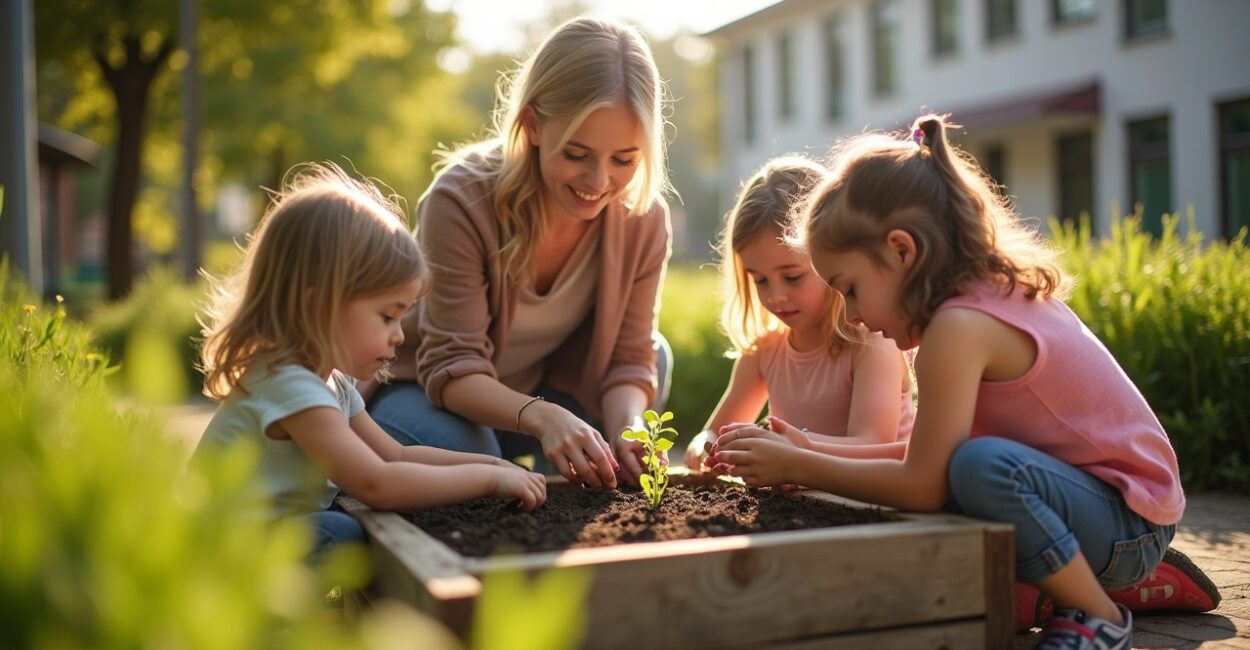
A school garden can start with a few pots, suitable soil, and a short care routine. To learn how to start a garden for young children in early childhood education, choose a safe spot, plant easy-to-follow species, and assign simple tasks to the children, always under adult supervision. Gardening brings together nature observation, language, math, and conversations about nutrition. The size of the garden depends on the school’s space and daily routine; even a planter by a window can help children follow the growth of herbs and leafy greens.
Key Takeaways
- Containers with drainage holes make it possible to grow plants in small courtyards, on balconies, or indoors in a well-lit space.
- Lettuce, scallions, arugula, and radishes are often good choices for beginners, as long as they suit the local climate and planting season.
- Quality soil and well-aged compost help plants grow; soil taken from an unknown location may be contaminated.
- A watering and observation schedule keeps plant care from depending on the children being at school every day.
School Gardens in Early Childhood Education: From Planning to the First Planting
To start a school garden for young children, choose a location and assign responsibilities, select containers with drainage holes, prepare a suitable growing medium, choose plants suited to the climate, and plant with the children under supervision. Then set up a watering and observation routine based on each plant’s needs and the school calendar. A teaching garden is a growing space that is also used to support learning experiences. Children can observe changes, compare leaves, draw what they see, and take part in age-appropriate tasks; adults remain responsible for tools, soil assessment, and food safety.

Start small. Two or three well-maintained planters teach more than a large number of garden beds left without water over a long holiday break.
Space, Containers, Soil, and Supplies for Your School
Check how many hours of sunlight the space gets, whether water is available, and who will care for the garden on weekends and during school breaks. Most vegetables need a few hours of direct sunlight; in heavily shaded areas, you may be limited to more shade-tolerant plants, such as certain herbs, and growth is likely to be slower.
Options for Small Courtyards or Indoor Spaces
Pots, planters, and garden boxes work in small spaces as long as they have holes to drain excess water and are deep enough for the roots. Reused bottles and other materials should only be used if they are clean, sturdy, and free of sharp edges. Avoid containers that have held chemicals.
In a building, look for a bright, well-ventilated window or balcony. Without enough natural light, plants may become weak, so try a few species before expanding the garden. Indoor gardening also requires care to prevent water on the floor, keep walkways clear, and protect access to outlets and equipment.
What to Use in the Garden Bed
Choose a potting mix for vegetables or combine suitable soil with well-aged compost. Compost improves soil structure and provides nutrients, but it does not replace an assessment of each plant’s needs. Fresh manure and materials of unknown origin can contaminate the garden, so avoid them.
To get started, gather containers with drainage holes, potting mix, labeled seeds or seedlings, a small watering can, and child-sized trowels with no sharp points. Adults should handle scissors, larger tools, and any tasks that involve cutting.
What to Plant in Early Childhood Education and When to Start

Choose quick-growing plants or ones that show frequent changes, such as lettuce, arugula, radishes, scallions, and basil. The best choices depend on your region, the season, sunlight, and available space. Check the planting calendar recommended for your area rather than relying on one planting date for all of Brazil.
Plant Why It May Work What to Watch For Radish Germinates and grows in a relatively short time. Needs loose soil for its roots to develop. Lettuce Lets children follow leaf growth and harvest one plant at a time. Intense heat can harm some varieties. Scallions A familiar herb that can regrow after careful harvesting. Needs light and watering without waterlogged soil. Basil Its aroma offers a way to explore the senses and language. Generally prefers plenty of light and does not tolerate waterlogged soil.
Embrapa, Brazil’s agricultural research agency, provides guidance on growing and producing vegetables. Since recommendations vary by climate and cultivar, use local planting information and the seed supplier’s instructions as additional references.
Read also: School Gardens: Simple Planting Activities for Children
Do not give young children small seeds without supervision: they may put them in their mouths or noses. For small-group activities, portion out the seeds and have an adult lead the demonstration.
Planting and Care Routine: Step by Step
- Prepare the space: Check the light, drainage, and foot traffic. Place pots on a stable surface.
- Fill the containers: Use a suitable growing medium without packing it down tightly. Leave space at the top so water does not spill over.
- Plant: Follow the seed packet’s recommended planting depth. For seedlings, keep the base level with the growing medium and water after transplanting.
- Label: Use markers with the plant’s name and, if useful, the planting date. Drawings can help children identify each garden bed.
- Observe and adjust: Check the soil moisture before watering. A dry surface does not always mean the roots need more water.
A simple schedule prevents care from being overlooked. For example, one class checks the soil and waters on Monday, another records changes on Wednesday, and an adult checks the plants before the weekend. How often to water depends on the heat, wind, container, and plant species.
Read also: Rubber Flooring for School Recess: Is It Worth the Investment?
A short, predictable routine keeps plants thriving and makes daily care part of the learning experience.
Set aside about 20 to 30 minutes a week for group activities, in addition to quick checks by an adult, which may need to happen daily during hot weather. This is a general guideline for a small garden; you may need more time if there are many pots, intense heat, or plants that require frequent attention.
Learning Activities in the Garden: Observation, Language, and Nutrition
A garden activity for young children can start with a question they can answer by observing: Which pot is wetter? Which leaf has changed? Where has a new sprout appeared? Children can draw what they see, dictate captions for an adult to write down, and compare changes over several weeks.
- Science: Follow germination, roots, leaves, insects, and plants’ needs for water and light.
- Math: Count seeds, compare sizes, and record how many days have passed since planting.
- Language and art: Name different aromas, make illustrated labels, and tell stories inspired by gardening.
- Nutrition: Identify herbs and vegetables, talk about flavors, and, if the school allows, take part in a safe tasting.
Here’s one example: arugula grows in two pots with different amounts of sun. The class compares leaf sizes and records which pot gets more sunlight. The teacher can help children come up with explanations without giving them a ready-made answer.
The Base Nacional Comum Curricular (Brazil’s National Common Curricular Base), issued by the Ministry of Education, provides guidance for learning experiences in basic education. A garden can connect with early childhood learning domains, as long as activities are suited to the group’s age, interests, and pace.
Safety, Common Problems, and Solutions for Keeping the Garden Going
Gardening with children requires close supervision. Adults should manage tools, check where the growing medium came from, prevent children from putting seeds or soil in their mouths, and make sure they wash their hands after touching soil. Before eating any produce, wash it with potable water and follow the school’s food safety rules.
If children have known allergies, identify the plants in advance and check with their families and school staff. Children should not handle fertilizers, pest control products, or unidentified plants. If insects or signs of disease appear, an adult should identify the problem before taking action.
Yellowing leaves can signal too much water, a lack of nutrients, or other conditions; there is no single cause. If the soil is waterlogged, adjust the watering routine and check the drainage holes. If plants wilt over school breaks or weekends, reduce the number of pots and assign someone to care for them during those periods.
For food handling and hygiene guidance, consult materials from Anvisa, Brazil’s health regulatory agency. Proper cleaning matters, but it cannot make up for unsafe water or contaminated soil.
How to Involve Families and Share What Children Have Learned
Invite families to contribute labeled seedlings, safe containers, or stories about plants they grow at home. Agree in advance on what they can bring: clean materials with no dangerous edges or chemical residue. The school should inspect and prepare any donated items before giving them to children.
A display board with drawings, photos taken with permission, and observation notes can show the process, even when a plant does not thrive. Harvesting a small amount and sharing it with the community can bring the project full circle, as long as the school can safely wash the produce and has permission to offer it.
Choose a small area and plan a first growing cycle with just a few species. Record the planting date and assign someone to check the plants on days when school is closed; this makes it easier to try the idea before expanding the garden.
Frequently Asked Questions About School Gardens
Do You Need to Replace All the Soil After Each Harvest?
Not necessarily. Remove roots and decaying material, check the condition of the growing medium, and add well-aged compost as needed. If there are signs of contamination or a persistent disease, have a responsible adult advise you on how to dispose of the material.
Can a School Garden Thrive Without Direct Sunlight?
It depends on how much light the area gets and which plants you choose. Many vegetables produce little in heavy shade, so try a few shade-tolerant species and see how they do before investing in several containers.
Can Children Taste What They Harvest?
Only with the school’s permission, adult supervision, and proper hygiene procedures. Confirm the plant’s identity, wash the produce with potable water, and account for allergies or dietary restrictions reported by families.
What Should You Do with the Garden During School Breaks?
Arrange for an adult to check on watering, or scale back the garden to plants and containers that can be maintained safely. Do not count on children to water plants when school is closed; make a care plan before planting.
Artigos Relacionados
 Technology for Young Children: Finding the Right Balance
 Neuroscience in Early Childhood Education: How Children’s Brains Learn and How to Apply This Knowledge to Maximize Learning
 Entrepreneurship for Young Children: Early Childhood Activities
 Free Early Childhood Education Courses: Where to Start Today
 Environmental Activities for Early Childhood Education
 Letter Activities in Early Childhood Education
