
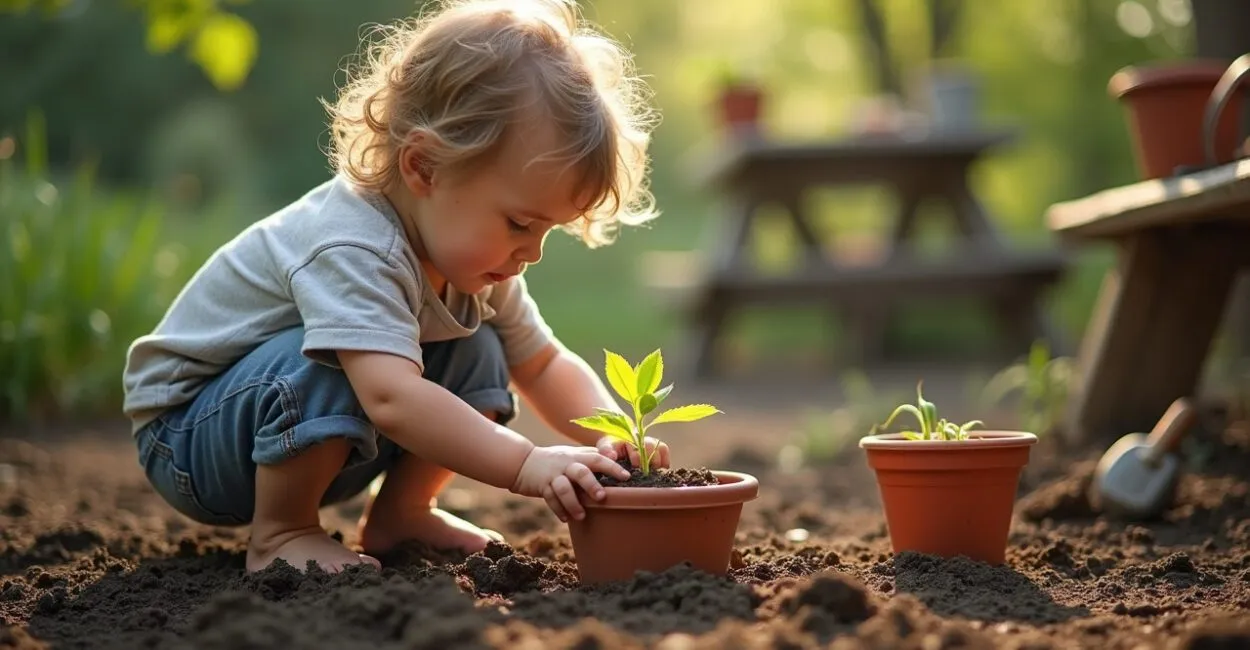
Environmental activities for early childhood education help children get to know nature and practice everyday acts of care through hands-on experiences. Planting a seed, observing an insect without touching it, or reusing a container are simple ideas that can fit into a school or home routine.
The challenge for educators is to turn children’s curiosity into safe, accessible experiences connected to everyday life. The ideas below can be adapted to the space, materials, and needs of each group.

They also support development in language, motor coordination, observation, and social skills.
The essentials
- Environmental activities are more meaningful when children can observe, touch, and care for things with appropriate supervision.
- Creative recycling projects can teach reuse, as long as materials are clean and safe.
- A garden can start with a pot, planter, or reused container; you don’t need a large plot of land.
- Educational games about sorting waste and using water responsibly make these ideas more relevant to everyday life.
- Connecting the topic to art, science, language, and movement encourages a range of experiences instead of limiting it to a single activity.
Why environmental education starts in childhood
During childhood, repeated experiences help shape habits and ways of relating to the environment. When children take part in an achievable task, such as watering a plant or saving paper for reuse, they begin to see how their actions have an impact.
This learning also involves a sense of belonging and responsibility. Caring for a plant, observing a green space, and talking about what happens to waste bring children closer to issues that are part of everyday life.
Adults who set an example help keep these practices going.
Cognitive and emotional impact
Environmental activities can involve attention, patience, language, and coordination. Watching a seed germinate, for example, gives children a chance to observe changes over time and talk about what a plant needs to grow.
The group can document the process with drawings, marks on a calendar, or stories dictated to the educator.
Spending time in natural spaces also gives children opportunities to explore sounds, shapes, scents, and movement. Activities should respect each child’s comfort and never force contact with textures, animals, or environments that may cause distress.
Time in nature during childhood offers opportunities to observe, care, and ask questions. These experiences can encourage curiosity and consideration for other forms of life.
Creative recycling projects that work
Reuse projects make it easier to see how a material can have another purpose before it is thrown away. With young children, choose a simple idea, introduce the material, and talk about how it was used before and what it can be used for now.
Plastic bottles: from trash to treasure
Clean PET bottles can become planters, containers for a planting activity, or pieces for a bowling game. Before you begin, an adult should remove caps and sharp edges and check that each bottle is in good condition. To make a planter, an adult prepares the opening and drainage holes; children can help add soil, seeds, and water. Decide in advance which materials families may bring from home, and avoid asking them to make purchases. If the school doesn’t have enough bottles, an available reusable container can be used to demonstrate the process. Shakers filled with grains must be securely sealed by an adult and used under supervision, since small pieces can pose a choking hazard.
Cardboard, newspapers, and old magazines
Cardboard boxes can become houses, play scenes, and structures. Clean newspapers and magazines can be used for collages, displays, and simple activities involving tearing, folding, and comparing sizes.
Provide age-appropriate scissors only with supervision; younger children can tear the paper by hand.
Before the activity, sort the materials and set aside a place where creations can dry or be stored. Talk about the difference between reusing an object and sending it for recycling, without suggesting that every material can be recycled everywhere.
School gardens: the most effective living lab

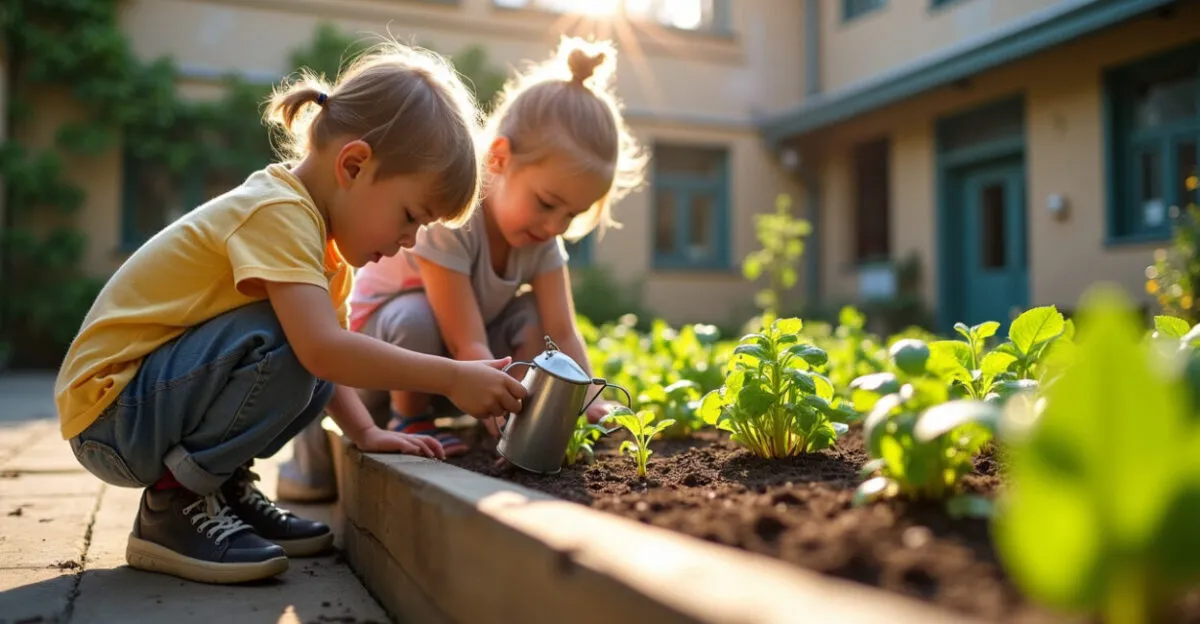
A school garden can be grown in pots, planters, or repurposed containers, as long as they have drainage and are placed in a suitable spot. Children can take part in planting, watering, watching plants grow, and harvesting when conditions allow. This cycle offers a chance to talk about where food comes from and what plants need. To get started, choose a stable container, use suitable soil, and make sure the location gets the light the chosen plant needs. Decide who will water and how often, checking soil moisture instead of following the same rule for every plant. Don’t use chemicals during the activity, and wash hands after handling soil.
Choosing plants for early childhood education
Beans, radishes, lettuce, arugula, parsley, and some herbs may be good options to observe, depending on the climate, availability, and conditions of the space. Sprouting a bean on damp cotton lets children observe the first changes, but the plant will need suitable conditions to keep growing.
Check plant identification and avoid toxic or thorny plants, as well as those that can cause irritation.
Introduce one or two species at a time. This gives the group a chance to notice differences in leaves, seeds, and growth rates.
If a seed doesn’t sprout, explore factors such as water, light, seed quality, and wait time with the children, without suggesting that they did something wrong.
Responsibility and routine
Small rotating tasks help children participate without leaving all the care to one person. One child can check the soil, another can look for changes in the leaves, and another can draw a record.
The adult supervises watering and adapts the task to each participant’s skills.
Use a simple chart, authorized photos, or drawings to track what happened each week. If the plant isn’t doing well, observations can prompt questions about too much or too little water, light, and other care needs.
The routine should be predictable but flexible enough to account for the weather and the conditions of the space.
A garden works best when tasks are clear and children can follow changes over time. Pots and planters can help establish this routine, too.
Educational games about sorting waste and conservation
Sorting games help children notice differences between materials and talk about what happens to waste. Use clean objects, pictures, or cards; don’t bring dirty or sharp trash into the activity.
Explain that collection rules can vary by municipality and that sorting items in the classroom is a learning exercise.
Waste-sorting game
Prepare cards showing paper, metal, plastic, and organic waste, along with containers labeled with words or pictures. Show one card at a time, ask the children to look at the material, and invite them to place it in the matching container. At the end, talk about the items that were confusing.
Instead of turning the activity into a competition, let children explain their choices and learn from one another. Packaging made from more than one material can be hard to sort; use it to explain that some objects require local guidance or an adult’s decision.
Water conservation game
Use a pitcher and spoons to represent water use in everyday situations. The group can discuss actions that help prevent waste, such as turning off the faucet while soaping up hands. Use a small amount of water, and don’t leave faucets running to demonstrate a leak.
Another option is to show cards with everyday activities, such as brushing your teeth or watering a plant, and ask the children to suggest a way to conserve water. Don’t treat water as a reward for getting answers right. The goal is to talk about choices and consider how small actions can be practiced at home and at school.
Observing insects and local biodiversity
Observing animals in their natural environment opens up conversations about living things and the relationships between them. Tell children to look without capturing, touching, or harming animals. If an insect appears in the classroom, keep your distance and ask an adult to handle the situation safely.
Homemade insect trap
Instead of setting traps that capture animals, invite children to observe plants, leaves, and flowers where insects may appear naturally. The group can choose a safe spot in the schoolyard, look for a few minutes, and draw what they see. If there are no insects, observe the shapes of leaves, marks in the soil, or other signs of the environment.
Don’t put fruit in closed containers or leave materials that attract insects in high-traffic areas. The goal is to notice animals in their natural habitats and let them go on their way. Children can compare observations from different days without touching living things.
Observing nature in the garden
Take the group to a garden, park, or planting bed and agree on rules before you go: walk calmly, observe without capturing, and don’t put hands into holes or unfamiliar plants. Magnifying glasses can be used to look closely while keeping a safe distance from animals. Children who prefer can observe from farther away or draw what they see.
Ask open-ended questions: “What do you notice?”, “Where is the animal?”, and “What does it seem to be doing?” There’s no need to identify every species. The conversation can highlight that animals need space and that observation should end without disturbing their food or shelter.
Observing animals in their environment can teach attentiveness and respect. The group can record what they notice without capturing or handling living things.
Arts and crafts with natural materials
Fallen leaves, large seeds, and branches found on the ground can inspire art projects, as long as they’re collected from safe places and nothing is taken from living plants. Before starting, check that the materials are clean and don’t pose a risk of allergies, splinters, or ingestion.
Collages and mosaics with natural materials
Invite children to create pictures with fallen leaves and other materials that have been selected in advance. They can arrange the materials on a sheet of paper before gluing them down, compare shapes, and create patterns. For children who don’t want to touch the materials directly, offer large tweezers, gloves, or printed pictures.
Don’t use small seeds with children who still put objects in their mouths. Instead, use paper cutouts or large pieces that are appropriate for their age. At the end, talk about what was picked up from the ground and what was left on the plant.
Natural paints
Some foods, such as beets and carrots, can be used for color experiments, but the intensity and staying power of the pigments vary. An adult prepares and tests the mixture while children observe, compare colors, and paint on paper. Identify the ingredients and consider allergies and dietary restrictions before offering the activity.
Don’t use unfamiliar plants or potentially toxic materials. Protect tables and clothing, and explain that these mixtures are for art, not for eating. Comparing natural pigments with classroom paints can lead to a broader discussion about materials and their uses.
Building with branches and stones
Fallen branches and large stones can be arranged on the ground to create paths, patterns, or scenes. Set clear limits: no throwing stones, climbing on structures, or removing materials from protected areas. Children with limited mobility can help choose where things go, point out shapes, or use lightweight pieces on a table.
Read also: Environmental Education in Elementary School: Hands-On Activities
If natural materials aren’t available, use blocks, craft sticks, or paper cutouts. The activity still gives children a chance to plan, compare sizes, and create together.
Sensory activities and tactile exploration
Sensory activities invite children to explore textures, sounds, and scents at their own pace. Introduce a few materials at a time and let each child choose how to participate, including observing without touching. Check for possible allergies, ingestion risks, and support needs in advance.
Themed sensory bins
Set up a tray with large leaves, smooth stones, clean sand, or soil, using pieces that can’t be swallowed. Supervise the activity and have children wash their hands afterward. Instead of mixing lots of items, start with two or three and invite children to describe what they notice: rough, smooth, light, or heavy.
If certain textures are uncomfortable, offer tools such as spoons, paintbrushes, or gloves. For children who can’t explore through touch, describe the materials, use high-contrast images, or offer safe sounds and scents according to their preferences.
Nature bathing
A short walk in the schoolyard or a green space can be an observation activity that doesn’t involve collecting anything. Invite the group to listen to sounds, notice the wind, and observe colors, while respecting children who prefer a quieter area. Before heading out, agree on boundaries, supervision, and an accessible route.
This experience can be adapted to a window, porch, or classroom: observe the sky, listen to outdoor sounds, or watch the light on a plant. Connecting with the environment doesn’t require a long visit or an identical activity for every child.
The World Health Organization discusses the effects of exposure to green spaces on health in its report Urban green spaces and health. The publication provides context about green spaces and health; it doesn’t replace an assessment of each child’s needs.
Curricular integration: connecting the environment to other subjects
Environmental activities can connect to different areas of everyday learning. A single observation of plants can lead to questions, drawings, counting, and movement, without requiring every child to produce the same result.
Science and exploration
Germination, decomposition, the water cycle, and changes in the weather can be explored through simple observations. To track a seed, for example, the group can compare what they see on different days and draw the changes. The educator can help distinguish between what was observed and what is still a hypothesis.
Language and storytelling
Invite children to make up stories about a leaf, a tree, or an animal they observed. They can tell stories aloud, draw scenes, or dictate ideas for an adult to write down. Questions such as “What happened next?” help organize the sequence and build vocabulary.
Practical math
Count leaves, compare plant sizes, or organize observations by day. Use simple units, such as blocks or craft sticks, and explain that comparisons need to be made the same way each time. Picture graphs can help the group visualize changes without requiring formal calculations.
Physical education and movement
Observation walks, games that involve imitating animal movements, and paths between natural elements can bring movement and environmental exploration together. Adapt distances, pace, and materials to children’s abilities. Children who can’t follow a path can help choose directions, observe, or suggest movements.
Visual arts
Observational drawing, collages, and leaf prints expand children’s visual repertoire. Invite them to notice lines, shapes, and colors before creating. Offer a variety of materials and alternatives that don’t require direct use of natural objects.
When a topic comes up in different experiences, children can make connections between the environment, language, art, movement, and investigation.
Engaging families and extending learning at home
Communication with families helps continue conversations that begin at school. Participation should be accessible and voluntary: no one needs to buy materials, start a garden, or complete assignments for their child to take part in the activities.
Weekly activities to try at home
Suggest observations that don’t require purchases or sending in materials, such as noticing a plant on the way home or talking about when the family uses water. Children can share what they noticed by talking, drawing, or telling the educator about it, without having to take a photo.
Family gardening
If they’re interested and able, families can grow a plant in a container they already have at home. This is optional and can be replaced with observing a tree, a porch plant, or a seedling in a community space. Care tasks should take into account each family’s available time and resources.
Clear communication with families
Explain what the group is learning and which materials will be used. If you ask for containers or other items, make it clear that they’re optional and should be clean and free of sharp edges. Providing an alternative at school ensures that participation doesn’t depend on each family’s circumstances.
Planning activities and aligning them with the BNCC
When planning environmental activities for early childhood education, decide what children will be able to observe, try, or communicate, and choose an activity that suits the group. Brazil’s Base Nacional Comum Curricular (BNCC), its national curriculum framework, organizes this stage around learning rights and fields of experience; consult the official document to verify objectives before claiming a specific alignment.
An experience can connect to more than one field, depending on what happens in practice. For example, when planting a seed, children can observe changes, talk about what they see, take turns caring for the plant, and draw its growth. Describe the connection to the BNCC based on these real actions, without assigning codes or objectives that haven’t been verified.
Before the activity, check the space, timing, materials, safety, and ways to participate. Afterward, record children’s comments, choices, questions, and strategies. You can consult the Base Nacional Comum Curricular on the official website to support your planning.
Simple environmental activities to try with your group
Short activities about water, pollution, and planting can be organized with common materials and adult supervision. Choose age ranges that suit the group and the materials available; for every activity, observation and discussion matter more than getting a perfect result.
Activity Suggested age Materials Goal Water cycle in a sealed container Ages 4–5, with adult guidance Clear container with a lid, a small amount of water, and a bright spot Observe condensation and talk about changes in water Observing pollution Ages 3–5, with supervision Pictures or clean, safe waste; gloves for the adult Identify waste where it doesn’t belong and think about shared responsibility Planting beans Ages 2–5, with adaptations Container, cotton or soil, beans, and water Observe germination and care for a plant
Water cycle: Add a small amount of water to a clear container and seal it tightly; an adult should place it in a bright spot, out of reach of young children. Over the following days, look for droplets that may form on the sides. Talk about what changed and explain that this model helps show part of the cycle but doesn’t represent every process that occurs in nature.
Pollution and caring for shared spaces: Use pictures of a clean environment and one with litter, or observe a safe location from a distance. Ask what the children notice and how the space could be cared for. If there’s a cleanup, only adults should handle waste; children can help sort clean materials that have been prepared in advance.
Planting: Place a bean on damp cotton or plant it in soil in a container with drainage. Children can monitor the moisture and draw what they observe on different days. Don’t let the cotton get waterlogged, and don’t allow young children to put seeds in their mouths.
School environmental calendar throughout the year
Environmental awareness days can help organize discussions and projects, as long as the topic remains part of learning throughout the rest of the year. Choose a few dates that make sense locally and use them to launch activities that last longer than a day.
For example, the group could begin observing plants on a nature-related awareness day and continue tracking their growth for several weeks. At another point in the year, they could talk about water and observe how it’s used at school. Check the official calendar before sharing dates, and don’t present an observance as a requirement for every school.
A simple plan can include the topic, the question guiding the investigation, the available materials, and a way to record what the children observed. Leave room to revisit topics that come up naturally, such as rain, heat, animals found in the schoolyard, or litter spotted during a walk.
Next steps: putting these ideas into practice
To get started, choose an activity that fits the time, space, and materials available. Observing leaves, planting in a pot, or playing a picture-based game can all start a conversation about the environment and care. Try one idea at a time and adjust the steps based on the group’s interest and responses.
Families can start with simple observations, too, such as noticing a tree along the way or keeping an eye on a plant they already have at home. Those without access to outdoor space can look at the sky through a window, use pictures, or watch a seedling in a container. Adults can offer choices so each child can participate in a way that feels comfortable.
Record children’s questions, discoveries, and changing interests, and revisit these observations at other times. This gives activities continuity without relying on expensive materials or a specific space.
Frequently asked questions
What’s the ideal age to start environmental activities with children?
There’s no single age to start. Young children can observe plants and explore safe materials with an adult, while activities with more steps, such as sorting games or tracking plant growth, can be adapted to the group’s understanding and skills. Supervision and age-appropriate materials are important at every age.
Do I need a large space to garden with children?
No. A pot, planter, or container with drainage can be used to observe a plant’s growth. Choose a species suited to the light and climate, and organize short care tasks. If there’s no space for planting, the group can observe an existing plant or track germination in a container.
What if the school doesn’t have resources for environmental activities?
Start with activities that use observation, drawing, and materials already on hand. Paper with one blank side can be used for drawing or writing; fallen leaves can inspire a conversation or collage if they’re safe. Any materials brought by families should be optional, clean, and age-appropriate. The school can also use pictures instead of objects when handling them isn’t practical.
Can children with disabilities take part in environmental activities?
Yes, with adaptations that take each child’s needs, preferences, and ways of communicating into account. You can offer accessible materials, assistive tools, visual instructions, spoken descriptions, breaks, and alternatives for children who don’t want to touch certain textures. Plan participation with the school team and, when needed, the family and the professionals who support the child.
How can I tell whether the activities are working educationally?
Notice whether children ask questions, recognize changes, explain their choices, or bring up something they learned on their own. Drawings, recorded comments, and educator observations can help track this process. Don’t expect every child to show learning in the same way; use what you observe to adjust the activity and offer new opportunities to participate.
Artigos Relacionados
 Letter Activities in Early Childhood Education
 Activities for Early Childhood Education: Practical Ideas
 Activities About Jobs in Early Childhood Education
 Mother’s Day in Early Childhood Education: 7 Memorable Activities
 Exploring the World Through the Senses: 10 Creative, Safe Sensory Activities to Support Early Childhood Development
 A Guide to Early Childhood Education: Best Practices, Play-Based Activities, and Innovative Approaches to Whole-Child Development
