
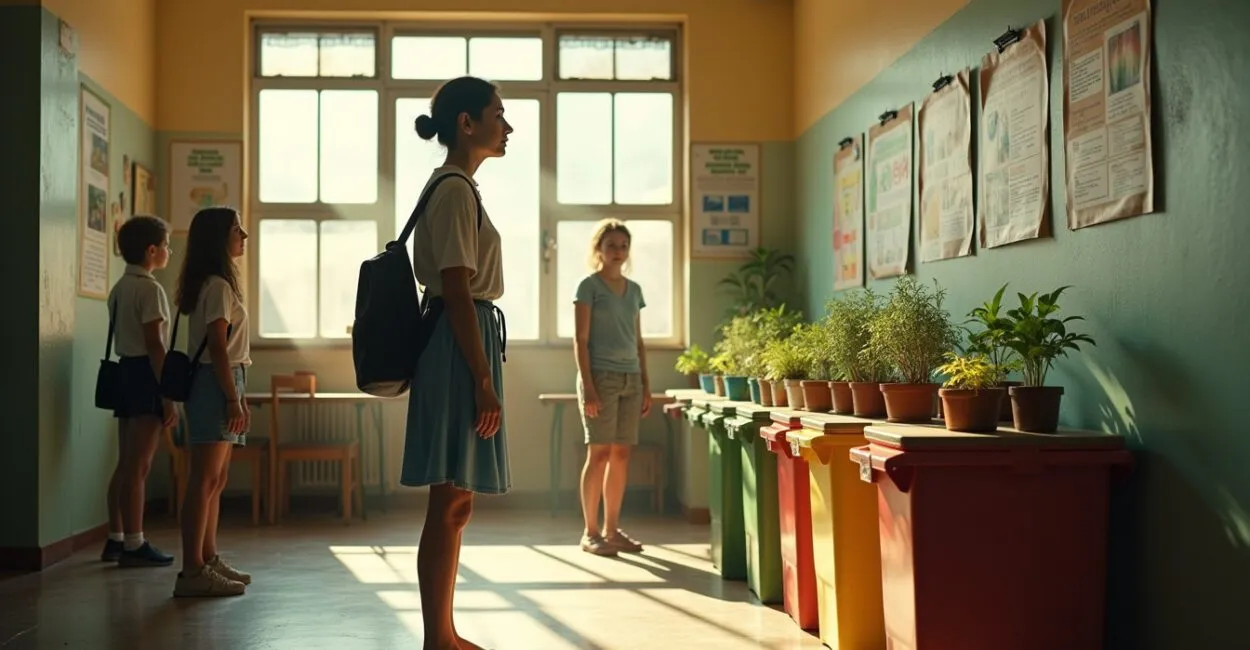
Common mistakes in school environmental education happen when activities are isolated, daily routines contradict what the school teaches, or students have no say in decisions. To strengthen learning, schools can start with problems they can observe on campus and work with students to track possible changes. An initiative might begin with a concrete question: Where is water, food, or materials being wasted? Investigating the issue helps connect academic content, habits, and community conditions without placing all the responsibility for environmental problems on students.
1. When an Activity Becomes a Show and Loses Its Meaning
Planting seedlings, building models, and making recyclable toys can be valuable experiences when they’re part of a learning sequence. The activity becomes meaningful when students investigate a problem, connect causes and consequences, and follow what happens next. Environmental education explores the relationships among society, consumption, place, and nature. For example, a class might look at where the school’s water comes from, when it’s being wasted, and what steps the school community can take.

To keep a project from becoming just a presentation, plan three steps: define a real question, take action based on what students investigated, and set aside time to assess the results. That way, the final product shares the learning process instead of replacing it.
2. The Mistake of Saying the Right Things but Changing Little in Daily Routines
When a school teaches students to save paper but prints too many materials, or talks about proper waste disposal without providing a way to sort trash, the inconsistency undermines the message. Before asking people to adopt new behaviors, staff can look at which school practices support or hinder the educational goal. Students notice whether the school practices what it teaches. A leaky faucet, for example, can become a topic for investigation: Who can report the problem? How can a repair be requested? What habits can help prevent waste in the meantime?
The official Ministry of Education website is an institutional resource. When planning, staff can also consider how the topic connects to the school’s educational plan and daily practices.
3. Too Much Blame Pushes People Away Instead of Engaging Them

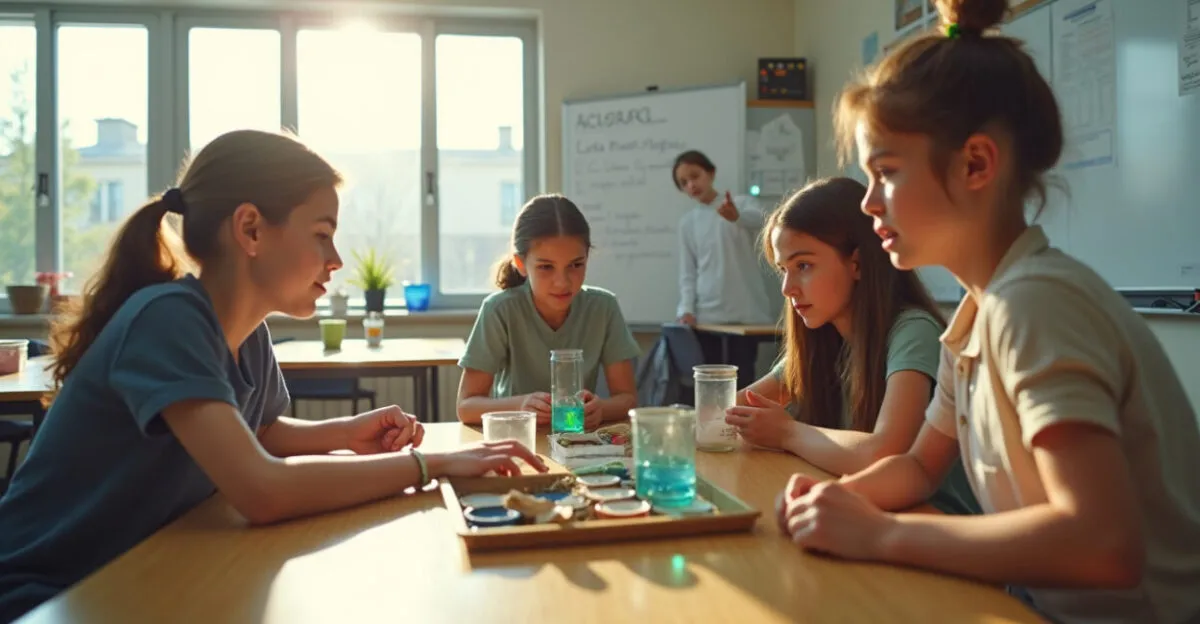
Messages that hold children and teens responsible for large-scale environmental problems can make them feel guilty or disengaged. It’s more productive to explore how individual choices, available resources, and collective decisions are connected, and to identify possible actions in each context. Everyday habits such as leaving the faucet running, wasting food, disposing of trash in the wrong places, using disposable items unnecessarily, or leaving lights on in empty rooms can be examined without blaming anyone. The class can record when and why these things happen, discuss alternatives, and agree on a change they can track.
For example, if there’s leftover food at lunch, students can note which days it happens and talk with the staff responsible for meals. The goal is to understand the problem and suggest practical changes without singling out or embarrassing classmates.
4. When the School Ignores the Community’s Context
A project needs to account for the local area, students’ ages, available resources, and community knowledge. A composting program may work where there’s enough space, organic waste, and people available to maintain it. At another school, investigating water use or waste disposal may be more practical.
Read also: School Recycling: An Effective Program for Institutions
This kind of adaptation also matters for rural schools. Being close to farmland, waterways, or resource-extraction activities can help shape project topics, but it doesn’t eliminate challenges such as long distances, limited access to materials, or community-specific schedules. Involving families and local workers helps create projects that reflect local realities without assuming that every rural school faces the same conditions.
Common barriers include a lack of time for joint planning, staff turnover, limited maintenance support, and difficulty integrating different subjects. A team can start with a small-scale activity, assign responsibilities, incorporate the investigation into the curriculum, and agree on how to track progress. UNESCO emphasizes the importance of integrating sustainability into learning in practical, relevant ways, as outlined in its education for sustainable development agenda.
5. What Gets Lost When There’s No Follow-Through
When the topic comes up only on special awareness days, students may see it as a one-time activity and miss how it relates to everyday decisions. A simple sequence—observe, act, and review the results—makes it possible to revisit the subject without relying on large events. Continuity doesn’t require a new project every week. The class can track one part of its routine over time, share what students observed, and discuss whether the solution worked.
- Review a routine each week, such as waste disposal or material use.
- Connect the investigation to subjects such as math, science, and geography.
- Share with the class what has changed and what challenges remain.
- Record the results to guide next steps without promising changes the school can’t guarantee.
6. The Mistake of Not Giving Students a Voice
When decisions are already made, student participation tends to stop at carrying out assigned tasks. Students can contribute from the moment a problem is selected through the evaluation of possible solutions, with responsibilities suited to their age and the school’s circumstances. A class might measure paper waste, interview staff about waste sorting, or compare different ways to organize supplies. Then students can present suggestions to school staff and help check which ones were adopted and why.
This kind of participation supports critical education: students observe the world around them, ask questions, and develop ideas with others. Autonomy grows when students have the opportunity to make arguments and decisions, without placing on children the burden of solving problems that depend on adults or institutional resources.
7. The Simplest Way to Tell Whether the Message Is Getting Through
To evaluate an activity, look at whether students can explain the problem, take part in decisions, and identify what has changed in their routine. Assessment should also consider obstacles: a change may not happen because the school lacks the necessary infrastructure, even if the class has learned about the topic. In a project about disposable cups, for example, the school can check whether students know the alternatives, whether those alternatives are feasible, and whether staff were able to adjust procedures. These records help distinguish what depends on learning from what requires an administrative decision.
Simple indicators might include participation in activities, observations recorded by the class, and verifiable changes to a routine. Comparing these over the course of a project provides a more useful picture than judging only the quality of posters or presentations.
Principles of Environmental Education and Critical Education
School environmental education can bring together an understanding of the relationship between society and nature, collective participation, shared responsibility, and attention to local context. These principles are reflected in how students investigate problems, consider different points of view, and track the consequences of decisions.
Drawing on Paulo Freire’s ideas, teaching can start with students’ lived experiences and value dialogue and the development of autonomy. In environmental education, this means making room for students to ask questions about their community, discuss causes, and suggest actions instead of receiving ready-made answers or being blamed.
Frequently Asked Questions
1. What’s the most common mistake in school environmental education?
A common mistake is treating the topic as a one-time event with no connection to the curriculum or school routines. One-off activities can start a conversation, but students need continued opportunities to connect what they’re learning to real situations.
2. How can we keep a project from becoming mere decoration?
Choose a problem from the school’s daily routine, involve students in investigating it, and agree on an action that can be tracked. Posters and displays can share the process, but they should be tied to decisions and practices that can be verified.
3. Does environmental education work with young children?
Yes. Young children can learn through hands-on experiences, repetition, and role modeling. Caring for a garden, observing water use, or sorting materials are age-appropriate activities when paired with a simple conversation about what they’re doing and why.
4. Is it wrong to use campaigns and posters?
No. Campaigns and posters can share information and remind people of agreements, as long as they aren’t the only strategy. They’re more effective when they communicate a real action and show how the school community can take part.
5. How can we tell if school environmental education is working?
Look at whether students understand the problem, take part in decisions, and can identify changes or obstacles. Consider the school’s resources and circumstances, too: learning can progress even when a solution depends on resources or decisions outside the class’s control.
6. What are the pillars of environmental education?
School programs can be grounded in understanding the relationship between society and nature, participation, shared responsibility, and connection to local realities. These principles guide investigation and action; they don’t have to be treated as one fixed list of pillars.
7. What does Paulo Freire contribute to environmental education?
Ideas associated with Paulo Freire’s critical approach to education help emphasize dialogue, understanding the world around us, and student autonomy. In practice, this can mean starting with problems students have noticed, discussing their causes, and developing proposals together instead of imposing ready-made answers.
Artigos Relacionados
 Environmental Education in Elementary School: Activities That Work
 National Environmental Education Day: 5 School Actions That Work
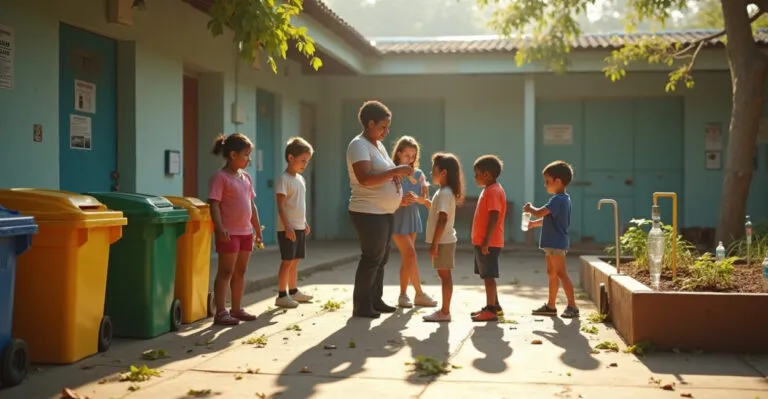 Environmental Education in Elementary School: Hands-On Activities
 Common Low-Cost Solar Panel Mistakes: Nine Failures That Cut Your Savings and How to Avoid Them Now
 5 Teaching Methods That Work for Financial Education
 7 Common Startup Mistakes That Can Shut You Down
