
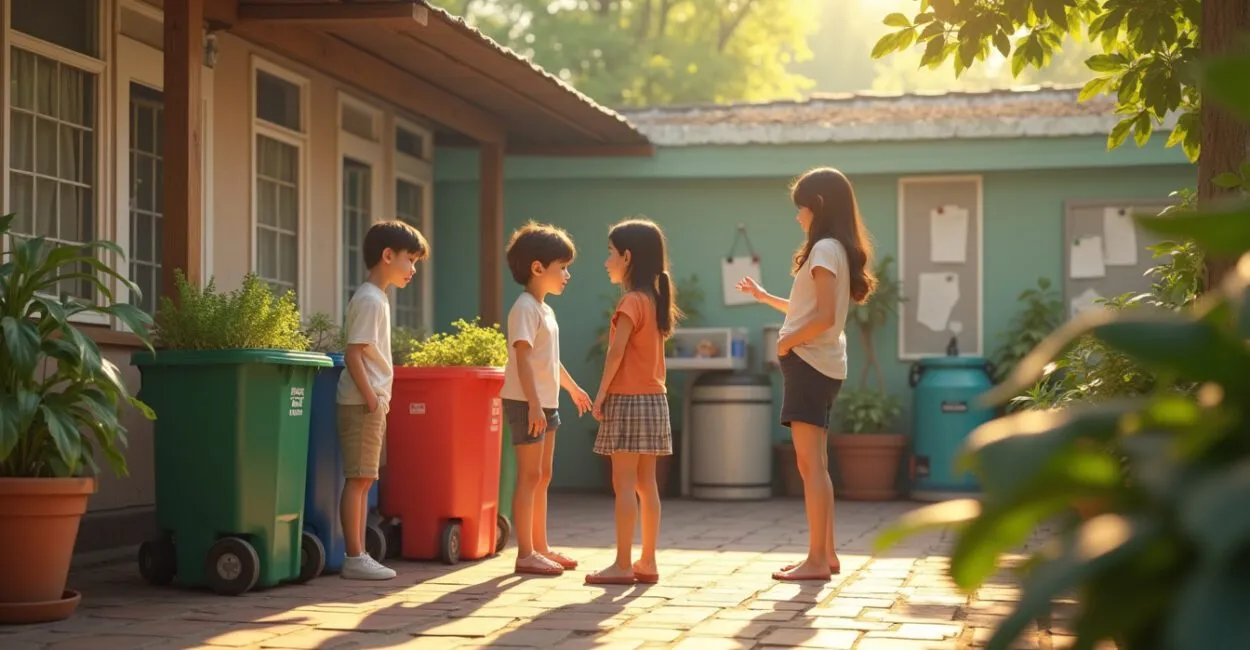
What helps a school move beyond celebrating National Environmental Education Day in Schools and put it into practice?
In most places, the day means a poster in the hallway, a discussion circle, and a photo for social media. It works for visibility. It doesn’t change habits.

There’s a smarter approach: small, low-cost, repeatable actions—and a few simple ways to measure engagement and see whether the school has really made progress.
Why National Environmental Education Day in Schools So Often Falls Short
When environmental education becomes a one-day event, it loses what matters most: continuity. Technically, environmental education means building values, knowledge, skills, and attitudes that support the conservation of the environment. In other words, it’s not enough to talk about trash; students need routines that reduce waste, help them observe their surroundings, and encourage better decisions.
On National Environmental Education Day in Schools, the most common mistake is putting together a polished program and dropping it all the following Monday. Anyone who works in this field knows that real change happens when students see results: a new sign on a trash can, a well-tended garden bed, less food waste in the cafeteria. Small. Visible. Repeated.
One fact can help bring the conversation back to the realities of school life: according to IBGE, Brazil’s national statistics agency, Brazilians live with increasingly dense cities, more waste, and greater pressure on infrastructure. In other words, environmental education isn’t just window dressing; it prepares students for urban life today.
5 Actions That Work Without a Big Budget
If you want to get started now, choose actions that work in any school. You don’t need a lab or an elaborate project. You need a clear plan.
- Track waste: Have students monitor water, energy, and trash use for a day.
- Sort waste together: Do a simple sort of recyclables and compostable materials.
- Start a low-cost garden: Use plastic bottles, boxes, tires, and locally available seeds.
- Habit reminders: Put short reminders near faucets, trash cans, and light switches.
- Set a class challenge: See who can reduce waste or paper use the most in a week.
The key is to keep it manageable. Schools are more successful when they do a little, then do it again. On National Environmental Education Day in Schools, one simple action is worth more than five ideas that end with the presentation.
Worth remembering: the best sustainability lesson is the one that changes behavior after the bell rings.
What Really Engages Students: Visible, Short, and Built Around Friendly Competition

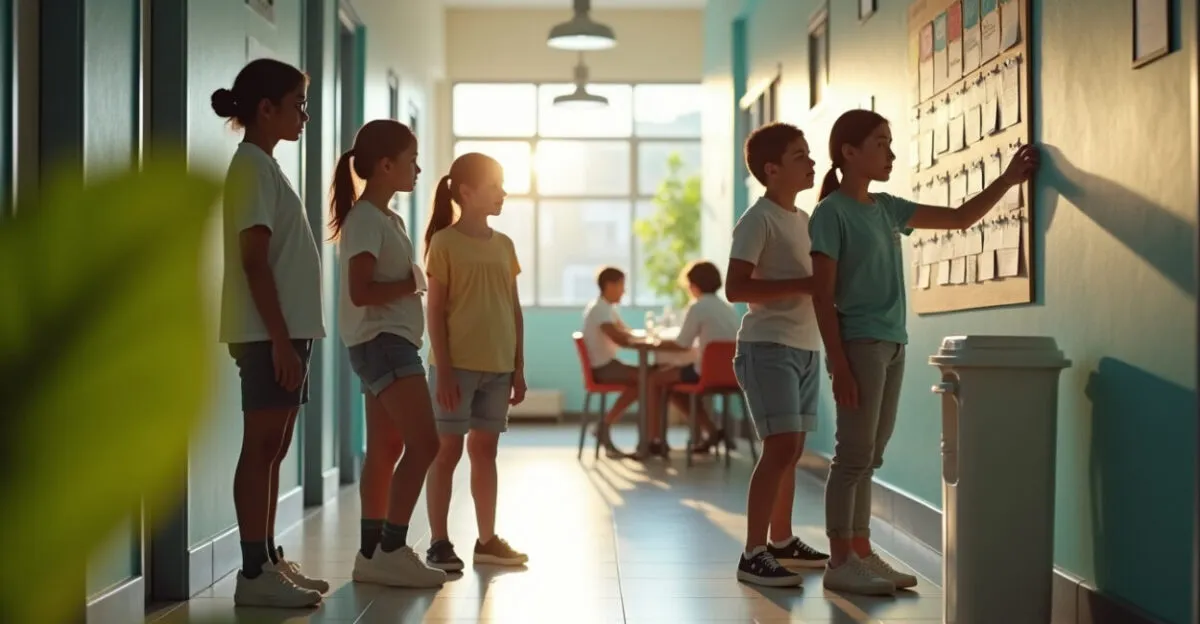
Students aren’t motivated by speeches alone. They respond to challenges, a sense of belonging, and visible results. In practice, that means turning environmental issues into something they can see in 10 minutes.
Here’s a realistic example: one class tracks how many sheets of paper are wasted in a week, then sets a goal for the next one. Another class monitors water waste during recess. When the numbers go down, motivation goes up. School stops feeling like a lecture and starts feeling like a team effort.
Read also: School-Community Partnerships: Real-World Environmental Actions
That’s how National Environmental Education Day in Schools gains momentum: with short-term goals, a simple scoreboard, and public recognition. There’s no need for an expensive prize. A progress board can be enough to get things moving.
School Engagement Works Better with Community Support
If families aren’t part of the conversation, the school is working alone. And environmental education gets tiring fast when it’s done in isolation. So invite the community to take on a concrete task: bring used cooking oil to a collection site, sort recyclables at home, or help with the school garden.
Read also: Environmental Education Projects: 7 Ideas for National Day
When the school changes a habit and families follow suit, the day stops being a campaign and becomes part of the culture.
In recent weeks, this approach has become more common in low-cost projects: fewer lectures, more hands-on activities. National Environmental Education Day in Schools works best when the neighborhood sees real value in it. That includes local businesses, cafeteria staff, custodians, and community groups.
To build a credible program, consult materials from Brazil’s Ministry of the Environment and Climate Change and guidance on environmental education from the Ministry of Education (MEC). These resources can help keep the project aligned with public policy, not just good intentions.
How to Tell Whether the Project Is Making a Difference
Without tracking results, everyone assumes things went well. With tracking, you find out what actually worked. And it doesn’t have to be complicated.
- Participation: How many students, classes, and families took part?
- Waste prevented: Less paper, less plastic, less trash.
- New habits: Turning off faucets, sorting waste, reusing materials.
- Follow-through: Did the project last 30 days?
This is what separates a nice-looking activity from a useful one. On National Environmental Education Day in Schools, the most honest measure is sometimes the simplest: What kept happening after the event?
The Common Time-Waster: Trying to Do Everything at Once
There’s a classic temptation: the school tries to tackle water, trash, gardening, recycling, and climate awareness all in one morning. The result is fatigue, distraction, and little that students remember.
A short story sums it up: one school planned a huge program with posters, a workshop, a lecture, and a presentation. It looked great. But the staff realized that no one knew which behavior should change first. The next year, the school chose just one goal: reduce trash during recess. The difference was dramatic. Less confusion. More participation. More meaningful conversation.
Not every approach works the same way everywhere—it depends on the students’ ages, the school’s facilities, and staff support. But one rule is safe for almost any school: start small enough to finish strong.
How to Make National Environmental Education Day in Schools Part of the Routine
The best sign of success isn’t a photo or a certificate. It’s when the day becomes the starting point for a simple calendar: paper month, water month, garden month, reuse month.
In the end, the school doesn’t need to prove that it “put on an event.” It needs to show that it built a habit. You can see that in the hallways, the trash cans, the electric bill, how the grounds are cared for, and what children talk about at home.
If a school teaches students to care for what others overlook, it’s doing more than educating students: it’s building a culture.
Frequently Asked Questions About National Environmental Education Day in Schools
What’s the Best Activity to Start with on a Tight Budget?
The most effective activity is usually the one that shows results quickly. Sorting waste, reducing paper use, and tracking water waste are all great starting points. They require few supplies, involve multiple classes, and make it possible to measure changes within days. On National Environmental Education Day in Schools, these activities help take learning out of theory and make it part of the routine.
Do We Need a Garden to Teach Environmental Education?
No. A garden is great, but it isn’t required. If the school doesn’t have the space or staff to care for plants, try simple composting, recycling, water conservation, or reuse campaigns. The important thing is to connect the activity to real behavior, not just hallway decorations.
How Can We Engage Students Who Aren’t Interested in the Topic?
Show them a concrete impact. Many students connect with a challenge, friendly competition, or measurable results. Goal boards, waste-reduction scoreboards, and group activities often work better than a long lecture. On National Environmental Education Day in Schools, the topic gains momentum when it feels less abstract.
How Can We Involve Families Without Overburdening Them?
Ask for simple, manageable actions: send in clean recyclables, reduce waste at home, save used cooking oil, or join a short volunteer event. Short requests work better than long lists. When the school asks for less but communicates clearly, participation tends to increase—and the community can see that its involvement has real value.
How Can We Tell Whether the Activity Worked?
Look at three things: participation, follow-through, and changes in habits. If lots of people participated but no one kept up the practice afterward, the project was interesting but short-lived. If only a few people took part but the routine changed, that’s a sign of progress. On National Environmental Education Day in Schools, the best measure is simple: did the behavior last beyond the initial enthusiasm?
Artigos Relacionados
 Environmental Education in Elementary School: Activities That Work
 5 Teaching Methods That Work for Financial Education
 Environmental Education in Elementary School: Hands-On Activities
 5 Creative Education Methods That Work
 School–Community Partnerships: Real-World Environmental Action
 Everyday Sustainability: 9 Simple Changes That Work
