
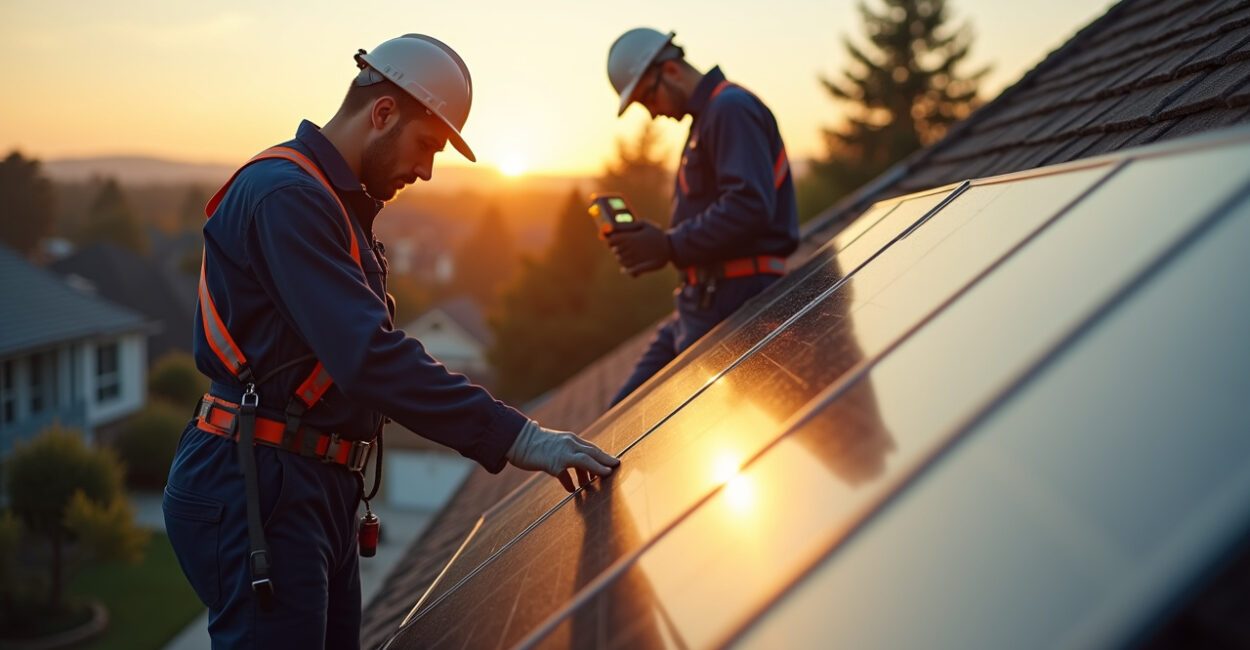
Residential solar panel maintenance isn’t an “extra” expense with no return. In practice, it protects energy production, prevents gradual efficiency losses, and extends the life of your photovoltaic system. Even a well-installed system needs cleaning, electrical inspections, and component checks to keep delivering the expected performance over the years. The key point is this: most systems don’t suddenly stop working. Instead, they gradually lose output because of dirt, new sources of shade, loose connectors, inverter failure, or grounding issues. That’s why knowing when to schedule maintenance, what the service includes, and how much it costs can help you protect your savings on electricity bills and avoid more expensive repairs later.
The Essentials
- Preventive solar maintenance is usually done annually, with more frequent cleaning in areas with dust, soot, coastal salt spray, or falling leaves.
- Solar panel maintenance costs vary based on system size, roof access, and whether an electrical inspection is needed. However, a basic service visit is usually much cheaper than replacing an inverter or damaged panels.
- An ideal service combines solar panel cleaning, a visual inspection, basic electrical tests, and checks of the inverter, cables, combiner box, and mounting structure.
- Reduced energy production, inverter alerts, persistent stains, unusual heat, and tripped safety devices are signs that your home solar system needs an evaluation.
- Cleaning the panels yourself may work in simple, safe situations, but steep roofs, hot glass, electrical hazards, and the risk of voiding your warranty are reasons to hire a professional.
Residential Solar Panel Maintenance and Why It Matters
Residential solar panel maintenance includes the cleaning, inspection, and repairs that keep a photovoltaic system producing close to its rated capacity. In practical terms, it prevents dust, debris, mechanical failures, and electrical problems from building up and reducing system efficiency.

Preventive and Corrective Maintenance Are Not the Same
Preventive solar maintenance is planned routine service designed to prevent failures: cleaning modules, checking mounts, inspecting cables, monitoring the inverter, and confirming that production is consistent with the area’s solar irradiance. Corrective maintenance comes into play after something has already gone wrong—for example, a string stops working, a connection corrodes, or a module cracks. Anyone who works in this field knows the financial difference between the two can be substantial. Scheduled cleaning and a visual inspection may cost very little; a failure that goes unnoticed for months can reduce production and require component replacement. Lost production also affects your return on investment, because every kilowatt-hour that isn’t generated reduces your accumulated savings for the month.
What separates a profitable solar system from one that “works well enough” isn’t just equipment quality—it’s a consistent maintenance routine that keeps small losses from becoming recurring expenses.
What Maintenance Protects in Practice
It protects three things at once: performance, safety, and solar panel lifespan. Photovoltaic modules can last for decades, but inverters, connectors, mounting structures, and cables are more vulnerable to environmental conditions. The goal is to protect the entire system, not just the panel glass.
For regulatory and technical information, consult ANEEL, Brazil’s National Electric Energy Agency, which regulates distributed generation in Brazil, and the Inmetro website, which provides information on equipment compliance and quality standards. These sources can help you distinguish marketing recommendations from actual safety and performance requirements.
When to Schedule Maintenance: Ideal Frequency and Warning Signs
For most homes, a sensible solar maintenance schedule is a full inspection once a year, with cleaning as needed based on local conditions. In typical urban areas, cleaning every six months may be enough. In areas with heavy dust, pollution, trees, coastal salt spray, or bird droppings, cleaning may be needed more often.
A Practical Rule of Thumb by Environment
- Clean environment with little dust: Annual inspection and cleaning when you notice reduced production or accumulated dirt.
- Urban area with soot and dust: Cleaning every 4 to 6 months can make a difference.
- Rural area, dirt road, or lots of vegetation: Check monthly and clean more often if production drops.
- Coastal area: Salt spray speeds up corrosion and residue buildup, so inspections should be more thorough.
These intervals aren’t set in stone. Installers may disagree because climate, roof pitch, glass type, and even panel placement can all affect how quickly dirt builds up. The best benchmark is still your system’s own production curve, compared with the same months in the previous year.
Signs Something Is Not Working as It Should
The most common warnings show up before a complete failure. These are the ones most likely to warrant a service call:
- Reduced energy production with no clear weather-related explanation.
- A fault message on the photovoltaic inverter.
- Dark stains, yellowed areas, or hot spots on the modules.
- Loose or brittle cables, or damaged insulation.
- Corrosion on MC4 connectors, the combiner box, or mounting points.
- Frequent tripping of circuit breakers or system safety devices.
If energy production drops and your household usage hasn’t changed, the problem is rarely “your electric bill.” First, check for dirt, new sources of shade, inverter failure, or a faulty electrical connection.
What Residential Solar System Maintenance Includes

Proper residential solar system maintenance includes module cleaning, a mechanical inspection of the mounting structure, electrical checks, and performance analysis. For simpler systems, the technician compares actual production with expected output to identify issues that aren’t visible to the naked eye.
What the Service Usually Includes
- Solar panel cleaning using methods and products suitable for the glass and seals.
- Visual inspection for cracks, delamination, hot spots, and localized dirt buildup.
- Checks of cables, connectors, conduit, grounding, and mounting structure.
- Inverter check, alarm review, and analysis of production history.
- Continuity testing and tightening of connections when required by the system design.
For larger or older systems, thermal imaging can also help identify hot spots before they cause serious damage. This type of inspection isn’t required for every home, but it can be very useful if the system has a history of reduced performance or some modules are behaving irregularly.
A Real-World Example
At a townhome community, a 6 kWp system began producing less energy without triggering an alarm. Cleaning seemed like it should be enough, but an inspection revealed that a newly grown tree was shading some of the panels at certain times of day. Pruning the tree solved more than any electrical repair could have.
Cases like this are common because the cause of reduced production isn’t always the equipment. Sometimes the problem is environmental, and overlooking it can lead to unnecessary replacements.
How Much Does Residential Solar Panel Maintenance Cost?
Solar panel maintenance costs depend on system size, roof height, the amount of dirt, the safety equipment required, and how thorough the inspection needs to be. A basic cleaning and visual inspection typically cost much less than maintenance involving electrical tests, thermal imaging, or troubleshooting.
Service type
What’s included
Typical price range
Basic cleaning
Controlled washing and a basic visual inspection
Lowest-cost option
Preventive maintenance
Cleaning, connection checks, and inspection of the inverter and mounting structure
Mid-range
Corrective maintenance
Diagnosis and replacement of failed components
Highest, depending on the issue
In practice, the final price often depends more on access and labor time than on the number of panels. A high or steep roof, or one with limited room to move, increases the cost because it requires anchors, personal protective equipment, and extra care. Ground-mounted systems or systems that are easy to access typically cost less to service.
To compare a quote with what the service actually offers, don’t just choose the lowest price. Ask exactly what’s included: cleaning, inverter inspection, cable checks, a performance report, and removal of stubborn dirt. Otherwise, the service may look inexpensive but accomplish very little. For technical references on component safety and performance, ABNT, Brazil’s technical standards association, is a good starting point for applicable industry standards. ONS, Brazil’s National Electric System Operator, can help you understand how distributed generation fits into the broader power system.
Preventive Care and Best Cleaning Practices
Solar panel cleaning should protect the glass, seals, and the person doing the work. Excess water, abrasive brushes, harsh detergents, and high-pressure spray can cause more harm than good, especially with older modules or those with microcracks.
How to Clean Safely
- Clean when it’s cool, preferably early in the morning or late in the afternoon.
- Use clean water and a soft cloth, a nonabrasive sponge, or equipment recommended by the manufacturer.
- Shut down the system according to the inverter and electrical design procedures.
- Don’t walk on the roof without proper fall protection.
- Check the manufacturer’s manual before cleaning to reduce the risk of voiding the warranty.
This approach works well for light, routine dirt, but not for hardened buildup, dried bird droppings, heavy salt spray, or hazardous access. In these cases, solar panel maintenance should be handled by a professional experienced in working at heights and around electrical systems.
What Never to Do
- Use a pressure washer directly on the modules.
- Apply abrasive products, solvents, or bleach.
- Clean the panels when their surface is very hot.
- Pull on cables or connectors, or force open junction boxes.
- Climb onto structures without fall protection or personal protective equipment.
Common Problems That Reduce Energy Production
The problems that cause the biggest drops in production aren’t always dramatic. Usually, they’re the more frustrating ones: dirt, partial shading, poor connections, intermittent inverter faults, and normal component degradation. Each one causes a small reduction, but together they can add up to significant losses over the year.
Problems That Need Immediate Attention
- New shading: A growing tree, water tank, antenna, or neighboring building.
- Hot spot: An overheated area on a module, often linked to a damaged cell or localized dirt.
- Inverter problem: Impaired DC-to-AC conversion, alarms, or shutdowns.
- Connectors and cables: Poor contact, corrosion, or damaged insulation.
- Grounding failure: A safety hazard that can also cause unstable operation.
The inverter is the system’s electronic heart. If it loses efficiency or enters protection mode, production drops even when the panels are in good condition. That’s why a solar panel inspection that doesn’t include the inverter is incomplete maintenance.
Another issue that often goes unnoticed is module aging. Solar panels have a long service life, but normal annual degradation still occurs. Generally, it happens slowly; when the drop is greater than expected, the cause is more likely to be a failure or poor installation than aging.
How to Choose a Solar Maintenance Company or Technician
Choosing carefully prevents repeat work, improves safety, and reduces the risk of tampering with something that was still working properly. The main criterion isn’t a low-price promise—it’s the ability to diagnose, document, and perform the work without cutting corners.
What to Ask Before Hiring
- Does the service include cleaning, electrical inspection, and inverter analysis?
- Does the company follow NR-35 and NR-10, Brazil’s occupational safety standards for working at heights and with electricity, when applicable?
- Will you receive a report with photos, measurements, and recommendations?
- Is the cleaning product compatible with photovoltaic modules?
- Is there a warranty on the work performed?
It’s also worth checking whether the company is familiar with the brands of modules and inverters installed in your home. When a service provider understands the equipment specifications, there’s less chance they’ll use the wrong technique and increase the risk of voiding your warranty. A practical rule: a good provider explains what they’ll measure, what could go wrong, and what falls outside the scope of the work. If the proposal doesn’t distinguish between cleaning and diagnostics, be cautious. They’re related services, but they aren’t the same.
Final Thoughts
The best approach to residential solar panel maintenance is simple: treat the system as an asset that needs monitoring, not as a “set it and forget it” installation. Tracking production, cleaning at the right intervals, and addressing small issues early can help you keep saving on your electricity bill for much longer. A useful next step is to compare the system’s current production with the history in your inverter app, identify any unusual drops, and schedule a preventive inspection before a loss turns into an expensive failure. If you see dirt, an electronic alert, or unusual heating, act right away.
Frequently Asked Questions
How Often Should I Maintain My Residential Solar Panels?
For most homes, an annual inspection is the safest starting point. Cleaning may be needed every six months or even more often in areas with dust, salt spray, soot, or excessive leaf buildup. Ideally, adjust the schedule based on your system’s actual production curve.
How Much Does Residential Solar System Maintenance Cost?
The cost depends on roof access, system size, and how thorough the inspection is. Basic cleaning usually costs less, while preventive maintenance with electrical checks and inverter analysis costs more. If repairs are needed, the price increases due to parts and specialized labor.
What’s Included in Solar Panel Maintenance?
A comprehensive service includes module cleaning, a visual inspection, checks of cables and connectors, an inverter review, and an inspection of the mounting structure. Electrical tests and thermal imaging may also be included in some cases. If the proposal doesn’t specify these items, the service may be incomplete.
What Are the Signs of a Problem with a Solar System?
The most common signs are reduced energy production, an inverter alert, stains on the modules, localized overheating, damaged cables, and frequently tripped circuit breakers. Comparing current production with similar months from the previous year can help you spot issues. If the drop doesn’t correspond to weather conditions, it’s worth investigating.
Can I Clean Solar Panels Myself, or Do I Need a Professional?
In some simple cases, yes, as long as access is safe, the system is shut down properly, and you use the right cleaning method. But high roofs, sloped panels, heavy dirt, and any suspected electrical issue call for a professional. If the equipment is still under warranty, check the manual before doing any work.
Artigos Relacionados
 Affordable Solar Panel Installation: Build a Simple PV System, Cut Costs, and Keep Your Home Safe
 Common Low-Cost Solar Panel Mistakes: Nine Failures That Cut Your Savings and How to Avoid Them Now
 Low-Cost Solar Panels: Lower Your Energy Bill and Pay Back Your Investment Faster
 Solar Energy or Energy Efficiency: Which Pays Off?
 Launch a Social Media Management Agency in Brazil: A Low-Cost Guide for Young Entrepreneurs
 Unlocking Entrepreneurial Dreams: 15 Innovative, Low-Cost Business Ideas for Young Brazilians in 2025
