
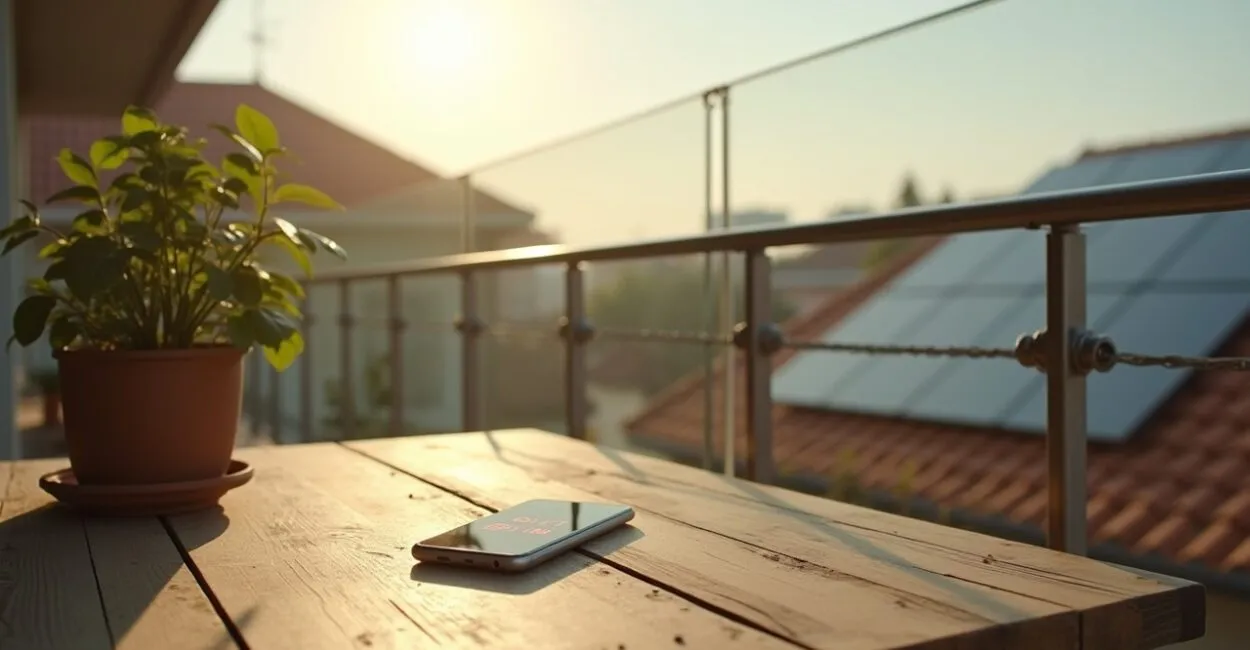
Let’s start with a familiar scene: your electricity bill flashing red on your phone while your roof glistens in the sun—there may be money up there that you’re letting slip away. Low-cost solar panels may seem like an obvious solution, but they don’t always deliver what they promise. In this article, you’ll learn how to choose, size, and install an affordable system that truly lowers your bill and offers a realistic payback period—without spending a fortune.
What Are Low-Cost Solar Panels? (Technical Definition and Practical Explanation)
Technically, solar panels are photovoltaic modules that convert solar radiation into electricity through the photovoltaic effect. Their efficiency is measured as a percentage, while their rated power is measured in watts-peak (Wp). Low-cost solar panels are modules offered at a lower unit price, sometimes with lower efficiency or a limited warranty. In practical terms, you pay less per installed watt—but what matters is the cost per kWh generated over the system’s lifetime, not just the price of the panel.

How to Size an Affordable System Without Creating a Headache
The most common mistake is buying panels based on price and sizing the system based on “how many fit on the roof.” First, calculate your average monthly consumption in kWh. Two or three utility bills will give you a good average.
Next, estimate local production based on roof tilt and shading, using solar irradiance data for your area. The goal is to balance generation and consumption to maximize self-consumption: undersized systems leave savings on the table, while oversized ones take longer to pay back.
- Rule of thumb: start by covering 30–70% of your nighttime consumption with daytime generation, depending on your usage and rates.
- Tools: generation calculators and local solar maps can help—see the reference link below.

Choosing Panels and Inverters: Where to Save Without Sacrificing Safety

The most expensive brand isn’t always the best choice for your home, and not every cheap panel is a bad deal. Invest in a reliable inverter and a solid warranty—the inverter is often the most expensive component to fail. Look for panels with IEC certification and a linear performance warranty (for example, a maximum degradation rate of 0.7% per year). Match the panels and inverter by power and voltage: incompatibility can increase operating costs and risks.
Read also: Solar Energy or Energy Efficiency: Which Is More Cost-Effective?
- Avoid offers with no warranty or from an unknown seller.
- Consider second-tier (B-grade) panels only after a technical inspection.
Affordable Installation: What to Cut and What Never to Cut
You can save money on labor by negotiating the price or bundling the purchase and installation, but some things should never be sacrificed: secure mounting, proper wiring, surge protection, and grounding. Cutting corners on mounting hardware or electrical design is a false economy—it can damage your roof or reduce energy production. In many cases, proper installation improves efficiency and reduces maintenance, speeding up payback.
- What to avoid: uncertified materials, makeshift electrical work, and installations in areas with predictable shading.
- What to negotiate: price per installed kWp, warranty terms, and inclusion of the paperwork needed to connect to the grid.
Calculating the Real Payback Period (with a Simple Example)
The payback period is how long it takes for a system to repay its cost through savings on your utility bill. Basic formula: payback = total investment / average annual savings. Example: a 3 kWp system costing R$ 12,000 that generates about 4,200 kWh per year, with average savings of R$ 0.80 per kWh, saves R$ 3,360 per year—a payback period of about 3.6 years. This calculation needs to account for rates, fees, losses, and annual degradation to avoid inflated expectations.
Read also: How to Reduce Business Waste Without Spending Much
- Include in your calculation: ICMS (Brazil’s state VAT), tariff flags, and grid-use charges when applicable.
- Account for panel degradation (annual performance loss) and maintenance costs.
Myths, a Surprising Comparison, and Costly Mistakes
A common myth is that “cheap panels always have a short lifespan.” That’s not necessarily true—some manufacturers sell at lower margins without compromising quality. Here’s a surprising comparison: paying 20% more for a better system can shorten the payback period by years thanks to improved efficiency and warranty coverage. Costly mistakes include:
- Buying without a system design (mistake 1).
- Ignoring seasonal shading (mistake 2).
- Focusing only on panel prices and overlooking the inverter and mounting system (mistake 3).
A quick story: A family in Campinas installed “cheap” panels without checking for shade from nearby trees. During the first summer, peak generation dropped by 30%. Removing the trees and repositioning the panels cost half the initial investment—and the payback period, which would have been 4 years, stretched to 7.
Sources, Regulations, and When to Call a Professional
For informed decisions, consult official data and technical standards. ANEEL, Brazil’s National Electric Energy Agency, provides interconnection rules and regulations. Irradiance maps and academic research (for example, from university energy centers) can help you size your system. Not every project requires an engineer on your roof, but projects over 5 kWp or installations in high-risk areas require a licensed professional.
There are limits to this approach: it works well for typical homes but may not work for households with highly variable consumption or roofs with complex shading. Experts disagree on the ideal battery size for backup—it depends on how you prioritize savings versus energy independence.
The Bottom Line: A Challenge for Your Next Utility Bill
Look at your electricity bill now and multiply it by 12 to see how much the sun could cover each year—partially or completely. Here’s the question: how much of that cost are you willing to keep paying for the next few years? A well-designed system with low-cost solar panels and smart choices can turn that expense into an investment with a real payback. Keep that in mind before choosing based on price alone.
Frequently Asked Questions
How Long Does It Take an Affordable System to Pay for Itself?
Payback varies widely, but for homes it typically takes 3 to 8 years, depending on system cost, electricity rates, and consumption. To estimate it, add up the total investment (panels, inverter, mounting system, installation, and paperwork) and divide it by your average annual bill savings. Include panel degradation, inverter efficiency, and any maintenance costs in your calculation. Properly sized systems with high self-consumption tend to pay for themselves faster.
Are Low-Cost Solar Panels Reliable in the Long Term?
Some inexpensive panels deliver acceptable performance, but the risk increases when there’s no strong warranty or certification. Choose panels with IEC certifications and a linear performance warranty (for example, one that limits annual degradation). Also check the manufacturer’s reputation and technical support terms. In many cases, saving too much on panels can lead to higher costs from lost generation and maintenance. Compare the cost per kWh generated over 20–25 years, not just the panel’s upfront price.
Do I Need Permission to Connect My System to the Grid?
Yes—in general, you must follow your local utility’s rules and obtain approval to connect under a net-metering arrangement. ANEEL, Brazil’s National Electric Energy Agency, sets procedures and limits for distributed micro- and minigeneration. Approval for small residential systems is usually straightforward, but it requires a system design, inspection report, and technical documents signed by a licensed professional. Check with your utility before buying components to avoid having to redo work.
Is It Worth Adding Batteries to an Affordable System?
Batteries provide greater energy independence, but they increase costs and extend the payback period. If your goal is to lower your bill and maximize household savings, the most affordable option is usually a grid-tied system without batteries, with daytime self-consumption. Batteries make sense if you need frequent backup, live in an area with extended outages, or have rates that make nighttime battery use more economical. Each case requires a cost-benefit analysis and detailed calculations.
What Are the Main Warning Signs of a Too-Good-to-Be-True Price?
Discounts far below market prices, lack of certification, very short warranties, or no receipt are clear warning signs. Be cautious if a quote leaves out the inverter, mounting system, or installation costs. Ask for a parts list, warranty terms, and references from previous installations. Check reviews of both the manufacturer and installer; an upfront saving that causes trouble later isn’t a real saving.
Artigos Relacionados
 Energy Savings at School: Cut Costs and Reduce Impact
 Renewable Energy: Why Solar Projects Fail Today
 Residential Renewable Energy
 Morning Habits for Focus and Energy: 9 Proven Practices to Boost Concentration, Increase Energy, and Reduce Stress Before Work
 Women’s Entrepreneurship on the Rise: 5 Proven Strategies to Build a Successful Business, Attract Investment, and Make an Impact
 Funding for the Creative Economy: How to Access Credit, Investment, and Support for Innovative Projects
