
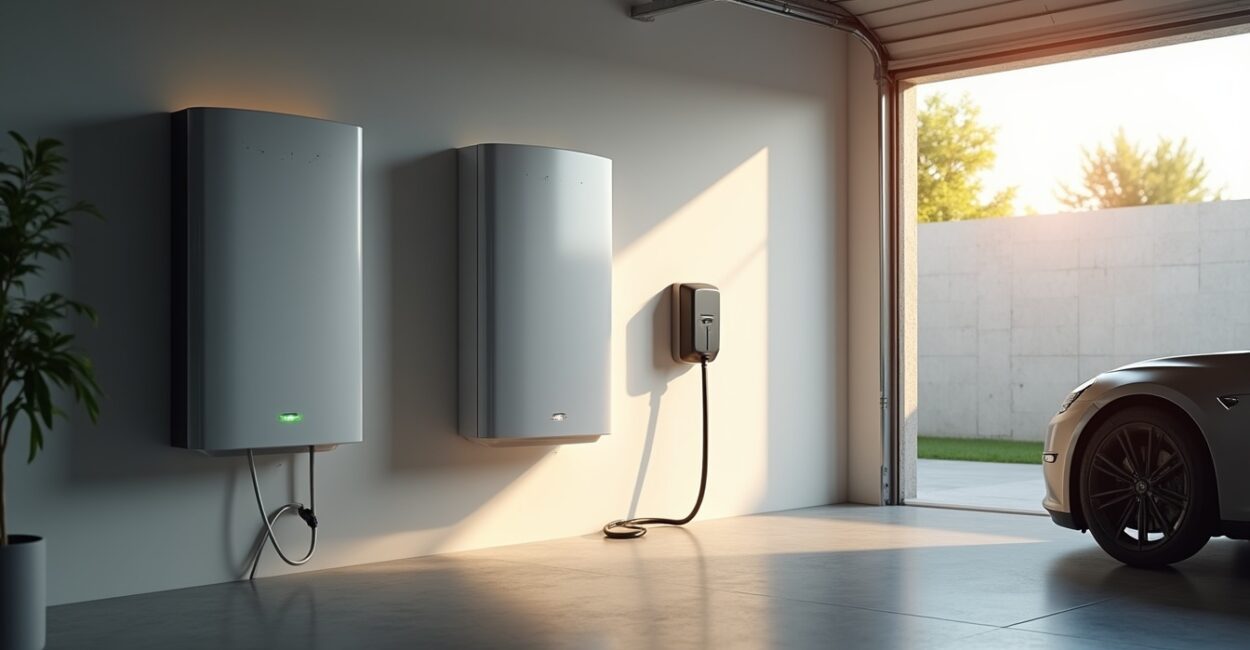
A home can cut a large part of its electric bill without waiting for a revolution in the power grid. When it comes to residential renewable energy, the point isn’t to “get solar panels for status.” It’s to build a system that generates, stores, and uses energy with predictable costs. In practice, that means solar panels, a hybrid inverter, a lithium battery, and, in some cases, integration with distributed generation. What makes the difference is the balance between upfront costs, local electricity rates, usage patterns, and equipment quality. Here’s how to assess payback, limitations, and technical choices without falling for easy promises.
The Essentials
- A solar system with a battery makes more sense when you also use electricity at night or when the grid is unreliable.
- Payback depends less on the “size of the panels” and more on your usage patterns, electricity rates, and the rules set by Brazil’s National Electric Energy Agency (ANEEL).
- Lithium batteries increase energy independence, but they don’t always speed up financial payback. In many cases, they’re chosen for safety and reliability, not immediate savings.
- A hybrid inverter, monitoring, and proper system sizing prevent waste and extend the life of the equipment.
- Financing can make a project feasible, but you need to include the effective interest rate in your calculations. Otherwise, the monthly savings can be misleading.
Residential Renewable Energy: Solar Power, Batteries, and Everyday Energy Independence
Technically speaking, residential solar power converts solar radiation into electricity using solar panels, with power either fed into the grid or used on-site. Home energy storage uses batteries, almost always lithium-ion, to store excess electricity and release it when the sun isn’t shining. In other words, you generate some of the electricity you use during the day and reduce your reliance on the utility at night, during peak-rate hours, or during outages. This won’t eliminate your electric bill, but it can change how much you pay each month. The difference shows up on your bill at the end of the month—and can be even more significant in homes with high energy use.

Why the Topic Is Gaining Momentum
Three factors have pushed this market forward: falling panel prices, more efficient inverters, and the growth of distributed generation in Brazil. Brazil’s ANEEL maintains rules that give the industry more predictability. That matters because energy investments require a clear long-term outlook. In addition, rising electricity rates hit harder for households with steady energy use. Homes with air conditioning, a home office, water heating, and energy-intensive appliances tend to get more value from the solution.
What Goes Into a Well-Planned Installation
- Solar panels: generate electricity during the day.
- Inverter: converts direct current to alternating current and coordinates system operation.
- Lithium battery: stores electricity for later use.
- Controller and monitoring: track generation, consumption, and faults.
- Electrical protection panel: reduces electrical hazards and protects the system.
A home solar system’s payback almost never depends on solar generation alone; it depends on how much of the electricity produced the household can use on-site.
How to Compare Upfront Costs, Payback, and Actual Savings
The most common mistake is looking only at the total installation cost. A proper calculation considers estimated annual production, household energy use, utility rates, panel degradation, and maintenance costs. Many projects look expensive on paper, but the numbers change when you factor in projected savings over 10 to 15 years.
Data from Brazil’s Energy Research Office can help explain the growth in energy use and interest in decentralized solutions, while resources from Inmetro, Brazil’s national standards and accreditation body, are useful for checking equipment compliance and efficiency. Buyers who compare only purchase prices overlook the total cost of ownership.
The Factors That Really Matter
Factor
What to look at
Practical impact
Monthly energy use
Home’s kWh usage over 12 months
Determines system size
Local electricity rates
Price per kWh and rate tiers
Affects payback
Storage
Whether there’s a battery and how many usable kWh it holds
Provides energy independence outside daylight hours
Financing
Interest rate, term, and down payment
Can lengthen or shorten the payback period
When Payback Estimates Are Misleading
Some projects look like they’ll pay for themselves quickly on paper but perform poorly in practice. This can happen when estimates leave out installation, approval, wiring, mounting hardware, and potential electrical panel upgrade costs. With systems that include a battery, you also need to account for the battery’s lifespan, which isn’t the same as the solar panels’ lifespan.
This approach works well for households with high, predictable energy use, but it falls short when a home uses little electricity or when the expectation is to “eliminate the bill” without careful system sizing. It won’t work for everyone—it depends on the home’s load profile.
Why Lithium Batteries Changed the Game for Homes

Batteries are no longer an unusual add-on; they’ve become a strategic part of the system. Lithium batteries offer high energy density, greater depth of discharge, and better efficiency than older technologies such as lead-acid. Put simply, they deliver more usable energy in less space.
Anyone who works in this field knows the real benefit isn’t just “storing energy.” It’s being able to use solar power at night, keep the refrigerator, internet, lights, and essential equipment running during an outage, and reduce consumption during more expensive hours. In areas with frequent outages, that can make a big difference.
Where Batteries Really Help
- Homes with home offices and sensitive equipment.
- Homes in areas with frequent grid fluctuations or outages.
- Households that use most of their electricity at night.
- Projects aimed at greater energy independence.
A lithium battery isn’t the cheapest option; it’s the most effective one when energy independence, reliability, and smart use of generated electricity are the priorities.
A Limitation Many People Overlook
Not every home needs a battery. In areas with a reliable grid, moderate rates, and daytime energy use, a solar system without storage may offer a better financial return. A battery makes sense when the goal goes beyond pure savings.
This explains why experts disagree about the ideal storage capacity. For some usage patterns, a small battery is enough; for others, the investment only makes sense with a larger system and integration with priority loads.
How to Choose an Inverter, Protection, and Monitoring
The inverter is the brain of the system. Hybrid models have become popular for residential projects because they work with both the panels and the battery, while also allowing for future expansion. But simply buying the “most powerful” model isn’t enough: sizing must match the installed capacity, system voltage, and household usage patterns.
Surge protection, grounding, and the right circuit breakers are also part of the project, not minor details. App or web-portal monitoring is no longer a luxury, either. It shows daily production, faults, and potential shading that can reduce output without any obvious signs.
Technical Checklist Before You Commit
- Review energy use over the past 12 months.
- Confirm available roof or ground space.
- Check orientation, tilt, and shading.
- Verify inverter and battery compatibility.
- Require a written project description and equipment warranties.
A Common Scenario
I saw a case where a family wanted to install a battery right away because they were worried about power outages. Once the system was sized, it became clear that the roof could support more solar panels, but including storage would have stretched the budget too far.
The solution was to start with a properly sized solar system and add the battery in a second phase. The result was better: the system started saving money in the first month, and the decision about storage became more rational, based on actual use rather than anxiety.
Financing, Incentives, and Distributed Generation Rules
The market has grown because financing made it easier to get started and energy net metering made the outlook less risky for consumers. Even so, read the contract terms carefully. Interest, the total effective cost of credit, and the loan term can make a huge difference to the final result.
Brazil’s rules for small-scale and mini distributed generation have changed, affecting how energy credits are applied to utility bills. The regulatory framework is based on the Brazilian federal government’s official energy compensation framework, but the financial model needs to be reviewed for each project.
What Consumers Should Watch For
- A longer loan term doesn’t always mean an affordable monthly payment.
- Monthly savings need to exceed maintenance costs, interest, and any potential battery replacement.
- Projects using energy credits depend on the utility’s rate structure.
- Documentation, interconnection approval, and warranties should be provided in writing.
When Residential Renewable Energy Makes the Most Sense
It makes the most sense when energy use is predictable, electricity rates are high, there’s enough space, and you plan to stay in the home for several years. It’s also a strong option for homes with significant nighttime energy use or in areas where reliable power is essential to daily life.
What separates a good decision from a rushed expense isn’t enthusiasm for technology—it’s finding a technical solution that fits a real need. In other words, the home should need the system, not the other way around.
Signs the Project May Be Worth It
- High electric bills that stay consistent throughout the year.
- Heavy energy use outside daylight hours.
- Interest in protection against power outages.
- A roof without significant shading.
- Plans to stay in the home for the medium term.
The best home energy project isn’t the biggest or most expensive; it’s the one that matches generation, storage, and consumption to the same usage pattern.
Next Steps for Evaluating Your Project
The smartest next step is to turn curiosity into calculations. Gather your energy use for the past 12 months, request estimates with and without a battery, compare warranties, and check that the equipment has the right certifications. Then assess whether the expected savings justify the investment for your situation—not your neighbor’s.
If you’re making a purchasing decision, compare at least three proposals with the same technical scope, and require each one to show estimated production, installed capacity, protection components, and expected payback period. With residential renewable energy projects, buyers who compare only the final price often pay more later.
Frequently Asked Questions
What’s the Difference Between a Solar System and Solar Power with a Battery?
A solar system generates electricity from sunlight. Adding a battery lets you store some of that electricity for later, especially at night or during an outage.
Is a Lithium Battery Worth It for Every Home?
No. It makes more sense when there’s significant nighttime energy use, a need for energy independence, or frequent grid fluctuations. If the only goal is to lower monthly bills, many homes get a better return from solar without storage.
How Long Does It Take to Recoup the Investment?
The timeline varies based on electricity rates, energy use, project costs, and financing. In general, higher energy use and more expensive electricity lead to faster payback; adding a battery usually extends the timeline.
Will the System Work During a Power Outage?
It depends on the system design. Systems with a hybrid inverter and battery can keep essential loads running if they’re configured for backup operation. Systems without a battery usually shut down for safety when the grid goes down.
Do I Need Utility Approval for the Installation?
Yes. As a rule, distributed generation must go through an interconnection approval process with the local utility. This ensures the connection meets the required technical and safety standards.
What Should I Compare Between Quotes?
Compare installed capacity, inverter type, usable battery capacity, warranties, mounting hardware, electrical protection, and estimated payback period. A good quote isn’t the shortest one; it’s the one that clearly states what is and isn’t included.
Artigos Relacionados
 Why Test Reverse Logistics in the Circular Economy
 Understanding Sustainability: Meaning and Why It Matters
 Sustainability: The Complete Guide to Building a Greener Future
 Sustainability: How to Build a Better Future
 Creative Upcycling: Practical Ideas for Making Money from Waste
 The Essential Role of Bees in Sustaining Ecosystems
