

The environmental bill has become too expensive to ignore: extreme weather, wasted resources, and pressure on energy, water, and food supplies are no longer “problems of the future.” When we talk about sustainability, we mean organizing our lives, businesses, and cities so development and conservation can go hand in hand—without passing the cost on to the next generation.
In practice, this means making decisions based on three criteria at once: environmental impact, economic viability, and social responsibility. It sounds simple, but it isn’t. Anyone who tries to put this concept into practice sees that small choices matter, even though not every “green” solution is truly effective in every context. Below, you’ll learn what the term really means, how it translates into concrete actions, and what to watch out for to avoid misleading shortcuts.

What You Need to Know
- Sustainability is the ability to meet today’s needs without compromising the resources and opportunities available to future generations.
- An action deserves to be called sustainable only when it considers environmental impact, cost, scale, and social effects at the same time.
- Reducing consumption, reusing materials, and improving efficiency tend to deliver more lasting results than one-off offsets.
- Not every “eco-friendly” solution works automatically: logistics, maintenance, and the origin of materials can completely change the outcome.
- Metrics such as carbon emissions, water consumption, and waste management help track progress with less guesswork.
Sustainability And Development: Balancing Growth And Limits
The most widely accepted technical definition of sustainability comes from the Brundtland Report: meeting present needs without reducing the ability of future generations to meet their own. Put simply, that means growing without destroying the foundation that makes growth possible. The point isn’t to “stop producing”; it’s to produce better.
This balance matters to businesses, governments, and individuals in their daily lives. A business can increase revenue while cutting energy waste, reducing packaging, and rethinking its suppliers. A city can expand public transit and waste management while maintaining economic efficiency. When this balance breaks down, the cost shows up later—in the form of scarcity, pollution, and higher public spending.
What separates growth from sustainable progress isn’t the amount consumed—it’s the ability to maintain results without exhausting the foundation that makes them possible.
For a closer look at this discussion, consult resources such as the United Nations Sustainable Development Goals portal, which organizes global goals related to poverty, energy, climate, and cities. The idea is clear: sustainability isn’t an isolated issue; it cuts across many areas at once.
Three connected pillars
- Environmental: responsible use of water, energy, land, and biodiversity.
- Social: decent working conditions, access to services, and reduced inequality.
- Economic: efficiency, financial continuity, and the ability to sustain solutions over the long term.
How To Put The Idea Into Practice Every Day
Anyone who works on this issue knows that real change rarely starts with big speeches. It starts with measurement. Without knowing how much you consume, how much you waste, and where the bottlenecks are, any action is just a guess.
At home and in your daily routine
Switching to LED bulbs, using less water in the shower, sorting recyclables, and buying fewer disposable products are familiar steps. The key is to do them consistently and thoughtfully. Buying a reusable water bottle helps, but the benefit is limited if the rest of your routine still involves excessive packaging and quick disposal.
At work and in business
In practice, what tends to make the biggest difference is operational efficiency: less loss, less rework, and less energy per unit produced. That includes optimizing logistics, using raw materials wisely, and reviewing supplier contracts. Companies that map a product’s life cycle make better decisions than those that look only at the purchase price.
In cities and communities
Public policies make a difference when they focus on public transit, sanitation, urban trees, and properly supported recycling. Brazil still faces significant inequality in this area, and data from the IBGE, Brazil’s national statistics agency, helps explain how consumption, housing, and access to services vary across regions. Without public policy, individual responsibility can solve only part of the problem.
The Role Of Energy, Water, And Waste

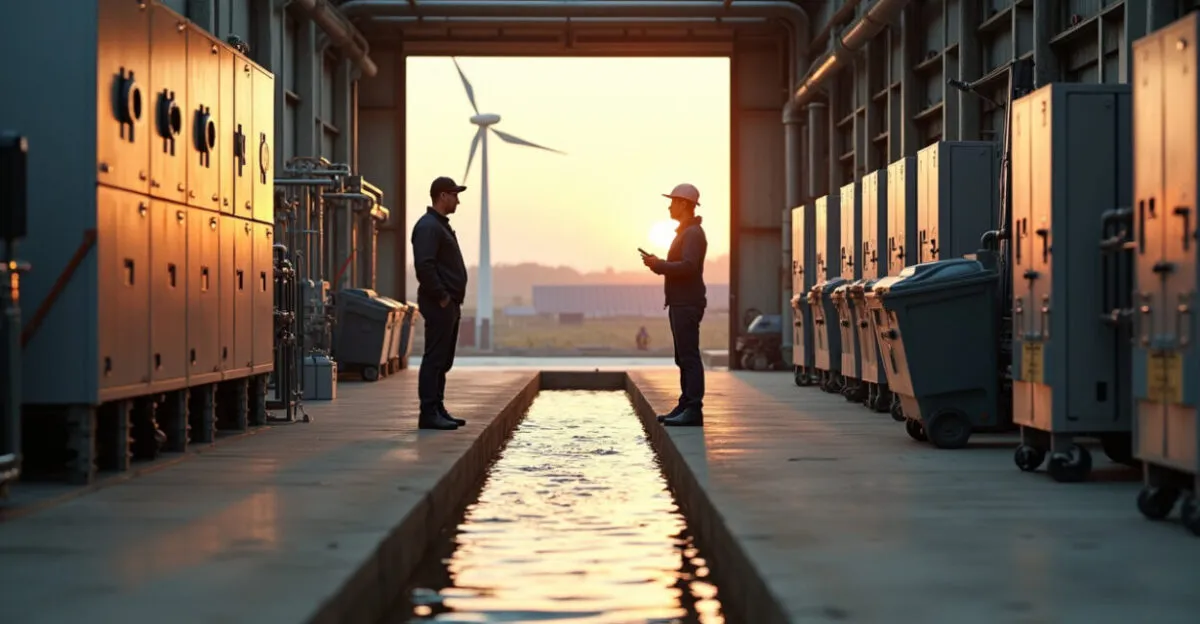
Three areas account for much of the environmental impact: energy, water, and waste. They are constantly connected. Energy generates emissions, water depends on infrastructure and energy, and poorly managed waste contaminates soil, rivers, and entire supply chains.
Clean energy doesn’t mean impact-free energy
Renewable sources such as solar and wind power reduce emissions, but they require planning, a suitable electrical grid, and a responsible supply chain. Many people treat these solutions as perfect, but they aren’t. The benefits are real, but they depend on scale, location, and proper disposal of components.
Water: The resource that quickly reveals waste
Water conservation often pays off faster than you might expect, especially in industrial facilities and apartment complexes. Reuse, rainwater collection, and leak prevention have a direct impact. For sector data and policies, the website of Brazil’s Ministry of the Environment and Climate Change provides current initiatives and guidelines.
Waste: What goes in the trash comes back on the bill
Recycling is important, but it can’t solve everything on its own. The most effective order is usually: reduce, reuse, recycle, and only then properly dispose of what remains. Ignoring this hierarchy makes the system costly and inefficient. Organic waste, for example, should go to composting more often than to landfills.
Conscious Consumption And The Life Cycle Approach
The most common mistake is confusing “buying something sustainable” with “buying any product with a green label.” That doesn’t always work. An item may look eco-friendly on the shelf but have a high impact during transportation, production, or disposal.
| Stage | What to assess | Common mistake |
|---|---|---|
| Production | Raw material sources and energy use | Looking only at the finished material |
| Use | Durability, maintenance, and efficiency | Choosing based only on the upfront price |
| Disposal | Recyclability, reverse logistics, and reuse | Ignoring the end of the product’s useful life |
This approach is called life cycle assessment. It helps compare options more realistically. A durable, repairable product is usually better than a cheap model that breaks quickly and becomes waste soon after. The same goes for packaging, electronics, and even clothing.
A sustainable product isn’t the one that looks cleanest on the shelf; it’s the one with the lowest overall impact throughout its entire useful life.
Metrics That Show Whether A Strategy Is Working
Without metrics, sustainability is just a story. With metrics, it becomes management. That’s why serious companies and governments track concrete indicators such as greenhouse gas emissions, water use, recycling rates, energy efficiency, and leadership diversity.
The most useful metrics
- Scope 1, 2, and 3 emissions: measure direct emissions, indirect emissions from purchased energy, and indirect emissions across the supply chain.
- Energy intensity: shows how much energy is used to produce each unit.
- Reuse rate: indicates how much waste returns to productive use.
- Water use per operation: reveals actual efficiency, not just good intentions.
- Social indicators: turnover, workplace safety, and fair pay matter, too.
There’s an important caveat: an impressive number doesn’t guarantee real change. An organization may improve one metric while making another worse. That’s why serious experts look at the whole picture, not just one data point. The IPCC has long emphasized that the climate problem requires a systems-based perspective, not fragmented solutions.
A Short Story: How A Small Change Improved The Results
At a small food-service operation, spending on disposable items seemed insignificant. It only seemed that way. When the people in charge mapped out their routine, they realized the biggest loss wasn’t coming from cups, but from overproduction on slower days. They adjusted purchasing, reduced leftovers, and replaced some packaging with reusable alternatives.
The results weren’t just environmental. The bottom line improved. Inventory became more predictable. And the team became more aware of waste. This kind of change shows why sustainability works best when it becomes part of operations, not just communication.
The Most Common Mistakes When Talking About Sustainability
The first mistake is treating sustainability as marketing. When actions don’t match promises, people notice quickly. Greenwashing—the green gloss applied to products, brands, or policies—has become a real reputational risk.
Where initiatives often fail
- Focusing only on campaigns and ignoring processes.
- Buying “green” materials without reviewing the entire supply chain.
- Measuring intentions but not results.
- Replacing one poor solution with another that is expensive and difficult to scale.
The second mistake is thinking every action has to be perfect before you can get started. It doesn’t. The most lasting progress usually comes from gradual improvements, as long as they can be verified. The third mistake is ignoring context: a solution that works well for one industry may be a poor fit for another. Not every approach works everywhere—it depends on scale, sector, and infrastructure.
Next Steps For More Consistent Action
The smartest approach isn’t to try to change everything at once. It’s to identify where the impact is greatest and start there. For an individual, that might mean rethinking consumption, transportation, and waste. For a business, it could mean starting with energy, logistics, and purchasing. For a city, it may mean prioritizing sanitation, transit, and waste management.
If the goal is to move from talk to action, the best next step is to choose one metric, measure the current situation, and set a specific improvement to achieve over the next 90 days. Sustainability stops being abstract when it becomes a process with a goal, an owner, and ongoing tracking.
Frequently Asked Questions
What is sustainability, in simple terms?
It’s the ability to meet today’s needs without compromising the resources and opportunities available to future generations. In practice, it involves balancing environmental impact, economic viability, and social responsibility.
Is sustainability only about the environment?
No. The environment is central, but the concept also includes social and economic factors. A solution is truly sustainable only if it can be maintained without creating new problems in another area.
What’s the difference between recycling and sustainability?
Recycling is one tool in the sustainability toolkit, but it doesn’t cover the whole issue. Sustainability starts before disposal, with reducing consumption, product design, and material selection.
How can you tell whether a company is truly sustainable?
Look at concrete metrics such as emissions, water use, waste management, supply chain transparency, and time-bound goals. If the messaging sounds good but there’s no data, that’s already a warning sign.
Do small individual changes make a difference?
They do, but the effect is greater when they become habits and add up to collective decisions. Changing one behavior helps; changing routines and consumption habits, while advocating for public policies, has a stronger impact.
What is greenwashing?
It’s when a brand, product, or institution presents a positive environmental image that doesn’t match its actual practices. The term describes green advertising that isn’t backed by consistent actions, data, or results.
Artigos Relacionados
 Youth and Adult Education in Brazil: Better Preparation for a Successful Future
 Transportation Careers: In-Demand Jobs and Future Opportunities
 Careers in Industry: Trends, Skills, and Future Opportunities
 Climate Change: Causes, Impacts, and Solutions for the Future
 Education and Sustainability: Pathways to Responsible Development
 IT Infrastructure Architect: Building the Future of Business
