

The difference between circular economy and recycling may seem like semantics, but it isn’t: recycling addresses the end of the line; the circular economy reorganizes the entire process. When a company replaces the “take, make, dispose” approach with “design, keep in use, recover value,” it changes the system—not just how waste is handled.
This matters because many people still call any operation that simply sorts waste and sends materials for processing “sustainable.” Recycling does reduce impact, but it comes late in the supply chain. The circular economy acts before scrap exists, addressing design, logistics, durability, repair, reuse, and remanufacturing. Below, you’ll see where each concept applies, where they overlap, and why confusing the two leads to poor decisions.

What You Need to Know
- Recycling is a process that transforms waste into secondary raw materials; the circular economy is an economic model that aims to prevent waste from being created in the first place.
- In practice, recycling recovers value at the end of a product’s useful life; circularity aims to keep products, components, and materials in use for as long as possible.
- Not every circular solution depends on advanced technology: repair, resale, sharing, and redesign often create more value than recycling.
- Recycling remains necessary, but it serves as a supporting step—not the main answer to excessive consumption.
- The best indicator of environmental progress isn’t how much is recycled, but how much material never becomes waste.
Circular Economy vs. Recycling: Where Each Concept Begins and Ends
First, the technical definitions: recycling is the processing of discarded materials so they can reenter the production chain as inputs; the circular economy is a model of production and consumption that aims to preserve the value of products, components, and materials for as long as possible. Simply put, recycling addresses what happens “after”; circularity redesigns what happens “before.”
This distinction changes everything when deciding on investments, public policy, or industrial strategy. Recycling depends on collection, sorting, contamination control, and the economic viability of reprocessing. The circular economy, by contrast, includes eco-design, reverse logistics, remanufacturing, repair, reuse, and even service models such as rentals or subscriptions.
Anyone who works in this field knows that a project can increase its recycling rate and still remain inefficient. I’ve seen operations recycle an entire package when the product could have been redesigned to use less material, last longer, and be reused several times. In that scenario, recycling solves part of the problem; circularity prevents the problem from growing.
What separates the circular economy from recycling isn’t the material recovered, but when a company captures value: recycling acts at disposal; circularity acts at the design, use, and maintenance stages.
For a solid institutional overview, see the EPA’s recycling page, the Ellen MacArthur Foundation’s overview, and the OECD’s resources on waste and materials. Each source reinforces one point: recycling is important, but insufficient when the system keeps producing excessive amounts of disposable goods.
Recycling Is One Step: Why It Can’t Close the Loop on Its Own
There’s a common misconception in environmental discussions: if material makes it back to the factory, the problem is solved. It isn’t. Recycling involves technical, economic, and energy losses. Mixed, contaminated, or multilayer plastics rarely return at the same quality level; metals and glass perform better, but still require logistics and energy.
The Losses Almost No One Counts
In theory, recycling sounds straightforward. In practice, the chain breaks down at several points: inefficient collection, inaccurate sorting, unstable markets for secondary materials, and low purity in recycled inputs. This explains why some waste streams have lower recovery rates than people expect, even in cities with relatively good collection systems.
Here’s a concrete example: a beverage company adopts PET packaging made with recycled content. That’s a positive step. But if the bottle is still very thin, the label is hard to remove, and the cap is made of a different material, the recycled material loses quality with each cycle. There are gains, but they’re limited. Product design still matters more than recycling itself.
Recycling reduces pressure on virgin resources, but it can’t fix a poorly designed product; when the design causes contamination, mixes polymers, or leads to premature disposal, recycling becomes a patch, not a solution.
That’s why researchers and organizations such as the UNEP advocate broader intervention hierarchies. First, prevent waste. Then, extend product use. Only after that should you recycle. This order isn’t ideological; it reflects material and energy efficiency.
Where the Circular Economy Creates More Value Than Recycling

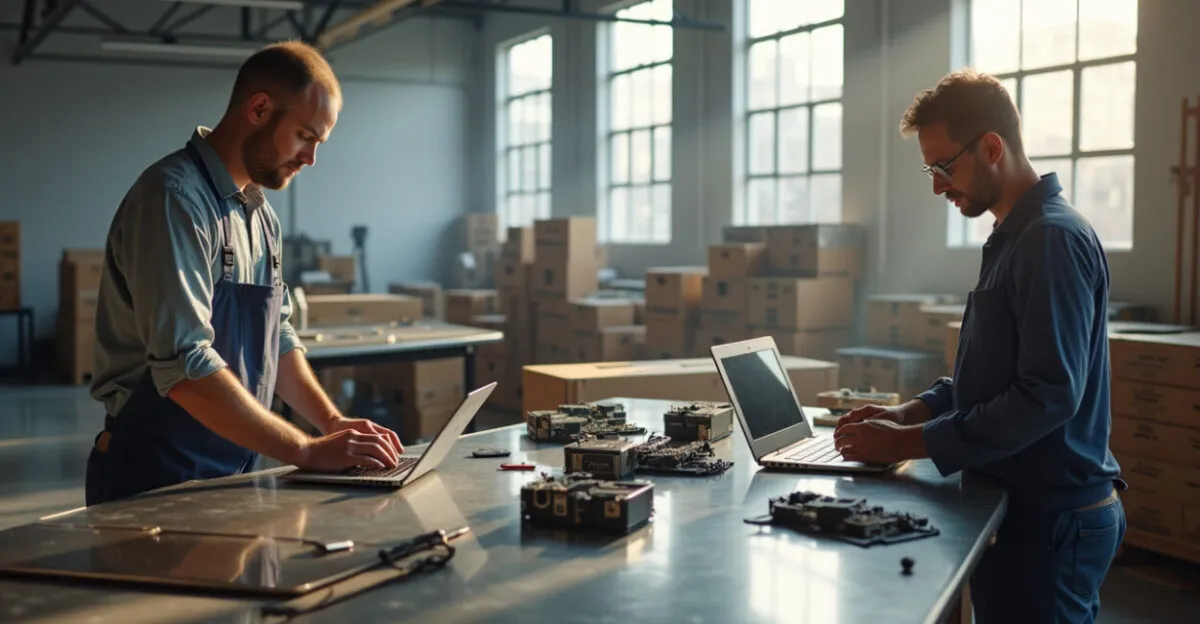
The advantage of the circular economy becomes clear when a product is worth more than its raw materials. A laptop, for example, is worth more when it’s working than when it’s taken apart. The same goes for furniture, industrial machinery, appliances, and even premium clothing. In these cases, repair, resale, or remanufacturing usually delivers greater environmental and financial returns than waiting until the product is discarded.
Read also: Circular Economy in Packaging: Cost-Saving Solutions
Industries Where Circularity Makes a Difference
- Electronics: Maintenance, component upgrades, and refurbishment extend product life and reduce the extraction of critical minerals.
- Construction: Selective demolition, structural reuse, and modular design create less debris and recover more components.
- Fashion: Durable design, resale, and repair typically have a greater impact than recycling low-value fibers.
- Food and packaging: Returnable containers, refills, and reusable systems often outperform the disposable-but-recyclable approach.
The circular economy also aligns with business metrics. Replacing products less often means lower replacement costs, less dependence on virgin raw materials, and less exposure to price volatility. In many cases, companies improve margins not by selling more units, but by selling use, service, or performance.
When Recycling Is Still Essential
Being critical of recycling doesn’t mean dismissing it. For some material streams, it’s the best available option: glass, aluminum, clean paper, and certain well-sorted plastics. In these cases, material recovery avoids additional extraction and reduces the impact of production.
Read also: 7 Examples of the Circular Economy in Brazilian Industry
The key point is simple: not all waste can be reused or remanufactured. Some materials are contaminated, some products are obsolete for safety reasons, and some components aren’t worth returning to use. Recycling works well in these situations, but it fails as a universal promise. When someone presents “recycling” as synonymous with total sustainability, they’re oversimplifying.
When Recycling Delivers the Best Results
- When the material arrives clean and sorted, without complex mixtures.
- When there’s a stable market for the recycled input.
- When reprocessing uses less energy than producing virgin raw materials.
- When the product has reached the end of its useful and safe life.
In public policy, this connects to the PNRS (Brazil’s National Solid Waste Policy) and reverse logistics systems. In Brazil, the legal framework recognizes that waste needs proper handling, but that doesn’t replace prevention at the source. This distinction is crucial for municipalities, industries, and cooperatives.
Real-World Examples: From Packaging to Electronics
A good way to distinguish talk from action is to look at real-world examples. Monomaterial packaging designed for recycling can make recycling easier, but that alone doesn’t make it circular. If consumers use it once and throw it away, the system remains linear with a green veneer. An aluminum can with a high return rate through formal collection channels, on the other hand, combines good design with efficient recycling—a closer fit with the ideal.
In the electronics industry, the difference is even clearer. Buyback programs, repair services, parts inventory, and remanufacturing recover the value of expensive components before everything is sent for shredding. This applies to phones, printers, and business equipment. Instead of turning an entire device into scrap, the system recovers modules, batteries, screens, or circuit boards.
In construction, the approach works at a different scale. On a project involving selective demolition, doors, window frames, and metal structures can be put back to use. On a conventional project, everything becomes debris. This is where the debate over the circular economy and recycling gets practical: recycling concrete is useful, but reusing intact components is usually better.
How Businesses and Consumers Can Apply This Distinction
For businesses, the process starts with an assessment of material flows. Which items break early? What can be repaired? What comes back for service? What actually needs to be recycled? Without this map, the strategy becomes advertising. With it, opportunities emerge to cut costs, emissions, and dependence on inputs.
For consumers, the same logic applies on a smaller scale. Before throwing something away, ask: Can it be repaired? Are replacement parts available? Is there a resale market? Does the item have a take-back program? Repeated often enough, these decisions change market demand. And markets respond quickly when they see demand for durability and repair.
A Practical Decision Checklist
- Can simple maintenance help the product last longer?
- Does the manufacturer offer parts, service, or buyback?
- Is the material recyclable—and is it actually recycled in your area?
- Is reuse, sharing, or renting an option?
This approach works well for durable goods, but not for products involving critical uses, sensitive hygiene, or regulated safety, where reuse may not be viable. For food, for example, priorities shift to safe packaging, efficient logistics, and proper disposal. Not every case fits; it depends on the product’s function and the risks involved.
How to Avoid Confusing the Two Concepts
If you need to decide quickly, use a simple rule: recycling deals with materials; the circular economy deals with systems. When the problem is turning waste into inputs, the focus is recycling. When the problem is premature disposal, the focus is circularity.
This distinction helps prevent cosmetic decisions. A company can publicize a high recycling rate while continuing to sell disposable products with excessive packaging and short lifespans. In that case, the metric looks good, but the system remains inefficient. The reverse can also happen: a business can reduce waste without recycling much simply by redesigning its products and extending their useful lives. That’s real circularity.
Next Steps
If the goal is meaningful impact, the first step isn’t announcing “100% recyclable.” It’s measuring how much material never becomes waste, how many products return to circulation, and how much value is preserved before disposal. For consumers and businesses, the smartest approach is to assess the entire life cycle: buy fewer disposable products, choose repairable items, demand reverse logistics, and prioritize reuse models. Recycling remains necessary, but circularity delivers structural gains.
Frequently Asked Questions About the Circular Economy and Recycling
Is the Circular Economy the Same as Recycling?
No. Recycling is one specific step in waste management that turns discarded material into a new input. The circular economy is a broader model that includes reducing consumption, redesigning products, extending useful life, repairing, reusing, remanufacturing, and recycling only at the end. In practice, recycling addresses part of the end of the cycle; circularity aims to change the entire cycle.
Why Can’t Recycling Alone Solve the Waste Problem?
Because recycling happens after waste already exists. If a product is poorly designed, doesn’t last long, combines materials that are difficult to separate, or requires frequent disposal, recycling becomes only a partial fix. Also, not every material retains its quality after reprocessing. That’s why reducing waste and extending product use usually deliver more consistent results than relying on collection alone.
Which Industries Benefit Most from the Circular Economy?
Industries with durable, high-value goods often see faster returns, including electronics, construction, furniture, premium fashion, and industrial equipment. In these markets, repairing, reselling, or remanufacturing preserves more value than taking everything apart. Returnable packaging and refill systems also perform well when the logistics make sense. Products with critical uses, however, require case-by-case analysis for safety and hygiene.
Is Every Recyclable Material Part of a Circular Strategy?
Not necessarily. A material may be technically recyclable and still be part of a linear model if the product is discarded early or recycling isn’t practical. Circularity depends on product design, maintenance, take-back, reuse, and secondary markets. Recyclability helps, but it doesn’t define a circular operation on its own.
How Can You Tell If a Company Is Truly Practicing the Circular Economy?
Look at whether it reduces the need for virgin raw materials, extends product life, and offers repair, buyback, remanufacturing, or reverse logistics. It’s also worth checking whether the design makes disassembly and recovery easier. If its messaging talks only about “recycled waste” but doesn’t address design, maintenance, or take-back, the strategy is more likely marketing than circularity.
Artigos Relacionados
 How to Apply a Circular Economy in Your Business
 Circular Economy: A Complete, Practical Guide
 Why Test Reverse Logistics in the Circular Economy
 Solar Energy or Energy Efficiency: Which Pays Off?
 Sustainable Hospitality Is Booming: Why Local Businesses Profit More
 School Recycling: An Effective Program for Educational Institutions
