

School recycling encompasses systematic practices for collecting, sorting, and properly disposing of waste at educational institutions. Through structured projects and internal policies, these practices promote environmental education and a circular economy.
Implementing school recycling means bringing students, teachers, and the community together to manage reverse logistics, reduce waste, and reuse materials. This fosters environmental and social skills and active citizenship as part of the school routine. The primary goal is to reduce environmental impact, create value from reusable materials, and teach sustainable practices that extend beyond school, transforming behavior and institutional culture.

Institutional Context and Benefits
Educational Benefits of School Recycling
School recycling programs expand hands-on learning by connecting curriculum content with concrete sustainability initiatives. This encourages student leadership and improves social and environmental responsibility metrics. Schools with recycling policies report stronger community engagement and improved skills such as teamwork, problem-solving, and critical thinking—all essential to students’ development as citizens and future professionals.
School recycling can also generate direct savings for an institution by lowering waste management costs and creating commercial and educational partnerships that recognize the value of reused materials.
Program Planning
Essential Steps for Implementing School Recycling
Planning a school recycling program requires a waste audit, clearly defined goals, a schedule, staff and material resources, and performance metrics that support ongoing monitoring and adjustments to deliver measurable results. It is essential to map waste streams, identify waste hotspots, and establish clearly labeled recycling drop-off points. The entire school community should receive regular guidance on how to sort waste correctly.
Incorporating school recycling into academic and administrative planning makes the program more effective by pairing hands-on activities with classroom instruction and ongoing assessment.
Operational Strategies

Logistics and Collection for School Recycling
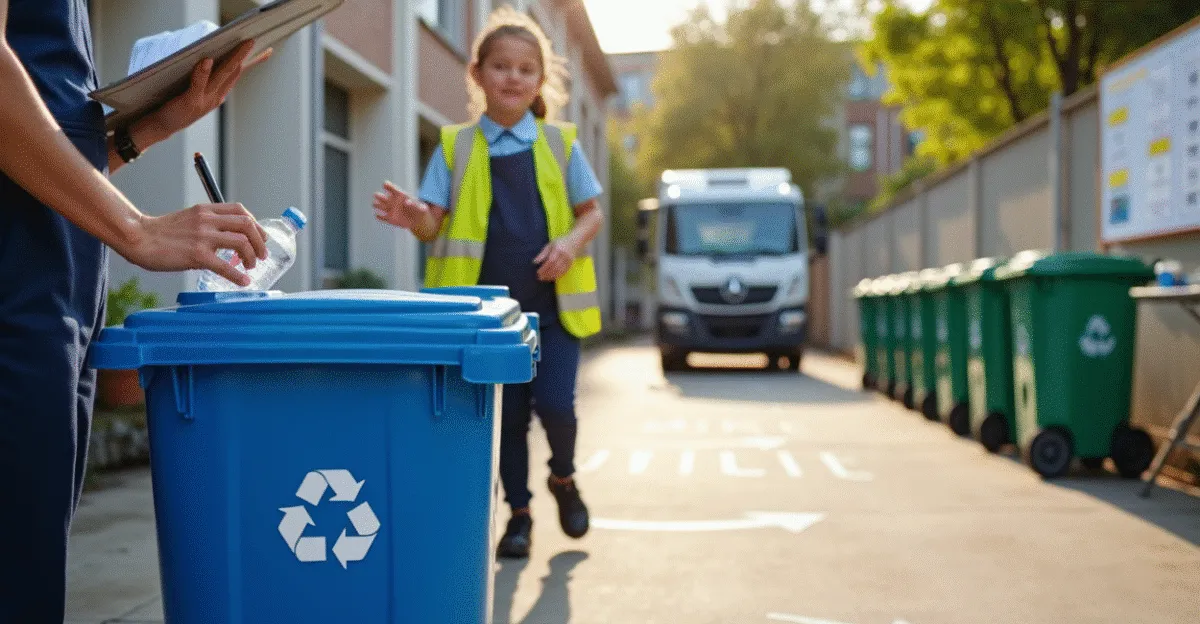
Setting collection schedules, assigning responsibilities to classes and departments, and identifying partners for final disposal are all part of the logistics needed to make school recycling efficient and safe. Voluntary drop-off points, standardized bins, and weekly collection routes help reduce material contamination and increase reuse and recycling rates, demonstrating the institution’s commitment.
Regular training for support staff, teachers, and students helps maintain best practices, prevent operational problems, and reinforce a culture of recycling at every level of the school.
Comparing Methods and Impacts
Comparing Disposal Methods
Composting, material recycling, and reverse logistics partnerships have different costs and impacts. Comparing them can help schools choose methods that fit their budgets and environmental goals. Schools that prioritize composting significantly reduce organic waste, while those focused on recycling paper and plastic may see more immediate financial and educational returns by integrating recycling into their budgets.
Combining methods is often the most effective approach, maximizing environmental and educational benefits while connecting school recycling with local suppliers and municipal waste management programs.
| Method | Benefits | Challenges |
|---|---|---|
| Composting | Reduces organic waste and produces compost for a garden | Requires space, maintenance, and frequent supervision |
| Material recycling | Financial returns and hands-on awareness | Risk of contamination and logistical demands |
| Local partnerships | Community collaboration and greater impact | Depends on agreements and consistent participation |
Communication and Engagement
Educational Campaigns for School Recycling
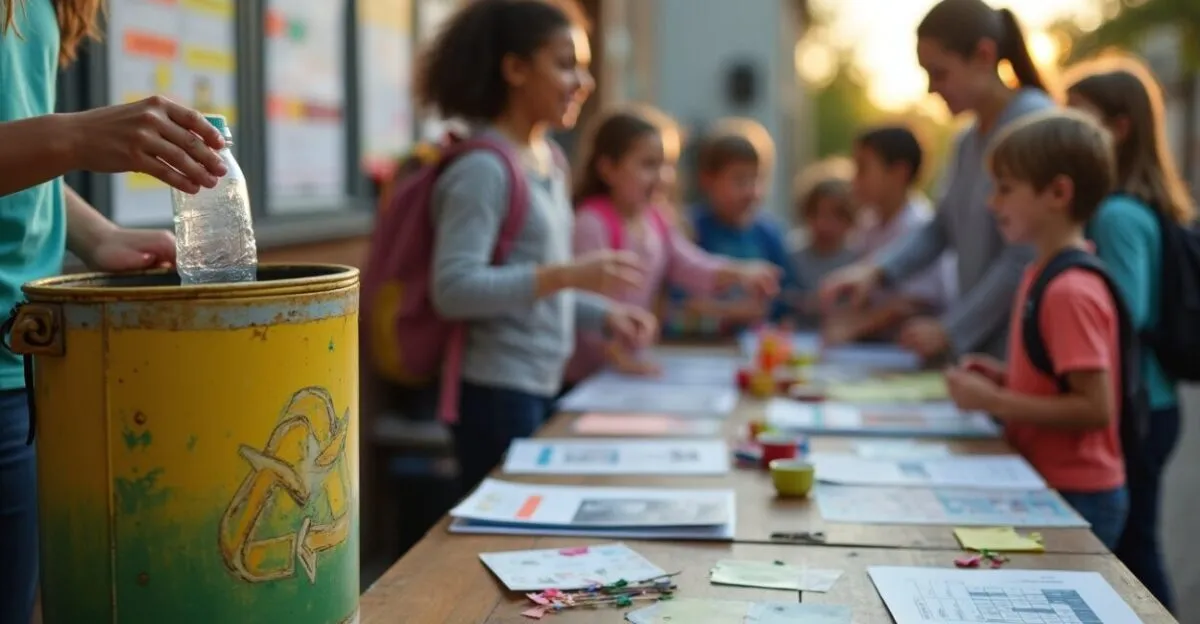
Ongoing internal and external communication campaigns are essential to the success of school recycling. They can engage parents, students, and staff through educational materials, talks, and interactive projects. Strategies such as gamification, class competitions, and hands-on workshops encourage participation, make recycling visible and measurable, and create a collaborative, sustainable environment.
Leia também: Financial Literacy Activities for Kids at School
Working with local media and drawing on academic research strengthens the credibility of these efforts, while clear metrics help demonstrate results and build broader institutional and community support.
- Printed and digital educational materials
- Hands-on workshops with experts
- Interdisciplinary projects involving the entire school
These communication efforts establish school recycling as a teaching tool, making sustainable practices easier to adopt and strengthening the institution’s culture of environmental stewardship.
Leia também: Why Sustainable Eating Matters Now
Measuring Results and Financial Sustainability
Metrics for Monitoring School Recycling
Tracking metrics such as the amount recycled, the reduction in waste sent to landfills, and the savings generated makes it possible to assess the impact of school recycling and adjust strategies to meet institutional sustainability goals. Digital monitoring tools and regular records help track results over time, identify and replicate successful practices, and ensure the program evolves based on reliable data.
Financial sustainability may include selling recyclable materials, partnering with businesses, and participating in government incentive programs, with school recycling integrated transparently into the institution’s finances.
| Metric | Measurement | Target |
|---|---|---|
| Amount recycled | kg/month | +20% annually |
| Waste sent to landfill | kg/month | -30% in 12 months |
| Revenue from materials | R$/month | Cover operating costs |
Policies, Partnerships, and Legal Compliance
Regulations and Compliance for School Recycling
Understanding municipal and federal environmental laws is essential to school recycling. It helps ensure that waste disposal and partnerships comply with public health and solid waste management regulations. Laws such as Brazil’s National Solid Waste Policy (a federal framework for waste management) provide useful guidance for educational institutions. School recycling programs must also comply with legal requirements for transporting, storing, and documenting recyclable materials.
Seeking certifications and aligning with public and educational programs strengthens the credibility of school recycling and can open the door to funding, institutional support, and official recognition.
Strategic Partnerships for School Recycling
Partnering with waste picker cooperatives, recycling companies, and government agencies strengthens the school recycling value chain, supporting efficient logistics and socioeconomic benefits for the community. Collaborations with universities and research centers can bring new ideas, evaluation methods, and evidence-based teaching tools into school recycling, increasing its impact and potential for replication.
Organizations such as municipal departments of education and the environment often provide technical and financial support, making them strategic partners for implementing and expanding school recycling programs with legal safeguards.
Key Takeaways
- School recycling combines hands-on education and waste management to foster environmental citizenship.
- Planning, logistics, and communication are essential to efficiency and financial sustainability.
- Partnerships and legal compliance increase programs’ impact and credibility.
These points outline the essential steps for making school recycling effective, scalable, and measurable. They provide a roadmap for administrators looking to implement programs that deliver lasting results.
For technical guidance and examples of public policies on waste management, consult official documents such as Brazil’s National Solid Waste Policy and educational resources from the Ministry of the Environment and the Ministry of Education, as well as studies and guides from leading specialized websites.
Frequently Asked Questions
What Is School Recycling, and Why Implement It?
School recycling refers to the collection, sorting, and disposal of waste in educational settings, with the goal of reducing environmental impact and educating students. Implementing a program promotes a circular economy, social responsibility, community involvement, and environmental and social skills. It is an essential tool for developing environmentally conscious citizens, lowering institutional waste management costs, and creating partnerships and revenue through the sale of recyclable materials.
How Do I Start a School Recycling Program at My Institution?
To start a school recycling program, begin with a waste audit, set clear goals, involve academic and operations leaders, establish collection points, and train staff. Run educational campaigns, form partnerships with cooperatives or recycling companies, and set up metrics to track results. Regularly adjust processes to ensure efficiency, legal compliance, and participation from the entire school community.
Which Materials Should Be Prioritized for School Recycling?
Prioritize high-volume materials with strong reuse or recycling potential, such as paper and cardboard, plastics, metals, and glass. Separate organic waste for composting if space is available. School recycling programs should account for logistical feasibility, prevent contamination, and prioritize efforts with educational and economic benefits, such as recycling programs that generate revenue for the institution or hands-on educational projects.
How Do You Measure the Success of a School Recycling Project?
Measure success using quantitative and qualitative metrics: the amount recycled, the reduction in waste sent to landfills, savings generated, community participation, and progress toward educational goals. Use regular records, reports, and surveys to assess educational, operational, and financial impact. Adjust practices based on the data to ensure the school recycling program remains sustainable and can grow.
What Partnerships Can Strengthen School Recycling?
Partnerships with waste picker cooperatives, recycling companies, universities, government agencies, and nonprofits strengthen school recycling by providing logistics, proper disposal, technical support, and educational opportunities. These collaborations can provide access to resources, funding, training, and certification, expanding the project’s reach and connecting it with public policies and community initiatives that support a circular economy.
Artigos Relacionados
 Effective Literacy Instruction in Elementary School: Practical Steps
 Literacy in Elementary School: Effective Practices
 Effective School Management: Practices for Students and Staff
 School Management: Effective Practices for Principals
 School Health and Physical Activity: Policies and Programs
 A Practical Guide to School Sustainability Projects
