
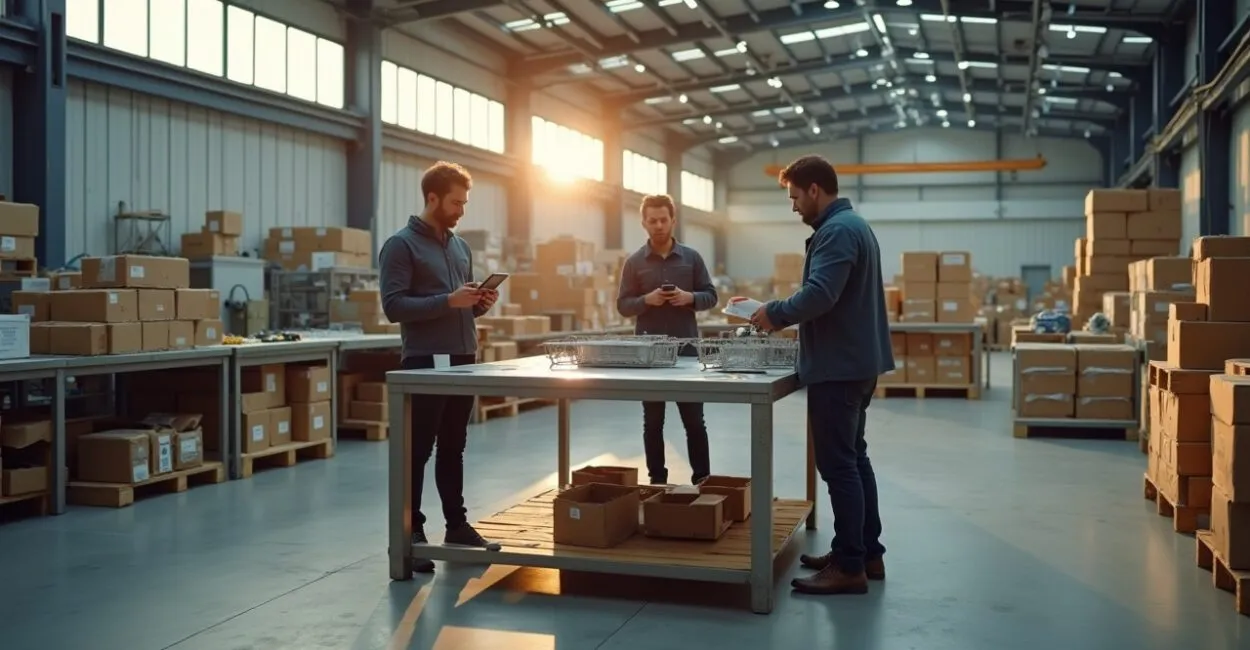
When a company treats raw materials, energy, water, and packaging as unavoidable costs, it accepts waste as part of the routine. A circular economy in business breaks that pattern: instead of extracting, using, and discarding, a business designs products, processes, and supply chains to keep value circulating for as long as possible. In practice, this isn’t vague “green” messaging. It’s a strategy to reduce input purchases, minimize operational losses, cut disposal costs, improve efficiency, and reduce regulatory risk. Companies that truly implement it make changes to design, production, reverse logistics, maintenance, reuse, and performance metrics—not just recycling.

The Essentials
- A circular economy is a business model that replaces the linear “extract, produce, consume, and dispose” flow with cycles of use, reuse, and regeneration.
- Financial gains come when a company reduces losses, extends the useful life of materials, and avoids unnecessary purchases in its operations.
- The biggest results typically come from circular design, material reuse, preventive maintenance, returnable packaging, and reverse logistics.
- Without circular economy metrics, an initiative becomes marketing: real progress depends on reuse rates, waste reduction, and operational efficiency.
- The model works best when it starts in areas with the most waste, the highest input volumes, or the greatest disposal costs.
How a Circular Economy Works in Practice
A circular economy in business means organizing products, processes, and purchasing to keep materials in use for as long as possible, while generating less waste and relying less on virgin inputs. Put simply, it means getting more out of what already comes in—not just “offsetting” what goes out. The contrast between the linear model and the circular economy is clear. In a linear model, a company buys, transforms, sells, and disposes. In a circular model, it designs for durability, repair, disassembly, recovery, and the reintroduction of materials into the supply chain. This changes engineering, procurement, maintenance, and even customer relationships.
What changes in day-to-day operations
- Circular design: Products are designed to use less material, last longer, and be easier to repair or disassemble.
- Production: Offcuts go back into the process, scrap decreases, and consumption per unit produced becomes more predictable.
- Procurement: Companies bring in suppliers with sustainable supply chains, recycled inputs, and traceability.
- After-sales: Technical support, remanufacturing, reuse, and component returns become sources of value.
What separates a company “with sustainability initiatives” from a circular company isn’t the messaging—it’s the ability to keep materials, products, and value circulating within the business for longer.
If a company still measures success only by sales volume, it tends to overlook the hidden cost of disposal. But when operations take the full life cycle into account, every breakdown, leftover, and return becomes management data.
Why Adopt a Circular Economy Now: Costs, Competitiveness, and ESG
The short answer is this: companies are already paying for inefficiency; they just aren’t seeing the full bill. Pressure to reduce waste, ensure supplier transparency, and meet ESG goals has turned circularity from a good practice into a competitive advantage. The financial case is the strongest. Less input waste, less disposal, fewer emergency purchases, and less rework mean better margins. In sectors with packaging, complex logistics, or high material consumption, the benefits show up quickly. In others, the savings build more gradually but are still significant.
On the regulatory side, Brazil’s National Solid Waste Policy provides a framework for reverse logistics and shared responsibility. The law is available on the Planalto, Brazil’s official government portal. When a company ignores these requirements, it isn’t just “less sustainable”; it faces greater operational costs and legal risks.
Where ROI tends to show up first
- Returnable packaging: Reduces repeat purchases and the disposal of single-use items.
- Material reuse: Cuts spending on new inputs and improves internal material utilization.
- Maintenance and remanufacturing: Extend asset life and prevent premature replacement.
- Recycling at work: Generates revenue or reduces disposal costs when materials are properly sorted.
Anyone who works in this area knows that a circular economy doesn’t work well as a standalone communications initiative. It works when leadership is willing to change goals, procurement, and product engineering. Without that, the project becomes a pretty cost center.
High-Value Applications: Design, Production, Packaging, and Reverse Logistics

The best opportunities for circularity usually aren’t in the final waste stream. They come earlier: in product design, material specifications, production-line setup, packaging, and post-consumer returns. That’s where companies can prevent waste at scale.
1. Circular design from the start
Circular design reduces complexity, makes repairs easier, and simplifies disassembly. This matters because products that are difficult to open or separate are usually expensive to recover. In many cases, changing a component or fastening method can transform the entire life cycle.
2. Production with less waste and more reuse
Production lines that track scrap at each stage can address the root cause, not just the symptom. The goal is to turn internal leftovers into reused materials or feed them back into the process, rather than letting waste become a disposal cost.
3. Smart, returnable packaging
Packaging is one of the fastest ways to tackle waste reduction. When a company redesigns package size, weight, material, and number of use cycles, it affects shipping, storage, and disposal all at once.
4. Reverse logistics as an asset, not an obligation
Reverse logistics is the structured return of products, parts, packaging, or components for reuse, repair, recycling, or proper disposal. In retail, manufacturing, and durable goods, it can become a source of secondary raw materials and stronger customer relationships.
Reverse logistics isn’t the end of the supply chain; it’s the point where a company decides whether to lose value through disposal or recover it through returns.
One important caveat: not every return flow is worthwhile. For low-value, high-volume products with costly logistics, the operation only works if there’s enough scale, consumer incentives, or specialized partners. This is one case where the theory falls apart if the logistics costs don’t add up.
The concept of circularity also appears in reports from the UNEP and the Ellen MacArthur Foundation, which describe the transition to circularity as a systemic change in materials, business models, and supply chain design.
How to Implement a Circular Economy in Your Business, Step by Step
The safest approach is to start small, but with a thorough assessment. A company needs to map where it loses material, where disposal costs are high, and where it depends too heavily on virgin inputs. From there, it can define projects with measurable returns.
Step 1: Map material flows
List inputs, losses, leftovers, scrap, packaging, returns, and final destinations. Without this map, a company is trying to “be circular” in the dark. In practice, assessments often reveal that 20% of operational areas account for most of the waste.
Step 2: Choose an area with a clear impact
Start with an area that has significant volume and cost, and is under internal control. It could be packaging, maintenance, inventory, procurement, after-sales, or shipping. The initial focus should be a real operational efficiency problem, not a symbolic gesture.
Read also: Practical Circular Economy Examples: 2025
Step 3: Update processes and supplier requirements
Include circularity criteria in purchasing: recycled content, durability, disassembly, repairability, packaging returns, and traceability. A sustainable supply chain needs to be included in the contract, not just on a slide.
Step 4: Set up return and reuse processes
Define what comes back, how it comes back, who receives it, how it is inspected, and where it goes next. Without this discipline, reverse logistics turns into a pile of idle material in the yard.
Read also: 7 Examples of the Circular Economy in Brazilian Industry
Step 5: Measure, adjust, and scale
The project only matures when the numbers show lower costs, less disposal, and more material reuse. After validating the pilot, expand to other production lines, locations, or product categories. For example, a mid-sized food company could start with secondary packaging. If it replaces a single-use box with a trackable returnable one, it reduces repeat purchases and waste while making logistics more predictable. Next, it can tackle production leftovers and the reprocessing of permitted inputs.
Circular Economy Metrics That Show Real Results
Without metrics, circularity becomes a story. Ideally, companies track financial, operational, and environmental indicators together, because they can only change the game when they see the full impact. The IBGE, Brazil’s official statistics agency, is an important source for economic data, while industry reports help establish more specific benchmarks.
| Metric | What it measures | Why it matters |
|---|---|---|
| Material reuse rate | Percentage of material reintroduced into the process | Shows whether reuse is becoming standard practice rather than an exception |
| Waste reduction | Decrease in the volume sent for disposal | Indicates environmental benefits and potential cost savings |
| Efficiency per unit produced | Input consumption per item or batch | Allows companies to compare actual operational improvements |
| Reverse logistics return rate | Percentage of items or packages returned | Shows channel participation and the viability of the return flow |
| Avoided disposal costs | Savings from sending less waste for final disposal | Helps justify the investment internally |
Metrics the finance team cares about
- annual savings on input purchases;
- lower waste disposal costs;
- reduced losses from damage, scrap, or obsolescence;
- revenue from selling recovered or remanufactured materials.
Experts disagree on which metrics should take priority. Some focus on the mass of recovered material; others prefer financial indicators. In practice, it’s best to combine both—weight and value—because either metric alone can distort decisions.
Real-World Examples by Industry
Circular economy practices vary across industries. The principle is the same, but the starting point changes. Manufacturing, retail, construction, and services each have different opportunities to capture value.
Manufacturing
In manufacturing, the biggest gains often come from raw material specifications, scrap reduction, and component recovery. Companies that use metal parts, engineered plastics, or expensive inputs can see quick returns when they close the loop on internal leftovers.
Retail and consumer goods
In retail, returnable packaging, refill programs, post-consumer product collection, and take-back programs create value. When the process is well designed, brands also build loyalty and gather data about how products are actually used.
Construction
In construction, modularization, reuse of wood, steel, and aggregates, and planning for disassembly make a difference. The industry handles large volumes of waste, so any improvement in sorting and returns tends to have a visible impact.
Services and technology
In services, circularity shows up in asset maintenance, extending equipment life, leasing, and remanufacturing. In technology, value comes from equipment recovery, refurbishment, and hardware life cycle management. I’ve seen companies think they were “recycling,” while throwing away useful material because they hadn’t sorted it properly. After improving sorting, working with recyclers, and adjusting inspection procedures, they reduced losses without changing the end product. These gains often come faster than complex innovation projects.
Common Mistakes When Trying to Apply Circularity
The most common mistake is treating circularity as a sustainability campaign rather than a process change. This leads to high expectations, shallow execution, and quick frustration.
1. Focusing only on recycling
Recycling matters, but it’s the last layer of the strategy. Before that come reduction, reuse, repair, redesign, and reverse logistics. If a company skips those earlier steps, it loses money it could have saved at the source.
2. Starting a project without an internal owner
When no one is accountable for goals, purchasing, suppliers, and measurement, the initiative fizzles out. Circularity needs governance; it can’t survive on goodwill alone.
3. Choosing weak metrics
If a company tracks only the number of initiatives, events, or tons “recycled,” it may conceal inefficiency. The right metric shows operational and financial impact at the same time.
4. Ignoring product design
Many companies try to fix the problem at the end of the supply chain and forget that the product was designed to be difficult to recover. Without circular design, returns cost more and deliver less.
Circularity without product redesign and metrics becomes short-term marketing; circularity that involves engineering, procurement, and operations cuts costs.
The model’s biggest limitation appears when a business depends on costly logistics or materials with no secondary market. In those cases, the best solution may be to reduce material use at the source rather than insist on return cycles that will never pay off.
Next Steps to Put the Model in Motion
The smartest way to move forward is to choose a material flow, measure losses for 30 days, and design a pilot with a clear financial return. If the project doesn’t affect cost, waste, or operational efficiency, it’s probably still a talking point, not a management practice.
The next practical step is to audit a process, define three circular economy metrics, and run a short-term improvement. After that, the company will have a stronger foundation to expand its efforts with less guesswork and more evidence.
Frequently Asked Questions
What does a circular economy mean for a business?
It means organizing products, operations, and the supply chain to reduce waste and keep materials in use for as long as possible. This includes design, reuse, repair, remanufacturing, recycling, and reverse logistics. It’s not just about disposing of waste properly; it’s about changing how the business works.
How can a company apply a circular economy in practice?
Start by mapping material inputs, losses, and destinations. Then choose an area with high volume or high costs, adjust processes and suppliers, establish a structured return system, and track performance metrics. The best pilot is one that delivers measurable gains within a few months.
What are the financial benefits of a circular economy?
The main benefits are lower input purchasing costs, less disposal, less rework, longer asset life, and value recovery from waste or parts. In many industries, this improves margins even before ESG messaging enters the picture. The impact tends to come faster when large volumes of material are in circulation.
Which industries benefit most from a circular economy?
Manufacturing, construction, retail, food, packaging, and logistics tend to see the most visible gains. In these industries, input volumes, waste generation, and disposal costs make circularity easier to measure. Services and technology also capture value, mainly through maintenance, reuse, and extending asset life.
How can a company measure its progress with this model?
Use a combination of material reuse rates, waste reduction, avoided disposal costs, efficiency per unit produced, and reverse logistics return rates. If the numbers aren’t improving, the initiative hasn’t moved beyond the conceptual stage. Tracking only the number of activities doesn’t show real progress.
%%AGPTRH8%%
Artigos Relacionados
 Circular Economy: A Complete, Practical Guide
 Why Test Reverse Logistics in the Circular Economy
 Design Thinking for Creative Businesses: Apply Innovative Methods to Solve Problems, Develop Unique Products, and Win Loyal Customers
 Small Business Sustainability: A Practical Guide
 Building a Sustainable Future: Eco-Friendly Fashion Business Ideas for Young Entrepreneurs in Brazil
 Launch a Social Media Management Agency in Brazil: A Low-Cost Guide for Young Entrepreneurs
